
 Worksheets
Unit 4: Water
Total questions: 32
Worksheet time: 23mins
Name
Class
Date
1.

What step of the water cycle is shown in #4?
a)
evaporation
b)
precipitation
c)
infiltration
d)
condensation
2.

What part of the water cycle is shown in #3
a)
evaporation
b)
precipitation
c)
condensation
d)
infiltration
3.
the process in which gas changes into a liquid
a)
evaporation
b)
condensation
c)
humidity
d)
precipitation
4.
Process in which liquid water changes to a gas
a)
evaporation
b)
condensation
c)
humidity
d)
precipitation
5.
the process in which gas changes into a liquid
a)
evaporation
b)
condensation
c)
humidity
d)
precipitation
6.
97% of the water on earth is _________, making it undrinkable for humans.
a)
Fresh water
b)
Ground water
c)
Salt water
d)
Surface water
7.
What percentage of the Earth's water is fresh water?
a)
70%
b)
10%
c)
3%
d)
7%
8.
About this much of Earth is covered in water...
a)
3%
b)
50%
c)
70%
d)
90%
9.

This photos shows water molecules in which state of matter...
a)
Solid
b)
Liquid
c)
Gas
10.

This photo shows water molecules in which state of matter?
a)
Gas
b)
Liquid
c)
Solid
11.

Which atoms bond together to create a water molecule?
a)
Oxygen and Hydrogen
b)
Carbon and Oxygen
c)
Hydrogen and Helium
d)
Helium and Carbon
12.

This photo shows water molecules in which state of matter?
a)
Liquid
b)
Solid
c)
Gas
13.

This picture represents which of the following?
a)
element
b)
compound
c)
mixture
14.

This picture represents which of the following?
a)
element
b)
compound
c)
mixture
15.

What is the picture displayed?
a)
atom
b)
element
c)
molecule
d)
compound
16.

What is the picture displayed?
a)
atom
b)
element
c)
molecule
d)
compound
17.

This diagram represents...
a)
An element
b)
A molecule
c)
A compound
d)
A mixture of elements and compounds
18.
Making a mixture results in ___________________ only.
a)
chemical reactions
b)
separate parts
c)
physical changes
d)
two subtances
19.
47 grams of salt is dissolved in 700 mL of water. How much salt will remain after the water is evaporated?
a)
653 grams
b)
47 grams
c)
none
d)
37 grams
20.

Cookies and cream ice cream would be classified as
a)
A homogenous mixture
b)
A heterogenous mixture
c)
An element
d)
A compound
21.
______________ is the substance in a solution that dissolves.
a)
Filtration
b)
Solute
c)
Solvent
22.
What is the definition of a solvent?
a)
The substance that is dissolved.
b)
The substance in which the solute is dissolved.
c)
Unable to be dissolved.
23.
A _________________ mixture is one where the substances are evenly spread throughout.
a)
heterogeneous
b)
homogeneous
c)
pure substance
24.
Fruit Loops, pizza, and Skittles are examples of ____________________ mixtures.
a)
heterogeneous
b)
homogeneous
c)
pure
25.
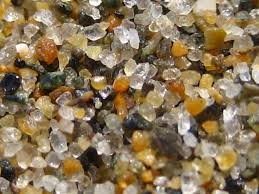
The picture shown here is what type of mixture?
a)
homogeneous
b)
hetergeneous
c)
pure substance
d)
element
26.
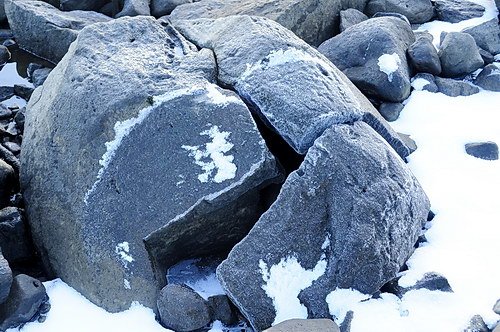
How does freezing water cause the weathering of rocks? The freezing water—
a)
keeps the rocks in place.
b)
makes the rocks last longer.
c)
expands cracks and breaks rocks.
d)
causes rocks to fall in landslides.
27.

What is the process that picks up and moves weathered rocks?
a)
Erosion
b)
Landslide
c)
Weathering
28.

What is an enormous mass of ice moving over land, causing weathering of rock and soil?
a)
A glacier
b)
An iceberg
c)
An ice wedge
d)
A sand dune
29.
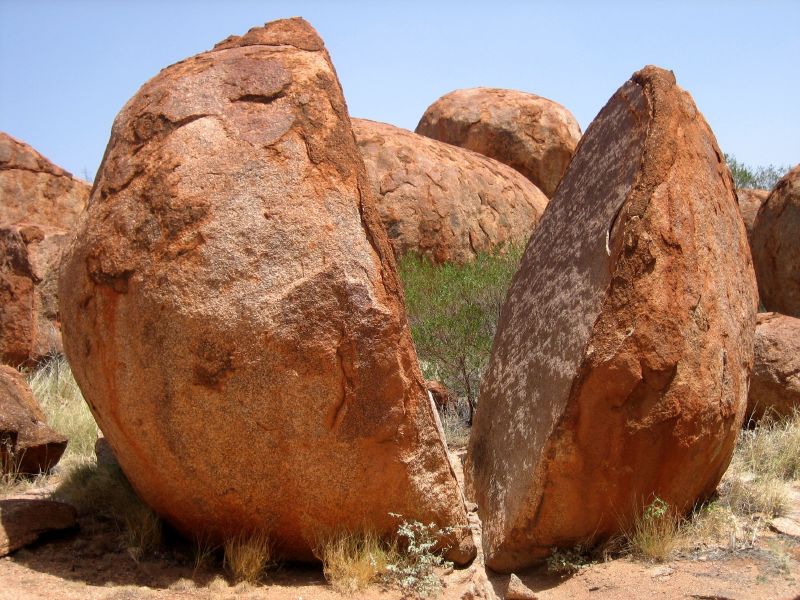
What is the wearing away or breaking down of rocks called?
a)
Weathering
b)
Erosion
c)
Glaciers
30.

What word describes when water is attracted to other substances?
a)
cohesion
b)
adhesion
c)
capillary action
d)
surface tension
31.

tendency of molecules of the same kind to stick to one another
a)
cohesion
b)
adhesion
c)
solution
d)
polar molecule
32.
Water is the universal solvent since it's:
a)
water
b)
such a small molecule
c)
polar
d)
essential to life
100 %

