
 Worksheets
Category 3: Earth and Space
Total questions: 30
Worksheet time: 1hrs 21mins

Categorize the following natural resources in their correct order.
Wood
Sun
Animals
Wind
Coal
Oil
Natural Gas
Gasoline
What are Fossil Fuels? (choose ALL that apply)
considered nonrenewable resources
cause pollution in the atmosphere
are renewable resources
oil, coal and natural gas
water, ice, wind or gravity
moves fragments of rock
and soil.
water, ice, wind or gravity
deposit rock sediments
and soil in a new place.
Earth’s crust into smaller
and smaller pieces.
water, ice, wind or gravity
moves fragments of rock
and soil.
water, ice, wind or gravity
deposit rock sediments
and soil in a new place.
Earth’s crust into smaller
and smaller pieces.
water, ice, wind or gravity
moves fragments of rock
and soil.
water, ice, wind or gravity
deposit rock sediments
and soil in a new place.
Earth’s crust into smaller
and smaller pieces.

Which statement best explains why this process results in weathering?

What caused the edges of these rocks to become smooth in water?
rocks bumping and scraping against each other in a river
ice scraping from a glacier
sand blowing in the wind
plants growing roots

What kind of change was made on the Earth's surface?
Rapid Change
Slow Change

What kind of change was made on the Earth's surface?
Slow Change
Rapid Change

buried by sediment for millions of years.
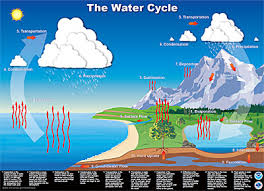
During the water cycle, in what stage do clouds form in the atmosphere?
Run-off
Some scientists measured and recorded local rainfall amounts and water levels at several local lakes over the summer. They compared their measurements with data from the past 30 years. What characteristic of the area are the scientists studying?
Climate, because they are making more than one type of measurement
Climate, because they are comparing rainfall amounts over a long period of time
Weather, because they are tracking changes only to their local environment
Weather, because they expect rainfall amounts and water levels to continue to decrease

What causes the phenomenon of nighttime and daytime on Earth?


A wide U-shaped valley is shown in the photograph. This valley was most likely formed by-- (5.7B)
flash flooding
a glacier
a hurricane
melting snow

The size and shape of a delta can change over time. The size and shape of this delta over time are NOT likely to be changed by----- (5.7B)
the number and height of tides along the shore
the amount and size of sediments carried by the river and streams
the amount of hunting and fishing in the delta
the number and size of waves from the ocean that reach the shore

Asteroids are large bodies of rock that are too small to be planets. An asteroid belt has many asteroids. The diagram shows the asteroid belt located between Mars and the first outer planet. Which outer planet is closest to this asteroid belt? (3.8D)
Uranus
Neptune
Saturn
Jupiter


What's the 7th planet in our solar system?
Made up of gas
Life exists here
Has no atmosphere
71% is water
Produces light and heat
Center of the solar system
Reflects sunlight
Orbits around the Earth
Visible at night
Is tilted on its axis

The diagram shows layers deposited under a body of water. This layering continued for millions of years.
What most likely happened to the dead plants and animals?
They were eaten by scavengers.
They became fossil fuels.
They were washed away by water.
They became an underground aquifer.

A teacher asks students to explain what they see in this picture. Four student explanations are shown in the box.
Which of the students gave a correct explanation?
Student 1 only
Students 2 and 4 only
Student 2 only
Students 1 and 3 only
Some buildings and homes are heated by energy produced from an alternative to fossil fuels. Which of these is an example of a building or home heated using an alternative energy source?
A home heated by energy generated by a hydroelectric dam
A building that has emergency electric generators that run on gasoline
A home heated by energy produced from a coal power plant in a city
A building that has furnaces powered by natural gas
Which diagram models the process of compaction leading to the formation of sedimentary rock?


The model above shows where water can be found during different stages of the water cycle.
What should be added to the diagram to better explain the water cycle?
Soil to trap water from runoff
The sun to provide energy for evaporation
Rocks to release thermal energy
Plants to provide oxygen in the atmosphere

