wayground logo

Free Printable Worksheets

NEW

Font size

S
M
L
XL
Worksheets

Vocabulary Review EOY

Total questions: 80

Worksheet time: 42mins

Name
Class
Date
1.

Organizations and individuals who have rights to rule over a group of people.

a)

entrepreneur

b)

government

c)

profit

d)

civics

2.

An account of an event created by someone who took part in or witnessed the event.

a)

textbook

b)

primary source

c)

secondary source

d)

world map

3.

The knowledge, beliefs, customs, and values of a group of people.

a)

civics

b)

government

c)

history

d)

culture

4.

The pattern of weather conditions in a certain area over a long period of time.

a)

archaeology

b)

artifacts

c)

climate

d)

weather

5.

Information gathered by someone who did not take part or witness an event.

a)

interview

b)

secondary source

c)

primary source

d)

artifacts

6.

The study of the past based on what people left behind.

a)

archaeology

b)

civics

c)

government

d)

history

7.

A system of producing, selling, and buying goods and services.

a)

trade

b)

economy

c)

government

d)

civics

8.

A dynasty can be defined as

a)

an election of religious leaders.

b)

rulers from the same family.

c)

a group of wealthy landowners.

d)

people who elect their representatives.

9.

A set of laws that citizens are expected to follow is called a

a)

monarchy.

b)

democracy.

c)

constitution.

d)

entrepreneur.

10.

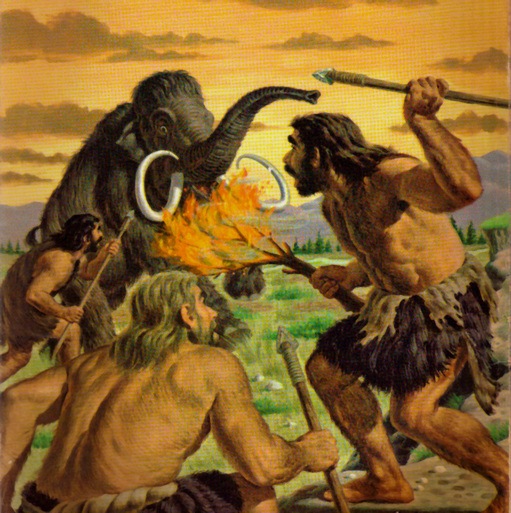
What is the Paleolithic Era?

a)

a time period of meat eaters

b)

when the earliest humans collided with the Ice Age

c)

The Old Stone - a period that lasted from about 2.5 million to 8000 BCE

d)

the practice of determining the age of a fossil

11.

What is the time period before a written language was created?

a)

History

b)

Climate

c)

Prehistory

d)

Environment

12.
How did man get his food during the Paleolithic Age?
a)
Growing crops
b)
Hunting and Gathering
c)
Stealing from others
d)
Scavenging
13.

A person who moves from place to place in search of food.

a)

Pull Factors

b)

Nomad

c)

Domestication

d)

Secondary Source

14.

What does domesticate mean?

a)

To tame wild animals and plants.

b)

A person that mostly eats berries and game meats.

c)

A person who studies the past.

d)

The first known group of people that domesticated animals.

15.

What does Mesolithic mean?

a)

Middle Stone Age

b)

Between Stone Age

c)

Mixed Stone Age

d)

Last Stone Age

16.

The continent where the FIRST species began was:

a)

Australia

b)

Antarctica

c)

Africa

d)

Europe

17.

What does specialization mean?

a)

to concentrate on a specific job or duty

b)

to become super special

c)

to be a nomad

d)

to be a hunter gatherer

18.
What is irrigation?
a)
the watering of crops
b)
the watering of animals
c)
giving babies all the milk they need
d)
reusing crops for several seasons
19.
What is agriculture?
a)
using soil to produce crops of food
b)
using humans to make advanced tools
c)
learning how to use fire
d)
digging up fossils and artifacts
20.
What is religion?
a)
a belief in farming
b)
the worship of a god, gods or spirits
c)
sources historians use to figure out the past
d)
a ruler of ancient times
21.
What is a social class?
a)
classes given by elders in early human times
b)
the hierarchy within a family structure
c)
a party given to honor the hunters upon their return
d)
a group of people with similar customs, backgrounds, training, and income
22.
What is surplus?
a)
an ancient healing practice
b)
a process of burning wood for fires
c)
a type of corn eaten by early humans
d)
an amount produced in excess of what is needed - extra
23.

a pyramid-shaped temple with a shire on top

a)

ziggurat

b)

irrigtaion

c)

plotheism

24.

religious ceremony

a)

tribute

b)

cuneiform

c)

ritual

25.

an extreme shortage of food

a)

irrigation

b)

silt

c)

famine

26.

a belief in many gods and goddesses

a)

ploytheism

b)

tribute

c)

ritual

27.

a type of writing made up of wedge-shaped markings

a)

cuneiform

b)

scribe

c)

polytheism

28.

an especially fine and fertile soil

a)

irrigation

b)

tribute

c)

silt

29.

a person who specializes in writing and serves as a record keeper

a)

scribe

b)

cuneiform

c)

empire

30.

when land has the nutrients and water to be able to grow crops

a)

surplus

b)

basin

c)

fertile

d)

shadoof

31.
The land between the Tigris and Euphrates Rivers.
a)
Fertile Crescent
b)
Mesopotamia
c)
Plain of Syria
d)
Nile River Delta
32.

What is the system in which people were ranked based on their occupation?

a)

social hierarchy

b)

city-state

c)

monarchy

d)

barter

33.

A System that Divides People into Jobs

a)

Division of Labor

b)

Irrigation

c)

Social Hierarchy

d)

Surplus

34.

King of the Akkad, who created the first empire in history

a)

Gilgamesh

b)

Hammurabi

c)

Sargon

d)

Sourgoat

35.
Babylonian kind known for his code of law
a)
Hammurabi
b)
Gilgamesh
c)
Sargon
d)
Wasabi
36.
a written set of laws that apply to everyone under a government
a)
code of ethics
b)
cheat codes
c)
code of law
d)
law of the land
37.
Modern country where Ancient Mesopotamia is located
a)
Iran
b)
Iraq
c)
Turkey
d)
Syria
38.

A triangle-shaped area of land made from soil deposited by a river

a)

Silt

b)

Delta

c)

Fertile

d)

Scribe

39.
Items sent to other regions to trade
a)
Imports
b)
Exports
c)
Hieroglyphics
d)
Silt
40.
The joining of separate parts such as kingdoms into one
a)
Division
b)
Addition
c)
Subtraction
d)
Unification
41.
A raised channel that carries water to distant places
a)
Aqueduct
b)
Levee
c)
Ditch
d)
River
42.
A belief in only one god
a)
Monotheism
b)
Polytheism
43.
The ___________ was used to make  form of paper?
a)
Papyrus
b)
bamboo
c)
reed
44.
____________ Where thought to be gods on earth, they were the king of Egypt 
a)
Dynasty 
b)
Pharaoh
c)
Hieroglyphics 
45.
Another word for god/goddess is _____________.
a)
Pyramid
b)
Mummy
c)
Deity
46.
The longest River in the world is.....
a)
The Euphrates
b)
The Nile River
c)
The Saluda River 
47.
The Egyptian form of writing which was made up of picture symbols, symbol stood for an object.
a)
Cuneiform 
b)
Papyrus
c)
Hieroglyphics 
48.
A body of a pharaoh who has been preserved and buried in a pyramid is called a _________.
a)
Pyramid
b)
Mummy
c)
Deity
49.

Government is run by a political ruler and a religious ruler who are the same person

a)

monotheism

b)

polytheism

c)

theocracy

50.
What is the time in Ancient China's history when kings were weak and the lords fought constantly?
a)
The Dynastic Cycle
b)
A Legalist State
c)
Time of the Warring States
d)
Trans-Eurasian
51.
What is an oracle bone?
a)
A bone that would foresee the future.
b)
An animal bone or turtle shell used by the Shang kings of China to communicate with the gods.
c)
A good luck charm that kings used when going to war.
d)
A religious symbol that priests used when performing sacrifices.
52.
What is the pattern of the rise and fall of dynasties?
a)
Political philosophies
b)
Mandate of Heaven
c)
Dynastic Cycle
d)
Time of the Warring States
53.
What is filial piety?
a)
Respect for authority
b)
A typical meal enjoyed by the members of the Zhou Dynasty.
c)
Being able to interpret the gods
d)
Respect for one's parents and ancestors
54.
What is the Mandate of Heaven?
a)
An ancient Chinese belief that a ruler had the gods' approval
b)
the Daoist path to eternal life
c)
the kingdom during the Zhou Dynasty
d)
a belief that heaven provided food for those that were hungry
55.
What is Daoism?
a)
A philosophy taught by Confucius that stresses proper relationships
b)
an ancient Chinese philosophy based on the teachings of Laozi
c)
a philosophy stressing the strict use of laws to control behavior
d)
a peace treaty signed by the warring states of Ancient China
56.
What is Confucianism?
a)
a philosophy taught by Confucius that stresses proper relationships
b)
an ancient Chinese philosophy based on the teachings of Laozi
c)
a philosophy stressing the strict use of laws to control behavior
d)
a belief that the stars and planets control human behavior
57.
What is Legalism?
a)
a philosophy taught by Confucius that stresses proper relationships
b)
an ancient Chinese philosophy based on the teachings of Laozi
c)
a philosophy stressing the strict use of laws to control behavior
d)
When lawyers in Ancient China fought for the release of prisoners.
58.
Who is Shi-Huangdi?
a)
First Emperor of the Zhou Dynasty
b)
First Emperor of the Han Dynasty
c)
First Emperor of the Qin Dynasty
d)
First Emperor of the Shang Dynasty
59.
What are the Silk Roads?
a)
the overland trade routes along which sild and other Chinese goods passed to Mesopotamia and Europe
b)
Roads in Ancient China made of silk for the Kings of each dynasty
c)
an army of silk figures designed to commemorate The Time of the Warring States
d)
Waterways that provided trade and travel for the people of Ancient China
60.
land surrounded on three sides by water.
a)
peninsula
b)
polis
c)
Classical 
d)
acropolis
61.
Greek word for city-state
a)
Pennisula
b)
polis
c)
parthonnon
d)
kingdom
62.
 the highest part of a Greek city-state, used for protection and government activities
a)
acropolis
b)
polis
c)
peninsula
d)
athens
63.
outdoor marketplaces
a)
agora
b)
pollis
c)
agile
d)
pennisula
64.
government in which people rule themselves
a)
theocracy
b)
oligarchy
c)
communist
d)
democracy
65.
rich landowners
a)
aristocrats
b)
democrats
c)
republicans
d)
greecians
66.
a few people rule
a)
oligarchy
b)
democracy
c)
monarchy
d)
diplomacy
67.
people who can participate in government. In Athens, not women, slaves, or foreigners.
a)
citizens
b)
leaders
c)
monarchs
d)
slaves
68.
a series of wars fought between Persia and Greece (Greeks won).
a)
Spartan War
b)
World War II
c)
Vietnam War
d)
Persian War
69.
a group of warriors who stood close together in a square with their spears pointed upward to fight off enemies. As men on the front lines were killed, others stepped up to fight in their spots.
a)
Phalanx
b)
Panic
c)
Philosopher
d)
Proprietor
70.
stories about gods and heroes that try to explain how the world works.
a)
riddle
b)
cartoon
c)
mythology
d)
article
71.

A form of government in which citizens elect their leaders

a)

legion

b)

republic

c)

patricians

72.

Large group of Roman soldiers

a)

republic

b)

legion

c)

consul

73.

The ruling class

a)

plebeians

b)

patricians

c)

consul

74.

Ordinary citizens

a)

plebeians

b)

patricians

c)

consul

75.

Head of government, usually with a limited term in office

a)

tribune

b)

consul

c)

dictator

76.

To reject

a)

ode

b)

neglect

c)

veto

77.

An elected official who protects the rights of ordinary citizens

a)

tribune

b)

consul

c)

dictator

78.

The idea that citizens have a responsibility to help their country

a)

duty

b)

plebeian duty

c)

civic duty

79.

In ancient Rome, a person who fought people or animals for public entertainment

a)

Paxiator

b)

Romanator

c)

Gladiator

80.

Roman Peace

a)

Pax Romana

b)

Civic Duty