
Font size
 Worksheets
Covalent Compounds
Total questions: 46
Worksheet time: 24mins

A molecule with a single covalent bond is
Cl2
N2
O2
CO

Which of the following are the weakest bonds?
nonpolar covalent bonds
ionic bonds
dipole interactions
hydrogen bonds

The ammonium ion (NH4+) is
bent
octahedral
square planar
tetrahedral
The PCl5 molecule is
trigonal pyramidal
octahedral
trigonal bipyramidal
tetrahedral
Which of the following are the strongest bonds?
nonpolar covalent bonds
London dispersion forces
dipole interactions
hydrogen bonds

A covalent bond formed between two elements that have an electronegativity difference of 1.8 would be
moderately polar covalent
very polar covalent
ionic
nonpolar covalent
A covalent bond formed between two elements that have an electronegativity difference of 0.3 would be
moderately polar covalent
very polar covalent
ionic
nonpolar covalent
A covalent bond formed between two elements that have an electronegativity difference of 2.3 would be
moderately polar covalent
very polar covalent
ionic
nonpolar covalent
A covalent bond formed between two elements that have an electronegativity difference of 0.7 would be
moderately polar covalent
very polar covalent
ionic
nonpolar covalent

If a bonding pair of electrons is shared equally between two atoms, the bond is
nonpolar covalent.
ionic.
coordinate covalent
polar covalent.
If a bonding pair of electrons is shared unequally between two atoms, the bond is
nonpolar covalent.
ionic.
coordinate covalent
polar covalent.

Which of the following compounds is not covalent?
NaCl
CH4
SO2
HBr

Which of the following molecules has one lone pair of electrons?
CO2
H2O
BCl3
SO2

Which of the following compounds composed of polar covalent molecules?
SF6
CH4
SO2
CO2

How many valence electrons does any halogen have?
1
2
6
7
Which of the following molecules has two lone pairs of electrons?
CO2
H2O
BCl3
SO2

Which two elements below exist as diatomic molecules?
N
He
B
I
Which element below does not exist as a diatomic molecule?
N
O
S
I

Which molecule below is held together by a double bond?
N2
I2
O2
F2
Which molecule below is held together by a triple covalent bond?
CO
I2
O2
F2

A covalent bond forms
when electrons are transferred from one atom to another.
when atoms share electrons.
between metals and nonmetals.
when an element becomes a noble gas.

The force that occurs when a hydrogen atom that is covalently bonded to a very electronegative atom is also weakly bonded to an unshared pair of electrons in the same or a nearby molecule
hydrogen bond
polar bond
triple covalent bond
nonpolar covalent bond

a bond formed by the equal sharing of bonding electrons by two atoms
polar covalent bond
nonpolar covalent bond
ionic bond
coordinate covalent bond

shows the arrangement of atoms in molecules and polyatomic ions
chemical formula
structural formula
molecular formula
Lewis formula
shows the kinds of atoms and numbers present in a molecule of a compound
chemical formula
structural formula
molecular formula
Lewis formula

formed between two atoms of different electronegativities in which the electrons are not shared equally
nonpolar covalent bond
double covalent bond
polar covalent bond
triple covalent bond

formed between two pairs of electrons when each atom donates one pair of electrons to a bond
polar covalent bond
single covalent bond
double covalent bond
triple covalent bond
occurs when three pairs of electrons are shared by two bonded atoms
polar covalent bond
single covalent bond
double covalent bond
triple covalent bond
Which of the following is the correct Lewis structure for SF6?


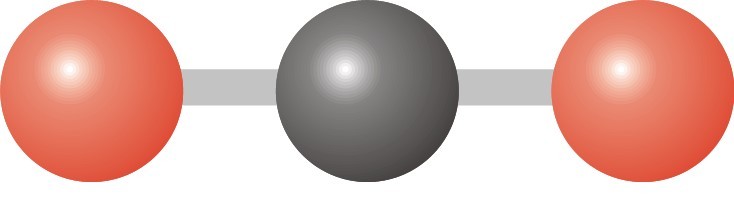
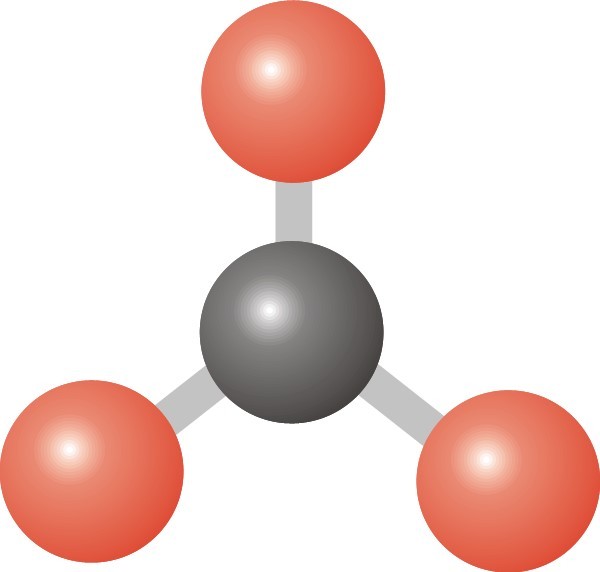
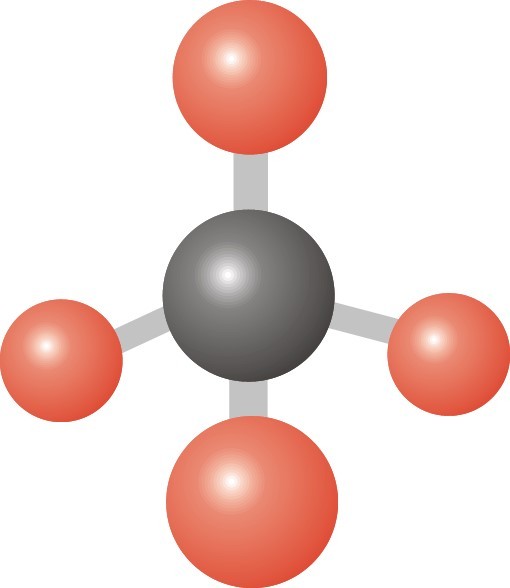
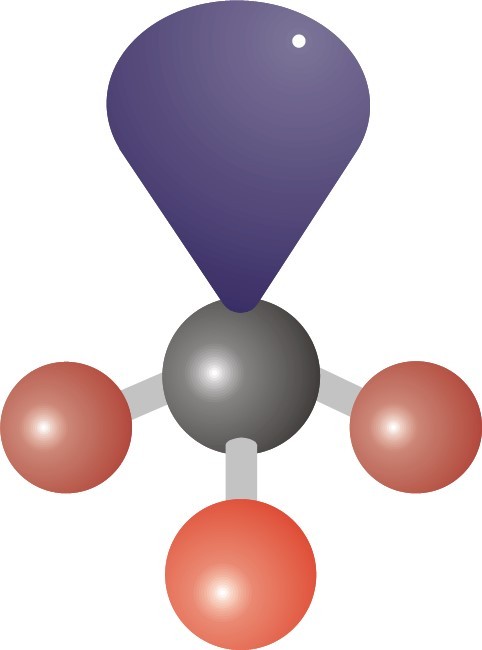
How many unshared pairs of electrons will a bent molecule have?
0
2
3
4

Is this molecule polar or non-polar?
Polar
Non-polar

Is this molecule polar or non-polar?
Polar
Non-polar

Is this molecule polar or non-polar?
Non-polar
Polar


Which of the following structures is correct for PCl5?



