
 Worksheets
Chemical Bonding
Total questions: 50
Worksheet time: 29mins

Look at the diagram. How many covalent bonds does each carbon atom form in graphite?
(a)

Look at the diagram. How many covalent bonds does each carbon atom form in diamond?
(a)
Tick the properties of diamond
Very hard
Slippery
Conducts electricity
Soft
Does not conduct electricity
Tick the properties of graphite
Very hard
Slippery
Conducts electricity
Soft
Does not conduct electricity
What type of bonding involves metals ONLY?
Ionic
Covalent
Metallic
What type of bonding involves metals and non-metals?
Ionic
Covalent
Metallic
What type of bonding would you expect to see in SODIUM CHLORIDE?
Ionic
Covalent
Metallic
What type of bonding would you expect to see in CARBON DIOXIDE?
Ionic
Covalent
Metallic
Which statement correctly explains why metals conduct electricity?
Metals contain sea of delocalised mobile valence electrons which can move throughout the structure
Metals contain ions which are free to move throughout the structure
Metals contain an electrical current
Metals are magnetic
Which statement correctly explains why ionic compounds conduct electricity as a LIQUID?
Ionic compounds contain delocalised valence electrons which can move throughout the structure
Ions are free to move
Ions are fixed in position
Ionic compounds contain an electrical current
Which statement correctly explains why ionic compounds DO NOT conduct electricity as a SOLID?
Ionic compounds contain delocalised valence electrons which can move throughout the structure
Ions are free to move
Ions are fixed in position
Ionic compounds are not magnetic
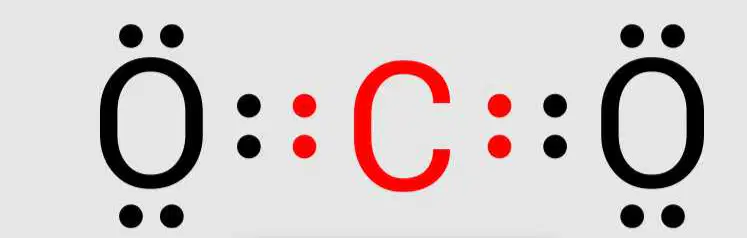
How many bonding pairs are present in this covalent molecule?
1
2
3
4
How are covalent bonds formed?
Pairs of valence electrons are shared
Valence electrons are transferred from one atom to another
Strong attraction between negative delocalised valence electrons and positive ions
How are ionic bonds formed?
Pairs of valence electrons are shared
Valence electrons are transferred from one atom to another
Strong attraction between negative delocalised valence electrons and positive ions
Which statement correctly explains why metals are easily bent and shaped?
The metal ions can be squashed
The metal ions can move
The metal ions are in layers which can slide over each other
The metal ions are all the same size
Which statement correctly explains why alloys are harder to shape than pure metals?
The metal ions can be squashed
The metal ions cannot move
The metal ions are in layers which can slide over each other
Different size metal ions disrupt the layers
What is an alloy?
Mixture of elements
Mixture of a metal and other elements
Pure metal
Mixture of metal and plastic
Which statement correctly explains why most covalent substances have low melting/boiling points?
There are strong electrostatic attractions
There are weak intermolecular forces
Covalent bonds are weak
There are no strong bonds
Which statement correctly explains why ionic compounds have high melting/boiling points?
There are strong electrostatic attractions
There are weak intermolecular forces
Ionic bonds are weak
There are strong intermolecular forces
What type of structure do ionic compounds have?
Small, simple molecules
Giant molecule
Giant lattice
Which ion is formed by sodium (Na)?
Na-
Na+
Na+7
Na-7
Which ion is formed by magnesium (Mg)?
Mg-
Mg+
Mg2+
Mg2-
Which ion is formed by Chlorine (Cl)?
Cl-
Cl+
Cl2+
Cl2-
Choose the correct words to complete the sentence:
Ionic compounds can conduct electricity when ____________ or ____________.
solid
aqueous (dissolved)
powdered
squashed
molten
Choose the correct words to complete the sentence:
Metals are excellent conductors of ___________ and _____________.
heat
water
electricity
light
Which of the following is a polyatomic ions?
sulfate
sulfur
nitrate
nitride
Which of the following is a polyatomic ions?
hydroxide
hydrogen ion
carbonate
carbon
Ammonium
Which elements consist of positive ions immersed in a "sea" of delocalised mobile valence electrons?
Sulfur
Nitrogen
Calcium
Chlorine
Iron
What does a single line represent in a structural formula?
Four valence electrons shared between adjacent atoms
Valence electrons that are transferred between atoms
A single bond, 2 valence electrons shared
A single bond, 4 valence electrons shared
Which of the following molecules is polar?
CH4
H2O
O2
CO2
How many electrons does P need to gain in order to attain a noble gas configurations?
5
4
3
8
Which of the following sets of atoms can be joined by a covalent bond?
Be and F
Na and Cl
S and Cl
Mg and Na
1. Why do atoms form ionic and covalent bonds?
to attain a noble-gas electron configuration
to increase their atomic numbers
to become ions to attract each other
to become more polar
How many electrons are shared in a double bond?
4
2
8
6
What happens in covalent bonds?
Electrons are transferred from cations to anions
Electrons are transferred from anions to cations
Electrons are shared in the inner electron layers
Valence electrons are shared between two atoms
MgO can conduct electricity in molten state because there are mobile (a) .
Aqueous zinc nitrate can conduct electricity because there are presence of ___________.
mobile valence electrons
mobile atoms
delocalised valence electrons
mobile ions
Ionic compounds can conduct electricity when they are melted into liquids because ___________________.
the strong covalent bonds between the atoms have been overcome, hence there are mobile atoms.
strong electrostatic attraction force between the anion and cation has been overcome, hence there are mobile valence electrons.
strong electrostatic attraction force between the anion and cation has been overcome, hence there are mobile ions
the strong covalent bonds between the atoms have been overcome, hence there are mobile valence electrons.
Graphite can conduct electricity because each carbon atom is bonded to (a) carbon atoms. Hence, each carbon atom only uses 3 out of 4 valence electrons for bonding. Thus, each carbon atom has 1 delocalised mobile valence electron to conduct electricity.
Graphite can conduct electricity because each carbon atom is bonded to three carbon atoms. Hence, each carbon atom only uses (a) valence electrons for bonding. Thus, each carbon atom has 1 delocalised mobile valence electron to conduct electricity.
Graphite can conduct electricity because each carbon atom is bonded to three carbon atoms. Hence, each carbon atom only uses 3 out of 4 valence electrons for bonding. Thus, each carbon atom has (a) delocalised mobile valence electron to conduct electricity.
Graphite can conduct electricity because each carbon atom is bonded to three carbon atoms. Hence, each carbon atom only uses 3 out of 4 valence electrons for bonding. Thus, each carbon atom has 1 delocalised mobile (a) to conduct electricity.
Diamond cannot conduct electricity because each carbon atom is bonded to (a) carbon atoms. Hence, each carbon atom uses all its valence electrons for bonding. Thus, there are no delocalised mobile valence electron to conduct electricity.
Diamond cannot conduct electricity because each carbon atom is bonded to four carbon atoms. Hence, each carbon atom uses all its valence electrons for bonding. Thus, there are no delocalised mobile (a) to conduct electricity.
Ammonia has lower melting point than diamond because less energy is required to overcome the weaker intermolecular attraction force between ammonia molecules than the strong covalent bonds between the ____________________________ in diamond.
carbon atoms
diamond atoms
carbon ions
carbon molecules
Ammonia has lower melting point than diamond because less energy is required to overcome the weaker intermolecular attraction force between _________________ than the strong covalent bonds between the C atoms in diamond.
nitrogen and hydrogen atoms
nitrogen and hydrogen molecules
ammonium ions
ammonia molecules
Ammonia has lower melting point than diamond because less energy is required to overcome the weaker intermolecular attraction force between ammonia molecules than the______________ between the carbon atoms in diamond.
strong electrostatic attraction force
strong intermolecular attraction force
strong covalent bonds
During melting of silicon dioxide, energy is used to overcome the strong covalent bonds between ________________.
silicon and dioxide molecules
silicon and oxide ions
silicon dioxide molecules
silicon and oxygen atoms
Sulfur dioxide has low melting point because little amount of energy is required to overcome the ___________________ between the _________________.
weak covalent bonds; S and O atoms
weak intermolecular attraction force; sulfur and oxygen molecules
weak intermolecular attraction force; sulfur dioxide molecules
weak covalent bonds; sulfur dioxide molecules
Calcium oxide has higher melting point than methane, CH4 because more energy is used to overcome the strong _________________ in CaO than the weak ______________ for methane.
electrostatic attraction force between Ca2+ and O2-; intermolecular attraction force between methane molecules
electrostatic attraction force between Ca and O; intermolecular attraction force between methane molecules
electrostatic attraction force between Ca2+ and O2-; intermolecular attraction force between C and H molecules
electrostatic attraction force between Ca2+ and O2-; covalent bonds between methane molecules

