
 Worksheets
Classification of Matter
Total questions: 51
Worksheet time: 26mins
The amount of space an object occupies
Mass
Volume
Length
Pressure
The amount of matter an object contains.
Volume
Mass
Pressure
Length
What phase of matter has an indefinite shape and a definite volume?
solid
liquid
gas
All of them

What phase of matter is shown in the picture?
Solid
Liquid
Gas

Physical or chemical?
Physical
Chemical

Physical or chemical?
Physical
Chemical

Physical or chemical?
Chemical
Physical

Physical or Chemical?
Physical
Chemical
NH3 is a:
Mixture
Element
Compound
Particle
Water and sugar dissolved is an example of:
Compound
Homogeneous mixture
Substance
Heterogeneous mixture
A chocolate chip cookie is an example of:
Substance
Compound
Homogeneous mixture
Heterogeneous mixture
What mixture is an heterogeneous mixture?
Soluble coffee in water
Sand and water
Perfume
Apple juice
The atmosphere is:
Mixture
Substance
Element
Compound

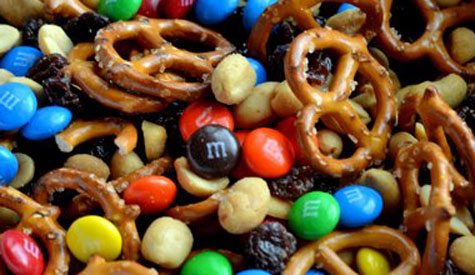
What is the classification of the following: gold, carbon, and hydrogen?
Compound
Mixture
Element
Solution
Which of the following is NOT a compound?
Acetic Acid
Seawater
Salt
Sugar
Which particle model represents a combination of two compounds?


Which particle model represents a combination of an element and a compound?
A mixture where heavy particles sink and settle on the bottom is called?
Homogeneous
Solution
Colloid
Suspension
A homogeneous mixture that has particles so small that they will never settle and do not scatter light
Compound
Solution
Colloid
Suspension
A homogeneous mixture that has particles large enough to scatter light but will not settle.
Compound
Solution
Suspension
Colloid
Any change is size, shape, or state of matter in which the identity of the substance remains the same.
Physical property
Physical Change
Chemical Property
Chemical Change
Which is an example of a physical property
Combustible
Rusts when exposed to environment
Melts and turns to a liquid at 100 degrees
Reacts with oxygen
Which is an example of a chemical property?
Freezes at 0 degrees
Magnetic
Flammable
Dissolves in water
Any characteristic of a substance that indicates whether it can undergo a certain chemical Change?
Physical Property
Chemical Property
Physical Change
Chemical Change
Which is an element?
NO
He
OH
CO
Which is a compound?
Ti
Fe
Zr
NO
The law of conservation of mass states that the mass of all substances present before chemical change________the mass of all substances present after the chemical change.
is greater than
is the same as
is less than
is twice as much as
The following statements describe a physical property EXCEPT one.
Ice melts when heated
Aluminum is a silver-colored metal
The density of water is 1g/cm3
An iron bar rusts
Blood is a fluid found in the bodies of humans and other animals. It can be physically separated into plasma, red blood cells and white blood cells. Blood is a ___________________
pure substance
mixture

TRUE or FALSE: In order to change the state of matter, you need increase or decrease the energy (heat).
TRUE
FALSE

TRUE or FALSE: The particles in solids move around a lot and spread out.
TRUE
FALSE

TRUE or FALSE: Liquids have a fixed volume but not a fixed shape.
TRUE
FALSE

TRUE or FALSE: Gases have the least kinetic energy out all 3 states of matter.
TRUE
FALSE

Phase change from liquid to gas is called:
Freezing
Condensation
Evaporation
Sublimation
Phase change from solid to gas is called:
Freezing
Condensation
Vaporization
Sublimation
Phase change from liquid to solid is called:
Melting
Freezing
Deposition
Condensation
Phase change from gas to liquid is called:
Melting
Freezing
Deposition
Condensation
Phase change from gas to solid is called:
Sublimation
Freezing
Deposition
Vaporization

When changing a substance from liquid to solid, the energy has to...
INCREASE
DECREASE
When changing a substance from gas to liquid, the energy has to...
INCREASE
DECREASE

Which of the following statements is NOT true about gases?
Gases do not have fixed shape or volume
Gas particles do not move much, but vibrate
Gas particles have a lot of free space
Unlike solids, gases can be compressed

Which of the following statements is true about liquids?
Particles do not move around much, but vibrate
Particles have a lot of free space and spread out
Liquids have fixed shape & volume
Particles are less closely packed than solids

Which of the following statements is true about solids?
Particles do not move around much, but vibrate
Particles have a lot of free space and spread out
Solids have fixed shape but not volume.
Particles are less closely packed than gas.

Look at the picture. Which state of matter is in beaker C?
Solid
Liquid
Gas
Blue thingys
Look at the picture. Which state of matter is in beaker A?
Solid
Liquid
Gas
Blue thingys

