wayground logo

Free Printable Worksheets

Font size

S
M
L
XL
Worksheets

Great Depression 2

Total questions: 35

Worksheet time: 35mins

Name
Class
Date
1.
The New Deal
a)
was a failure.
b)
created new jobs.
c)
only helped farmers.
d)
increased unemployment.
2.
What is the correct chronological order of these events?
1. The stock market crashed.
2. Franklin Roosevelt defeated Herbert Hoover
3. The economy of the United States went through a boom.
a)
3, 2, 1
b)
1, 2, 3
c)
3, 1, 2
d)
2, 1, 3
3.
The Great Depression caused many people to lose their money and their jobs.  In cities from New York to California, many people who had lost their homes did which of these?
a)
worked and saved their money
b)
went back to school
c)
became farmers
d)
built Hoovervilles
4.
Franklin D. Roosevelt wanted American citizens to feel that the economy would soon improve.  He developed programs such as the CCC, TVA, and WPA.  These programs became known as
a)
Social Security.
b)
the New Deal.
c)
minimum wage.
d)
Jim Crow laws.
5.
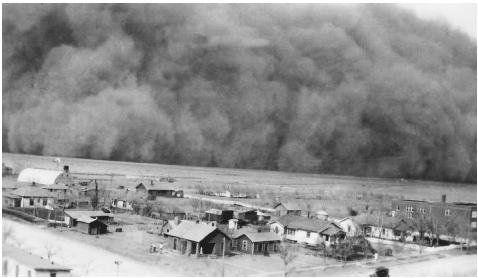
What does this list describe the effects of?
- People who have lost their homes leave the Great Plains for California.
- Crops are ruined, and farmers cannot pay back their debts.
- Migrant workers cannot find work because the farms have been destroyed.
a)
the Dust Bowl.
b)
Hoovervilles.
c)
the Roaring Twenties.
d)
Black Tuesday.
6.
What happened to bank customers in the 1930s?
a)
They earned interest on their savings accounts.
b)
They sold their shanties to the bank for a profit.
c)
Many of them lost their savings when banks closed.
d)
They asked the bank for loans to buy stocks.
7.
Who started the "New Deal" to help America recover from the Great Depression?
a)
Franklin Roosevelt
b)
Herbert Hoover
c)
Henry Ford
d)
Duke Ellington
8.
What happened in the early 1930s after the stock market crashed?
a)
Prohibition
b)
World War I
c)
the Great Depression
d)
the Harlem Renaissance
9.
The day the stock market crashed is known as:
a)
Black Monday
b)
Black Tuesday
c)
Black Wednesday
d)
Black Thursday
10.
FDR's plan to fix the American Economy was called:
a)
The New Deal
b)
Reaganomics
c)
Economic Injection
d)
The "band-aid" Solution
11.
Buying on margin means:
a)
buying stocks at a fraction of their price, with the promise of paying the rest later
b)
planning out your budget to make sure you have enough to get by
c)
Buying a few stocks from many companies to ensure profit
d)
Pouring all of your money into one stock in order to ensure profit
12.
This president was blamed for not doing enough during the Great Depression, so much so that shanty towns were named after him
a)
Hoover
b)
Roosevelt
c)
Wilson
d)
Polk
13.
This Image is used to describe:
a)
The failure of banks, causing people to lose their life savings
b)
How irresponsible people were with their money in the 20s
c)
How overspending had caused an economic collapse
d)
That buying on credit caused the stock market to crash
14.
Many organizations, such as the CCC and the SSA, were created to help Americans get back on their feet. These organizations were known as:
a)
Alphabet Soup
b)
The 3 Rs
c)
FDR's economic plan
d)
Economic Revitalization project
15.
October 29th, 1929
a)
Black Monday
b)
Black Tuesday
c)
Black Wednesday
d)
Black Friday
16.
President Hoover's philosophy that Americans must work harder to dig out of the depression.
a)
chicken in every pot
b)
rugged individualism
c)
Square Deal
d)
New Deal
17.
The Dust Bowl devastated what part of the U.S. during the Great Depression?
a)
West Coast
b)
New England
c)
Deep South
d)
Great Plains
18.
Which of the following DID NOT cause the Dust Bowl?
a)
overproduction
b)
windstorms
c)
drought
d)
tornadoes
19.
Which of the following was NOT a cause of the Great Depression?
a)
Hawley-Smoot Tariff
b)
Easy Credit
c)
Mistakes of the Federal Reserve
d)
high farm prices
20.
Buying stock without knowing the risks, assuming it will just go up is known as ________.
a)
speculation
b)
buying on margin
c)
market capitalization
d)
hammering the market
21.
Who are these people?
a)
hoboes
b)
immigrants
c)
tourists
d)
carpet baggers
22.
When people went to the bank to withdraw their money and the banks had no money was known as the 
a)
Bank Crisis 
b)
Black Tuesday
c)
Stock Market Crash
d)
New Deal 
23.
What effect did the Dust Bowl storms have on the Great Depression?
a)
Many farmers were forced to leave the Great Plains.
b)
Unemployment decreased gradually.
c)
Many homes long the Mississippi River were flooded.
d)
Hoover was re-elected as president.
24.
The Bonus Army incident in 1932 best illustrates the idea that
a)
F.D.R.'
s relief programs were unsuccessful.
b)
many felt that Herbert Hoover was not handling the Depression well.
c)
protests by veterans during the Depression were effective.
d)
the U.S. Army had increased in size and power during the Depression.
25.

The 1920s was a decade known as....

a)

The Roaring Lions

b)

The Roaring Years

c)

The Roaring Days

d)

The Roaring 20's

26.

On which day did people lose a lot of cash when the stock market crashed?

a)

October 31, 1929

b)

May 7, 1929

c)

January 14, 1929

d)

October 29, 1929

27.

What was the time span of The Great Depression?

a)

1929-1939

b)

1929-1937

c)

1929-1944

d)

1929-1911

28.

A drought hit which region of the US?

a)

The southwestern Great Plains

b)

The northern mountains.

c)

The western farming communities.

d)

The northwestern Great Plains.

29.

What was the WPA?

a)

The Worker's Protected Administration

b)

The Worker's Probation Administration

c)

The Works Progressive Administration

d)

The Works Progress Administration

30.

How did the WPA help with employment?

a)

It employed millions to work in factories.

b)

It employed millions to build public buildings.

c)

It employed millions to work for car companies.

d)

It employed millions to work for the military.

31.

What did the Social Security Act guarantee?

a)

Pensions for retired elderly.

b)

Unemployment pay for those who lost their job.

c)

Both options.

d)

Neither options.

32.

Which war had the US gotten out of before The Great Depression?

a)

World War II

b)

World War I

c)

Viet Nam

d)

World War Z

33.

Which war did the US enter when The Great Depression was over?

a)

The Viet Nam War

b)

The Korea War

c)

The Star Wars

d)

World War II

34.
The most popular home appliance in the 1930's 
a)
Television
b)
Radio
c)
Movies
d)
Telephone 
35.
The name given to the programs enforced by FDR to ensure relief, recovery and reform. 
a)
Stock Market 
b)
Great Depression
c)
Margin 
d)
New Deal