wayground logo

Free Printable Worksheets

Font size

S
M
L
XL
Worksheets

U.S. Government Review

Total questions: 110

Worksheet time: 1hrs 16mins

Name
Class
Date
1.
What are the first ten amendments to the Constitution called?
a)
the Preamble
b)
the Constitution
c)
the Articles of Confederation
d)
the Bill of Rights
2.
What system did the framers of the Constitution use to make sure that no one branch of government would become too strong?
a)
Checks and Balances
b)
Judicial Branch
c)
National and Local
d)
Executive Branch
3.

What is the purpose of the judicial branch?

a)

Enforce laws

b)

Make laws

c)

Interpret laws

d)

Throw out laws

4.

What is the purpose of the legislative branch?

a)

Make laws

b)

Throw out laws

c)

Enforce laws

d)

Decide what laws mean

5.

What is the purpose of the executive branch?

a)

Decide what laws mean

b)

Throw out laws

c)

Make laws

d)

Enforce laws

6.
Which of the following is found at the beginning of the Constitution?
a)
Pretest
b)
 Preamble
c)
Preface
d)
Preparatory
7.
How does the Bill of Rights limit our government’s power? 
a)
It gives the government power.
b)
It keeps the government from having too much power.
c)
It gives the president more power.
d)
It keeps the people from having too much power.
8.
Which is true of the executive branch?
a)
The executive branch can veto bills or sign into the law.
b)
The executive branch can declare a law unconstitutional.
c)
The executive branch approves federal judges.
d)
The executive branch declare presidential acts unconstitutional.
9.
Which is true of the judicial branch? 
a)
The judicial branch has the power to appoint judges. 
b)
The judicial branch can override vetoes with a two-thirds vote. 
c)
The judicial branch can declare a law unconstitutional. 
d)
The judicial branch has the power to impeach the president.
10.
Articles Of Confederation
a)
Weak U.S. Constitution, State Power
b)
Strong Federal Government
c)
Bill Of Rights
d)
James Madison
11.
Territories To States, Population Of 60,000
a)
U.S. Constitution
b)
Northwest Ordinance
c)
Virginia Plan
d)
Treaty Of Paris (1763)
12.
Virginia Plan
a)
Equal Representation
b)
2 Houses Of Congress
c)
5 Slaves=3 Free People For Representation
d)
Representation By State Population
13.
Patrick Henry, George Mason, Demanded Bill Of Rights
a)
Federalists
b)
Loyalists
c)
Anti-Federalists
d)
Democratic-Republicans
14.
Laws Made By Elected Representatives
a)
Federalism
b)
Republicanism
c)
Separation Of Powers
d)
Limited Government
15.
2/3 Congress, 3/4 States
a)
Article 1
b)
Northwest Ordinance
c)
Amendment Process
d)
Electoral College
16.
No Quartering Of Soldiers
a)
3rd Amendment
b)
5th Amendment
c)
7th Amendment
d)
9th Amendment
17.
6th Amendment
a)
Self-Incrimination
b)
Lawsuits, Civil Cases
c)
No Cruel Or Unusual Punishment
d)
Fair & Speedy Trial By Jury
18.
State Powers
a)
10th Amendment
b)
9th Amendment
c)
4th Amendment
d)
5th Amendment
19.

5th Amendment

a)

Fair & Speedy Trial By Jury

b)

Due Process, Rights of the Accused, No double jeopardy

c)

No Unreasonable Searches & Seizures

d)

Unwritten Individual Rights

20.
Federal & State Power Divided
a)
Federalism
b)
Checks & Balances
c)
Republicanism
d)
Popular Sovereignty
21.
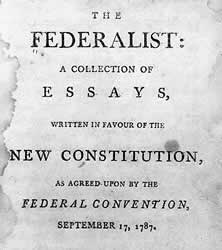
Persuaded Americans To Ratify The New Constitution
a)
Common Sense
b)
Articles Of Confederation
c)
Federalist Papers
d)
New Jersey Plan
22.
The Great Compromise
a)
Equal Representation
b)
2 Houses Of Congress, Roger Sherman
c)
Representation By State Population
d)
California=Free, Utah & NM=Vote
23.
5 Slaves=3 Free People For Representation
a)
The Great Compromise
b)
Missouri Compromise
c)
3/5 Compromise
d)
Compromise Of 1850
24.
James Madison
a)
Wrote Declaration Of Independence
b)
The Great Compromise
c)
President Of Continental Congress
d)
Wrote U.S. Constitution
25.
Popular Sovereignty
a)
People Power, Consent Of The Governed
b)
Federal & State Power Divided
c)
Unalienable Rights
d)
Laws Made By Elected Representatives
26.
Equal Representation
a)
First Great Awakening
b)
New Jersey Plan
c)
Virginia Plan
d)
13th Amendment
27.
8th Amendment
a)
No Unreasonable Searches & Seizures
b)
Unwritten Individual Rights
c)
No Cruel Or Unusual Punishment
d)
No Quartering Of Soldiers
28.
Limitations on Bail and Punishments
a)
Amendment 3
b)
Amendment 5
c)
Amendment 8
d)
Amendment 10
29.
Unecessary Search and Siezures
a)
Amendment 4
b)
Amendment 1
c)
Amendment 9
d)
Amendment 6
30.
Freedom of Religion, Speech, Press, Petition, and Assembly
a)
Amendment 9
b)
Amendment 3
c)
Amendment 1
d)
Amendment 10
31.
Powers reserved for the states
a)
Amendment 9
b)
Amendment 10
c)
Amendment 2
d)
Amendment 4
32.
Rights of the Accused
a)
Amendment 6
b)
Amendment 7
c)
Amendment 8
d)
Amendment 5
33.
Who is known as the "father" of the Constitution?
a)
George Washington
b)
George Mason
c)
John Adams
d)
James Madison
34.
This Amendment protects your right to own a firearm
a)
7th
b)
1st
c)
2nd
d)
10th
35.
Which is NOT a duty of the Judicial Branch?
a)
to make laws
b)
to judge the fairness of the laws
c)
to interpret the laws
d)
to settle disputes about laws
36.
What city is the location of the federal government of the USA?
a)
Philadelphia, PA
b)
Harrisburg, PA
c)
Washington, D.C.
d)
New York City, NY
37.
The President must ask Congress for a declaration of war in order for the USA to go to war.  This is an example of which principle?
a)
separation of powers
b)
checks and balances
c)
majority rules
d)
preserving the rights of the minority
38.
What was the 3/5 compromise about during the Constitutional Convention?
a)
Ratifying new amendments
b)
Representation in Congress for slave states.
c)
Senate Filibuster rules
d)
Creating new states out of territories
39.
The Northwest Ordinance provided a pathway for territories to apply for
a)
statehood
b)
federal funding
c)
infrastructure grants
40.
What part of the present government comes from the New Jersey Plan?
a)
House of Representatives
b)
The Senate
c)
The Supreme Court
d)
The Cabinet
41.

People choose

a)

Federalism

b)

Individual Rights

c)

Republicanism

d)

Popular Sovereignty

42.

President vetoes a bill from Congress

a)

Federalism

b)

Checks and balances

c)

Republicanism

d)

Popular Sovereignty

43.

Voting for representatives

a)

Federalism

b)

Checks and balances

c)

Republicanism

d)

Popular Sovereignty

44.

The President of the United States represents which branch of government?

a)

Judical

b)

legislative

c)

international

d)

executive

45.

The congress of the United States represents which branch of government?

a)

Judicial

b)

legislative

c)

international

d)

executive

46.

The Supreme Court of the United States represents which branch of government?

a)

Judicial

b)

legislative

c)

international

d)

executive

47.

Who was in favor for a strong central government?

a)

Federalist

b)

Anti-Federalist

48.

The ___________ are for the ratification (approval) of the U.S Constitution.

a)

Federalists

b)

Anti-Federalists

c)

Whiggs

d)

Representatives

49.

The ___________ are NOT for the ratification (approval) of the U.S Constitution.

a)

Anti-Federalists.

b)

Federalists.

c)

Whiggs.

d)

Supreme Court Justices.

50.

The "Federalist Papers" were written to:

a)

Explain and convince the people into supporting the new U.S Constitution.

b)

spark a new revolution among the American people against their government.

c)

oppose a strong centralized government.

d)

create a new monarchy.

51.

Anti-Federalists were in favor of:

a)

States Rights and the protection of individual rights.

b)

A strong Central Government.

c)

A Monarchy (King & Queen) to rule over the country.

d)

a powerful National Government

52.

Who was the leader of the Anti-Federalists?

a)

George Mason

b)

George Washington

c)

George Bush

d)

Patrick Henry

53.

How did the Federalists and Anti-Federalists "compromise" to ratify (approve) the U.S Constitution?

a)

The added the Bill of Rights (First 10 Amendments)

b)

They outlawed cruel and unusual punishment.

c)

Ensured due process of the law.

d)

The Federalists threatened the Anti-Federalists to war.

54.

What state is this?

a)

Massachussetts

b)

Washington

c)

Montana

d)

Nebraska

55.

What state is this?

a)

Georgia

b)

Louisiana

c)

Florida

d)

Alabama

56.

What state is this?

a)

Hawaii

b)

Alaska

c)

Florida

d)

Texas

57.

What state is this?

a)

Florida

b)

Georgia

c)

Alabama

d)

California

58.

What state is this?

a)

Georgia

b)

Alabama

c)

New York

d)

California

59.

What state is this? (see little red dots to the side of map)

a)

Florida

b)

Puerto Rico

c)

Hawaii

d)

Bermuda

60.

What state is this?

a)

New York

b)

Alaska

c)

Texas

d)

Pennsylvania

61.

What state is this?

a)

Alaska

b)

Mississippi

c)

Alabama

d)

Texas

62.

What state is this?

a)

Rhode Island

b)

Colorado

c)

Pennsylvania

d)

New York

63.

What state is this?

a)

Florida

b)

Minnesota

c)

Louisiana

d)

Iowa

64.

What state is this?

a)

New York

b)

New Hampshire

c)

New Jersey

d)

New England

65.

What state is this?

a)

Missouri

b)

Maine

c)

Hawaii

d)

Kansas

66.

What state is this?

a)

Missouri

b)

Maine

c)

Hawaii

d)

Kansas

67.

What state is this?

a)

Missouri

b)

Maine

c)

Wisconsin

d)

Kansas

68.

What state is this?

a)

Missouri

b)

Washington

c)

Wisconsin

d)

Kansas

69.

What state is this?

a)

Missouri

b)

Washington

c)

Wisconsin

d)

Oregon

70.

What state is this?

a)

Arizona

b)

Washington

c)

Wisconsin

d)

Oregon

71.

What state is this?

a)

Arizona

b)

Nevada

c)

Wisconsin

d)

Oregon

72.

What state is this?

a)

Arizona

b)

Utah

c)

Wisconsin

d)

Oregon

73.

What state is this?

a)

Arizona

b)

Utah

c)

Idaho

d)

Oregon

74.

What state is this?

a)

Arizona

b)

Utah

c)

Montana

d)

Oregon

75.

What state is this?

a)

Wyoming

b)

Utah

c)

Montana

d)

Oregon

76.

What state is this?

a)

Wyoming

b)

Utah

c)

Montana

d)

New Mexico

77.

What state is this?

a)

Wyoming

b)

Oklahoma

c)

Montana

d)

New Mexico

78.

What state is this?

a)

Wyoming

b)

Oklahoma

c)

South Dakota

d)

New Mexico

79.

What state is this?

a)

Wyoming

b)

Oklahoma

c)

North Dakota

d)

New Mexico

80.

What state is this?

a)

Wyoming

b)

Oklahoma

c)

North Dakota

d)

Minnesota

81.

What state is this?

a)

Missouri

b)

Oklahoma

c)

North Dakota

d)

Minnesota

82.

What state is this?

a)

Arkansas

b)

Oklahoma

c)

North Dakota

d)

Minnesota

83.

What state is this?

a)

Arkansas

b)

Louisiana

c)

North Dakota

d)

Minnesota

84.

What state is this?

a)

Arkansas

b)

Louisiana

c)

North Dakota

d)

Michigan

85.

What state is this?

a)

Arkansas

b)

Louisiana

c)

Illinois

d)

Michigan

86.

What state is this?

a)

Arkansas

b)

Louisiana

c)

Indiana

d)

Michigan

87.

What state is this?

a)

Ohio

b)

Louisiana

c)

Indiana

d)

Michigan

88.

What state is this?

a)

Ohio

b)

Louisiana

c)

Indiana

d)

Kentucky

89.

What state is this?

a)

Ohio

b)

Tennessee

c)

Indiana

d)

Kentucky

90.

What state is this?

a)

Ohio

b)

Tennessee

c)

Mississippi

d)

Kentucky

91.

What state is this?

a)

Alabama

b)

Tennessee

c)

Mississippi

d)

Kentucky

92.

What state is this?

a)

Alabama

b)

South Carolina

c)

Mississippi

d)

Kentucky

93.

What state is this?

a)

Alabama

b)

North Carolina

c)

Mississippi

d)

Kentucky

94.

What state is this?

a)

Alabama

b)

North Carolina

c)

Virginia

d)

Kentucky

95.

What state is this?

a)

Alabama

b)

North Carolina

c)

West Virginia

d)

Kentucky

96.

What state is this?

a)

Alabama

b)

North Carolina

c)

West Virginia

d)

Pennsylvania

97.

What state is this?

a)

Vermont

b)

North Carolina

c)

West Virginia

d)

Pennsylvania

98.

What state is this?

a)

Vermont

b)

New Hampshire

c)

West Virginia

d)

Pennsylvania

99.

What state is this?

a)

Vermont

b)

New Hampshire

c)

West Virginia

d)

Massachusetts

100.

What state is this?

a)

Vermont

b)

New Hampshire

c)

West Virginia

d)

Rhode Island

101.

What state is this?

a)

Connecticut

b)

New Hampshire

c)

West Virginia

d)

Rhode Island

102.
What state is this?
a)
Delaware
b)
New Hampshire
c)
West Virginia
d)
Rhode Island
103.

What state is this?

a)

Delaware

b)

New Hampshire

c)

Maryland

d)

Rhode Island

104.

Which mountain range is depicted here?

a)

Sierra Nevada Mountains

b)

Rocky Mountains

c)

Himalayas

d)

Appalachian Mountains

105.

The river that borders between Texas and Mexico is known as:

a)

Ohio River

b)

Mississippi River

c)

Rio Grande River

106.

The body of water surrounding southern states and Mexico is known as:

a)

the Mississippi River

b)

The Pacific Ocean

c)

The Gulf of Mexico

107.

Which colonial region are the blue colonies?

a)

New England

b)

Middle Colonies

c)

Southern Colonies

108.

Which colonial region are the green colonies?

a)

New England

b)

Southern Colonies

c)

Middle Colonies

109.

Which colonial region are the pink colonies?

a)

Southern Colonies

b)

New England colonies

c)

Middle Colonies

110.

Which geographic feature is being depicted?

a)

Appalachian Mountains

b)

Great Plains

c)

Mississippi River

d)

Eerie Canal