
 Worksheets
Renaissance / Reformation / Scientific Revolution WH
Total questions: 109
Worksheet time: 54mins

What does the word "Renaissance" mean?
Renewed
Rebuilt
Remade
Rebirth

The Sistine Chapel was painted by...
Michalangelo
Albrecht Durer
Miguel Cervantes
Leonardo DaVinci

Which of the following is associated with Humanism (focus on the individual)?
the ideas of the middle ages
the ideas of Greece & Rome
the ideas of ancient China
the ideas of ancient India

What was the time in history when the Roman Catholic Church was questioned?
Middle Ages
Industrial Revolution
Reformation
The Great Trek

How did the invention of the printing press help the Reformation?
Bibles printed allowed more people to read them.
People could read translations of the Bible in their language.
It allowed reformers to spread their ideas.
All of the Above

Invented the telescope; proved Copernicus' theory.
da Vinci
Michelangelo
Galileo
Copernicus

______ is an art technique used during the Renaissance to give depth/dimension.
sfamato
marble
fresco
perspective

Martin Luther believed all of the following EXCEPT?
taught people could talk directly with God
read the Bible on your own
against selling of indulgences/excommunication
Counter Reformation
95 Theses, Protestantism & Calvinism support which of the following?
Reformation
Counter Reformation
Marxism
Imperialism
The Counter Reformation, Council of Trent & Diet of Worms supported which of the following?
Martin Luther
Catholic Church
Which factor contributed to the beginning of the Renaissance in Italian cities?
occupation by foreign powers
interaction with Latin America
surplus of porcelain from Japan
location near important trade routes
A direct impact that the printing press had on 16th-century Europe was that it encouraged the
spread of ideas
beginnings of communism
establishment of democracy
development of industrialization
Which period in European history is most closely associated with Leonardo da Vinci, Michelangelo, William Shakespeare, and Nicolaus Copernicus?
Early Middle Ages
Renaissance
Age of Absolutism
Enlightenment
17th-century scholars Nicolaus Copernicus and Galileo Galilei faced serious challenges to their scientific theories because their ideas
were based on the Bible
contradicted traditional medieval Christian beliefs
relied only on teachings from non-Christian cultures
were not supported by scientific investigations
The Heliocentric Model believes that
Earth rotates on axis and orbits around the sun
Earth is center of universe
There is no center of universe
There are no other planets than planet Earth
Which individual is correctly paired with an individual who further developed his ideas?
Pope Urban II → Martin Luther
Nicolaus Copernicus → Galileo Galilei
Hernando Cortez → Simón Bolívar
Louis XVI → Maximilien Robespierre
Which pair of ideas were central to the Scientific Revolution?
social stability and economic self-sufficiency
observation and experimentation
technology and military expansion
scarcity and interdependence
Which statement about the Scientific Revolution in Europe is accurate?
The existence of natural laws was rejected.
Scientists questioned traditional beliefs about the universe.
New ideas supported the geocentric theory of Ptolemy.
The Bible was used to justify new scientific findings.
One similarity between Martin Luther, Henry VIII and Galileo is that they
argued against the establishment of a theocratic state
protested against the ideas of the Enlightenment
died during the Reign of Terror
challenged the teachings of the Catholic Church
What was the most important force in providing unity and stability throughout western Europe during the Middle Ages?
Church
nobility
inquisition
military
Which book became most widely printed shortly after the arrival of the movable type printing press to Europe?
The Da Vinci Code
The Bible
The Torah
The Koran
Who invented the printing press?
Francis Bacon
Isaac Newton
Johannes Gutenberg
Martin Luther
Who got mad and created the Church of England when the Pope denied his annulment?
Michelangelo
King Henry VIII
John Calvin
da Vinci
True or False?
Martin Luther protested against the practice of selling indulgences by the Catholic Church.
True
False
True or False?
One result of the Protestant Reformation is the power of the church strengthened.
True
False
True or False?
Art from the Renaissance contains more realistic images than art from the Middle Ages.
True
False

Which of these famous structures did Michelangelo paint?
the Louvre
the Coliseum
the Sistine Chapel
the Eiffel Tower
Which of these men of the Renaissance was known equally for his art as well as inventions?
Rueben
Leonardo da Vinci
Michelangelo
Aristotle
• Nicolaus Copernicus
• Galileo Galilei
• Tycho Brahe
• Johannes Kepler
All of the above were famous Renaissance
philosophers.
priests.
artists.
scientists.
Which of these changes occurred during the Renaissance?
The Church was all-powerful.
The Church’s power declined.
Factories began using electricity.
Women gained equal rights with men.
In Rousseau's The Social Contract, he expressed his belief that
a child was a small adult with all the same abilities and obligations.
the individual's will is the most important.
government was necessary to protect the rights of its citizens, but may be overthrown.
government was an evil that should be totally eliminated.


Who sculpted the 14-foot marble David?
Raphael
Leonardo da Vinci
Michelangelo
Donatello

Who painted The School of Athens?
Donatello
Michelangelo
Leonardo da Vinci
Raphael

Who painted The Last Supper?
Leonardo da Vinci
Donatello
Michelangelo
Raphael

Where is The Creation of Adam located?
Uffizi Gallery
Galeria Borghese
Sistine Chapel
Guggenheim Museum

What was one of John Calvin’s major teachings?
Adult baptism
Indulgences
Humanism
Predestination
If someone is devious and ruthless, especially in politics, they might be called
Antagonistic
Philosophical
Belligerent
Machiavellian
In what country did the Renaissance start?
Italy
Greece
France
Germany
Which is NOT a reason the Renaissance began in Italy?
Rich trading ports
They never had the Black Plague
Wealthy city states could support arts
Home to Rome, which everyone was trying to copy
Which was NOT a characteristic of Renaissance art?
More secular subjects than before
More focus on perspective than before
More realistic human figures than before
More religious subjects than before
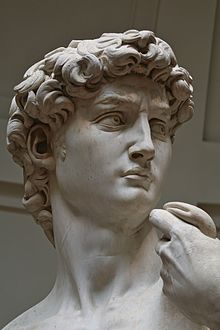
This work by Michelangelo is called what?
Michael
Noah
David
Vitruvius

This painting was done by which artist?
Donatello
Raphael
da Vinci
Michelangelo
The fact that the "School of Athens" painting features Plato and Aristotle, and Greek and Roman architecture is an example of....
Cynicism
Classicism
Individualism
Polytheism
Which of these was the PRIMARY intellectual movement of the Renaissance?
Secularism
Humanism
McCarthyism
Classicism
You need someone to finance your artwork. You need a...
Patron
Banker
Professor
Financial analyst
Who said "The end justifies the means"?
Medici
Donatello
Machiavelli
Castiglone
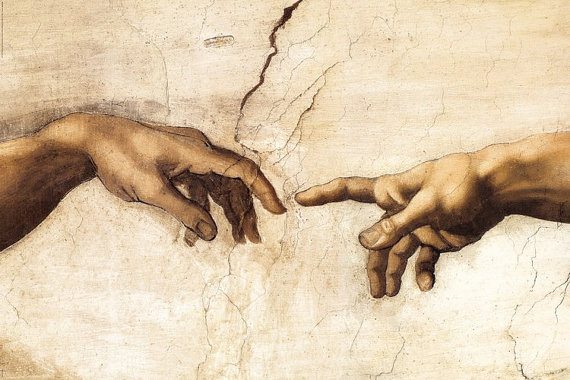
You would find this painting by Michelangelo on the ceiling of what building?
The Metropolitan Museum of Art
The Louvre
The US Capitol
Sistine Chapel
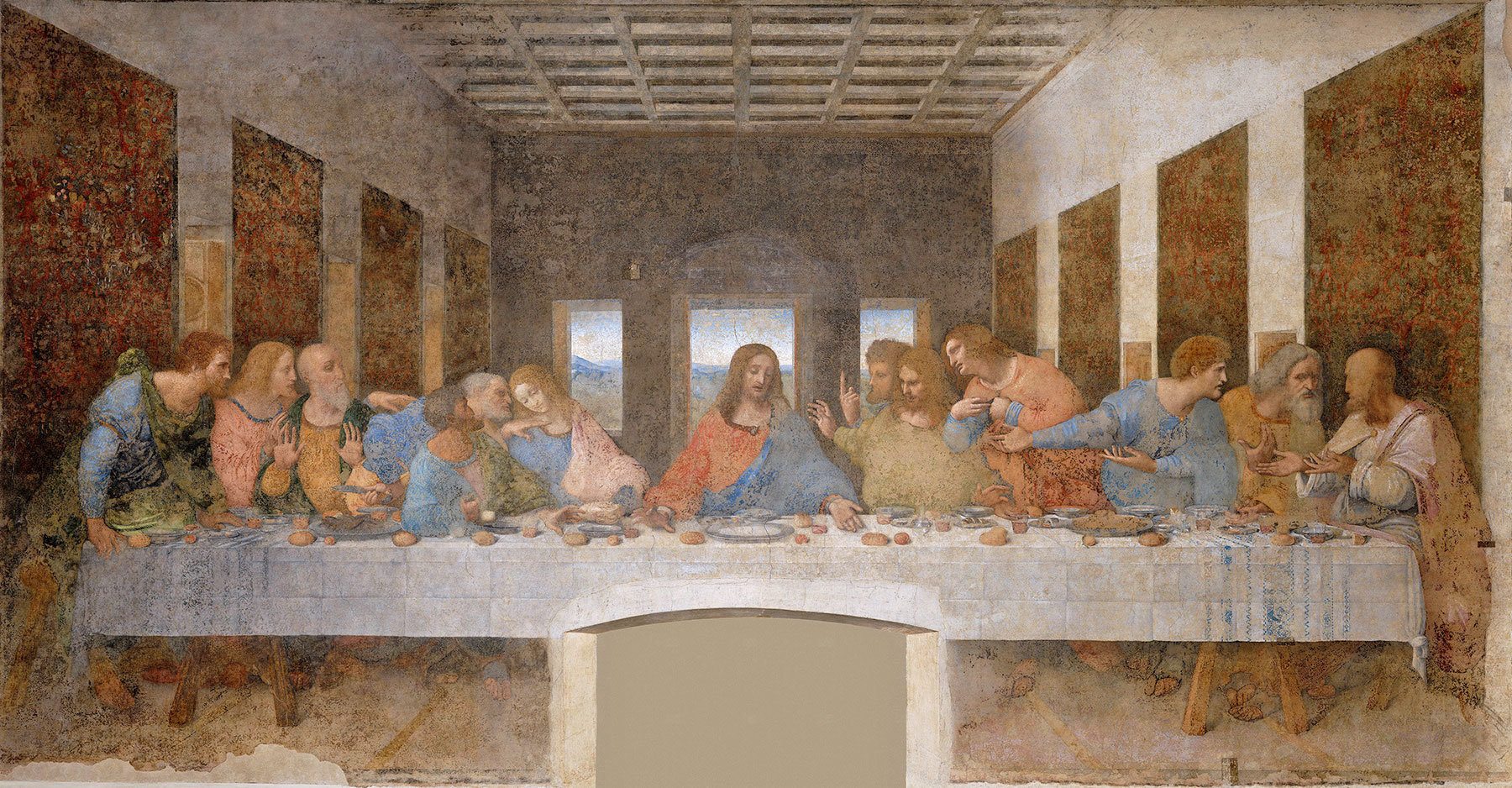
In this painting, the large area in the foreground (front) shrinks down to the smaller area in the back, giving it dimension. This is an example of....
Secularism
Perspective
Water color techniques
Pointilism

Which Italian city is the BIRTHPLACE of the Renaissance
Rome
Florence
Milan
Naples

Who was the founder of a powerful banking family
Niccolo Machiavelli
Lorenzo di Medici
Galileo
Queen Elizabeth
Which family, known primarily for banking, ruled Florence during the Renaissance?
the Medici
the Capulet
the Scala
the Montague

Humanism
Concerned with worldly rather than spiritual matters
focus on human potential and achievement
Art technique that recreates three dimensions
Use of Native Language instead of classical Latin

Secular
Concerned with worldly rather than spiritual matters
focus on human potential and achievement
Art technique that recreates three dimensions
Use of Native Language instead of classical Latin

Perspective
Concerned with worldly rather than spiritual matters
focus on human potential and achievement
Art technique that recreates three dimensions
Use of Native Language instead of classical Latin

People who are involved in buying products to sell to the public are called
bankers
merchants
industrialists
workers

Petrarch is known for
painting bible scenes
writing love poetry
writing about how to be a strong political leader
great scientist who studied stars and planets

Galileo is known for
painting bible scenes
writing plays about history, comedy and drama
writing about how to be a strong political leader
great scientist who studied stars and planets
a period of rapid scientific discoveries and changes
Theory
Scientific Revolution
Heliocentric
Expansion
Name of the oval path a planet takes around the Sun.
Science
Pope
Reason
Ellipse
a systematic way to find proof using reason
Theory
Scientific Method
Geocentric
Heresy
leader of the Roman Catholic Church
Pope
Heliocentric
Geocentric
Theory
earth centered
Geocentric
Heliocentric
Precentric
Subcentric
sun centered
Geocentric
Heliocentric
Subcentric
Precentric
an opinion opposed to (against) the church
Heresy
Theory
Science
Reason
proposed explanation of the facts
Scientific Method
Theory
Reason
Science

1. Ask a question
2. Form a hypothesis
3. Experiment to test hypothesis
4. Analyze data
5. Draw a conclusion
What was the result of the Scientific Revolution?
advancements in the theories and teachings of the Roman Catholic Church
Advancements made in science and math
Supports previous thought processes and studies
Expanded on beliefs in faith
Johannes Kepler said that the planets rotated around the sun in what shape?
Oval
Circle
Square
Pentagon
Galileo improved what invention that was used to look further into space?
Quadrant
Telescope
Sail
What is an astronomer?
Someone who studies landscapes
Someone who studies books
Someone who studies the stars and planets
Someone who studies history
Issac Newton discovered what?
Cheese
Gravity
Scientific Method
Astronomy
Francis Bacon argued that the truth could not be known at the beginning of a question, but only at the end after a long process of?
investigation
waiting
conspiring
formulating
Andreas Vesalius wrote a book on what?
astronomy
scientific method
water
human anatomy
Which Northern European Renaissance writer would have most appreciated the printing revolution for eventually allowing everyday people to purchase and read their own copies of the Bible?
Desiderius Erasmus
William Shakespeare
François Rabelais
Sir Thomas More
Mona Lisa

