
 Worksheets
Common Assessment #2
Total questions: 111
Worksheet time: 3hrs 34mins
Many colonists were angered by the Proclamation of 1763 because it
took too much land from Canada
gave Florida to the French
limited their freedom to move west
encouraged raids by Native American Indians
“. . . We hold these truths to be self-evident, that all men are created equal, that they are endowed by their Creator with certain unalienable rights, that among these are life, liberty, and the pursuit of happiness. . . . ”
Which document contains these words?
Mayflower Compact
Treaty of Paris
Emancipation Proclamation
Declaration of Independence
The British government established the Proclamation Line of 1763 mainly to
avoid conflicts with Native American Indians
promote the fur trade
expand the thirteen colonies
provide access to the Mississippi River
The British system of mercantilism was designed to
close Boston Harbor to trade
favor the economic interests of Great Britain
encourage trade outside the British Empire
prevent local elections in the thirteen colonies

What is the main idea of this illustration?
The colonists were restricted by the laws passed by the British government.
Repeal of unpopular laws was the only way out of the stocks.
King George III put many American colonists in stocks.
The King of England wanted the colonists to have a greater voice in government.
What was the major effect of the Stamp Act (1765) on colonial trade?
The British refused to sell certain products to the colonists.
The law led to a decline in the value of colonial currency.
The colonists no longer needed British goods.
Many colonists boycotted British goods.
- Statement of the natural rights of life, liberty, and the pursuit of happiness
- Statement of grievances committed by Britain
- Establishment of the United States of America
Which document is associated with these actions?
Albany Plan of Union
Constitution of the United States
Articles of Confederation
Declaration of Independence
Who wrote most of the Declaration of Independence?
John Adams
Patrick Henry
Benjamin Franklin
Thomas Jefferson
Where was the first battle of the American Revolution fought?
Valley Forge
Saratoga
Lexington
Yorktown
In the American colonies, boycotts were an effective way of protesting British policies mainly because the boycotts
ended trade within the colonies
forced Britain to remove most troops
kept out products from other European nations
caused economic hardships for British Merchants

The main goal of most of the policies shown in the illustration was to
allow American colonists greater self government
enable Great Britain to impose new taxes and control trade
encourage immigration to the colonies
encourage Americans to trade with other European countries

Which conclusion is best supported by the chart?
The Stamp Act led to widespread smuggling.
The colonists reacted to British laws in a nonviolent way.
British policies were opposed by many colonists.
Colonists raised revenue by imposing new taxes.

The series of events shown in the chart led directly to the
start of the French and Indian War
outbreak of the American Revolution
formation of a colonial alliance with Prussia
rejection of the Albany Plan of Union
Which statement represents one of the main ideas in the Declaration of Independence?
The United States needs a strong central government.
People have a right to rebel against an unjust government.
Americans cannot afford to pay high British taxes.
The power of the president must be limited by the legislative and judicial branches.
What was a result of the French and Indian War that led directly to the American Revolution?
England decided to make the American colonists help pay war debts.
Native American Indians were given lands west of the Appalachians.
French colonies expanded west of the Appalachians.
The British lost most of their colonies in the Americas.
The belief that colonies exist to benefit the economy of the mother country is known as
nativism
free trade
mercantilism
triangular trade
The main purpose of mercantilism laws passed by England was to
limit the size of ships in English waters
ensure that England benefited from colonial trade
train sailors for the British navy
limit manufacturing in colonial America
What was the primary purpose of the Declaration of Independence?
to persuade England to end slavery in America
to list reasons the colonies should be free from England
to provide a plan for financing the American Revolution
to convince the king to grant colonists more land
Colonial boycotts of British goods before the Revolutionary War were effective measures because they
reduced the profits of British merchants
lowered the prices of imported products
left British troops short of supplies in the colonies
allowed the Americans to start their own factories
The slogan “No taxation without representation” referred to taxes enacted by
colonial legislators
town meetings
the English Parliament
the First Continental Congress
Which set of events is in the correct chronological order?
Boston Tea Party → Declaration of Independence → French and Indian War
French and Indian War → Boston Tea Party → Declaration of Independence
French and Indian War → Declaration of Independence → Boston Tea Party
Declaration of Independence → French and Indian War → Boston Tea Party
Which patriot was the leader of the Sons of Liberty?
Patrick Henry
Benjamin Franklin
George Washington
Samuel Adams
Many American colonists believed that British tax laws were unfair because
colonists lacked representation in Parliament
taxes were higher in the colonies than in England
the British treasury had a surplus of funds
Native American Indians were exempt from British tax laws
What was one purpose of the Declaration of Independence?
to establish a framework for government
to list arguments for women’s suffrage
to express reasons for limiting immigration
to state the reasons for the colonies to separate from England
Which action by the colonists could be categorized as an act of civil disobedience?
colonists throwing British tea into the Boston Harbor
firing guns at British soldiers at Lexington and Concord, Massachusetts
paying the stamp tax to British tax collectors
placing restrictions on trade with Spain and France
According to the theory of mercantilism, the principal purpose of the thirteen original colonies was to provide Great Britain with –
workers
military recruits
naval bases
raw materials
According to the Declaration of Independence, the main purpose of government is to –
protect the rights of individuals
ensure the stability of a country’s economy
protect a nation from foreign invasions
provide strong military leadership

In this cartoon, Benjamin Franklin is trying to suggest that –
The only way to win the war against France is to fight together
Only the New England colonies will succeed in a war against the French
The Only way for the colonies to survive is to surrender to the French
The south is the key to defending the colonies from France

Which colonial claim about the Boston Massacre is supported by this illustration?
British soldiers fired on unarmed colonists
Colonists were better equipped for war than British soldiers were
There were more soldiers than civilians at the Boston Massacre
Most of the American colonists in Boston were killed
This patriot was known as the “Midnight Rider” because he warned Massachusetts colonists that the “British were coming!”—
George Washington
Samuel Adams
Paul Revere
Thomas Jefferson

What is Patrick Henry’s message in this excerpt?
Only the free can survive
Freedom is worth dying for
Free people live longer
People must die to gain freedom
Known as “The shot heard round the world”, this was the first battle of the Revolution.
Valley Forge
Treaty of Paris
Lexington and Concord
Yorktown
Thomas Paine wrote Common Sense to -
Explain why the American colonies should form an alliance with Spain
Criticize King George III for his support of the French and Indian War
Criticize the military strategies of General George Washington
Increase public support for American independence
In the thirteen British colonies, voting rights were limited to
men who owned property
colonists born in America
women who could read and write
people who had come from England
Which best describes an important effect of the First Great Awakening:
People became more emotionally engaged in religion
Puritans in England immigrated to settlements in the New World
Slavery was abolished in the colonies
Followers put suspected witches on trial
Which historic document promised Englishmen the right to a trial by jury?
Mayflower Compact
Great Awakening
Fundamental Orders of Connecticut
Magna Carta
The Great Awakening was a time of renewed interest in:
The church
Colonization
Renewed trade with Native Americans
Plantation-style agriculture

What document is being written in this image?
Declaration of Independence
Articles of Confederation
Albany Plan of Union
The Constitution

Fought for the rights of women and African Americans
Married to John Adams
Abigail Adams
Mercy Otis Warren
Elizabeth Cady Stanton
Harriet Tubman

Lawyer & Politician
Massachusetts Representative at the Second Continental Congress
Defended British Soldiers in Boston Massacre
2nd President of the US
John Adams
Thomas Jefferson
James Madison
James Monroe

Organized resistance to the Stamp Act
Leader of the Sons of Liberty
Sam Adams
Thomas Paine
Wentworth Cheswell
James Armistead

Enslaved African American from Virginia
Worked as a spy for the Continental Army
James Armistead
Wentworth Cheswell
Ben Franklin
Crispus Attucks

First Casualty of the American Revolution
Killed during the Boston Massacre
Crispus Attucks
Wentworth Cheswell
James Armistead
Bernardo de Gavlvez

Made the Midnight Ride along with Paul Revere
Served in the Continental Army
Fought at the Battle of Saratoga
Wentworth Cheswell
James Armistead
Crispus Attucks
John Adams

Helped write the Declaration of Independence
American Diplomat in France during the American Revolution
Invented the stove
John Adams
Ben Franklin
George Washington
Sam Adams

Spanish Nobleman
Governor of Louisiana
Protected ships at New Orleans
Bernardo de Galves
James Armistead
Wentworth Cheswell
Thomas Paine

"Why stand we here idle? What is it that gentlemen wish? What would they have? Is life so dear, or peace so sweet, as to be purchased at the price of chains and slavery? Forbid it, Almighty God! I know not what course others may take; but as for me, give me liberty or give me death!"
Sam Adams
Patrick Henry
George Washington
John Adams

Key writer of the Declaration of Independence
Thomas Jefferson
John Adam
Ben Franklin
George Washington

French Nobleman
Fought in the Revolution
Assisted Washington with training at Valley Forge
Marquis de Lafayette
Bernardo de Galves
John Paul Jones
Thomas Paine

Wrote "Common Sense"
Thomas Paine
John Adams
Sam Adams
Thomas Jefferson

Jewish financier who helped to fund the Revolutionary War
Haym Solomon
John Paul Jones
Bernardo de Galves
James Armistead

Wrote the first history of the American Revolution
Mercy Otis Warren
Abigail Adams
Harriet Tubman
Martha Washington

Soldier in the French and Indian War
Commander of the Continental Army
First President
George Washington
Benedict Arnold
Henry Knox
Nathaniel Greene

Father of the American Navy
John Paul Jones
Wentworth Cheswell
Mercy Otis Warren
Marquis de Lafayette

King of England at the time of the American Revolution
King George III
King Louis
King Crimson
Burger King

The main purpose for writing the Declaration of Independence was to-
Declare war on Great Britain
Force Spain to support the Revolutionary War
Convince Great Britain to abolish slavery
State the colonists' reasons for separating from Great Britain
According to the Declaration of Independence, the main purpose of government is to-
Protect the rights of individuals
Provide strong military leadership
Protect a nation from foreign invasions
Ensure the stability of a country's economy
True or false After the Battle of Saratoga, the French decided to help the Americans in the war.
true
false
Why is the battle of Saratoga important
It was the first time an American army surrendered to a British army
It was the turning point in the war
It ended the Revolutionary war
Britain had supplied the colonists with supplies and troops during the French and Indian War. Immediately after the war Britain-- (8.4A)
passed a series of laws designed to restrict colonial trade and disrupt colonial government
closed Boston Harbor and passed laws forcing colonists to house British troops
wanted to ask France to sell their territory west of the Mississippi river
began enacting economic policies on the colonies to help pay for the war
Why did European countries mainly compete to control territory in the New World?
to profit from trade with Native Americans
to gain access to a vast supply of raw materials
to acquire fertile land for agricultural production
to seek protection from attack by Native Americans
What is the middle passage?
the voyage for slaves from England to Africa
the voyage for slaves from England to the Americas
the voyage for slaves from Africa to the Americas
the voyage for slaves from Africa to England
The trade that allowed movement of goods, people and materials among the continents.
Continental trade
Triangular Trade
Slave Trade
European Trade
What were exports from the Americas during the Triangular Trade?
Finished products like textiles, rum, and manufactured goods
African Slaves
Raw goods like tobacco, sugar cane, and cotton
Roman Catholic Missionaries
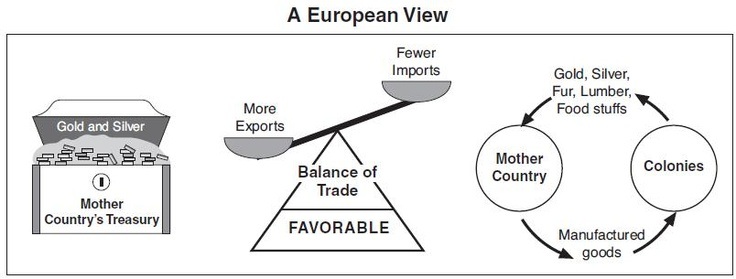
What is mercantilism?
A system where a mother countries gains money and power from natural resources that come from its colonies.
where colonies trade gold and silver with each other.
Wars that start over money.
Plantation colonies trading slaves for money.

The impact of mercantilism was that
The rate of slavery in the Americas went down
Trade was limited in the Atlantic
The Colony grew wealthy
The Mother Country grew wealthy
What was the main goal of the settlers at Jamestown
To convert the natives to Christianity
To establish a community with representative government
to establish a successful agriculturally-based colony
to find gold and riches

The principle motivation for the settlement of the Plymouth Bay Colony was?
Economic
political
social
religious
The French
Enslaved the Native Americans they encountered
Worked with the Huron to establish a Fur trade
The Spanish
Enslaved the Native Americans that they encountered
Worked with the Native Americans they encountered to establish a fur trade.
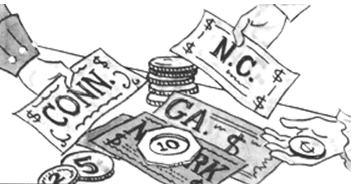
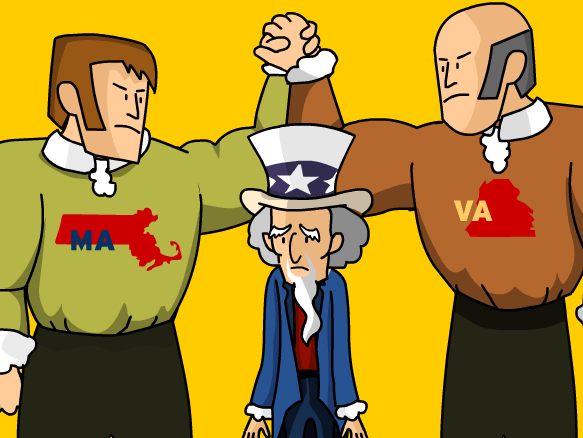
Why were farmers in Massachusetts so upset in 1786 and 1787?
The US was getting ready to go to war with France and they'd have to be soldiers again
The national government kept raising taxes on farmers to pay off the war debt
They were losing their farms because they could not afford the taxes on them
No one would buy their crops because they were over priced
What is one reason the farmers in Massachusetts could not afford to pay the taxes on their farms?
There was a drought that ruined their crops
Most were soldiers who'd never been paid of their service
People were not interested in buying the crops they were selling
Who was Daniel Shays?
A former soldier and farmer who was worried about losing his farm, so he started a rebellion
A tax collector from Massachusetts who had to go and collect money from the poor
He was the Governor of Massachusetts at the time of a huge rebellion by farmers
What did Daniel Shays' and his men do?
Burned down government buildings all over Massachusetts
Took over courthouses by going in armed and refusing to leave
Paid Native Americans to raid the houses of the wealthy and powerful
Challenged the US military to a battle
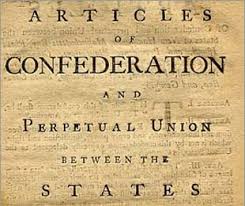
What did Shays' rebellion reveal about the Articles of Confederation?
That it was too similar to the British system
That it was too weak to succeed
That it was strong and resilient
That it was a successful model of government
In the fall of 1787, because of Shays' Rebellion, what did government leaders do?
They decided Massachusetts couldn't be a state anymore
They allowed all the states to become independent countries
They met in Philadelphia to fix the Articles of Confederation
They switched to a French model of government
The Northwest Ordinance of 1787 said that people within the territory had all of the following rights EXCEPT...
To own slaves
Religious freedom
Right to a trial by a jury
To have a say in the government (if you were a free white landowning male)
Which of the following did the Northwest Ordinance of 1787 set land aside for in every township?
Police stations
A fort
City Halls
Schools
The lasting impact of the Northwest ordinance of 1787 was...
that slavery would be made illegal forever after in the U.S.
that the U.S. was unable to compromise.
that we would be dragged into another war.
that it provided instructions on how the U.S. should add new states to the U.S. in the future.

