wayground logo

Free Printable Worksheets

NEW

Font size

S
M
L
XL
Worksheets

Fall Semester MONSTER REVIEW!

Total questions: 71

Worksheet time: 2hrs 22mins

Name
Class
Date
1.
Where is the DNA found in a prokaryotic cell? 
a)
floating around in the cytoplasm 
b)
in the nucleus 
c)
in the ribosomes
d)
attached to the cell membrane
2.
DNA is free floating, not in a nucleus
a)
Prokaryote
b)
Eukaryote
3.
Include kingdoms: Bacteria and Archaea
a)
Prokaryote
b)
Eukaryote
4.
Include kingdoms: Protist, Animal, Fungi, and Plant
a)
Prokaryote
b)
Eukaryote
5.
DNA is found in the nucleus
a)
Prokaryote
b)
Eukaryote
6.
Has cytoplasm
a)
Prokaryote
b)
Eukaryote
c)
both
7.

Has cell membrane

a)

Prokaryote

b)

Eukaryote

c)

both

8.
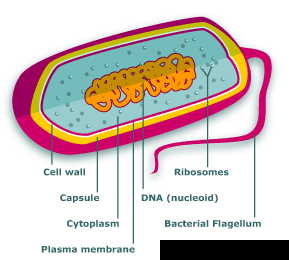
Which type of cell?
a)
Prokaryote
b)
Eukaryote
9.
This is a picture of:
a)
Prokaryote
b)
Eukaryote
10.

The Eukarya Domain has which organisms?

a)

Bacteria that causes diseases

b)

Bacteria found in volcanoes

c)

plants, animals., fungi and protists

d)

none of the above

11.

Autotrophs

a)

Make their own food

b)

Get their food from others

c)

are Fungi

d)

are none of the above

12.

Heterotrophs

a)

make their own food

b)

get their food from others

c)

are fungi

d)

none of the above

13.

Mulitcellular organism have

a)

one cell

b)

many cells

c)

no cells

d)

both one cell and many cells

14.

Which domain has organisms that live in extreme environments (vocanoes, Yellowstone hot pools, deep under water with no light)

a)

Eubacteria

b)

Archaea

c)

Eukarya

d)

No organism can live in those conditions

15.

I am multicellular and autotrophic which kingdom would I be in?

a)

Plantae

b)

Animalia

c)

Fungi

d)

Protists

16.

Which kingdom would I be in if I had:

heterotrophic, usually sexual reproduction, and multicellular

a)

Plantae

b)

Animalia

c)

Fungi

d)

Protist

17.

I am Eukaryotic, mainly multicellular, heterotrophic and reproduce with spores (asexual) and sexually.

a)

Plantae

b)

Animalia

c)

Fungi

d)

Protist

18.

I am:

single celled (mostly), Eukaryotic, heterotroph, reproduce sexual and asexual. What Kingdom am I in?

a)

Fungi

b)

Archaebacteria

c)

Eubacteria

d)

Protists

19.
What does unicellular mean?
a)
1 parent
b)
2 parents
c)
1 cell
d)
More than 1 cell
20.

What does asexual reproduction mean?

a)

1 set of genetic material/1 parent

b)

2 sets of genetic material/2 parents

c)

1 cell

d)

More than 1 cell

21.

What does sexual reproduction mean?

a)

1 set of genetic material/1 parent

b)

2 sets of genetic material/2 parents

c)

1 cell

d)

More than 1 cell

22.
The non living parts of an ecosystem
a)
abiotic factors
b)
biotic factors
c)
oxygen
d)
soil
23.
All of the different populations that live in a specific area.
a)
ecosystem
b)
habitat
c)
ecology
d)
community
24.
All the members of one type of species in a specific area.
a)
habitat
b)
community
c)
population
d)
ecosystme
25.
the living parts of an ecosystem
a)
biotic factors
b)
biology
c)
abiotic factors
d)
animals
26.
All of the different populations that live in a specific area.
a)
community
b)
habitat
c)
ecosystem
d)
village
27.
What is an ecosystem?
a)
A group of animals that are the same species.
b)
Soil, water, air and sunlight
c)
All the living and non living things that interact in an area.
d)
North America
28.
What is the definition of CONDUCTION?
a)
When heat is transferred from objects like rays of light or electromagnetically.
b)
a  hot liquid or air that  expands, becomes less dense, and rises or becomes more dense, and sinks.
c)
When heat transfers from objects that are touching.
d)
When heat transfers through the heater or AC in your house.
29.
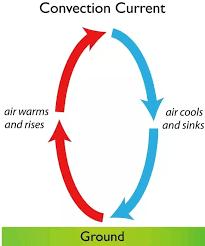
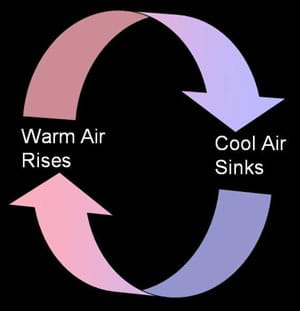
What is the definition of CONVECTION
a)
When heat transfers through waves.
b)
When heat transfers from objects that are touching.
c)
a  hot liquid or air that  expands, becomes less dense, and rises or becomes more dense, and sinks.
d)
Heat traveling from the sun
30.

Which of the following is an example of convection?

a)

A hair dryer is drying up your hair.

b)

When the AC or heater changes the temperature.

c)

When a car engine turns hot after being turned on.

d)

When you are making soup and the water is rising and lowering.

31.
The baby chickens are kept warm from the heat lamps demonstrates this type of heat transfer. 
a)
conduction
b)
convection
c)
radiation
32.

Near the ceiling of a room the air is warmer. The warm air rises because of

a)

conduction

b)

convection

c)

radiation

33.

In heat transfer, heat always flows from the _______________ substance to the _______________ substance.

a)

Hotter to colder

b)

Colder to hotter

c)

Hotter to hotter

d)

Colder to colder

34.

The handle of a metal spoon warms up when it is placed in a hot bowl of soup because of

a)

Convection

b)

Conduction

c)

Radiation

d)

insulation.

35.

What is the energy transformation that occurs in an electric pencil sharpener?

a)

mechanical energy to electrical energy

b)

electrical energy to mechanical energy

c)

radiant energy to sound energy

d)

chemical energy to mechanical energy

36.

Which object shows an energy transformation from electrical to mechanical?

a)
b)
c)
d)
37.

What type of energy transformation occurs in an electric hot that is turned on?

a)

thermal energy to electrical energy

b)

electrical energy to thermal energy

c)

thermal energy to mechanical energy

d)

mechanical energy to thermal energy

38.
The diagram shows a complete circuit with a battery and a buzzer making noise. This circuit works by transforming -
a)
chemical energy to electrical to sound.
b)
electrical energy to thermal to light.
c)
sound energy to electrical to chemical.
d)
mechanical energy to electrical to sound.
39.
what type of energy is stored in a battery?
a)
electrical
b)
chemical
c)
thermal
d)
mechanical
40.
Electrical Energy is transferred to _____ Energy.
a)
Thermal
b)
Solar
c)
Electrical
d)
None
41.

When the sun shines on a solar panel, energy transforms from radiant energy to _______________ energy.

a)

Mechanical

b)

Solar

c)

Sound

d)

Electrical

42.
If heat and pressure inside the Earth cause a rock to melt, the material that formed would be
a)
Metamorphic
b)
Magma
c)
Sedimentary
d)
Igneous
43.
Fossils are only found in
a)
Sedimentary rocks
b)
Foliated Metamorphic rocks
c)
Igneous Rocks
d)
Nonfoliated Metamorphic rocks
44.
This rock was another type of rock that was heated and compressed over time. What type of rock is this?
a)
Sedimentary
b)
Igneous
c)
Metamorphic
45.
This rock started as molten magma. What type of rock is this?
a)
Sedimentary
b)
Igneous
c)
Metamorphic
46.
What are the 3 major types of rocks?
a)
Igneous, Metamorphic, Sedimentary
b)
Metamorphic, Igneous, Cementation
c)
magma, lava, crystals
47.
The process by which igneous rocks are formed...
a)
heat and pressure
b)
melting and cooling
c)
weathering and erosion
48.
The process by which metamorphic rocks are formed...
a)
heat and pressure
b)
erosion and deposition
c)
melting and cooling
49.
The name rock is given when it is broken down into smaller pieces.
a)
texture
b)
weathering
c)
sediment
d)
erosion
50.
Identify the Major Plate labeled J
a)
African Plate
b)
Antarctic Plate
c)
Pacific Plate
d)
Eurasian Plate 
51.
Identify the Major Plate labeled D
a)
Indo-Australian Plate
b)
North American Plate
c)
South Americana Plate
d)
Eurasian Plate 
52.
Identify the Major Plate labeled L
a)
Indo-Australian Plate
b)
North American Plate
c)
South Americana Plate
d)
Eurasian Plate 
53.
Which explains that the continents were once joined together and over time they broke up and then drifted apart?
a)
Plate Tectonic Theory
b)
Continental Drift 
54.
Which of these explains that Earth's outer layer is broken into large slowly moving pieces? 
a)
Plate Tectonic Theory
b)
Continental Drift 
55.
This boundary is described by two plates moving away from eachother along the edges and separating. The resulting gap allows magma to rise and create new crust, forming new lithosphere. 
a)
Convergent Boundary 
b)
Divergent Boundary  
c)
Transform Boundary
56.
This boundary is described as two plates moving past eachother ALONG THE EDGES horizontally.  These boundaries will get stuck or lock against eachother causing earthquakes when they slip and release. 
a)
Convergent Boundary
b)
Divergent Boundary
c)
Transform Boundary
57.
This boundary is described as moving toward one another  When the plates are both continental plates the will crumple up and form a mountains. When they are continental and oceanic plates, subduction occurs  and earthquakes and volcanoes form. 
a)
Convergent Boundary
b)
Divergent Boundary
c)
Transform Boundary
58.
Trenches, deep underwater canyons on the sea floor are created at this type of boundary 
a)
Divergent
b)
Convergent, Subduction Zone
c)
Transform 
59.
New crust is created at this type of  boundary.
a)
Divergent
b)
Convergent, Subduction Zone
c)
Transform 
60.
Mountains are created at this type of  boundary.
a)
Divergent 
b)
Convergent
c)
Transform 
61.
Mid Ocean Ridge Formation  is created at this type of  boundary.
a)
Divergent 
b)
Convergent
c)
Transform 
62.

This property allows substances to be rolled or pounded into thin, flat sheets.

a)

Malleability

b)

Ductility

c)

Conductivity

d)

Solubility

63.

An element is a good conductor, flattens when hit with a hammer, and can easily be pulled into a thin wire. Which group does it belong to?

a)

Metal

b)

Nonmetal

c)

Metalloid

64.

An element is a good conductor, flattens when hit with a hammer, and can easily be pulled into a thin wire. Which group does it belong to?

a)

Metal

b)

Nonmetal

c)

Metalloid

65.

An element is a poor conductor, lacks luster, and is brittle when hit with a hammer. Which group does this element belong to?

a)

Metal

b)

Nonmetal

c)

Metalloid

66.

An element has moderate conductivity, high luster, and breaks when you hit it with a hammer. Which group does this element belong to?

a)

Metal

b)

Nonmetal

c)

Metalloid

67.

Which of the following represents a compound?

a)
b)
c)
d)
68.

Which of the following represents an element?

a)
b)
c)
d)
69.

Which of the following represents an element?

a)

Na

b)

NaHCO3

c)

H2O

d)

CO

70.

How do elements and compounds differ?

a)

Elements are pure substances of only one type of atom, and compounds are a bunch of elements thrown together.

b)

Elements are two atoms chemically bonded together, compounds are only one type of atom.

c)

Elements are pure substances made of only one type of atom, compounds are two different elements that are chemically combined.

d)

Elements are a bunch of different atoms thrown together, compounds are a bunch of elements thrown together.

71.

True or False: Compounds must contain atoms that are more than one type of element.

a)

True: compounds must have atoms of more than one type of element, such as NaCl (salt)

b)

False: compounds can be made using two atoms of the same kind of element, such as O2.