Wayground logo

Free Printable Worksheets

Font size

S
M
L
XL
Worksheets

Semester 1 BIG FAT REVIEW QUIZ

Total questions: 225

Worksheet time: 4hrs 1mins

Name
Class
Date
1.
Chromatid pairs line up in the middle of the cell.
a)
Metaphase
b)
Telophase
c)
Anaphase
d)
Interphase
2.
What phase of mitosis is shown in the picture?
a)
Prophase
b)
Anaphase
c)
Telophase
d)
Metaphase
3.
What phase of mitosis is shown in the picture?
a)
Prophase
b)
Anaphase
c)
Telophase
d)
Metaphase
4.
What phase of mitosis is shown in the picture?
a)
Prophase
b)
Anaphase
c)
Telophase
d)
Metaphase
5.
Chromosomes duplicate, the cell grows and develops
a)
Metaphase
b)
Telophase
c)
Interphase
d)
Anaphase
6.
What phase of mitosis is shown in the picture?
a)
Prophase
b)
Anaphase
c)
Telophase
d)
Metaphase
7.
Which of the following lists, in order, the phases of mitosis?
a)
interphase, metaphase, anaphase, telophase
b)
prophase, metaphase, anaphase, telophase
c)
prophase, metaphase, anaphase, interphase
d)
prophase, anaphase, metaphase, telophase
8.
How many daughter cells are produced in mitosis?
a)
1
b)
2
c)
4
d)
6
9.

What is the purpose of Mitosis?

a)

Growth of an organism and Repair of damaged tissue

b)

To help the body get rid of extra cells

c)

To increase the amount of classwork you have to do

d)

To get rid of the nucleus

10.
DNA is replicated during the ______ phase of the cell cycle.
a)
G1
b)
Synthesis
c)
G2
d)
G0
11.
Structure B is pointing to the _____. 
a)
chromosome
b)
centromere
c)
DNA
d)
chromatid
12.
Structure C is pointing to one ____. 
a)
sister chromatid
b)
chromosome
c)
centromere
d)
gene
13.

In which cell below would a student likely observe a cell plate during mitosis?

a)

rat muscle cell

b)

alligator stomach cell

c)

onion root cell

d)

human lung cell

14.
Cytokinesis is a phase of mitosis. 
a)
True
b)
False 
15.
Cells spend the majority of their lives in
a)
Interphase
b)
Mitosis
c)
Synthesis 
d)
Gap 2
16.
Cells of organisms must replicate for ?
a)
growth
b)
repair of damaged cells
c)
replacement of dying cells.
d)
All of the above
17.
Cell division is represented by what letter?
a)
A
b)
B
c)
C
d)
D
18.
Which of the following is a phase in the cell cycle?
a)
G1
b)
M
c)
G2
d)
all of the above
19.
A repeating sequence of growth and division...
a)
Mitosis
b)
Interphase
c)

Cell Cycle

d)
Somatic
20.
During which stage of the cell cycle does mitosis and cytokinesis occur?
a)
Interphase
b)
S phase
c)
M phase
d)
G1 phase
21.
During what phase of the cell cycle is DNA replicated?
a)
G1 phase
b)
S phase
c)
G2 phase
d)
M phase
22.
Put the following stages of the cell cycle in order: G2, S, G1, M. 
a)
G1, S, G2, M
b)
S, G1, G2, M
c)
G1, M, G2, S
d)
M, G1, S, G2
23.
In mitosis, the two resulting cells are
a)
different from the starting cell and identical to each other.
b)
different from the starting cell and different from each other.
c)
identical to the starting cell and different from each other.
d)
identical to the starting cell and identical to each other.
24.
Why don't cells just stretch when you grow, instead of making copies of themselves?
a)
The muscles in the cells can't stretch that far.
b)
The cell won't be able to bring in food fast enough or get waste out fast enough.
c)
The cell membrane doesn't like the feeling of stretching.
d)
The lysosomes don't want to work so hard.
25.

What happens when something goes wrong during mitosis?

a)

Nothing

b)

cancer

c)

diabetes

d)

the cells die

26.
The cell cycle involves several checkpoints. Why?
a)
To repair DNA damage.
b)
To check for glucose.
c)
To prevent dehydration.
27.
At the end of the G1 phase, there's a checkpoint. What is this checkpoint probably checking for?
a)
To see if the cell has grown enough
b)
To see if the DNA was correctly replicated
c)
To make sure the cell does not have cancer
d)
To make sure that the enzymes aren't amalyzed
28.

When is apoptosis initiated?

a)

When DNA damage is repaired.

b)

When cells are removed from the cell cycle.

c)

When DNA damage cannot be repaired.

29.
The checkpoints that regulate the cell cycle can fail when ____ becomes damaged.
a)
DNA 
b)
Cell Membrane
c)
Mitochondria
d)
Ribosomes
30.
During which parts of the cell cycle does the cell grow?
a)
G1 and G2
b)
G1 and S
c)
M phase and cytokinesis
31.
Cancer creates abnormal cells by disrupting
a)
the cell cycle
b)
red blood cell formation
c)
DNA replication
d)
ATP synthesis
32.
Chromosome movement in mitosis and meiosis is regulated by
a)
microtubules
b)
microfilaments
c)
intermediate filaments
d)
All of thiese
33.
Which of the following happens when a cell divides?
a)
Each daughter cell receives its own copy of the parent cell’s DNA.
b)
The cell has DNA overload.
c)
It becomes more difficult for the cell to get enough oxygen and nutrients.
d)
The cell’s volume increases.
34.
What is the role of the spindle during mitosis?
a)
It divides the cell in half.
b)
It duplicates the DNA.
c)
It breaks down the nuclear membrane.
d)
It helps separate the chromosomes.
35.
________________is a critical point where stop and go signals can regulate the cycle
a)
Metastasis
b)
Checkpoint
c)
Malignant
d)
Benign
36.
Type of tumor that remains at original site
a)
Benign
b)
Malignant
c)
Metastaasis
d)
checkpoint
37.
What usually happens when cells come into contact with other cells?
a)
they divide more quickly
b)
they stop growing
c)
they produce cyclins
d)
they produce p53
38.
Cancer that has the ability to spread 
a)
somatic
b)
benign
c)
malignant
d)
diploid
39.
When cancer spreads to other areas of the body, it is said to have
a)
metastisized
b)
benigned
c)
tumored
d)
localized
40.

A insect like a water strider can skate along the top of a pond because:

a)

covalent bonds result in water cohesion

b)

hydrogen bonds result in water cohesion (surface tension)

c)

low surface tension of water

41.
What word describes when water is attracted to other substances?
a)
cohesion
b)
adhesion
c)
capillary action
d)
surface tension
42.
Attractions between the negative Oxygen atom of one water molecule and the positive Hydrogen atom of another water molecule are called
a)
Covalent bonds
b)
Ionic bonds
c)
Polar bonds
d)
Hydrogen bonds
43.
Large bodies of water, such as lakes and oceans, do not quickly fluctuate in temperature. What is the reason for this phenomenon?
a)
Water is an acid.
b)
Water is a versatile solvent.
c)
Water has a high heat capacity.
d)
 Water acts as a buffer.
44.
Water is essential for life. Its special properties make water the single most important molecule in plant life. Which of the following properties of water enables it to move from the roots to the leaves of plants?
a)
Water expands as it freezes.
b)
Water is an excellent solvent.
c)
Water exhibits cohesive behavior.
d)
Water is able to moderate temperature.
45.
Why does ice stay at the top of oceans instead of sinking to the bottom?
a)
 Ice is colder than liquid water.
b)
Ice is less dense than liquid water.
c)
Ice is more dense than liquid water.
d)
Ice is warmer than liquid water.
46.
 Small insects can walk across the surface of calm water. Their feet push the surface of the water down slightly, somewhat like a person walking across a trampoline, but they do not break the surface. What is the best explanation for why this happens?
a)
The insects are light enough so that they do not break the hydrogen bonds holding the water molecules together
b)
The insects actually use their wings to hover slightly above the water's surface and they only skim it with their feet
c)
The insects' feet are non-polar, so they are repelled by the polar water molecules and are pushed away from the water's surface
d)
The insects are small enough to see the individual water molecules, so they are able to step carefully from one molecule to the next
47.
Water makes up approximately 60% of the human body and plays a vital role in regulating body temperature. Which property of water makes it good at regulating temperature?
a)
Water is a good solvent.
b)
Water exhibits strong cohesion.
c)
. Water has an unusual crystalline structure.
d)
Water has a high capacity for heat.
48.
What two elements make up water?
a)
Helium and oxygen
b)
Hydrogen and oxygen
c)
helium and carbon
d)
oxygen and carbon
49.
The fact that ice floats on liquid water is due to the fact that water's solid is ___________ than it's liquid form
a)
less polar
b)
more polar
c)
less dense
d)
more dense
50.
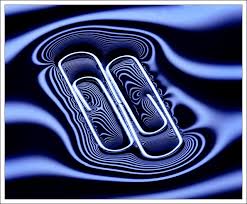
The tightness across the surface of water that enables paper clips to float is ____________.
a)
adhesion
b)
capillary action
c)
surface tension
d)
polarity
51.
Which statement explains why water molecules stick together?
a)
both sides are negative
b)
one side has a positive charge and the other side has a negative charge
c)
one side has a negative charge adn the other side has a neutral charge
d)
both sides are positive
52.
What is water?
a)
An atom
b)
A molecule composed of 2 parts Oxygen and one part Hydrogen
c)
A molecular compound composed of 2 parts Hydrogen and one part Oxygen
d)
A pure substance composed of 2 parts Hydrogen and one part Oxygen
53.

Why does water ice have a lower density than liquid water?

a)

Because it floats

b)

Because it is a crystal

c)

Because the molecules expand in volume as water freezes into a crystal

d)

Because ice is colder than water

54.
What is adhesion?
a)
Water's ability to stick to itself
b)
Water's ability to stick to other substances
c)
The strength of the cohesion of all the water molecules combined
d)
Tape, glue and other adhesives
55.
What is cohesion?
a)
Water's ability to stick to itself
b)
Water's ability to stick to other substances
c)
The strength of the cohesion of all the water molecules combined
d)
Tape, glue and other adhesives
56.
molecule in which opposite ends have opposite electric charges
a)
cohesion
b)
polar molecule
c)
hydrogen bond
d)
solution
57.
Water is a universal solvent because it...
a)
It can be found anywhere
b)
It freezes when it gets cold
c)
floats when frozen
d)
Dissolves most substances
58.
Which term refers to water having partial positive and a partial negative charge?
a)
cohesion
b)
surface tension
c)
polarity
d)
adhesion
59.
A high specific heat means...
a)
It heats up quickly with energy added
b)
It requires more energy to change temperature
60.

Capillary Action

a)

The property of water that allows ice to float on the surface of liquid water

b)

The property of water that allows it to dissolve polar substances

c)

When water molecules stick to other surfaces

d)

The property of water that allows water to move up a thin tube (or the stem of a plant) by itself

61.

What property of water allows water to flow against gravity?

a)

Polarity

b)

Cohesion

c)

Capillary Action

d)

Adhesion

62.
Which of the following is LEAST likely to dissolve in water?
a)
nonpolar fats and oils
b)
polar sugar molecules
c)
salt made of a positive sodium ion and a negative chloride ion
d)
all of the substances will dissolve easily in water
63.
When water molecules stick easily to other water molecules, this is called what?
a)
cohesion
b)
adhesion
c)
solution
d)
polar molecule
64.
What is the charge of the electron
a)
positive
b)
no charge
c)
negative
d)
neutral
65.
A proton is a _____ charged particle.
a)
Negatively
b)
Positively
66.
An electron is a _____ charged particle.
a)
Positively
b)
Negatively
67.

Water is a polar molecule. Which portion of water has a negative charge?

a)

the hydrogens

b)

the oxygen

c)

both

d)

neither

68.

Which portion of a water molecule has a positive charge?

a)

none of it

b)

the hydrogens

c)

the oxygen

d)

all of it

69.

Which type of cell is this?

a)

Prokaryote

b)

Eukaryote

70.
What type of cell has a nucleus? 
a)
eukaryotic
b)
prokaryotic 
71.
Plants and animal cells are examples of ___ cells 
a)
prokaryotic cells 
b)
eukaryotic cells 
72.
Which is true of prokaryotic and eukaryotic cells?
a)
Prokaryotic cells are larger than eukaryotic cells.
b)
Eukaryotic cells do not have nuclei, and prokaryotic cells do have nuclei.
c)
Prokaryotic cells lack membrane-bound organelles, and eukaryotic cells contain membrane-bound organelles.
d)
Eukaryotic cells are simpler than prokaryotic cells.
73.

Which type of cells has a chloroplast?

a)

Prokaryote

b)

Plant Cell

c)

Animal Cell

74.

All of the following contain a cell wall except:

a)

prokaryotes

b)

animal cells

c)

plant cells

d)

bacteria

75.

Which do BOTH prokaryotes and eukaryotes contain?

a)

nucleus

b)

mitochondria

c)

ribosomes

d)

cell wall

76.

Which does only eukaryotic cells contain?

a)

nucleus

b)

DNA

c)

cell membrane

d)

ribosomes

77.

Which organelle is photosynthetic?

a)

cell wall

b)

chloroplast

c)

mitochondria

d)

vesicle

78.

Prokaryotic cells do not have…….

a)

membrane bound organelles

b)

cell membrane

c)

DNA or RNA

d)

life

79.
This is a picture of:
a)
Prokaryote
b)
Eukaryote
80.
Which of the following is not a characteristic of a Prokaryotic cell?
a)
unicellular
b)
floating DNA
c)
very small
d)
complex
81.
A fossilized cell is discovered, and evidence suggests it reproduced on its own and had DNA, but a membrane did not enclose its DNA. Which type of organism would this most likely be?
a)
prokaryote
b)
eukaryote
c)
plant cell
d)
animal cell
82.
If a cell contains a cell membrane, a cell wall, and ribosomes, what kind of cell could it be?
a)
either a eukaryotic or a prokaryotic cell
b)
a prokaryotic cell only
c)
an eukaryotic cell only
d)
neither a eukaryotic nor a prokaryotic cell
83.

Bacteria are considered what?

a)

Eukaryotes

b)

Prokaryotes

84.
What organelle controls and regulates cellular activity?
a)
Ribosome
b)
Nucleus
c)
Mitochondria
d)
Lysosome 
85.
The major function of ribosomes is to
a)
Make fats
b)
Synthesize protein
c)
Digest protein
d)
Make sugars
86.
The ____________ packages and processes material before it exports out of the cell.
a)
Vacuoles
b)
mitochondria
c)
Golgi apparatus 
d)
nucleus 
87.
Which of the following is an enzyme filled organelle that breaks down waste in the cell?
a)
lysosomes
b)
chloroplast
c)
mitochondria 
d)
Golgi apparatus 
88.
Select the statement that best describes the function of the cell wall.
a)
It gives structural support to plant cells.
b)
Its jelly-like fluid surrounds the nucleus and most of the cell’s internal parts.
c)
It contains the cell’s nuclear material. 
d)
It produces food from sunlight. 
89.
What am I?       I'm a real "powerhouse". I break down glucose to make ATP.  
a)
Cell membrane 
b)
ribosome
c)
mitochondria
d)
lysosome
90.
What is the name and function of the organelle displayed above?
a)
Mitochondria: breakdown glucose and produce ATP
b)
Chloroplast: converts solar energy into chemical energy
c)
Vacuole: Stores H2O, salt, food
d)
Nucleus: stores genetic information
91.
which of the following transports material within the cell?
a)
Golgi apparatus 
b)
Endoplasmic reticulum
c)
cell wall 
d)
ribosomes
92.
In what type of cells would you expect to find many mitochondria ?
a)
muscle cells
b)
nerve cells
c)
skin cells
d)
sperm cells
93.
Rough endoplasmic reticulum has ________________ attached to it. 
a)
ribosomes 
b)
chromosomes 
c)
Golgi apparatus 
d)
nucleolus 
94.
What is the function of vacuoles?  
a)
make protein
b)
store genetic information
c)
storage of salt, H2O, food, and waste
d)
transports material outside the cell
95.
Which of these statements best describes the function of the cell membrane?
a)
It allows things to freely enter and exit the cell
b)
it controls which substances enter and exit the cell
c)
it prevents substances from entering the cell
d)
it prevents substances from leaving the cell
96.
The arrow is point to the 
a)
mitochondria 
b)
Cell membrane 
c)
nucleus 
d)
ribosome
97.

A living thing that is made up of organ systems.

a)

cell

b)

tissue

c)

organ

d)

organ system

e)

organism

98.

2 or more different kinds of tissues that work together.

a)

cell

b)

tissue

c)

organ

d)

organ system

e)

organism

99.

The smallest unit of a living thing

a)

cell

b)

tissue

c)

organ

d)

organ system

e)

organism

100.

2 or more organs that work together.

a)

cell

b)

tissue

c)

organ

d)

organ system

e)

organism

101.

Groups of similar cells that work together.

a)

cell

b)

tissue

c)

organ

d)

organ system

e)

organism

102.

Which is the correct order for levels of organization from simple to complex?

a)

cell, organ , tissue, organ system, organism

b)

organism, organ system, tissue, cell, organ

c)

cell, tissue, organ, organ system, organism

d)

organ, tissue, cell, organism, organ system
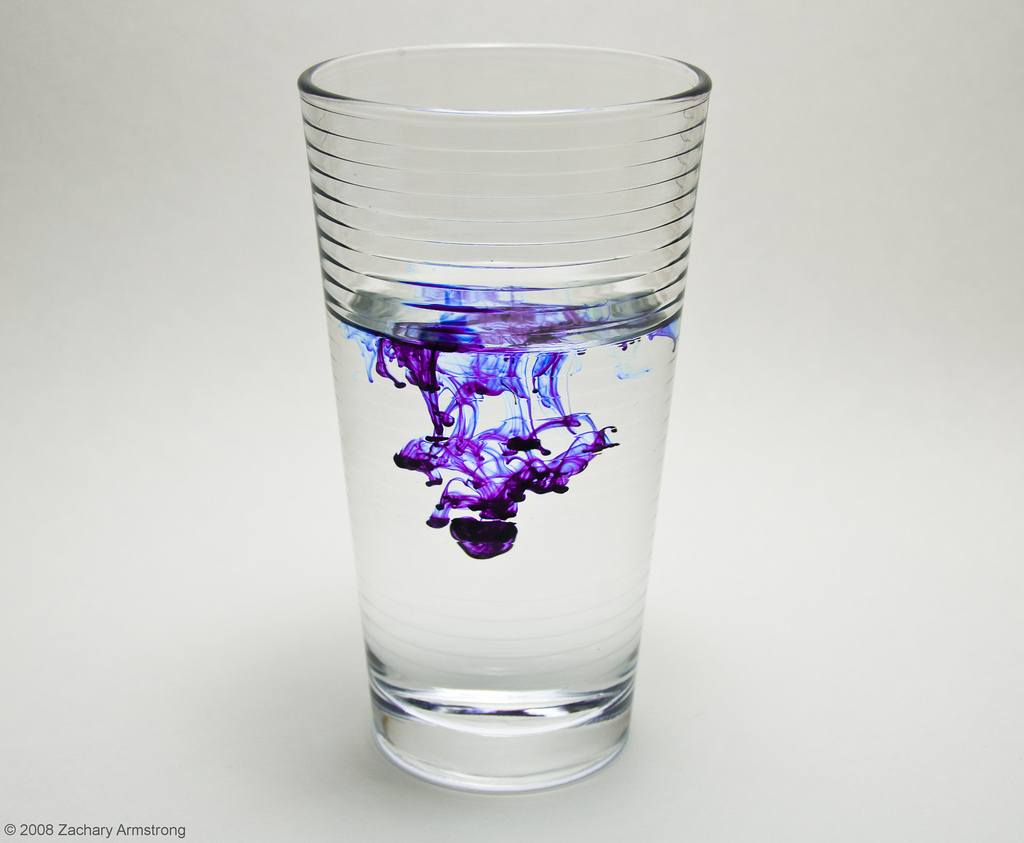
103.
Where is there a low concentration of dye?
a)
at the bottom of cup
b)
in the color
c)
at the top of cup 
d)
no concentration gradient
104.
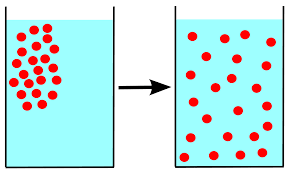
The picture below is an example of _________________.
a)
osmosis
b)
isotonic
c)
diffusion
d)
active transport
105.
Osmosis is the movement of _____ across a membrane.
a)
food
b)
energy
c)
oxygen
d)
water
106.
Permeable means
a)
things can pass through
b)
the concentration levels are different
c)
it is permanent
d)
things are stuck
107.
When both inside and outside of a cell have the same amount of water it is said that the cell has reached a state of
a)
Osmosis
b)
Diffusion
c)
Equilibrium
108.
Passive transport requires no
a)
concentration gradients
b)
osmosis
c)
motion
d)
energy
109.
What is diffusion?
a)
when molecules move 
b)
when molecules move from a high concentration to a low.
c)
no movement 
d)
molecules move everywhere
110.
Which cell is placed into a hypotonic environment? 
a)
A
b)
B
c)
C
d)
D
111.
The cell below is in a _________ solution.
a)
Hypotonic
b)
Hypertonic
c)
Isotonic
112.
The cell below is in a _____________ solution.
a)
Hypertonic
b)
Hypotonic
c)
Isotonic
113.
What is diffusion?
a)
when molecules move from a low concentration to a high concentration 
b)
when molecules move from a high concentration to a low concentration.
c)
no movement 
d)
molecules move everywhere
114.
What is the definition of  Selective Permeability?
a)
The movement of materials across the cell membrane that requires NO ENERGY from the cell.
b)
The movement of materials through (or across) the cell membrane
c)
The ability of the cell membrane to allow some things to pass through while preventing other things from passing through.
d)
The movement of molecules from an area of high concentration (where the molecules are more crowded together) to a area of low concentration (where molecules are more spread apart)
115.
Osmosis
a)
diffusion of water molecules through a semi-permeable mebrane from an area of low concentration to an area of high concentration
b)
the diffusion of particles from an area of high concentration to an area of low concentration
c)
diffusion of water molecules through a semi-permeable membrane from an area of high concentration to an area of low concentration
d)
the diffusion of particles from an area of low concentration to an area of high concentration
116.
Osmosis is the movement of _____ across a membrane.
a)
food
b)
energy
c)
oxygen
d)
water
117.
_______ regulates what enters and leaves a cell.  
a)
Cell Membrane
b)
Nucleus
c)
Mitochondria
d)
Cytoplasm
118.
Which way will the water molecules move during osmosis?
a)
Out of the cell, so the cell shrinks.
b)
Out of the cell, so the cell swells.
c)
Into the cell, so the cell shrinks.
d)
Into the cell, so the cell swells.
119.
What is the difference between active and passive transport?
a)
Active does not need energy and passive uses ATP (energy)
b)
Active uses ATP (energy) and passive does not need energy
c)
Active stores transport proteins and passive releases 
d)
Active uses hormones and passive does not 
120.
If a red blood cell is put in a salt solution, what will happen to the cell?
a)
It will shrivel.
b)
It will swell and burst.
c)
It will shrivel and swell and burst
d)
It will do nothing at all
121.
If a red blood cell is put in distilled water, what will happen to the cell?
a)
Nothing will happen
b)
It will shrivel.
c)
It will burst and then shrivel up
d)
It will swell and burst
122.
What does semi-permeable mean?
a)
Only some things can move through membrane
b)
Nothing can move through membrane
c)
Reagan can move through membrane
d)
Membrane connot be moved through
123.
What are three types of passive transport
a)
Transport proteins, Endocytosis, Exocytosis
b)
None of the ones listed
c)
Osmosis, Diffusion, Facilitated diffusion 
d)
Touchdown, interception, football
124.
What are 3 types of active transport?
a)
Riding a bike, Running through the mountains, walking on the beach
b)
Osmosis, Diffusion, Facilitated Diffusion
c)
Sodium/potassium Pump, Endocytosis, Exocytosis
d)
Throwing a ball, Playing tennis, driving a car
125.

Which of the following are examples of active transport? (Select all that apply)

a)

osmosis

b)

diffusion

c)

endocytosis

d)

exocytosis

126.

Which of the following are examples of passive transport? (Select all that apply)

a)

osmosis

b)

diffusion

c)

endocytosis

d)

exocytosis

127.

Which of the following processes relies on the difference in concentrations (concentration gradient) to move materials across a semi-permeable membrane?

a)

passive transport

b)

active transport

128.
Active transport moves substances against a concentration gradient 
a)
true
b)
false 
129.
Which form of active transport is being shown?
a)
Pinocytosis
b)
Endocytosis
c)
Exocytosis
d)
Osmosis
130.

When cells take in food molecules through active transport, what is it called?

a)

diffusion

b)

phagocytosis

c)

exocytosis

d)

osmosis

131.
When cells form a vesicle to release materials, which form of transport is occurring? 
a)
Endocytosis
b)
Exocytosis
c)
Facilitated Diffusion
d)
Osmosis
132.
Human immune cells can engulf bacteria to destroy them. This is an example of 
a)
pinocytosis
b)
phagocytosis
c)
exocytosis
d)
acidosis
133.
When the concentration of solute molecules outside the cell is equal to the concentration inside the cell, the solution is
a)
hypertonic
b)
hypotonic
c)
isotonic
d)
ionic
134.
What is the function of ATP in living things?
a)
provides energy for cells
b)
stores genetic information
c)
provides structure in the nucleus
135.
Which structures shown in the Figure make up the ADP molecule?
a)
A and B
b)
A, B and C
c)
A, B, C, and D
d)
C and D
136.
What does the "TP" in ATP stand for?
a)
2 phosphates
b)
tri (3) phosphates
c)
Two proteins
d)
tri (3) proteins
137.
Which of the following can be compared to a battery in need of recharging?  (empty wallet)
a)
ADP
b)
ATP
c)
Ribose
d)
Adenosine
138.
What are the parts of the ATP molecule?
a)
adenine, thylakoids, stroma
b)
stroma, grana, chlorophyll
c)
adenine, ribose, phosphate groups
d)
NADH, NAHPH, FADH
139.
Which bond of the ATP molecule is broken in order to release energy?
a)
A
b)
B
c)
C
d)
D
140.
Which of the following results in the storage of energy in terms of the ATP/ADP cycle?
a)
The breaking of the bond between the 5-carbon sugar and the 1st phosphate group
b)
The addition of a phosphate group
c)
The removal of a phosphate group
d)
The addition of glucose 
141.
How many sugar units make up monosaccharides?
a)
one
b)
two
c)
three
d)
zero
142.
How many sugar units make up disaccharides?
a)
one
b)
two
c)
three
d)
zero
143.
How many sugar units make up polysaccharides?
a)
one
b)
two
c)
more than two
d)
zero
144.
Which do all carbohydrates do for us?
a)
provide energy
b)
make muscle
c)
make brains
d)
make hair
145.
What type of carbohydrate is this?
a)
polysaccharide
b)
disaccharide
c)
monosaccharide
d)
it isn't a carbohydrate
146.
The process of removing water in order to form a bond between monomers is called....
a)
Dehydration Synthesis
b)
Hydrolysis
147.
The process of adding water in order to break bonds within a polymer....
a)
Dehydration Synthesis
b)
Hydrolysis
148.
The process of digesting a polysaccharide into individual monosaccharides is called....
a)
Dehydration Synthesis
b)
Hydrolysis
149.
The process of breaking the bonds within a starch molecule in order to release glucose molecules is called......
a)
Dehydration Synthesis
b)
Hydrolysis
150.
The following figure is illustrating
a)
Dehydration Synthesis
b)
Hydrolysis
151.
The following figure is illustrating
a)
Dehydration Synthesis
b)
Hydrolysis
152.
In the following chemical reaction, what are the products:
Starch + Water -------> Glucose
a)
Starch + Water
b)
Glucose
153.
Is the following chemical reaction illustrating dehydration synthesis or hydrolysis?
Starch + Water -------> Glucose
a)
Dehydration Synthesis
b)
Hydrolysis
154.

Which of these is a function of carbohydrates?

a)

form the structure of plant cell walls

b)

store genetic material

c)

form waxy layers of leaves

d)

make up most of the cell membrane

155.
In which part of the cell does respiration occur?
a)
vacuole
b)
mitochondria
c)
cell wall
d)
chloroplast
156.

Plants need ________ to conduct photosynthesis

a)

Oxygen

b)

Soil

c)

Carbon dioxide

d)

Sugar

157.
Why do plants conduct photosynthesis?
a)
To make light
b)
To make mitochondria
c)
To make glucose
d)
To release carbon dioxide
158.
Which organelle in the plant cell performs photosynthesis?
a)
Chloroplast
b)
Mitochondria
c)
Nucleus
d)
Cytoplasm
159.
What are the products of photosynthesis (what is made)?
a)
Glucose and Chlorophyll
b)
Glucose and Oxygen
c)
Water and Light
d)
Carbon dioxide and Water
160.
What is the source of energy for photosynthesis?
a)
Carbohydrates (chemical energy)
b)
Light (radiant energy)
c)
Heat (thermal energy)
d)
Wind (kinetic energy)
161.
Which choice correctly shows the gases that enter and exit plants during photosynthesis?
a)
Enter: Oxygen
Exit: Carbon dioxide
b)
Enter: Water vapor
Exit: Glucose
c)
Enter: Carbon dioxide
Exit: Oxygen
d)
Enter: Light
Exit: Water vapor
162.

Cellulose is a structural carbohydrate found in-

a)

plants

b)

fungi

c)

insects

d)

polyvinyl

163.
What are the reactants (what's needed) for photosynthesis?
a)
glucose and oxygen
b)
light, water, and carbon dioxide
164.

Which of the following is the correct equation for PHOTOSYNTHESIS?

a)

carbon dioxide + water + sunlight --> oxygen + glucose

b)

carbon dioxide + glucose + water --> oxygen

c)

oxygen + water + sunlight --> carbon dioxide + glucose

d)

glucose+ oxygen ---> water + carbon dioxide + sunlight

165.
What pigment absorbs sunlight for photosynthesis?
a)
chloroplast
b)
thylakoid
c)
grana
d)
chlorophyll
166.
What is another name for glucose?
a)
Chlorophyll
b)
Chloroplasts
c)
Stomata
d)
Sugar
167.
This image shows the process of _____.
a)
Respiration
b)
Photosystem I
c)
Dark Reactions
d)
Photosynthesis
168.
What atoms make up all carbohydrates?
a)
Carbon, Sulfur, Hydrogen
b)
Carbon, Oxygen, Phosphorus
c)
Carbon, Oxygen, Nitrogen
d)
Carbon, Oxygen, Hydrogen
169.
How many sugar units make up monosaccharides?
a)
one
b)
two
c)
three
d)
zero
170.
What type of carbohydrate is this?
a)
polysaccharide
b)
disaccharide
c)
monosaccharide
d)
it isn't a carbohydrate
171.
Which organisms perform Photosynthesis?
a)
Only Autotrophs
b)
Only Heterotrophs
c)
Autotrophs and Heterotrophs
172.
Most plants appear green because chlorophyll
a)
absorbs green light.
b)
absorbs violet light.
c)
reflects green light.
d)
does not absorb violet light.
173.

What is the function of NADPH and ATP?

a)

They absorb light

b)

They make glucose

c)

They are light-reflecting pigments

d)

They are energy carrying molecules

174.
Which of the following is considered a waste product of photosynthesis?
a)
glucose
b)
oxygen
c)
carbon dioxide
d)
sunlight
175.
Which organelle does photosynthesis take place in?
a)
Mitochondrion
b)
Chlorplast
c)
Cytoplasm
d)
Nucleus
176.

Look at the diagram. Which gas would most likely be found in the greatest amount in the bubbles?
a)
oxygen
b)
nitrogen
c)
ozone
d)
carbon dioxide
177.
What is one of the reactants of cellular respiration?
a)
energy
b)
glucose
c)
carbon dioxide
d)
water
178.
The mitochondria is responsible for ...
a)
photosynthesis
b)
anaerobic respiration
c)
aerobic respiration
d)
fermentation
179.
What type of respiration requires oxygen?
a)
Aerobic
b)
Anaerobic
180.
What is the correct equation for cellular respiration?
a)
6O2 + C6H12O6 -> 6CO2 + 6H2O + Energy
b)
6O2 + C6H12O6 + Energy -> 6CO2 + 6H2O
c)
6CO2 + 6H2O -> 6O2 + C6H12O6 + Energy
d)
6CO2 + 6H2O + Energy -> 6O2 + C6H12O6
181.
Cellular Respiration's goal is to
a)
make water
b)
make ATP
c)
make glucose
d)
make  oxygen
182.
What is cellular respiration?
a)
the breakdown of glucose  to release ATP
b)
the breakdown of glucose to release NADH
c)
the breakdown of glucose to release FADH
d)
the breakdown of glucose to release carbon
183.
Which molecule isn't an energy carrier?
a)
FADH2
b)
NADH
c)
oxygen
d)
ATP
184.
Where does aerobic respiration occur?
a)
glucose molecule
b)
mitochondria
c)
cytoplasm
d)
chloroplast
185.
Where does anaerobic respiration occur?
a)
glucose molecule
b)
mitochondria
c)
cytoplasm
186.

How many ATP are produced in fermentation?

a)

0

b)

~30

c)

2

d)

too many to count

187.

What type of fermentation occurs in most organisms, including animals?

a)

Aerobic

b)

Alcoholic

c)

Citric Acid

d)

Lactic Acid

188.

What is the correct order for aerobic cellular respiration?

a)

glycolysis-->ETC--> Krebs Cycle

b)

ETC-->glycolysis-->Krebs Cycle

c)

glycolysis-->Krebs Cycle-->ETC

d)

Krebs Cycle-->glycolysis-->ETC

189.

Which of the following processes generates the MOST ATP

a)

cellular respiration

b)

photosynthesis

c)

fermentation

d)

glycolysis

190.

Which of the following terms means "without oxygen"

a)

aerobic

b)

oxygenated

c)

dihydrogen monoxide

d)

anaerobic

191.

Which of the following steps generates the MOST ATP?

a)

ETC

b)

Krebs

c)

Fermentation

d)

Glycolysis

192.

When oxygen is running low, our bodies resort to __________ for energy.

a)

cellular respiration

b)

lactic acid fermentation

c)

alcoholic fermentation

d)

glycolysis

193.

When does the glucose get "chopped in half?"

a)

glycolysis

b)

ETC

c)

fermentation

d)

Krebs

194.

Which of the following is a PRODUCT of cellular respiration?

a)

glucose

b)

nitrogen

c)

oxygen

d)

carbon dioxide

195.

Which of the following are done by plants?

a)

photosynthesis

b)

cellular respiration

c)

both

d)

neither

196.
What organic molecule is necessary for cellular respiration to occur?
a)
lipids
b)
fats
c)
carbon dioxide
d)
glucose
197.
Which is a product of Kreb's Cycle?
a)
Carbon dioxide
b)
Glucose
c)
Pyruvate
d)
Water
198.
Which is a product of the ETC?
a)
Carbon dioxide
b)
Glucose
c)
Oxygen
d)
Water
199.
Fermentation is cellular respiration without which molecule?
a)
CO2
b)
O2
c)
C6H12O6
200.
Why is yeast used to bake bread? 
a)
The waste gas, CO2, makes bread rise
b)
The alcohol produced makes bread dangerous
c)
The yeast consumes O2, causing bread to rise
201.

What is the correct order of steps for anaerobic respiration?

a)

Krebs cycle, fermentation, glycolysis.

b)

Glycolysis, fermentation.

c)

Glycolysis, Krebs cycle, electron transport chain.

d)

Electron transport chain, glycolysis, fermentation.

202.

Which of these accurately lists the 3 locations for each step or aerobic respiration?

a)

glycolysis: cytoplasm, Kreb's: Mitochondrial matrix, ETC: inner membrane of the mitochondria

b)

glycolysis: Mitochondrial matrix, Kreb's: inner membrane of the mitochondria, ETC: cytoplasm

c)

glycolysis: Thylakoid membrane, Kreb's: stroma, ETC: cytoplasm

d)

glycolysis: cytoplasm, Kreb's: inner membrane of the mitochondria, ETC: Mitochondrial matrix

203.
What causes genetic variation in meiosis?
a)
chromosomes lining up
b)
crossing over of chromosomes
c)
separation of chromosomes
d)
chromosomes pulling apart
204.
What kind of cells are made in MEIOSIS?
a)
Haploid cells
b)
Diploid Cells
c)
Skin Cells
d)
Liver Cells
205.
Diploid Cells are represented by
a)
2n
b)
n
c)
4n
d)
1/2 n
206.
If the Diploid number of Carrots is 18, the haploid number is
a)
18
b)
9
c)
27
d)
36
207.
The process of crossing over occurs in what phase of meiosis?
a)
anaphase 1
b)
prophase 1
c)
prophase 2
d)
telophase 1
208.
The chromosomes that pair up during meiosis, are called __________ chromosomes.  
a)
homozygous 
b)
asexual
c)
homologous
d)
genes
209.
When homologous chromosomes match up, they form a structure call a ___________.
a)
tetrad (pair of chromosomes, one from mom and one from dad)
b)
triad
c)
diploid
d)
quad (group of 4 replicated chromosomes, 2 from mom and 2 from dad)
210.
Which cellular process is shown?
a)
meiosis
b)
endocytosis
c)
mitosis
d)
phagocytosis
211.
Which of the following best describes meiosis?
a)
It is carried out in all tissues theat require cell replacement
b)
It occurs only in cells in the reproductive structures of an organism
c)
It happens in all of the tissues except the brain and spinal cord
d)
It is the first stage of mitosis
212.
What phase is represented?
a)
metaphase 1
b)
metaphase 2
c)
anaphase 1
d)
anaphase 2
213.
What phase is  shown in the picture?
a)
metaphase 2
b)
anaphase 2
c)
metaphase 1
d)
telophase 1
214.
Which of the following represents chromosome # during fertilization?
a)
n+n=2n
b)
n=n
c)
2n=n+n
d)
2n=2n
215.
Meiosis makes sperm and egg cells. In humans, sperm and egg cells each have _____ chromosomes. Therefore a fertilized human egg cell (sperm and egg cell combined) would create a cell with _____ chromosomes.
a)
23, 46
b)
46, 23
c)
2, 4
d)
50, 100
216.
How many daughter cells does Meiosis create?
a)
2
b)
4
c)
8
d)
1
217.
In meiosis, Prophase 1 is when chromosomes...
a)
cross over
b)
mutate
c)
hybridize
d)
fertilize
218.
What is one reason why we need meiosis?
a)
To double the number of chromosomes going into sex cells
b)
To halve the number of chromosomes going into sex cells
c)
To triple the number of chromosomes going into sex cells
d)
To not change the number of chromosomes going into sex cells
219.
Which of the following cells is a gamete?
a)
egg
b)
bone
c)
heart
d)
muscle
220.
When does replication of chromosomes occur in animal cell meiosis?
a)
Before Meiosis I and Meiosis II
b)
Before Meiosis II Only
c)
Before Meiosis I Only
d)
During Prophase I and Prophase II
221.
In sexual reproduction, chromosome reduction is necessary to ___.
a)
ensure that all offspring have the correct diploid number of chromosomes
b)
ensure that all offspring have the correct haploid number of chromosomes
c)
ensure that all daughter cells are identical
222.

1n indicates that the cell is ____.

a)

Diploid

b)

Haploid

223.

Is this a normal human karyotype?

a)

YES

b)

NO

224.
a)

INCREASES GENETIC VARIATION

b)

TAKES PLACE IN PROPHASE I

c)

CROSSING OVER

d)

ALL ARE TRUE

225.

MEIOSIS

a)

REDUCES THE NUMBER OF CHROMOSOMES BY ONE HALF

b)

PRODUCES UNIQUE SEX CELLS-1N

c)

ALLOWS TRAITS TO BE PASSED TO OFFSPRING

d)

ALL ARE TRUE

e)

INCREASE GENETIC VARIATION