
 Worksheets
PS1-1 Test Review
Total questions: 46
Worksheet time: 36mins
Which subatomic particles determine the charge on an atom or ion?
protons and neutrons
neutrons and electrons
protons and electrons
only protons

What is the charge on the atom or ion pictured?
+1
-1
+11
-2
Elements in the same group (vertical column) on the periodic table have what thing in common?
they have the same number of electron shells
they have the same number of electrons
they have the same number of valence electrons
they have the same atomic number
Due to having the same number of valence electrons, members of the same group tend to share _____.
similar chemical properties
similar nuclear properties
Why is Group 18 so unreactive?
they are missing electrons in their outer shells
the have full outer shells
they have too many electrons in their outer shells
they are rare, so they never get a chance to react with other elements
Metals tend to ____ electrons and form ____ ions.
gain; positive
lose; positive
gain; negative
lose; negative
Nonmetals tend to ____ electrons and form ____ ions.
gain; positive
lose; positive
gain; negative
lose; negative
USE THE PERIODIC TABLE
How many valence electrons does strontium (Sr) have?
1
2
3
4
Strontium will form which ion?
Sr+
Sr2+
Sr2-
Sr6-
USE THE PERIODIC TABLE
How many valence electrons does Phosphorus have?
31
5
15
4
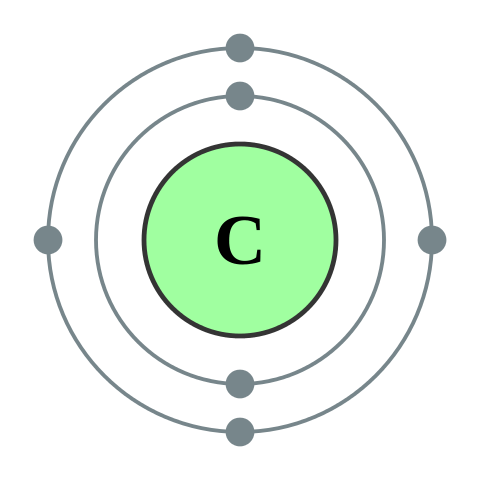
How many valence electrons does carbon have?
4
5
6
7
Which pair of elements has the most similar chemical properties?
boron and carbon
oxygen and sulfur
aluminum and bromine
argon and silicon
Valence electrons are:
Electrons farthest away from the nucleus that take part in chemical bonding
Electrons closest to the nucleus that take part in chemical bonding
Electrons that just come and go - they don't stay with the atom
Electrons in the first shell
How many valence electrons are in an atom of Rb?
2
8
4
1
Why are halogens so reactive?
They want to get rid of their only valance electron to become like a noble gas
They only need one more electron to become like a noble gas
They are non reactive, they have a full shell

What are the vertical columns on the periodic called?
groups, or families
periods
nonmetals
metals
metalloids
The modern periodic table of the elements is arranged by
increasing atomic mass
increasing atomic number
decreasing valence electrons
number of isotopes
What are the horizontal rows on the periodic table called?
periods
groups
metals
nonmetals
metalloids
What do the periods (rows) on the periodic table tell us?
The number of principle energy levels, or shells in the atom
The number of valence electrons (the electrons on the outer most shell)

Name group 1 on the periodic table.
alkali metals
alkaline earth metals
noble gases
halogens


The elements to the right of the staircase, plus hydrogen, are called
metalloids
nonmetals
metals
noble gases
Ionization energy is...
the energy required to add an electron to a specific atom
how much energy it takes to remove an electron from an atom
the energy required to shield the outer electrons from the nucleus
a measure of the ability of an atom to attract electrons
Which of the following will have a lower ionization energy than Scandium (Sc)?
Helium (He)
Titanium (Ti)
Calcium (Ca)
Magnesium (Mg)
The element on the periodic table with the highest ionization energy is
He
F
H
Fr
The element on the periodic table with the smallest atomic radius is
Cs
He
H
Rn
Which atom has the largest atomic radius?
potassium
rubidium
francium
cesium
As you move down the periodic table atoms get bigger. This is because ____________.
The atoms have more mass.
The atoms have more protons.
The atoms have more energy levels
The atoms have more neutrons
The element with the highest electronegativity is _______________.
Helium
Fluorine
Francium
Chlorine
The element from Period 3 listed below with the lowest electronegativity is
Na
Cl
Ar
Mg
Electronegativity __________ from left to right within a period and __________ from top to bottom within a group.
decreases, increases
increases, increases
increases, decreases
stays the same, increases
Which of these is NOT a metalloid?
Si
B
Sb
Al
Which element in the alkali metals group is the least reactive?
Li
Na
Rb
K

Which element could be both brittle and conductive?
A
B
G
L


Which element has 3 valence electrons?
A
B
E
C



