
 Worksheets
US History EOC
Total questions: 65
Worksheet time: 1hrs 11mins
________________ became the first permanent English settlement in North America.
Williamsburg
Rappahannock
Jamestown
Fredericksburg


Who established the colony of Rhode Island?
Roger Williams
John Wise
Anne Hutchinson
William Penn
The middle passage was apart of what trading system
Triangular Trade
African Trade
Square Trade
Gold Mine Trade
The Great Awakening was a __________ movement.
political
scientific
religious
artistic

Which answer best explains what the image of The Albany Plan means? (its message)
The British colonies are like sneaky snakes and should be cut up and destroyed.
This image warns British colonist they must unite together to defeat the French, or die from the French.
The British colonies were actually divided into 10 different sections.
This is how parts of a snake are labeled.

What did the Quartering Act say?
British Soldiers could search your house without a cause to
Colonists had to pay a tax on thier houses
Colonists had to allow British Soldiers to stay in their homes
British Soldiers could seize any house they wanted
The Stamp Act taxed all ________ goods.
paper
plastic
pollution
Who were the Loyalists?
Colonists who wanted to stay part of the British Empire
Colonists who wanted to tax British soldiers
Colonists who wanted to be independent of the British Empire
Colonists who wanted to move west of the Appalachian Mountains
Who were the Patriots?
Colonists who wanted to stay part of the British Empire
Colonists who wanted to tax British soldiers
Colonists who wanted to be independent from the British Empire
Colonists who wanted to move to Great Britain


Who were the Sons of Liberty?
Colonists, known as American patriots, who spoke out against the British.
A group of religious rebels.
People who followed King George's rule.
King George III's loyal subjects.
This writing was published during the American Revolution and paved the way for the Declaration of Independence.
Rights of man
The American Crisis
Common Sense
What document did the colonists write to share their concerns with England and to break away?
Mayflower Compact
Bill of Rights
Magna Carta
Declaration of Independence

What was the main weakness of the Articles of Confederation?
the federal government was too weak
It had no legislative branch
The judicial was too powerful
The executive was too powerful
One result of the Shay rebellion was the realization that the federal government needed more control over the states
true
false
What is the purpose of the principle of Checks and Balances?
To make sure that the President (Executive) has the most power
To make sure that the Judicial Branch can overrule Congress (Legislative) and the President (Executive)
To ensure that Congress can keep the other two branches in check
To ensure that one branch of government does not become too powerful
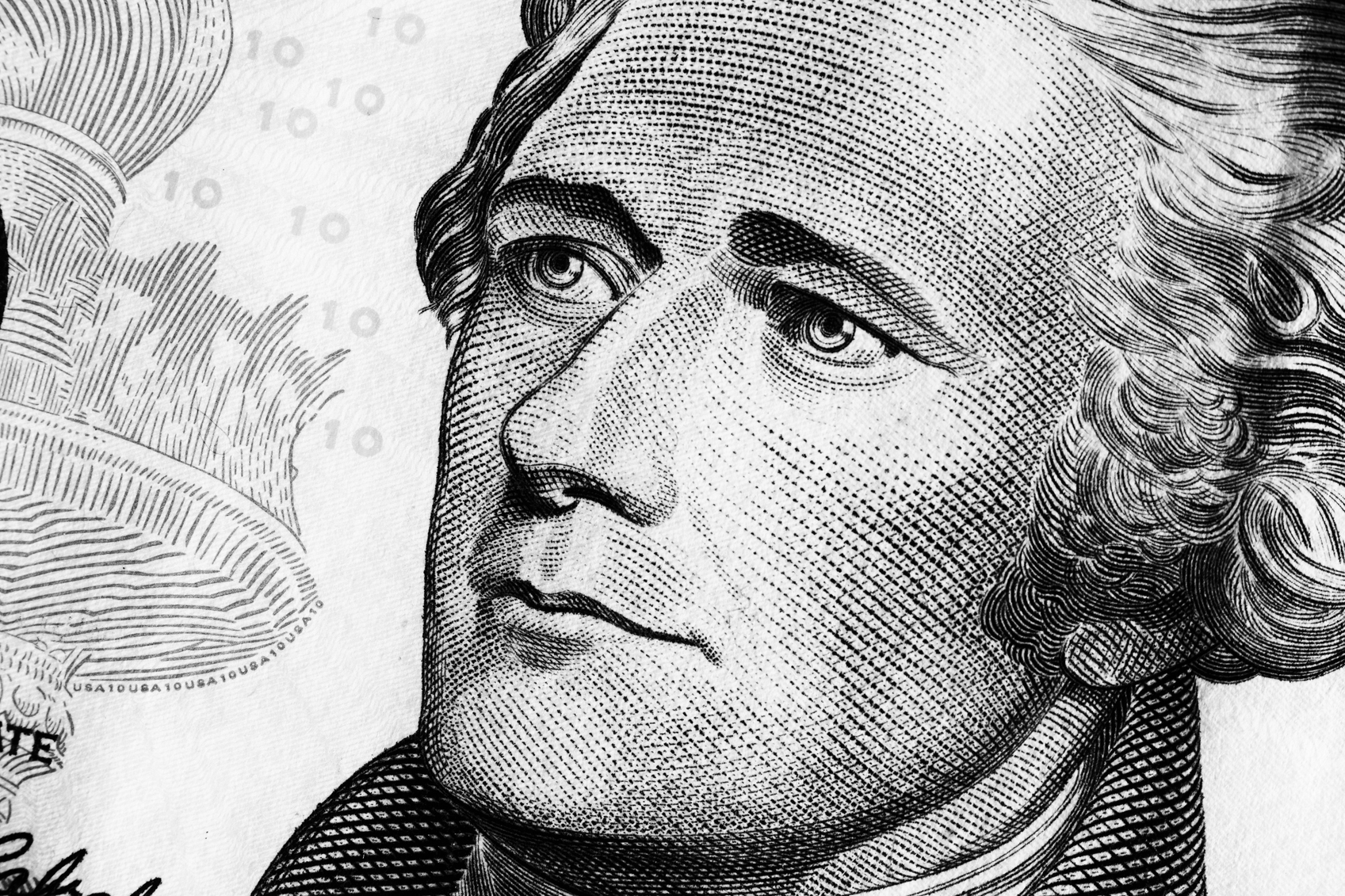
Who is known as the leader of the Federalists?
Alexander Hamilton
John Adams
Patrick Henry
Benjamin Franklin
What was the Anti-Federalists’ greatest concern about ratifying the U.S. Constitution?
The lack of a federal court system.
The lack of legislative veto power.
The lack of a bill of rights.
The lack of a strong military.
What is the name of the first 10 amendments?
Constitution
Declaration of Independence
Bill of Rights
Articles of Confederation
What power did the Supreme Court give itself in Marbury v Madison?
Judicial Review
Veto Power
Make Laws
Override

Federalists wanted to...
ratify the Articles of Confederation
Get rid of the Declaration of Independence
Ratify the constitution
elect George Washington as president

Susan B. Anthony and Elizabeth Cady Stanton both fought for_______________________.
expansion of slavery
women's suffrage
prison reform
public education
Who was the author of the anti-slavery newspaper "The Liberator"?
John Brown
Nat Turner
Frederick Douglass
William Lloyd Garrison
What is a reform?
A change on a large scale
A change that cannot really happen
A change made in history
A change that upsets people
President Andrew Jackson was liked mostly by the --
Richest Americans
Poorest Americans
The common man
What is an Abolitionist?
A person who wants to abolish slavery forever
A immigrant to the USA from Poland
A person of high breeding and class
A person born into a political family

This former slave was taken to the North, but told he could still not be free (even in a free state) and lost his case in the Supreme Court.
Harriet Tubman
Harriet Beecher Stowe
Frederick Douglas
Dred Scott
This legislation said that slavery in Kansas and Nebraska would be decided by vote. It lead to lots of violence.
Kansas Nebraska act
Missouri Compromise
Compromise of 1850
Raid on Harper's Ferry
What name was given to the conflict fought in the Kansas territory between pro-slavery settlers and anti-slavery settlers?
Missouri Compromise
Summer if 1856
Bleeding Kansas
Pottawatomie Creek, Kansas

Lincoln gained the confidence to order the emancipation of the slaves due to the victory of the Union army in this battle:
Battle of Gettysburg
Battle of Antietam
Battle of Fredericksburg
Battle of Fort Sumter

The Emancipation Proclamation paved the way for what constitutional amendment that outlawed slavery in the United States?
The thirteenth amendment
The nineteenth amendment
The fifth amendment
The first amendment

Which of the below statements best describes the Emancipation Proclamation?
A change to the United States constitution allowing for all men to vote regardless of race.
A new law issued by congress that said slavery was illegal in the North.
An executive order from Abraham Lincoln that eventually led to the freedom of millions of slaves.
A speech given by Abraham Lincoln asking for the Civil War to end.
What was Sherman's plan with his march to the sea to end the war quickly?
Asking soldiers to surrender
Total war
Capture as many confederates as possible
Free all the slaves in the South

Who was General of the Union army that defeated Lee?
Robert E. Lee
Abraham Lincoln
Ulysses S. Grant
Thomas "Stonewall" Jackson

What was the process of Reconstruction?
attempt to rebuild the South after the Civil War
creating land zones for freedmen after the Civil War
instituting new laws in the north
eliminating the plantation economy in the South
Who wrote Uncle Tom's Cabin about the evils of slavery?
Harriet Tubman
Harriet Beecher Stowe
William Lloyd Garrison
Frederick Douglas
What group of people wanted to reform the Church of England and settled in Massachusetts Bay?
Pilgrims
Puritains
Separatists
Colonists

