
 Worksheets
Articles of Confederation/Shays' Rebellion/Constitutional Convention
Total questions: 64
Worksheet time: 53mins
First Constitution of the Colonies
Articles of Confederation
Bill of Rights
The Constitution
Fundamental Orders of Connecticut
Which of the following were powers of the Government under the Articles of Confederation?
Conduct foreign affairs
borrow money and issue currency
regulate trade
impose taxes
Which of the following are powers the federal government did not have under the Articles of Confederation.
Impose taxes
regulate trade
draft citizens into the military
conduct foreign affairs
Which level of government had the most power under the Articles of Confederation?
The Central/Federal Government
The States
Townships
All of them equally
Because this branch was missing under the Articles of Confederation the government had no power to enforce its laws?
Judicial
Legislative
Executive
Congress
How many states were needed to enact a law under the Articles?
5 out of 13
10 out of 13
9 out of 13
2 out of 13
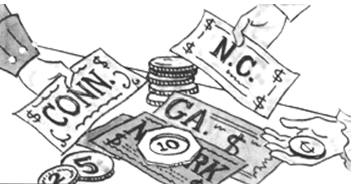

In order to amend the articles, ________ of the states needed to agree
all
7
9
51%
The Northwest Ordinance provided a pathway for territories to apply for
statehood
federal funding
infrastructure grants
After an area in the Northwest Territory reached 5,000 free, adult, white, men, they could elect a __________.
Govenor
President
assembly
judge
What area contained present day Ohio, Indiana, Illinois, Wisconsin, Michigan, and parts of Minnesota.
Canada
U.S.A.
13 colonies
Northwest Territory
In order for someone to vote in the Northwest Territory they had to be what?
A citizen
a white male who owned 50 acres
A resident of the Northwest Territory
Over the age of 21
Which of the following were accomplishments of the federal government under the Articles?
Putting down Shays' Rebellion
Establishing a process for the admission of new states
Paying off Revolutionary War debt
Treaty of Paris 1783
Which of the following was NOT a right guaranteed to citizens living in the Northwest Territory?
freedom of speech
freedom of Religion
trial by jury
right to secede
"The confederation's failure to deal with conditions that might lead to rebellion, as well as the problems with trade and diplomacy, only added fuel to their argument." Who is "their"?
Those who felt the federal government was too strong
Those who felt that the federal government was too weak.
Where did Shays' rebellion take place?
New York
Massachusetts
Pennsylvania
How did Shays' Rebellion demonstrate the weakness of the Articles of Confederation?
It revealed that the federal government was unable to protect the country from internal and external threats
Proved that states were unable to protect the rights of the people
Showed that the inability to impose taxes would lead to rebellion
What was the original purpose of the Constitutional Convention?
To revise the Declaration of Independence
To revise the Articles of Confederation
To draft the Treaty of Paris 1783
To elect the first president
What did Anti-Federalists believe?
The states should have more power than the federal government
There should be no federal government
The federal government should be more powerful than state governments
A strong central government could lead to restrictions on rights and freedoms
The _______________ Plan proposed a strong federal government with three branches.
Virginia
New Jersey
Connecticut
Three-fifths
Which type of legislature did the Great Compromise create?
A bicameral legislature, one equal and one based on population
A unicameral legislature with equal representation
A bicameral legislature with proportional representation
A unicameral legislature based on population

The Great Compromise solved the problem between large and small states regarding representation.
True
False
In federalism, the national government and the states share power, but the __________________ has more power.
National government
State government
Supreme Court

What does the political cartoon represent?
3/5 Compromise: every 5 slaves = 3 people for representation & taxation in Congress
5/3 Compromise: every 3 slaves = 5 people for representation & taxation in Congress
3/5 Compromise: every 3 slaves = 5 people for representation in the slave trade taxes
10/8 Compromise: every 10 slaves = 8 people for representation in the Appalachian Mountains
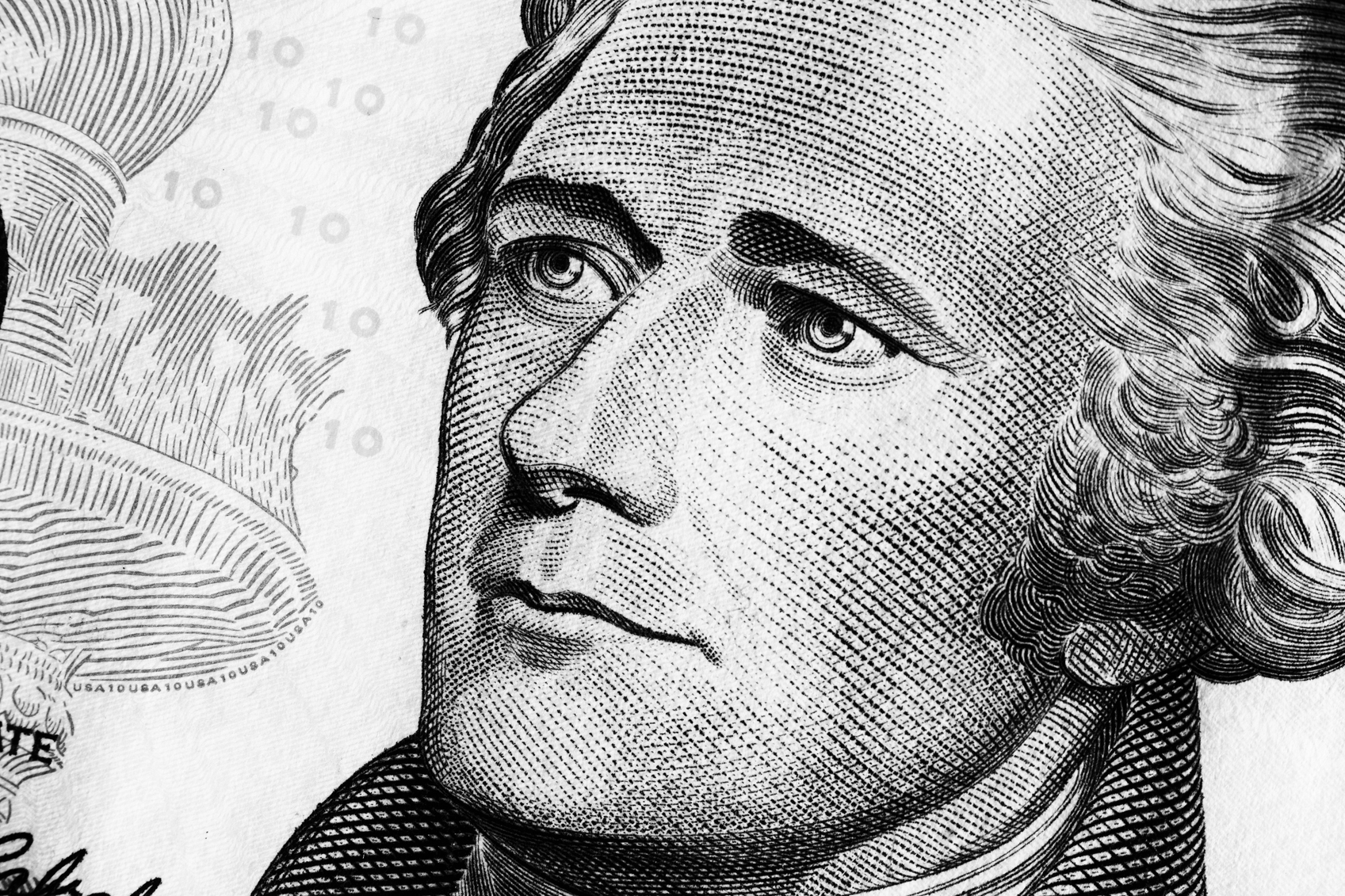
Who is known as the leader of the Federalists?
Alexander Hamilton
John Adams
Patrick Henry
Benjamin Franklin
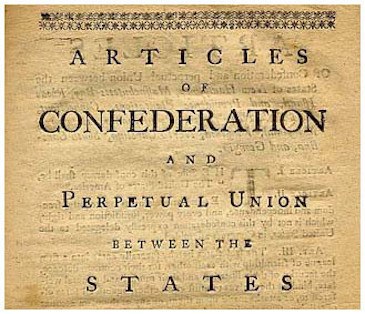
Federalists believed that the Articles of Confederation were a ________ because it set up a ________ National Government.
Success, Strong.
Success, Weak.
Failure, Weak.
Failure, Strong.
Whose perspective does this statement express: The Constitution contains no Bill of Rights to protect individual liberties like freedom of speech, trial by jury, and the right against searches and seizures.
Federalists
Anti-Federalists
What did Federalists and Antifederalists disagree most strongly about?
a strong national government
creating a system of checks and balances
protecting individual liberties
increasing the power of the confederation

Whose perspective does this statement express: Though the Federal Government has more power, these powers are clearly defined and limited by the new Constitution and no bill of rights is necessary.
Federalists
Anti-Federalists
First Constitution of the United States
Articles of Confederation
Bill of Rights
The Constitution
Fundamental Orders of Connecticut
The South wanted slaves to count for what purpose?
Population
Taxation
No purpose at all
both population and taxation


According to the Land Ordinance of 1785, one section of each township was to be used to support
churches
businesses
public education
farmers
Who put down Shays' rebellion?
The Continental Army under George Washington
the Massachusetts militia
The U.S. Army under John Paul Jones
The British Army
The Constitutional Convention was held in _________________ in _____________
Washington, D.C., 1787
Philadelphia, PA, 1787
Washington, D.C., 1781
New York, NY, 1787
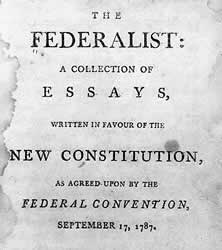
The "Federalist Papers" were written to:
Convince people to ratify (support) the new Constitution.
spark a new revolution among the American people against their government.
oppose a strong centralized government.
create a new monarchy.
Which of the following were authors of the Federalist Papers
George Mason
John Jay
Alexander Hamilton
James Madison
Thomas Jefferson
The Northwest Ordinance provided a pathway for territories to apply for
statehood equal with the original 13 states
colonial status
statehood with less power than the original 13 states
Charles de Montesquieu advocated for what form of government?
one where governmental powers were separated into branches
oligarchy
absolute monarchy
a constitutional monarchy

How is each state's number of representatives determined
based on a state's population as determined by a decennial census
based on the size of the state's territory
each state receives an equal number of representatives in the House

