
 Worksheets
Birth of Modern US Practice
Total questions: 147
Worksheet time: 2hrs 39mins
Amendment that gave Congress the power to tax income.
16th Amendment
17th Amendment
18th Amendment
19th Amendment
Amendment that established the direct election of senators by the people.
16th Amendment
17th Amendment
18th Amendment
19th Amendment
Prohibited the manufacture, sale, and distribution of alcoholic beverages
16th Amendment
17th Amendment
18th Amendment
19th Amendment
Amendment that gave women the right to vote.
16th Amendment
17th Amendment
18th Amendment
19th Amendment
Law that weakened monopolies and upheld the rights of unions and farm organizations.
Interstate Commerce Act
Clayton Anti-trust Act
Pure Food & Drug Act
Roosevelt Corollary
form of democracy in which the people vote firsthand
representative democracy
fake democracy
direct democracy
indirect democracy
This muckraker took on Standard Oil.
Ida Tarbell
Lincoln Steffens
Upton Sinclair
Jacob Riis
This is a tax on a person's earnings.
Death tax
Municipal tax
Income tax
Probate tax
These tools were used to help increase direct democracy during the Progressive Era.
initiative, referendum. recall
Social Gospel, Social Darwinism, Gospel of Wealth
Homestead Act, Pacific Railway Act, Morill Land Grant Act
13th, 14th, 15th Amendments.
Journalists who exposed and published about corruption in business and politics.
Yellow Journalists
Muckrakers
Slanderers
Libelists
Choose which of the following helped Progressives decided to make "A better American society" (Choose ALL that apply)
Protecting Social Welfare
Promoting moral improvement
Economic reform/competition
Run by corporations and crooked politicians.
Halted sale of contaminated foods & medicines; called for truth in labeling
The Good Neighbor Act
The Dawes Act
Pure Food & Drug Act
The Homestead Act
This word means the right to vote.
freedom
suffrage
federalism
republicanism
Susan B. Anthony, Elizabeth Cady Stanton, and Alice Paul were prominent women known for working for the right of women to vote.
Apologists
Suffragists
Strategists
Communists
This muckraker wrote a book entitled The Jungle which exposed disgusting practices in the meat packing industry.
Lincoln Steffens
Upton Sinclair
Ida Tarbell
Jacob Riis
This word refers to a movement that is anti-alcohol
temperance
suffrage
civil rights
rum runners
The WCTU stands for
Women's Charity Texans Union
Women's Christmas Teachers Union
Women's Christian Temperance Union
Wonderful Charity Together United

Which of the following complete the list above?
What is the perspective of the quote above?
The Progressive Movement was
a period of time when industrial giants challenged traditional authority.
a social theory describing “survival of the fittest” in the business
a reform movement in the early 20th century.
an amendment which provided senators to be elected directly.
The term “muckraker” refers to
a person who supported Prohibition.
a tool used for industrial production.
women who supported the 19th amendment.
a writer who exposed corruption and the ills of society.
The Temperance Movement was focused on
restoring better morals in America by urging people not to drink alcohol.
improving living conditions in urban tenements.
helping new immigrants adjust to life in America.
improving working conditions and ending child labor.
The 26th President who worked to preserve the nation’s national forests and fought against big business and political corruption, nicknamed “The Trust-Buster”
John Muir
Theodore Roosevelt
Franklin D. Roosevelt
Abraham Lincoln
Which of the following was a long-term effect of Prohibition?
the rise of fundamentalism
the right to vote for women
the awareness that alcoholism was harmful
the rise of organized crime
The Founding member of the Settlement House movement who helped found Hull House was
Alice Paul
Jane Addams
Ida Tarbell
Elizabeth Taylor
The Conservationist who studied plants and animals in the Yosemite area and worked to set aside land for National Parks
John Muir
John Henry
Jacob Riis
Grizzly Adams
African-American activist who fought against racial injustices in the US in the early 20th century
William Du Bois
John Henry
John Muir
Jacob Riis
The photographer who exposed unsanitary living conditions in New York City was
Matthew Brady
Herbert Spencer
Andrew Carnegie
Jacob Riis
An organization of workers dedicated to protecting members' interests and improving wages, hours and working conditions for all.
Labor Union
Workers Rights
Worker Strikes
Collective Bargaining
The negotiation of wages and other conditions of employment by an organized body of employees
Labor Unions
Workers Rights
Worker Strikes
Collective Bargaining
Facing 12-hour work days and wage cuts resulting from the depressed economy, factory workers at the Pullman Palace Car Company walked out in protest. The strike ended when President Grover Cleveland sent federal troops to Chicago on July 6, 1894.
The Pullman Strike
Great Anthracite Coal Strike
Great Southwest Railroad Strike
Steel Strike of 1919
What was the first nationwide industrial union?
the Knights of Labor
the AFL
the Pinkertons
the Anarchists
In July of 1877, what did several railroads announce that triggered the first nationwide labor protest?
employee layoffs
wage cuts
blacklists
sixteen-hour workdays
Which incident was a result of a Chicago labor disturbance on May 4, 1886, in which people were killed by a bomb thrown during a demonstration?
the Great Railroad Strike
the Haymarket Square Riot
the Homestead Strike
the Pullman Strike
What incident occurred in 1886 that badly hurt the reputation of the Knights of Labor?
the formation of the American Federation of Labor
the Pullman Strike
the Haymarket Riot
the Great Railroad Strike

Most strikes by unions in the late 1800s were unsuccessful mainly because
unions were unconstitutional
strikes had never been used before to settle labor issues
government supported business instead of workers
strikers failed to use militant tactics

Formation of national labor unions in the late 1800's was mainly because of
passage of laws that supported workers
laws restricting immigration
poor working conditions and low wages
economic depression that led to high unemployment
What is the name given to the technique for breaking a union in which the company refuses to allow the workers on the property and refuses to pay them.
strikebreaker
blacklist
shutout
lockout
What was the first major national strike by American workers?
Haymarket Strike
Homestead Strike
Pullman Strike
Great Railroad Strike
What were "Scabs?"
socialists
federal troops
factory management
replacement workers
Workers that were fired due to union activity were often fired and placed on a lists of "troublemakers" that was called a(n)
strikebreaker list.
union list
lockout list
blacklist
Most strikes by unions in the late 1800s were unsuccessful mainly because
unions were unconstitutional
strikes had never been used before to settle labor issues
government supported business instead of workers
strikers failed to use militant tactics
Andrew Carnegie dealt with striking union workers at his Pennsylvania steel factory in 1892 by
firing every worker and replacing them with machines.
firing half the workers and cutting pay for the rest.
locking workers out of the factory and hiring strike breakers.
agreeing to give workers higher wages.
What ended open-range cattle herding in the late 1800s?
Oil wells
Barbed wire
Railroads
Telegraph
How did barbed wire help farmers settle in West Texas?
It helped expand railroads into the area
It helped crops by providing protection from cattle
It gave people a way to earn money
It provided growth of protected land
What did the final destination of all the cattle trails have in common?
All led to highways where cattle would be shipped to the East to be sold
All went through Indian Territory for trade with Native Americans
All led to railroads where cattle would be shipped to the East to be sold
Some went to railroad cities to be sold at auction
In what direction did the cattle trails go?
West
South
East
North
Why were the rivers important on the Goodnight-Loving Trail?
They provided a path for the trail
They were used for moving cattle north
They provided water for the cattle
They were used as landmarks to travel along
What does transcontinental mean?
flying to another continent
extending or going over a continent
visiting a continent for research
writing about a continent
What is the relationship between the cattle industry and the railroad industry?
There is no connection between the cattle industry and railroad industry
Cattle ranchers would also invest in railroad companies
Cattle ranchers would set up thier ranches along train stations
The end destination of cattle trails was railroad stations that would take cattle to markets
What helped cities boom in the late 1800s?
Cities grew with railroad expansion.
Cotton became the number on industry in Texas
American Indians removed to reservataions
Population dropped due to loud noise of trains
_________________________ drove cattle from ranches to railroads.
Railroad officials
Explorers
Cowboys
Meat dealers
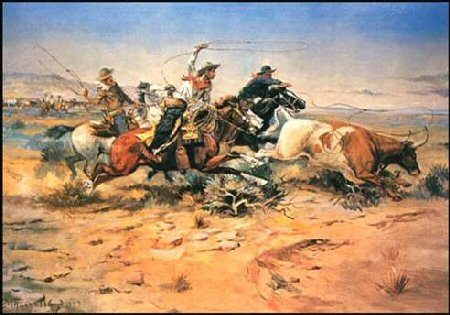
Bad weather, cattle rustlers, Indians, and stampedes are all causes of what?
Dangers on an oil rig
Dangers during the battle of the Alamo
Dangers on a Cattle Drive
Dangers of farming
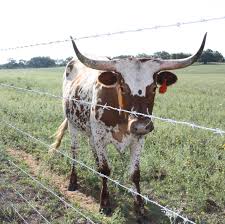
What effect did barbed wire fences have on the closing of open land in the Texas frontier?
Kept the Indians off the land
Made cattle drives dangerous for Ranchers
Caused too much damage to horses
Ranchers loved the invention of barbed wire
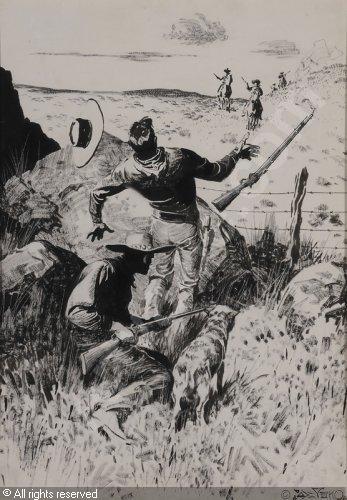
Barbed wire helped close off most of the western frontier, as a result, farmers and ranchers engaged in....
Peace Talks
Range Wars
Elections
Celebrations
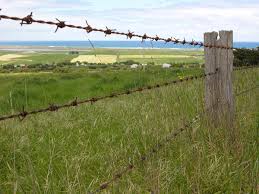
During the late 19th century, how did farmers contribute to the bust cycle in ranching?
Farmers purchased all the cattle
Farmers placed barbed wire fences which closed off the open range
Indians were stealing all the cattle
Ranchers gave up on cattle drives and became farmers
About how many years did the glory days of the cowboy period last?
approximately 100 years
approximately 10 years
It never ended
approximately 25 years
What part of what state was the original home of most of the longhorn cattle?
South Texas
West Texas
Northern Kansas
Eastern Oklahoma
Why was the first day of the cattle drive often the longest and the hardest?
The Cowboys were not organized yet
They had not gathered enough food yet
Cattle were spooked about leaving their home range.
There was not enough water on the first day.
Approximately what percentage of the cowboys would sign up for an additional year?
1/2
1/3
1/4
3/4
Packing house is
A factory in a major city where meat was prepared for market
The place where cattle were loaded on trains
The original ranch in South Texas
a Kansas town where trails connected with trains
Cattle ranching became profitable after the civil war because
The cattle had been over-breeding during the war, without attention from ranchers
The government needed money to pay the soldiers
Cattle had not been taxed during the war
Cattle ranching was a government program set up with reconstruction of the South
A vaquero is a Mexican cowboy
True
False

What is the significance of the Buffalo Soldier in Texas history?
They were Native Americans who fought with Texas during the Civil War.
They were African Americans who guarded the Texas frontier before the Civil War.
They were Anglo Americans who protected the Texas frontier before the Civil War.
They were Mexican Americans who guarded the Alamo during the Texas Revolution.

Which answer best describes how the Spanish vaqueros influenced the growth of Texas industry during the late 19th century ?
Assisted the growth of the cotton industry in Texas during the late 19th century.
Assisting the Texas settlers on their problems with Native Americans.
Passing on wisdom of cattle raising to Texas settlers during the late 19th century.
Responsible for the discovery of major oil fields in east Texas.

Joseph Gliddens invention of ________ had the greatest impact on settlement in the West.
Barbed Wire
Colt Revolver
Cotton Gin
Windmills

Law enforcement groups originally created by Stephen F. Austin that patrolled the frontier were called the ..
King's Army
Texas Rangers
Buffalo Soldiers
Confederate Army

Why did cattle ranchers in Texas "drive" cattle north to states like Kansas, Colorado and Nebraska ?
So they could transport their cattle to the markets in the North by railroad.
So they could trade their cattle with other cattle ranchers.
They were told they had to move their ranches out of Texas.
The weather was too cold in Texas to have ranches.

Boom towns experience a major increases , or boom , in population due to sudden rapid economic growth.
The discovery of which natural resource caused boom towns to appear in the early 1900's in East and West Texas.
Oil
Iron
Coal
Silver

Which region of Texas saw the development of lumber mills and company towns at he beginning of the 20th century?
Coastal Plains
Great Plains
North Central Plains
Mountains and Basins
So much oil was pumped that it "flooded" the market. Texas and the U.S. had fallen into the Great Depression. As a result, the bottom fell out of oil prices. Oil that had been selling for more than a dollar a barrel in 1930 fell to 8 cents per barrel by 1931. To control prices, the Texas and U.S. governments set limits on production.
Which of the following described the economic trend described above.
Scarcity
Industrailization
Boom and Bust Business Cycle
Urbanization

Why does the Chisholm trail end in Abilene,Kansas?
Cattle markets developed near the railroads.
Texas longhorns could not survive north of Dodge City.
It was at the base of the Rocky Mountains.
The markets in Abilene paid the most per head of cattle.
What is the best definition of Nativism?
When Native Americans are discriminated against.
the belief that immigrants are inferior to others.
When immigrants are recruited from overseas
When immigrants choose to live in areas with people like them.
Upon arriving in New York, immigrants were to go to
Central Park
Elis Island
Manhattan
the Empire state building
An immigrant new to America would most likely where?
a penthouse
a tenement apartment
in the suburbs
on a ranch
Which of the following limited immigration?
the Dawes Act
The Homestead Act
The Pacific Railway Act
Chinese Exclusion Act
Political Machines promised to protect immigrants' jobs in return for
military service
physical security
votes
cash payments
Which statement about immigration during the 1800s is most valid?
organized labor supported unlimited immigration
most immigrants to the United States were illegal aliens
few immigrants came from western Europe
industrial growth led to a demand for cheap immigrant labor
During the late 1800s and early 1900s, where did most of the immigrants to the United States settle?
urban centers of the Northeast
plantations of the New South
farming regions of the Great Plains
mining areas of the Far East
Why did the United States follow a policy of unrestricted immigration from Europe during most of the 1800s?
the US wanted to help European nations by taking their surplus population
immigrants were the only capital resources for business and industry
most American desired a more diversified culture
the American economy needed many unskilled workers
In the late 1800s, the patterns of United States immigration changed in that
most immigrants were political refugees
increasing numbers came from eastern and southern Europe
most immigrants chose to settle in the farming regions of the West
far fewer immigrants arrived than in previous years
Which of the following individuals would have been most likely to become a Nativist?
a Protestant worker
an Italian immigrant
a Catholic priest
an English speaking Irish immigrant
Which statement about immigration to the United States is most accurate?
the number of immigrants has remained constant in each decade during most of American history
the ethnic mix of immigrants to the United States has remained mostly unchanged
nearly all immigrants have easily assimilated into American culture
the desire for economic advancement has been a major reason for immigration to the US
Which of the following individuals would have been most likely to visit Ellis Island during the first few years of the 20th century?
an Italian immigrant
a farmer moving to New York
a Chinese immigrant
an emancipated slave
Which of the following laws was passed in large part due to Nativism?
Chinese Exclusion Act
Sherman Anti-Trust Act
Civil Rights Act of 1964
Voting Rights Act of 1965
Iron ore, running water, lumber, and oil are all examples of which of the following?
natural resources that helped the US become an industrialized nation
natural resources used to produce steel
natural resources used to produce electricity
natural resources which the US lacked during the age of industrialization
"It was a sight to behold. Whole families sharing small rooms with other families. The smell was horrible, and the Lord knows what critters were living in the walls. I guess it's good they work 16 hour days; ain't no room for much except sleeping."
The above quote is probably talking about
African American sharecroppers
immigrants living in a tenement
robber barons living in an urban area
members of the Populist movement
Ethnic ghettos, political machines, tenements, slums, and cultural diversity were all consequences of which of the following?
democracy
abolition
emancipation
industrialization
The steerage part of a ship
was for wealthy passengers only
persecuted people for their religion
persecuted people for their ethnicity
were cheap tickets on a ship for immigrants
The main goal of Hull House was to
provide jobs for wealthy women
pass the Tenement House Act of 1901
help poor immigrants
oppose the Chinese Exclusion Act
Hot stuffy workshops in which workers prepare materials for low wages in neighborhoods were
factories
sweatshops
tenements
mass transit
Jacob Riis exposed the horrible conditions in New York City and wrote How the Other Half Lives
tenements
schools
factories
sweatshops
Joseph Pulitzer and William Randolph Hearst
managed tenement apartments
opened a settlement house
published comic strips in their newspapers
were reformers for women and children
Describe life in a tenement apartment building
overcrowding
unsafe buildings
disease
all of the above
laissez-faire
opposed to government regulation of business
government should control major industries
government should be eliminated
nations should avoid trade
The belief that the ideas of natural selection should be applied to the marketplace.
social darwinism
gospel of wealth
Spencer's Theory of Selectivity
laissez-faire
Wealthy had a god-given responsibility to give money to benefit society.
Gospel of Wealth
laissez-faire
Social Darwinism
invisible hand
Who was responsible for the first modern research laboratory?
Thomas Edison
George Westinghouse
Andrew Carnegie
Alexander Graham Bell
In the late 1800s, Sears and Montgomery Ward changed the way people shopped because they
issued catalogs that allowed people across the country to order goods.
created large department stores for shopping in large cities.
brought nationwide chain stores to small towns.
In the late 1800s, Macy's and Marshall Field's changed the way people shopped because they
issued catalogs that allowed people across the country to order goods.
created large department stores for shopping in large cities.
brought nationwide chain stores to small towns.
Where did the Union Pacific and the Central Pacific Railroads meet to complete the Transcontinental Railroad?
San Francisco
Sutter's Mill
Promontory Summit
Houston
The railroads were funded by loans and _____________.
Land Grants
Stock
Buffalo Hides
More Workers
Why did the government want the Transcontinental Railroad built?
To move prisoners west
To encourage westward expansion
To defeat Mexico
To make peace with the Native Americans
Which mountain range did the Central Pacific have to build through?
The Sierra Nevada Mountains
The Appalachian Mountains
The Platte Mountains
The Rocky Mountains
The Homestead Act required people to farm on land for _____ years to get _______ acres for free.
10 years, 50 acres
1 year, 80 acres
7 years, 180 acres
5 years, 160 acres
Who were Forty-Niners?
Prospectors
Sailors
Soldiers
Native Americans
Which city grew by over 30,000 people in just six years because of the Gold Rush?
Los Angeles
San Francisco
Denver
Portland
California became a state because of _____________.
The Homestead Act
The Compromise of 1812
The Pacific Railroad Act of 1862
The Compromise of 1850

