wayground logo

Free Printable Worksheets

NEW

Font size

S
M
L
XL
Worksheets

Chemical Reactions Review

Total questions: 69

Worksheet time: 54mins

Name
Class
Date
1.
How many Hydrogen are in 4H2O?
a)
6
b)
8
c)
2
d)
4
2.
How many elements are in C6H12O6?
a)
1
b)
2
c)
3
d)
4
3.
How many Sodium (Na) are in 6NaCl?
a)
1
b)
12
c)
6
4.
Which is the correct formula for:
 three hydrogen (H)
one sulfur (S)
four oxygen (O)
a)
H3SO4
b)
HSO4
c)
H4S3O
d)
H2O
5.
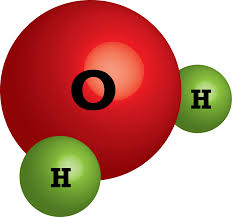
How many atoms of Hydrogen are in this compound
a)
1
b)
2
c)
3
d)
4
6.

What does the subscript in a chemical formula tell you?

a)

How many molecules are present

b)

How many atoms are present

c)

How many elements are present

d)

How many neutrons are present

7.
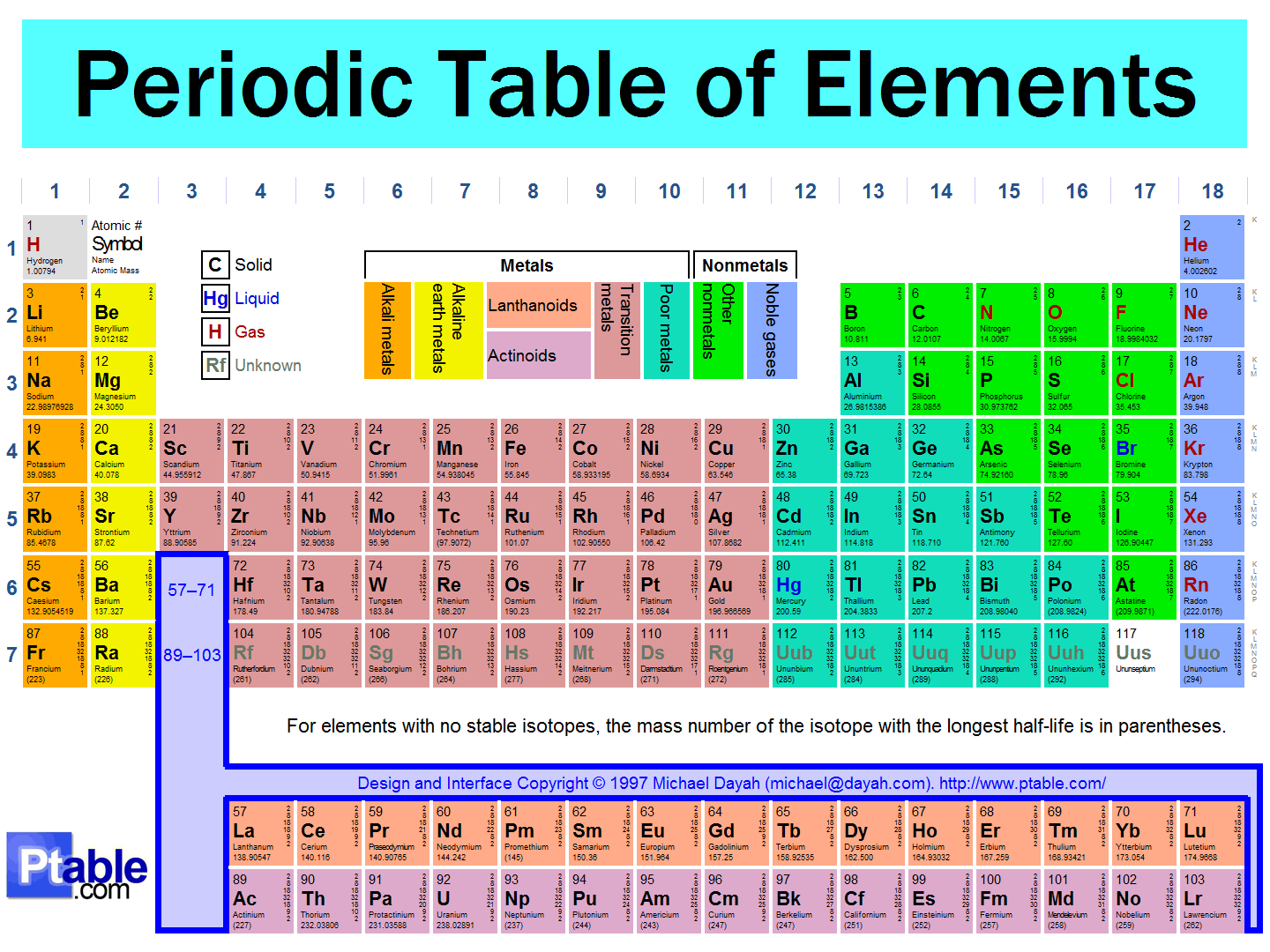
Which of the following has a full valence shell?
a)
Oxygen
b)
Neon
c)
Barium
d)
Carbon
8.
Elements on the LEFT side of the periodic table will most likely form:
a)
Positive ions
b)
Negative ions
c)
Neutral Ions
d)
None of these
9.
An ionic bond forms when atoms ___________ electrons.
a)
gain
b)
share
c)
increase
d)
transfer
10.
Which type of bond has a transfer of an electron from on atom to another?
a)
Polar Covalent 
b)
Non Polar Covalent
c)
Ionic
d)
Metallic
11.
Chemical bonds form when atoms
a)
combined nuclei
b)
give up neutrons
c)
gain protons
d)
share or transfer electrons
12.
If an atom loses two electrons what charge will it have?
a)
+ 2
b)
 - 2
c)
+1
d)
-1
13.
Covalent compounds
a)
Share electrons
b)
transfer electrons
c)
contain a sea of electrons
d)
conduct electricity
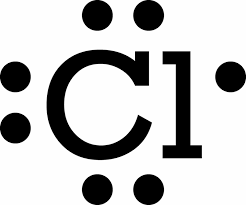
14.
How many valence electrons in this structure?
a)
6
b)
5
c)
4
d)
7
15.

2. Ionic Bonding involves:

a)

The transfer of protons

b)

The transfer of neutrons

c)

The transfer of electrons

d)

None Of the above

16.

3. What do atoms that form positive ions tend to do?

a)

Tend to lose electrons

b)

Tend to lose protons

c)

Tend to gain electrons

d)

Tend to gain protons

17.

6. What usually forms the negative ion?

a)

Nonmetals

b)

Metal

c)

None

18.

9. What happens when an atom gains an electron?

a)

Neutral (no charge)

b)

Positive Charge

c)

Negative Charge

19.

13. What elements generally make a covalent bond?

a)

metal and nonmetal

b)

2 or more nonmetals

c)

metal

d)

none of the above

20.

15. What is a valence electron?

a)

an electron that is found in the outermost shell of an atom.

b)

an electron found in the innermost shell of an atom.

c)

an electron found in the middle shell.

21.
What does an atomic number tell you about an atom?
a)
Number of Protons in an atom or ion
b)
Number of Neutrons in an atom or ion
c)
Number of Nuclei in an atom or ion
d)
Number of fingers on a hand
22.
What is a charged atom called?
a)
ion
b)
ide
c)
bond
d)
Tyler
23.
What is used to show the valence electrons in an atom?
a)
Electron-dot diagram
b)
lines
c)
molecule
d)
covalent bond
24.
What are the only parts of atoms that make chemical bonds?
a)
Protons in the nucleus
b)
Neutrons in the nucleus
c)
Electrons in the nucleus
d)
Valence Electrons
25.
Why don't noble gases normally form chemical bonds?
a)
They have only 2 valence electrons
b)
Their outer level electrons are empty
c)
They have 8 neutrons
d)
They have a full valence electron shell
26.
What type of bond is formed with Sodium (Na) bonds with Chlorine (Cl) to make sodium chloride (table salt)?
a)
ionic
b)
covalent
c)
metallic
d)
James
27.
What type of bond is formed when carbon reacts with 2 oxygen atoms to form CO2 (carbon dioxide)
a)
ionic
b)
covalent
c)
metallic
d)
James
28.
The positive particles of an atom are 
a)
electrons 
b)
positrons 
c)
neutrons 
d)
protons 
29.
the central region of an atom where its neutrons and protons are is its 
a)
nucleus 
b)
electron cloud
c)
core 
d)
center 
30.
What subatomic particle(s) would be found orbiting the nucleus?
a)
Neutrons only
b)
Electrons only
c)
Protons and Neutrons
d)
Protons and Electrons
31.
Which subatomic particles contribute the most to the mass of an atom?
a)
Protons, Neutrons, Electrons
b)
Protons only
c)
Protons and Electrons
d)
Protons and Neutrons
32.
the central region of an atom where its neutrons and protons are is its 
a)
nucleus 
b)
electron cloud
c)
core 
d)
center 
33.
What are the 3 subatomic particles that make-up the atom?
a)
protons, neutrons, and isotopes
b)
neutrons, isotopes, and electrons
c)
positives, negatives, and electrons
d)
protons, neutrons, and electrons
34.

How many valence electrons does Magnesium Have?

a)

1 Valence electron

b)

2 Valence electron

c)

3 Valence electron

d)

4 Valence electron

e)

5 Valence electron

35.
What element is represented in this Bohr Model? 
a)
Carbon
b)
Hydrogen
c)
Aluminum
d)
Lithium
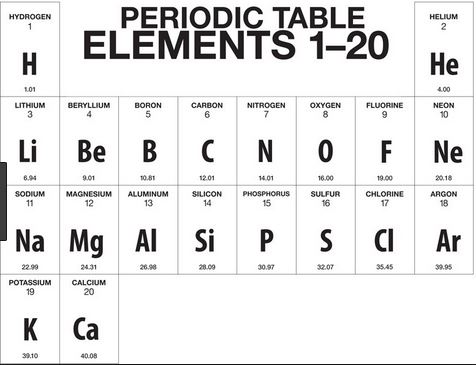
36.
How many electrons does potassium K contain? (click to see image)
a)
19
b)
39
c)
20
d)
40
37.
?
a)
Lithium
b)
Boron
c)
Carbon
d)
Neon
38.
What is the Law of Conservation of Mass?
a)
It states that no matter can be created or destroyed.
b)
It states that no energy can be created or destroyed.
c)
It states that matter can be created or destroyed.
d)
It states that no sound can be created or destroyed.
39.
What is a coefficient?
a)
The small number on the right of the chemical symbol.
b)
The large number in front of a chemical formula.
c)
The number in between the chemical symbols.
d)
The number behind a chemical formula.
40.
What is the part of the chemical equation in green called? 
Fe + S --> FeS
a)
products
b)
reactants
c)
yield
d)
chemical formula
41.
What is the little number after an element in a chemical equation called.
Example: H2
a)
Coefficient 
b)
Subscript
c)
Atom
d)
Equation
42.
Is this balanced?
Al + O2 → 2Al2O3
a)
Yes
b)
No
43.
What are the larger numbers that you CAN CHANGE in a chemical equation? 
a)
Coefficient 
b)
Products
c)
Reactants
d)
Subscripts
44.
What is the left part of a chemical equation called?
2H2 + O2 --> 2H2O
a)
Reactants
b)
Products 
c)
Yields 
d)
Chemical Equation 
45.
What is the right part of a chemical equation called...
2H2 + O2 --> 2H2O
a)
Reactants
b)
Products 
c)
Yields 
d)
Chemical Equation 
46.

Why do all bonds form?

a)

so the number of protons equals the number of electrons

b)

so an atom can become unstable

c)

to fill the outermost energy level

47.

What two types of atoms make a covalent bond?

a)

2 Nonmetals

b)

1 Metal and 1 Nonmetal

c)

2 Metals

d)

2 Noble Gases

48.
Covalent bonds are between...
a)
Metal and Non-metal
b)
Non-metal and Non-metal
c)
Metal and Metal
49.
Ionic bonds are between...
a)
Metal and Non-metal
b)
Non-metal and Non-metal
c)
Metal and Metal
50.
Is hydrogen considered a metal or a non-metal?
a)
A metal
b)
Nonmetal
c)
Metalloid
51.
What is a valence electron?
a)
The sum of neutrons and protons.
b)
The # of electrons in the last shell.
c)
A type of bond.
d)
A popular compound.
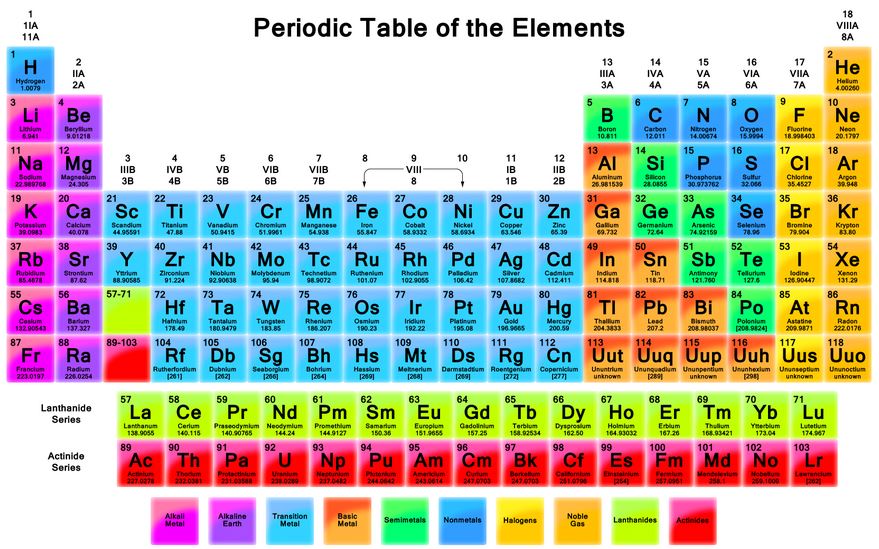
52.
Group numbers on the periodic table help us determine 
a)
The number of valence electrons
b)
Color of the elements
53.
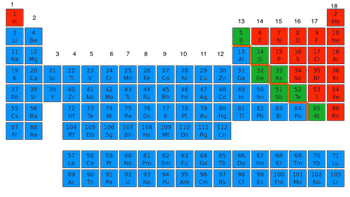
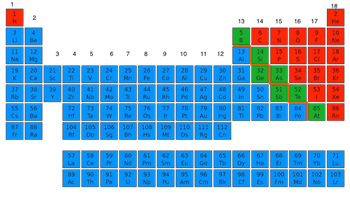
Where are metals located on the periodic table?
a)
Blue
b)
Green
c)
Red
54.
Where are the nonmetals located on the periodic table? 
a)
Blue
b)
Red
c)
Green
55.

Identify the following compound as ionic or covalent: CF4

a)

ionic

b)

covalent

56.

Identify the following compound as ionic or covalent: SO2

a)

ionic

b)

covalent

57.

Identify the following compound as ionic or covalent: CO

a)

ionic

b)

covalent

58.
An atom becomes _________ when it gains electrons.
a)
Positive
b)
Negative
c)
Neutral
d)
Invinsible
59.
An atom becomes _______ when it loses electrons.
a)
Positive
b)
Negative
c)
Neutral
d)
Invinsible
60.
Ions are: 
a)
atoms with a positive or negative charge
b)
atoms with no charge
c)
atoms with ONLY a positive charge
d)
atoms with ONLY a negative charge
61.
When an atom loses a valence electron, it becomes a(n) _____________ ion.
a)
positive
b)
negative
c)
neutral
d)
polyatomic
62.
Negative ions form when atoms _________ valence electrons.
a)
lose
b)
gain
c)
share
63.

The vertical (up and down) columns in the Periodic Table are called

a)

groups

b)

towers

c)

periods

d)

atomic numbers

64.
The Modern Periodic Table of Elements is arranged by
a)
atomic mass
b)
atomic number
c)
valence electrons
d)
number of isotopes
65.
These are found on the Periodic Table.
a)
Compounds
b)
Elements
c)
Mixtures
66.

The horizontal (side to side) rows in the Periodic Table are called

a)

groups

b)

families

c)

periods

d)

atomic numbers

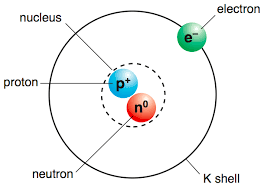
67.
Which is a neutron?
a)
A
b)
B
c)
C
68.
Which is a proton?
a)
A
b)
B
c)
C
69.
Which is an electron?
a)
A
b)
B
c)
C