wayground logo

Free Printable Worksheets

NEW

Font size

S
M
L
XL
Worksheets

Water Cycle Review

Total questions: 42

Worksheet time: 45mins

Name
Class
Date
1.

What are the four major spheres of Earth?

a)

Hydrosphere, Geosphere, Biosphere, Atmosphere

b)

Hydrosphere, Lithosphere, Biosphere, Atmosphere

c)

Precipitation, Condensation, Evaporation, Hydrosphere
2.
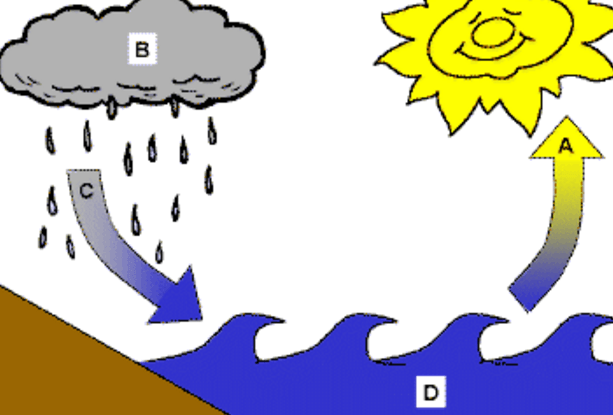
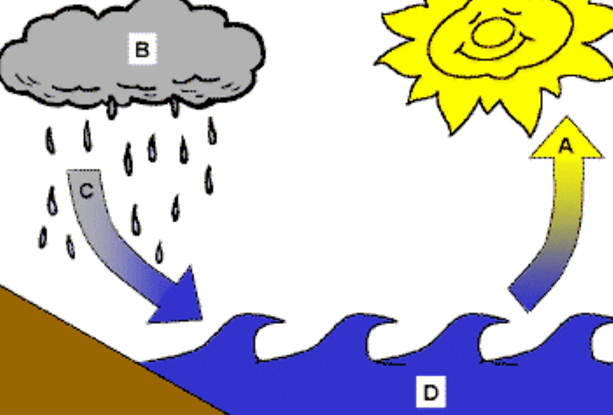
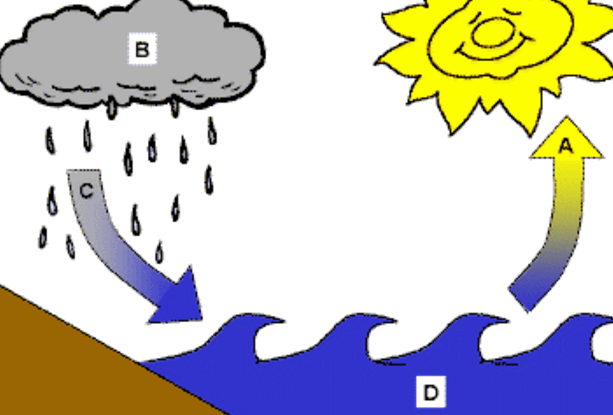
Letter A is representing what part of the water cycle? 
a)
Condenstation
b)
Evaporation
c)
Accumulation 
d)
Precipitation 
3.
Letter B is representing what part of the water cycle? 
a)
Condenstation
b)
Evaporation
c)
Accumulation 
d)
Precipitation 
4.
Letter C is representing what part of the water cycle? 
a)
Condenstation
b)
Evaporation
c)
Accumulation 
d)
Precipitation 
5.
Letter D is representing what part of the water cycle? 
a)
Condenstation
b)
Evaporation
c)
Accumulation 
d)
Precipitation 
6.
The water cycle is ____________
a)
The process by which water moves in and out of the atmosphere. 
b)
A blanket of air that surrounds the earth.
c)
gravitational pull of the moon causing the oceans on the Earth to rise and fall. 
d)
the creation of oxygen by plant through photosynthesis.  
7.
Which of the following best describes what happens during precipitation? 
a)
Water from the land is returned to the ocean 
b)
Ocean water is evaporated into the atmosphere 
c)
Water from the atmosphere is returns to Earth's surface 
d)
Water vapor in the atmosphere is condensed into clouds. 
8.
Water that falls to Earth’s surface as rain, snow, or ice is called
a)
evaporation
b)
condensation
c)
transpiration
d)
precipitation
9.
Condensation occurs when water vapor cools and changes from a 
a)
gas to a solid
b)
liquid to a gas
c)
gas to a liquid
d)
solid to a gas
10.
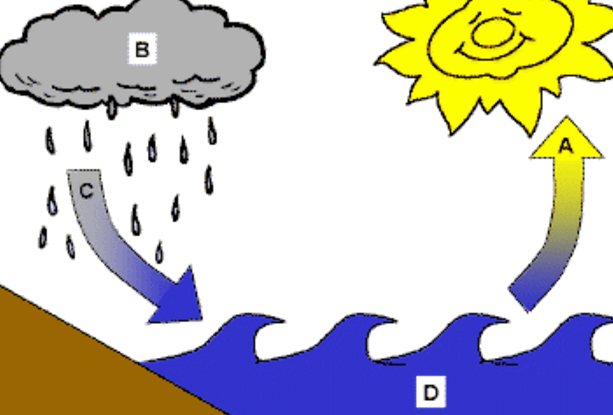
The arrows in the picture below are repenting the process of
a)
The sun cooling the water in the lake 
b)
The clouds pulling up water from the lake 
c)
The water from the lake changing into a gas 
d)
The water falling from the clouds into the lake 
11.
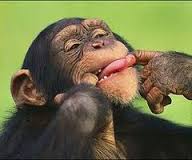
A monkey is:
a)
Atmosphere
b)
Biosphere
c)
Geosphere
d)
Hydrosphere
12.
Polar Bears hunt seals on ice:
a)
Biosphere-Hydrosphere
b)
Biosphere-Atmosphere
c)
Hydrosphere-Atmosphere
d)
Hydrosphere-Geosphere
13.
A farmer plowing a field to plant crops:
a)
Biosphere-Atmosphere
b)
Biosphere-Geosphere
c)
Biosphere-Hydrosphere
d)
Geosphere-Hydrosphere
14.
A thunderstorm is a connection between:
a)
Biosphere-Atmosphere
b)
Atmosphere-Hydrosphere
c)
Hydrosphere-Geosphere
d)
Hydrosphere-Biosphere
15.
Oceans, rivers, lakes, and the moisture in the air are all part of which of Earth's spheres? 
a)
Hydrosphere 
b)
Biosphere 
c)
Atmosphere 
d)
Geosphere 
16.
This sphere is composed of all the living things 
a)
Hydrosphere 
b)
Biosphere 
c)
Atmosphere 
d)
Geosphere 
17.
Water evaporating from the surface of a lake moves from the...
a)
Atmosphere to the geosphere 
b)
Geosphere to the hydrosphere 
c)
Hydrosphere to the atmosphere 
d)
Atmosphere to the hydrosphere 
18.
This sphere includes the continents, the ocean floor, all the rocks on the surface, and all of the sand in the deserts. 
a)
Hydrosphere 
b)
Biosphere 
c)
Atmosphere 
d)
Geosphere 
19.
Wind is part of what sphere of Earth?
a)
Windosphere
b)
Atmosphere
c)
Hydrosphere
d)
Airosphere
20.
When carbon dioxide dissolves from the air into the ocean- the interaction is between...
a)
The atmosphere and lithsphere 
b)
The atmosphere and hydrosphere 
c)
The atmosphere and biosphere 
d)
The atmosphere and atmosphere 
21.
Sometimes fires burn down large areas of forests that are part of the biosphere. Other than the biosphere, which of Earth’s other systems is a forest fire most likely to affect? 
a)
geosphere
b)
cryosphere
c)
atmosphere
d)
hydrosphere
22.
When trees die, they often fall on the ground and decompose. Which part of the Earth system includes dead and decomposed trees?
a)
biosphere
b)
geosphere
c)
atmosphere
d)
hydrosphere
23.
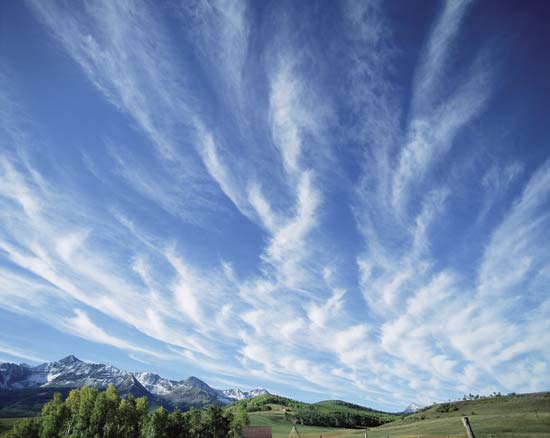
The picture shows three of Earth’s spheres.
What two spheres are represented by the water and heron?
a)
biosphere and geosphere
b)
atmosphere and biosphere
c)
hydrosphere and biosphere
d)
atmosphere and hydrosphere
24.
All of the following are examples of the biosphere except
a)
plants
b)
animals
c)
bacteria
d)
air
25.
The geosphere includes all but
a)
rocks
b)
mountains
c)
lava
d)
plants
26.
The hydrosphere interacts with the biosphere by providing __________ to life.
a)
nutrients
b)
water
c)
soil
d)
lightning
27.
This includes the gases that surround the earth, giving us a protective layer. 
a)
Hydrosphere
b)
Atmosphere
c)
Lithosphere
d)
Biosphere
28.
The classification of water that is located underground:
a)
Groundwater
b)
Deep water
c)
Dark water
d)
Cave water
29.
The classification of water that is in lakes and rivers:
a)
Groundwater
b)
Open water
c)
Clearwater
d)
Surface water
30.
True or false?
Bio means life.
a)
True
b)
False
31.
True or false?
Hydro means water.
a)
true
b)
false
32.

What does GEO mean?

a)

Gas

b)

Earth

c)

Rocks

d)

Life

33.

What does ATMOS mean?

a)

Gas

b)

Water

c)

Earth

d)

Life

34.

What are the two main gases that make up the atmosphere?

a)

Hydrogen and oxygen

b)

Nitrogen and oxygen

c)

Nitrogen and hydrogen

d)

Oxygen and carbon dioxide

35.

What are the gases held in place by?

a)

Wind

b)

Gravity

c)

Nitrogen

d)

Earth

36.

What is the study of water on Earth?

a)

Biology

b)

Herbology

c)

Chemistry

d)

Hydrology

37.

What percent of Earth is covered in water?

a)

97%

b)

3%

c)

70-75%

d)

30%

38.

What type of water is 97% of Earth's total water?

a)

Salt water

b)

Fresh water

39.

What type of water is 2% of Earth's total water and 69% of Earth's freshwater?

a)

Frozen water - glaciers and ice caps

b)

Salt water - oceans

40.

What type of water is 0.7% of Earth's total water and 30% of Earth's freshwater?

a)

Underground

b)

Frozen

41.

What percent of total water on the Earth is actually accessible for humans to consume?

a)

0.01%

b)

3%

c)

2%

d)

1%

42.

The lithosphere is a part of what major sphere?

a)

Biosphere

b)

Hydrosphere

c)

Geosphere

d)

Atmosphere