
 Worksheets
Sci9 - Ecology!
Total questions: 50
Worksheet time: 4hrs 10mins

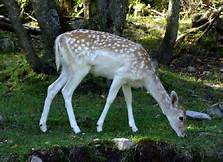


In general, how do nutrients travel from a producer to a consumer?
The consumer breaks down the dead producer, releasing its nutrients
The consumer eats the producer
The producer is released into the atmosphere, which the consumer breathes in
They do not flow between a producer and a consumer
Which of the following is an example of a producer?
A sunflower
The sun
A worm
A human
Which of the following is an example of a consumer?
Bacteria
A bird
A tree
The sun
Bees take nectar from flowers and in turn, flowers get pollinated by the bees. This would be an example of
Predation
Mutualism
Commensalism
Parasitism
A lion hunts a gazelle for food. This is an example of
Predation
Competition
Mutualism
Commensalism
2 bucks are fighting to try to get a mate. This is an example of
Predation
Competition
Parasitism
Commensalism
When barnacles live on whales, the whale provides safety and transportation. Barnacles don't hurt whales but don't help them either. This is an example of
Mutualism
Commensalism
Parasitism
Competition
Mosquitoes take human blood to feed their babies and leave us with an itchy bump. This is an example of
Predation
Mutualism
Commensalism
Parasitism
Grass --> Worm --> Bird --> Owl
In the above food chain, grass would be an example of a
primary producer
primary consumer
secondary consumer
tertiary consumer
Grass --> Worm --> Bird --> Owl
In the above food chain, the bird would be an example of a
primary producer
primary consumer
secondary consumer
tertiary consumer
Grass --> Worm --> Bird --> Owl
In the above food chain, what would be the primary consumer?
grass
worm
bird
owl

What would be a tertiary consumer in this food web?
tree
snake
goat
lion

According to the food web, what eats the snake?
mouse
kite
owl
lion

According to the food web, what is an example of a primary consumer?
tree
goat
jackall
owl
Grass --> Worm --> Bird --> Owl
This is an example of
A food chain
A food web
A trophic level
An energy transformation
Grass --> Worm --> Bird --> Owl
Which organism belongs to the third trophic level?
grass
worm
bird
owl

Approximately how much energy is transferred from producers to primary consumers?
100%
90%
10%
1%

What happens to the energy that is not transferred between levels?
It is lost to heat and other processes
It is taken in by the sun
It is taken up by other organisms
It is taken in by bacteria and decomposers

If the producers start off with 5000 kJ of energy, how much of that energy will eventually be passed on to the tertiary consumers?
5000 kJ
500 kJ
50 kJ
5 kJ
Which of the following is part of the geosphere?
Grass
Clouds
Volcano
Pond
Which of the following is part of the atmosphere?
Sand
Butterflies
Lava
Oxygen
Plants are able to use nitrogen with the help of
Bacteria
Water
The Carbon cycle
Animals
Which is the correct equation for photosynthesis?
Water + CO2 + Energy --> Glucose + Oxygen
Glucose + Oxygen --> Water + CO2 + Energy
Water + Oxygen + Energy --> Glucose + CO2
Glucose + CO2 --> Water + Oxygen + Energy
What is the correct equation for cellular respiration?
Glucose + Oxygen --> CO2 + water + energy
CO2 + water + energy --> glucose + oxygen
Oxygen + water + energy --> CO2 + glucose
CO2 + glucose --> oxygen + water + energy
Which of the following is a way that humans contribute to the nitrogen cycle?
Using fertilizers
Burning fossil fuels
Treating sewage
All of the above are correct
What is the biggest Carbon sink/source?
Atmosphere
Plants
Rocks/sediments
Animals
What is the biggest Nitrogen sink/source?
Plants
Animals
Atmosphere
Ponds and Marshes
How do humans contribute to the carbon cycle?
They burn fossil fuels which release CO2
They cut down trees, releasing CO2
Through agriculture and urbanization
All of the above
Which nutrient cycle is responsible for causing acid rain?
Carbon
Nitrogen
Phosphorus
Oxygen
Grass --> Worm --> Bird --> Owl --> Bacteria
In the above food chain, which group contains the most energy?
grass
worm
bacteria
owl
What is the main sink/store in the phosphorus cycle?
atmosphere
rocks/sediments
animals and plants
ocean
Which nutrient is NOT stored in the atmosphere?
oxygen
carbon
nitrogen
phosphorus
How is phosphorus released from rock?
Consumers
Producers
Weathering
The sun
Humans burn fossil fuels for energy. This releases greenhouse gases which is causing ________
Global warming
Global cooling
Increased phosphorus in the atmosphere
Decreased phosphorus in the atmosphere
Which of the following describes nitrogen fixation?
A process in which bacteria convert atmospheric nitrogen into a usable form
A process in which bacteria convert nitrogen compounds (like nitrates) into the atmospheric form
A process in which plants convert atmospheric nitrogen into a usable form
A process in which plants convert nitrogen compounds (like nitrates) into the atmospheric form
What causes algae blooms?
Weathering of rock
Leaching of nitrogen-containing fertilizer into the water
Burning fossil fuels
Bacteria
Bacteria are super important to which cycle?
Carbon
Nitrogen
Phosphorus
Water
All of the water on Earth makes up the ___
Geosphere
Atmosphere
Biosphere
Hydrosphere
All of the living things on Earth (e.g. plants and animals) belong to the ___
Atmosphere
Biosphere
Geosphere
Hydrosphere

