
 Worksheets
Earth Systems-19
Total questions: 76
Worksheet time: 19hrs 0mins


The greatest amount of water found on earth is fresh water.


Which statement best describes the processes of weathering and erosion?
Weathering and erosion are directly responsible for the breakdown of any type of rock into smaller particles and the carrying away of the loose sediments.
Weathering and erosion are directly responsible for depositing loose sediments on the bottom of the ocean, forming layers of sediment.
Weathering and erosion are directly responsible for the amount of water in a river that transports sediments to the sea.
Weathering and erosion are directly responsible for the transportation, deposition and compaction of loose sediments on the seafloor.

Which diagram models the process of compaction leading to the formation of Sedimentary Rock?
F
G
H
J
Erosion is one of the processes involved in the formation of Sedimentary Rock. Which of these best describes the process of erosion?
Rocks are broken into smaller pieces that remain in the same location.
Pressure compacts layers of sediment and turns them into rock.
Pieces of rock or soil are carried from one place to another.
Sediment grains fall to the bottom of a lake to form Sedimentary Rock.
Some students make a model to show one of the first steps in the formation of sedimentary rock. The students pour 2 centimeters of light-colored sand into a clear plastic box. Then they add 1 centimeter of gravel. Finally they pour 2 centimeters of dark-colored sand on top of the gravel. Which characteristic of sedimentary rock does this model best show?
Sedimentary rock is made of layers.
Sedimentary rock is cemented bits of rock.
Sedimentary rock is often limestone.
Sedimentary rock is common in Texas.

The model below shows layers of sediment on the floor of an ocean. Which of the following best explains how these layers can become rock over many years?
Sand in the sediment melts and turns into rock.
The weight of the water compacts the sediment into rock.
Changing water temperatures turn sand in the sediment into rock.
Pollution caused by humans turns the sediment into rock.
Sedimentary rocks form when broken bits of other rock are deposited and then –
buried and squeezed and cemented together.
melted by the heat of the Earth’s core.
completely dissolved in salt water in the ocean.
used by humans as a natural resource.

Several layers of sedimentary rock are illustrated. They are in the same order as when they first formed. Which layer formed first?
Rock Layer W
Rock Layer X
Rock Layer Y
Rock Layer Z

Which of the following correctly completes the Sedimentary Rock Cycle?
A = Compaction, B = Erosion, C = Cementation
A = Erosion, B = Compaction, C = Cementation
A = Cementation, B = Compaction, C = Erosion
A = Erosion, B = Cementation, C = Compaction

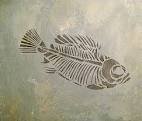


A flammable material, without a definite form, made from the remains of marine organisms from millions of years ago
coal
oil
natural gas
gasoline


Landform
process by which exposed rock is broken down by rain, frost, wind, or other elements of weather
process by which weathered and eroded material is deposited by wind, water, and ice
the movement of weathered material by wind, water, or ice (e.g. glaciers)
a physical structure on Earth that occurs naturally

What is this landform?
sand dune
delta
canyon
arch

This landform is formed by
water erosion
wind erosion
deposition
glaciers

This landform is formed by
water erosion
weathering
deposition of sediments
glaciers

This landform is formed by
water erosion
wind erosion and deposition
glaciers
weathering

This landform was formed by
ice erosion (from a glacier)
water erosion
wind erosion
weathering


What role does the Sun play in the water cycle?
The Sun splits the water molecules and they disappear
The Sun causes clouds to form and they precipitate
The Sun is not part of the water cycle
The Sun causes water to change form and move
Which of the following is a description of climate?
Today it is hot and sunny in Phoenix, Arizona.
Summers are usually mild in Lansing, Michigan.
Last week it rained every day in San Antonio, Texas.
Yesterday was cold and windy in Anchorage, Alaska.
Which of the following is an example of weather data?
The average high temperature in May is 21°C in the Midwest of the United States.
Central Australia usually receives less than 110 mm of rainfall all year.
The relative humidity was 24% at noon on July 23 in Tempe, Arizona.
On average, there is 88 mm of rain in the Gulf Coast region in July.

Which of these cycles is a direct result of Earth's rotation?
Day and Night
Moon Phases
Rainfall and evaporation
Seasons

Some students use globes to model the rotation of the Earth. They shaded in Texas on the globe, as shown. They rotated the globe and observed that Texas was in exactly the same place after each rotation. The students could rotate the globe quickly or slowly. If the globe could rotate only at the rate that Earth actually rotates, about how long would each complete rotation take?
30 days
60 minutes
24 hours
365 days

A student draws a model showing the movements on Earth, the moon, and the sun. Which arrow shows the movement that caused day and night on Earth?
Arrow 1, because it shows the rotation of the sun
Arrow 2, because it shows the orbit of Earth around the sun
Arrow 3, because it shows the orbit of the moon around Earth
Arrow 4, because it shows the rotation of the Earth
A student is looking for evidence that Earth is always rotating on its axis. Which of the following would provide the best evidence?
The different amount of rain that falls each day
The appearance of shadows changing throughout the day
The presence of other planets in the night sky
The different phases of the moon in a month
Which of these best explains why the sun appears to move across the sky each day?


A student builds a model of the solar system that includes a sphere representing Earth. The sphere turns in a full circle on its axis. By using a model of Earth that spins on its axis, the student can best demonstrate...
the cycle of the four seasons
the aging of a star
the passing of a year
the cycle of day and night

A student wanted a model to demonstrate what causes day and night on Earth. The model, illustrated above, was created by placing a softball on a table in a dark room and shining a flashlight on the softball. In this model, what most likely represents the Sun?
The softball
The table
The dark room
The flashlight

The diagram above suggests that the next event that can be expected in Houston in a couple of hours is–
sunrise
noon
sunset
midnight
The Earth's atmosphere protects life and keeps the surface warm.
True
False

Which of these completes the diagram?
Mountains and valleys on the surface
Made mostly of gases
Has thunderstorms
Surface is frequently changed by erosion
The surface of the sun is made of --
gases
solids
liquids
energy

What is one way to make this model more accurate?
Use wooden blocks instead of foam balls
Make the sun larger than the Earth and the moon smaller
Move the sun closer to the Earth
Change the order of the foam balls to be moon, sun, Earth
Which of the following can be found on both Earth and the moon?
Hills
Thick atmosphere
Thunderstorms
Oceans

Which layer of sedimentary rock is the oldest?
1
2
3
4

Which layer of sedimentary rock is the youngest (newest)?
1
2
3
4

The diagram above shows layers of sedimentary rock in the Earth’s crust. In which layer of rock should a scientist expect to find the oldest fossils?
Layer M
Layer N
Layer O
Layer P

This picture shows layers of the earth and the fossils found in each. The youngest fossils would be found in-
top layers of rock
the middle rock layers
the bottom layers of rock
every layer

This diagram represents the layers of the earth and fossils found in each layer. Based on the drawing, which imprint is the oldest?
Freshwater clam shells
Fish bones
Fern imprints
Leaf imprints

