Font size
 Worksheets
KS3 - Computational Thinking - End of unit quiz
Total questions: 22
Worksheet time: 23mins
Why do we decompose a complex problem?
To make it easier to solve
To make it more difficult to solve
To change the problem we have
How often do we decompose problems?
We never decompose them, computers do this for us
Occasionally, but we don't really need to
Every day, often without thinking about it
Only in the morning, when getting ready for the day
Define ABSTRACTION
Breaking a task into smaller tasks.
Drawing a map to show how to reach a destination.
Creating step by step instructions.
Focusing on what is important and ignoring what is unnecessary.
When designing a building that must be accessible for wheelchairs, which of the following characteristics is non-essential?
Number of doors
Number of walls
Number of wall paintings

32,36,40,44
What is pattern recognition?
Breaking down a complex problem into smaller problems
Looking for similarities among and within problems
Building models from patterns
2, 4, 6, 8, 10, 12

What is the purpose of a flowchart?
To plan the program before it is made
Because it is easier
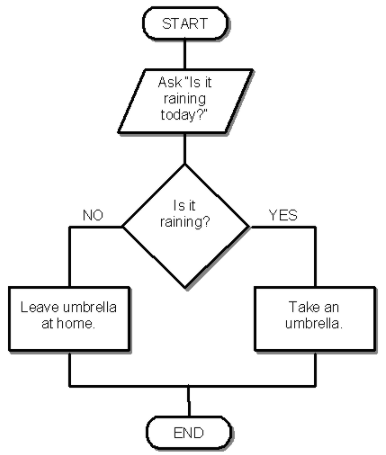
What is the Output if the user enters:
Yes
Leave umbrella at home
Take an umbrella
What are the two main ways that algorithms can be designed?
Images or videos
In pseudocode or as a flowchart
By hardware or software
Why do we need to think computationally? (multiple answers)
To help us think like a computer
To help us solve problems efficiently
To help us solve problems slowly
To help us solve complex problems easily
What is decomposition?
Adding detail to make a problem more complex
Breaking down a complex problem or system into smaller, more manageable parts
When you ignore the unnecessary detail in a problem
Recognising patterns in problems

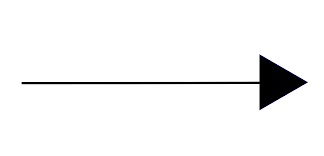
What is the purpose of an arrow in a flowchart?
Shows the relationships between shapes / the flow of information
They look nice when we use them
We don't use arrows