Wayground logo

Free Printable Worksheets

Font size

S
M
L
XL
Worksheets

Selection and Speciation

Total questions: 20

Worksheet time: 15mins

Name
Class
Date
1.
A flash flood carried a raft of Amazon ants away from their original population. There is enough distance between the two groups, that they will never meet in nature again. What type of reproductive barrier is this?
a)
behavioral isolation
b)
temporal isolation 
c)
gametic isolation
d)
geographic isolation 
2.
The flowers of pink tulips open in the morning, while the flowers of lavender tulips open in the early afternoon. The bees that pollinate these tulips cannot carry pollen back & forth between the two types of tulips because of their flowers being closed at different times of day. What type of reproductive barrier is this?
a)
behavioral isolation
b)
hybrid sterility 
c)
temporal isolation
d)
mechanical isolation 
3.
What is a species? 
a)
A group of organisms that can mate with each other and produce fertile offspring. 
b)
A group of organisms that can mate and produce offspring even if those offspring are infertile.
c)
A group of organisms that genetically are very different from each other. 
d)
Indivual organisms that live in the same environment. 
4.

when the organism develops different courtship rituals which do not attract main population this is a part of ____________ speciation.

a)

Allopatric

b)

Sympatric

c)

Simple

d)

Temporal

5.

Different finch populations lived on separate islands with different environments. They evolved to best adapt to those particular environments and can no longer mate. What type of speciation is this?

a)

Allopatric

b)

Sympatric

c)

Temporal

d)

Mechanical

6.

Different finch populations lived on separate islands with different environments. They evolved to best adapt to those particular environments and can no longer mate. What type of speciation is this?

a)

Allopatric

b)

Sympatric

c)

Temporal

d)

Mechanical

7.
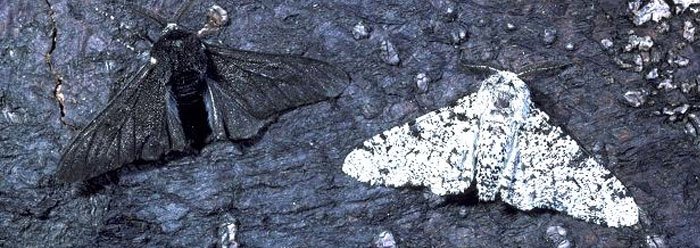
The trees these moths used to live on were white, but have been covered in soot from coal factories. Which moth will be more successful in this environment?
a)
Dark moth
b)
Light moth
c)
Both will be equally successful
d)
Neither will be successful
8.
Mutations are important because they bring about
a)
death of the organism in which they develop
b)
genetic variation needed for a population to evolve
c)
benefits for the individual, not for the population
d)
Hardey-Weinberg equilibrium within a population
9.
Scientist have created larger and sweeter strawberries for humans to consume (eat). What process was used?
a)
Natural Selection 
b)
Artificial Selection 
c)
Cellular Respiration 
d)
Environmental Natural Selection 
10.
Sympatric speciation is when one species evolves in to two...
a)
In the same geographic area
b)
In different geographic areas
c)
Because of different climates
d)
None of the above
11.
A change in the genetic composition of a population as a result of descending from a small number of colonizing individuals is called:
a)
founder effect
b)
bottleneck
c)
genetic drift
d)
gene flow
12.

Which of the following is an example of the bottleneck effect?

a)

Cheetah populations reach their lowest levels with reduced diversity and as they rebound are so genetically similar they appear to be inbred.

b)

Affected individuals with blue skin can trace their ancestry back to one of the first settlers in the region.

c)

The environment of a fox population changes and over time foxes who are white survive and pass on their genes to their offspring.

d)

Humans choose two dogs they like the characteristics of and breed them together.
13.

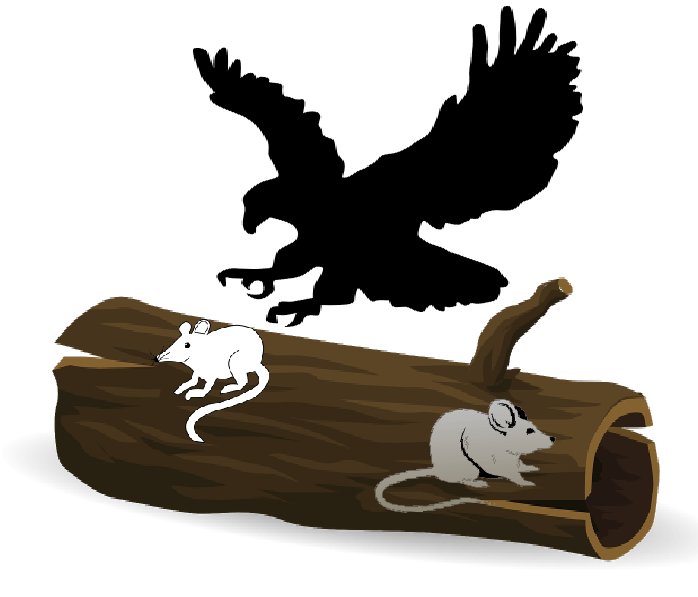
Over the years, white mice became extinct and darker mice survived. This is

a)

stabilizing selection

b)

directional selection

c)

disruptive selection

d)

due to exercise

14.

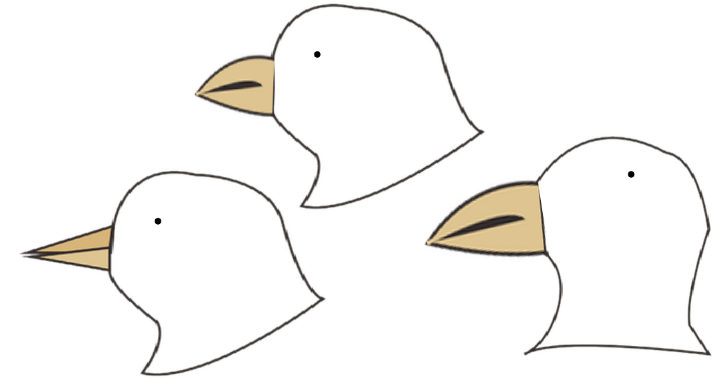
Birds with smaller beaks die out when a disease kills all food sources except hard nuts.

a)

adaptive radiation

b)

respiration

c)

an anomoly

d)

unlikely

15.

What type of natural selection is this?

a)

Disruptive Selection

b)

Directional Selection

c)

Stabilizing Selection

d)

Natural Selection

16.
The genitalia of the male damselfly varies in shape. Certain males can only hold onto & mate with females whose genitalia fit.  What type of reproductive barrier is this?
a)
behavioral isolation
b)
temporal isolation 
c)
gametic isolation
d)
mechanical isolation 
17.
Some female peacocks prefer males with large, colorful tales while other female peacocks prefer males with no tail at all. Females are beginning to only mate with the type of males with the tail they prefer. What type of reproductive barrier is this?
a)
behavioral isolation
b)
hybrid sterility 
c)
temporal isolation
d)
mechanical isolation 
18.

The emergence of a mountain range is an event that would lead to _______________ speciation

a)

Allopatric

b)

Sympatric

c)

Temporal

d)

Behavioral

19.

Sympatric speciation can reduce gene flow and form a new species in overlapping populations in the same place.

a)

True

b)

False

20.

Orcas occur in the same habitat but some are avoiding each other and do not interbreed. They have different diets, vocal behavior, and social structures. What type of speciation is this?

a)

Allopatric

b)

Sympatric

c)

Complex

d)

Covergent