wayground logo

Free Printable Worksheets

Font size

S
M
L
XL
Worksheets

PreCalc CCA Review

Total questions: 96

Worksheet time: 6hrs 26mins

Name
Class
Date
1.
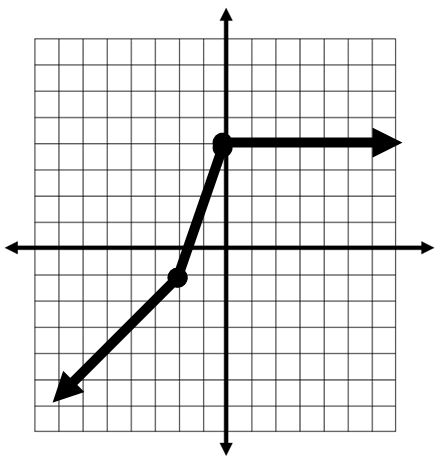
1. What is this type of function called?
a)
Discrete Function 
b)
Segment Function
c)
Step Function
d)
Jump Function
2.
What is g(7) if:
a)
-17
b)
-13 
c)
13       
d)
17
3.
What is f(-2)?
a)
4
b)
1
c)
1
d)
DNE
4.
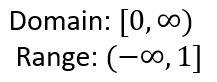
What is the RANGE of the function?
a)
(-∞, +∞)
b)
(-∞, 4]
c)
(-∞, 4)
d)
[0, 4]
5.
Which graph matches:
4-x for x<2
2x-6 for x>=2
a)
A
b)
B
c)
C
d)
D
6.

What is/are the increasing interval(s) for the function shown?

a)

(3, 1)\left(-3,\ 1\right)

b)

(4, 8)\left(4,\ 8\right)

c)

(,1) and (3, 1)\left(-\infty,1\right)\ and\ \left(-3,\ 1\right)

7.

What is/are the decreasing interval(s) for the function shown?

a)

 (2, 4) and (8, )\left(2,\ 4\right)\ and\ \left(8,\ \infty\right) 

b)

 (, 1) and (8, )\left(-\infty,\ 1\right)\ and\ \left(8,\ \infty\right) 

c)

 (,1), (3, 1) and (8, )\left(-\infty,1\right),\ \left(-3,\ 1\right)\ and\ \left(8,\ \infty\right) 

d)

 (, 1), (2, 4) and (8, )\left(-\infty,\ 1\right),\ \left(2,\ 4\right)\ and\ \left(8,\ \infty\right) 

8.

What is the decreasing interval(s) on the function shown?

a)

(7, 6) and (2, 4)\left(-7,\ -6\right)\ and\ \left(-2,\ 4\right)

b)

(7, 0) and (2, 4)\left(-7,\ 0\right)\ and\ \left(-2,\ 4\right)

c)

(7, 6) and (2, 0)\left(-7,\ -6\right)\ and\ \left(-2,\ 0\right)

d)

(7, 0) and (4, 5)\left(-7,\ 0\right)\ and\ \left(4,\ 5\right)

9.

What is the increasing interval(s) on the function shown?

a)

(, 15) and (9, 15)\left(-\infty,\ -15\right)\ and\ \left(9,\ -15\right)

b)

(2, 9) and (2, )\left(-2,\ 9\right)\ and\ \left(2,\ \infty\right)

c)

(, 2) and (0, 2)\left(-\infty,\ -2\right)\ and\ \left(0,\ 2\right)

d)

(2, 0) and (2, )\left(-2,\ 0\right)\ and\ \left(2,\ \infty\right)

10.
What is the range of this function?
a)
x ≥ 2
b)
f(x) ≥ 2
c)
All Real Numbers
d)
f(x) ≤ 2
11.
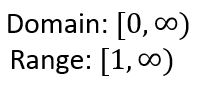
What is the domain of this function?
a)
All Real Numbers
b)
f(x) ≥ -2
c)
f(x) ≥ 2
d)
x ≥ -2
12.
Find the Range.
a)
All Real numbers
b)
0 < y < 11
c)
y ≥ 0
d)
y > 0
13.
a)
all real numbers, except for x=-3
b)
all real numbers, except for x=0
c)
[0, ∞)
d)
(0, ∞)
14.
a)
(-∞, 5/3]
b)
[5/3, ∞)
c)
All real numbers except for x=5/3
d)
[-5/3, 5/3]
15.
a)
All real numbers except for c=5
b)
(-∞, 5]
c)
[5, ∞)
d)
All real numbers except for c=0
16.
a)
All real numbers, except for t=2
b)
All real numbers, except for t=-2 & t=2
c)
(-∞,2)
d)
(2, ∞)
17.
What is the Domain?
a)
x > 0
b)
All Real Numbers
c)
x > 1
d)
x < 1
18.
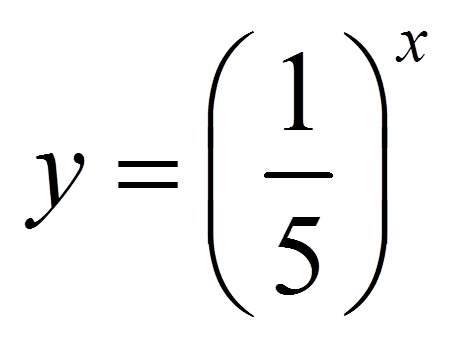
Is this exponential growth or decay?
a)
Growth
b)
Decay
19.
Write in logarithmic form.
52 = 25
a)
log52 = 25
b)
log225 = 5
c)
log255 = 2
d)
log525 = 2
20.
Write in exponential form.
log232 = 5
a)
2-5 = 32
b)
232 = 5
c)
25 = 32
d)
325 = 2
21.
The common logarithm has what base?
a)
10
b)
0
c)
e
d)
-e
22.
Rewrite logpt = m in exponential form.
a)
pt = m
b)
tm = p
c)
mt = p
d)
pm = t
23.
eln(f)
a)
f
b)
e
c)
ef
d)
undefined
24.
p(x) = 3x + 4
q(x) = 2x2
Find p(p(-3))
a)
-9
b)
7
c)
-11
d)
None of these
25.
p(x) = 3x + 4
q(x) = 2x2
Find p(q(x))
a)
10x2
b)
18x2 + 4
c)
6x2 + 4
26.
What does it mean to find the inverse of a function?
a)
the x's and y's are switched
b)
the x's and y's are divided by 2
c)
the x's and y's are made negative
d)
the x's and y's are the same
27.
If the equation of f(x) goes through (1, 4) and (4, 6), what points does f-1(x) go through?
a)
(1, 4) and (4, 6)
b)
(-4, -1) and (-6, -4)
c)
(-1, -4) and (-4, -6)
d)
(4, 1) and (6, 4)
28.
Are these functions inverses?
a)
Yes
b)
No
29.
If the domain of f(x) is x ≥ 4, then the ____ of ____ is  y ≥ 4
a)
domain, f-1(x)
b)
range, f(x)
c)
range, f-1(x)
d)
domain, f(x)
30.
In an inverse function, the _____ and _______ are switched from the original
a)
f(x) and g(x)
b)
input and output
c)
positives and negatives
d)
slope and intercept
31.
What's the name of the inverse of g(x)?
a)
f(x)
b)
f-1(x)
c)
y
d)
g-1(x)
32.
Given f(x) = x+3, find f-1(-2).
a)
-1
b)
1
c)
5
d)
-5
33.

Which of the following is NOT TRUE about inverse functions?

a)

Inverse functions are reflections of each other over the line y = x.

b)

You find the inverse by switching x and y in the equation.

c)

The domain of a function always becomes the domain of its inverse.

d)

The domain of a function always becomes the range of its inverse.

34.
a)
b)
c)
d)
35.

The relation in the graph is..

a)

a function but not a one-to-one function.

b)

a one-to-one function.

c)

not a function

36.
What is the first step in finding the equation of the inverse of a function?
a)
get x by itself
b)
switch x and y
c)
solve for y
d)
write the function in inverse function notation
37.
Match the description to its equation.
Reflected over the x-axis 
Stretched by a factor of 2
a)
A
b)
B
c)
C
d)
D
38.
Match the description to its equation.
Moves up 2
Moves left 4
a)
A
b)
B
c)
C
d)
D
39.
How did we transform from the parent function?
g(x) = -1/5(x - 1)2 + 7
a)
reflection, vertical compression, horizontal right, vertical up
b)
vertical compression, horizontal shift left, vertical shift up
c)
reflection, horizontal shift right, vertical shift down
d)
no changes were made to y = x2
40.
Identify the Transformations. 
a)
Vertical stretch by 2 and down 4
b)
Horizontal compression by ½ and down 4
c)
Vertical stretch by 2 and up 4
d)
Horizontal compression by ½ and right 4
41.
What transformations has the function undergone?
a)
reflect over y, vertical compress by 2, right 5, up 1
b)
reflect over x, horizontal compression by 2, left 5, up 1
c)
reflect over x, vertical stretch by 2, right 5, up 1
d)
reflect over y, horizontal stretch by -2, right 5, up 1
42.
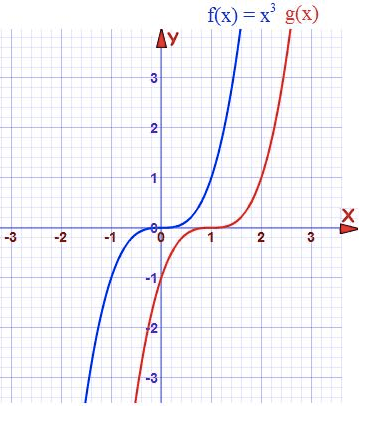
  What is the equation for the red function? 
a)
g(x)=x3+1
b)
g(x)=x3-1
c)
g(x)=(x-1)3
d)
g(x)=(x+1)3
43.
If f(x) = x3 is changed to f(x) = - (x + 3)3 + 2, how is the graph transformed?
a)
3 units right, 2 units up, reflected across the y-axis
b)
3 units right, 2 units up, reflected across the x-axis
c)
3 units left, 2 units up, reflected across the y-axis
d)
3 units left, 2 units up, reflected across the x-axis
44.
If f(x) = ∛(x) is reflected over the x-axis, vertically compressed by a factor of 1/4, and shifted left 9, which equation is correct?
a)
1/4 ∛(x + 9)
b)
1/4 ∛(x - 9)
c)
- 1/4 ∛(x + 9)
d)
- 1/4 ∛(x - 9)
45.
What are the transformations of this functions compared to the parent function?
a)
Shifted down 2
b)
Shifted up 2
c)
Shifted left 2
d)
Shifted right 2
46.

What are the transformations of this functions compared to the parent function?

a)

Shifted right 5, shifted down 2, and reflected over the x-axis

b)

Reflected over the x-axis, vertical stretch by 2, and shifted right 5

c)

Reflected over the x-axis, vertical stretch by 2, and shifted left 5

d)

Shifted right 5, shifted down 2

47.
Which of these equations shifts a radical equation right 5 times and down once?
a)
y = √(x - 5) - 1
b)
y = √(x + 5) - 1
c)
y = √(x - 5) + 1
d)
y = √(x + 5) + 1
48.

Let f(x)=√(x) and g(x)= -3√(x-2)+1. Describe g(x) in terms of f(x):

a)

reflects over x axis, vertical stretch by 3, right 2, up 1

b)

reflects over y axis, vertical compression by -3, left 2, up 1

c)

reflects over x axis, vertical stretch by -3, left 2, up 1

d)

reflects over y axis, vertical compression by 1/3, right 2, up 1

49.
What is the transformation?
a)
Vertical Translation up 1
b)
Vertical Translation down 1
c)
Horizontal Translation left 1
d)
Horizontal Translation right 1
50.
What is the transformation?
a)
Vertical Translation up 2
b)
Vertical Translation down 2
c)
Horizontal Translation left 2
d)
Horizontal Translation right 2
51.
What is the transformation?
a)
Vertical Translation up 2 and Horizontal translation right 1
b)
Vertical Translation down 2 and Horizontal Translation left 1
c)
Horizontal Translation left 2 and Vertical Translation up 1
d)
Horizontal Translation right 2 and Vertical Translation down 1
52.
Is this exponential growth or decay?
a)
Growth
b)
Decay
53.
What is the transformation?
a)
Horizontal Translation left 2
b)
Vertical Translation down 2
c)
None
d)
Reflection across the HA
54.

Describe the transformation that occurred

g(x) =2f(x)

a)

Up 2 units

b)

vertical compression

c)

vertical stretch

d)

Right 2 Units

55.

Describe the transformation that occurred

h(x) = 1/5f(x)

a)

Up 5 Units

b)

vertical compression

c)

vertical stretch

d)

Down 5 Units

56.

Describe the transformation that occurred

s(x) = 7f(x)

a)

vertical compression

b)

Up 7 Units

c)

Over 7 Units

d)

vertical stretch

57.

Determine the order of transformations

a)

reflected over x-axis, left 1

b)

reflected over y-axis, up 1

c)

reflected over x-axis, right 1

d)

reflected over y-axis, left 1

58.

List the transformations

a)

left 1, up 5

b)

left 1, vertical stretch by 3

c)

right 1, up 5

d)

up 1, right 5

59.

Click any transformation that exists in the equation:

a)

reflect x-axis

b)

right 2

c)

down 4

d)

vertical stretch by 3

e)

vertical compress by -3

60.

Which is the correct transformation:

a)

Vertical stretch of 2, right 1, up 6

b)

Vertical stretch of 2, left 1, up 6

c)

Vertical compress of 2, right 1, up 6

d)

Vertical stretch of 8, left 1, up 6,

61.

Transformations:

a)

vertical compress

b)

vertical stretch

c)

left

d)

right

e)

down

62.

What is the base:

a)

2

b)

8

c)

1

d)

6

63.
Which parent function is this?
a)
Exponential
b)
Logarithmic
c)
Quadratic
d)
Reciprocal
64.
Describe the transformation to graph the following equation from it's parent function:
f(x) = 2(x + 3) - 4
a)
Shift left 3, down 4
b)
Shift right 3 down 4
c)
Shift left 4, up 3
d)
Shift right 4, up 3
65.

log (32) =?

a)

log 6

b)

2 log 3

c)

log2 3

d)

log3 2

66.
Write logb(xy) as two logs
a)
logbx+logby
b)
logbx-logby
c)
logbx*logby
d)
logbx/logby
67.
Logarithmic functions are the inverse of...
a)
Linear Functions
b)
Exponential Functions 
c)
Quadratic Functions 
d)
Polynomial Functions 
68.
Evaluate logb(b)
a)
-1
b)
0
c)
1
d)
b
69.
Evaluate log8 8
a)
8
b)
-1
c)
0
d)
1
70.
Simplify log443x
a)
3x
b)
3
c)
4
d)
43x
71.
Evaluate:
log416
a)
2
b)
4
c)
1/2
d)
-2
72.
log525 = ?
a)
2
b)
5
c)
125
d)
10
73.
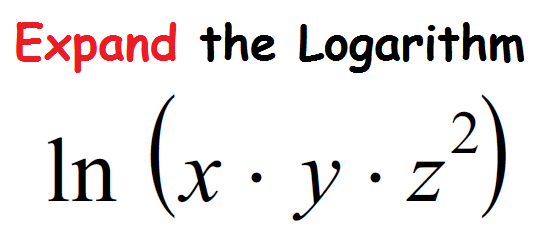
a)
2ln(xyz)
b)
ln(x) + ln(y) + ln(z)
c)
ln(x) - ln(y) - 2ln(z)
d)
ln(x) + ln(y) + 2ln(z)
74.
a)
A
b)
B
c)
C
d)
D
75.
a)
A
b)
B
c)
C
d)
D
76.
When a logarithm has division inside of it, it expands using ________________.
a)
Addition
b)
Subtraction
c)
Multiplication
d)
Division
77.
Condense
a)
A
b)
B
c)
C
d)
D
78.
Condense
a)
A
b)
B
c)
C
d)
D
79.
Expand.
a)
A
b)
B
c)
C
d)
D
80.
What are the x-intercepts?
a)
x= 2/3
b)
x= 4, x = -2
c)
x= -8, x = 1
d)
x= -4, x = 2
81.
What are the asymptotes?
a)
x=1, x= 2, y =1, y= 2
b)
x= 2, x=-2, y = 1
c)
x=2 y =-1
d)
x=1 y =2, y =-2
82.
How is this function transformed from the parent function?
a)
Translated left and up
b)
Translated right and up
c)
Translated left and down
d)
Translated right and down
83.
What is the horizontal asymptote to this function?
a)
y=4
b)
y=0
c)
y=-2
d)
y=1
84.
Where is the removable discontinuity?
a)
x=2
b)
x=2 and x=3
c)
x=-3
d)
x=3
85.
What is/are the vertical asymptote(s)?
a)
x=-2
b)
x=2 and x=3
c)
x=-3
d)
x=3
86.
What is the horizontal asymptote?
a)
y = -4
b)
y = 1
c)
x = 1
d)
y = -6
87.
Find the horizontal asymptote.
a)
None
b)
y=-2
c)
y=2
d)
y=0
88.
What is the horizontal asymptote of this function?
a)
y=2
b)
x=1/2
c)
y=1
d)
y=1/2
89.
What is the Vertical Asymptotes? 
a)
x= -5
b)
x= 5
c)
x= 6
d)
x= -6
90.
What is the Vertical Asymptotes?
a)
x= -4
b)
x= -4,5
c)
x= -5,5
d)
x= 4
91.

What's the horizontal asymptote of the function?

a)

y = 0

b)

No horizontal asymptote

c)

y = 2

d)

y = 4

92.

What's the horizontal asymptote of the function?

a)

y = 0

b)

No horizontal asymptote

c)

y = 1

d)

y = 9

93.

What's the horizontal asymptote of the function?

a)

y = 0

b)

No horizontal asymptote

c)

y = 1/2

d)

y = 1

94.

What are the coordinates of the hole, if one exists.

a)

(-1, -2)

b)

(-1, ½)

c)

(-1, -½)

d)

there isn't one

95.

What is the domain?

a)

x ≠ 3

b)

x ≠ -1

c)

x ≠ 3, -1

d)

x ≠ 3, 1

96.

Find the x-intercept(s), if one exists.

a)

(1, 0)

b)

(-1, 0)

c)

(1, 0), (-1, 0)

d)

(0, 0), (1, 0)