wayground logo

Free Printable Worksheets

Font size

S
M
L
XL
Worksheets

Review for Biology, Chemistry & Physics

Total questions: 47

Worksheet time: 35mins

Name
Class
Date
1.

What is Newton's first law of motion?

a)

Every action has an equal opposite reaction

b)

An object in motion stays in motion unless acted upon by an unbalanced force

c)

The force acting on an object is equal to the mass of an object times its acceleration

d)

Sandwich

2.

What is the atomic number of oxygen?

a)

5

b)

Sandwich

c)

8

d)

17

3.

What is the molecular structure of table salt?

a)

Sandwich

b)

Molecular who?

c)

H2O

d)

NaCl

4.

Biology is the study of what?

a)

Life

b)

Sandwich

c)

The human brain

d)

Weather

5.

Energy=____to the speed of light squared

a)

Gravity

b)

Mass

c)

Sandwich

d)

Lightning

6.

Who was Dimitri Ivanovich Mendeleev?

a)

Periodic table inventor

b)

Sandwich

c)

A singer

d)

An Astronomer

7.

What is the formula for force?

a)

Net force ÷\div Mass

b)

Sandwich

c)

Mass ×\times Acceleration

d)

Mass ×\times Velocity

8.
In an experiment, the one variable that is changed by the scientist is called the ______.
a)
independent variable
b)
dependent variable
c)
random variable
d)
controlled variable
9.
In an experiment, the factor that we observe and/or measure is called the ____.
a)
independent variable
b)
dependent variable
c)
random variable
d)
controlled variable
10.
A testable, possible explanation for a scientific question is called a(n) _____.
a)
theory
b)
random guess
c)
law
d)
hypothesis
11.

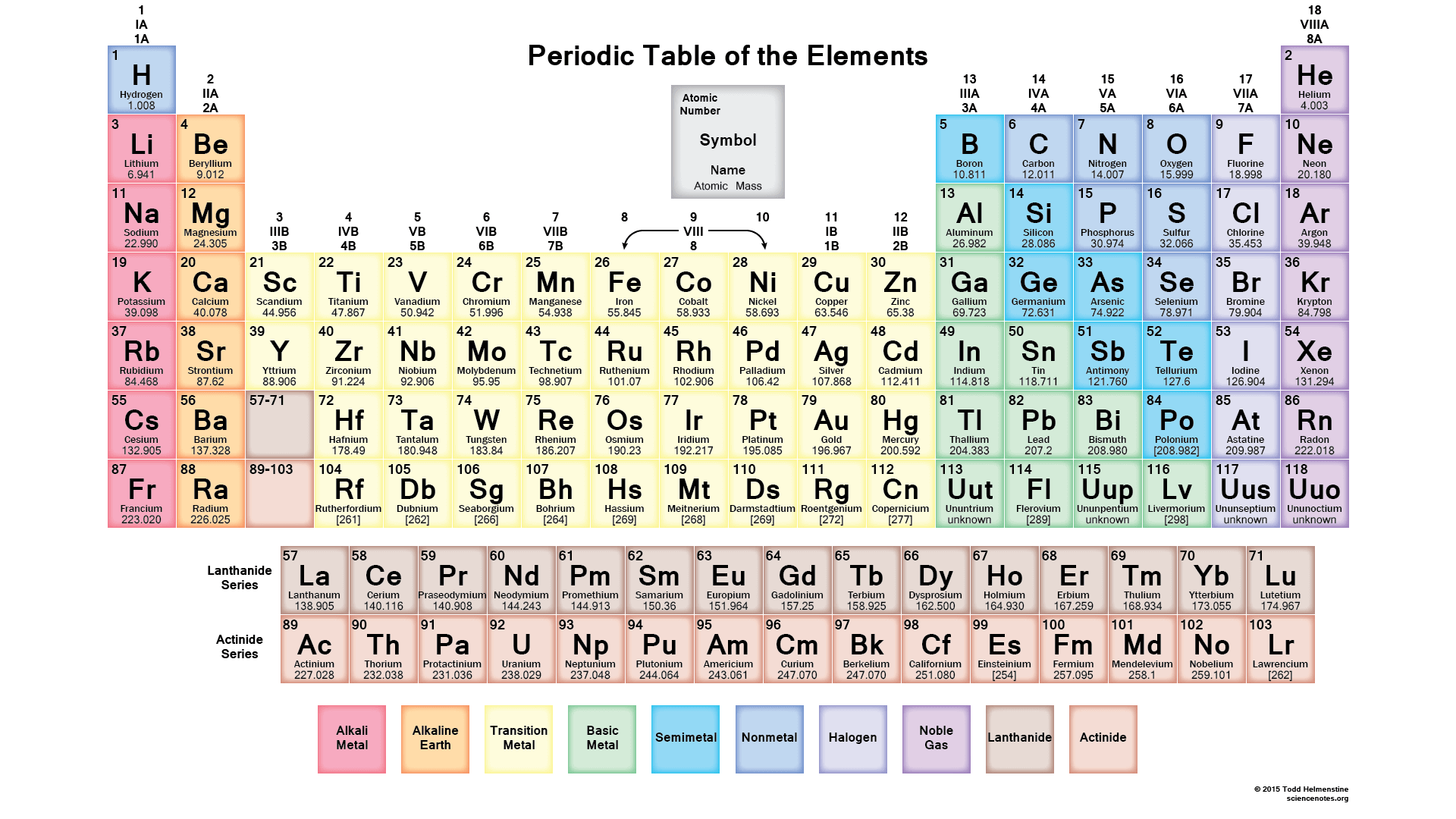
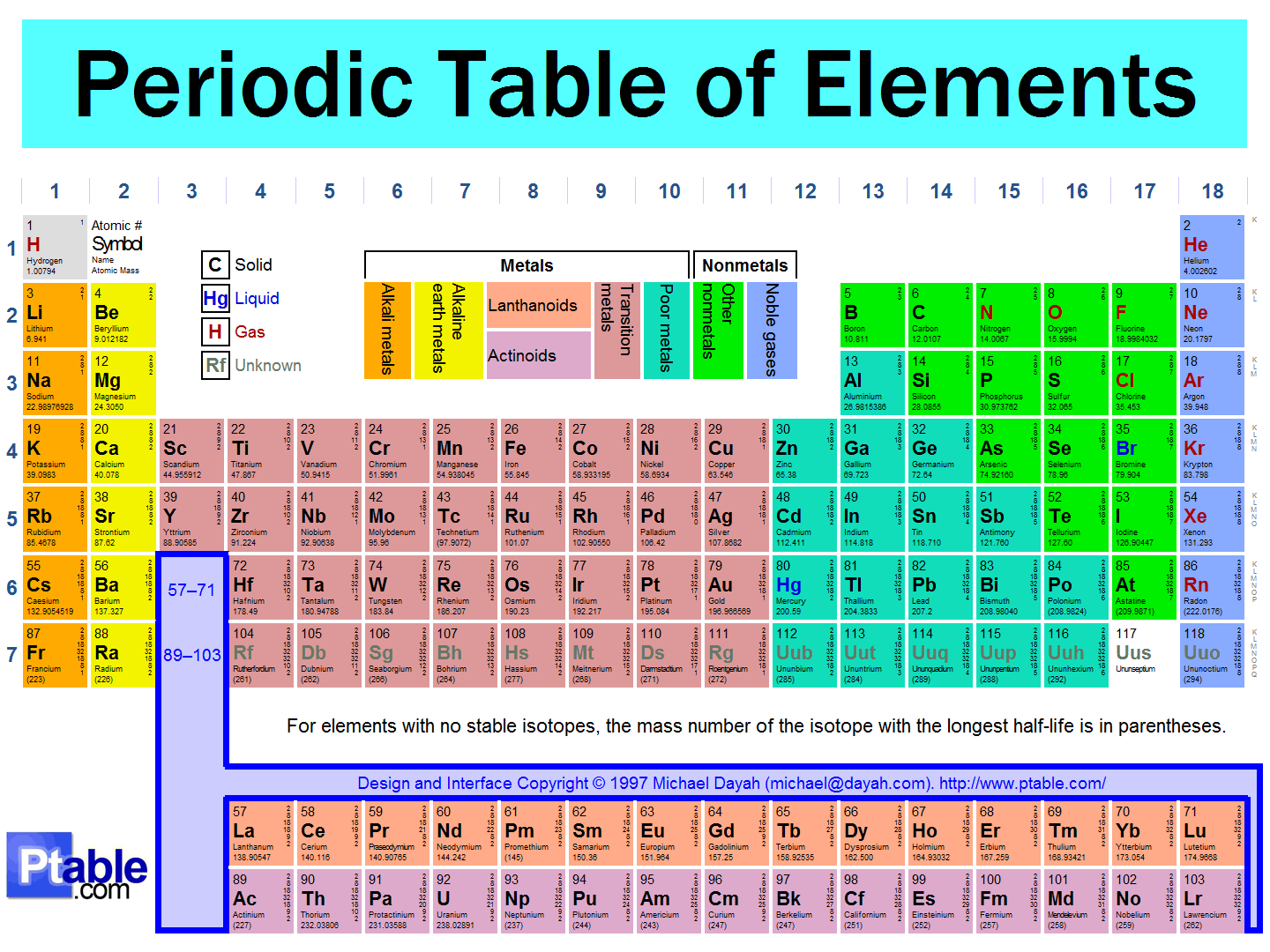
The vertical (up and down) columns in the Periodic Table are called

a)

groups

b)

towers

c)

periods

d)

atomic numbers

12.
The Modern Periodic Table of Elements is arranged by
a)
atomic mass
b)
atomic number
c)
valence electrons
d)
number of isotopes
13.
Sodium (Na) is found in period 
a)
3
b)
2
c)
4
d)
1
14.
Sodium (Na) is found in group 
a)
1
b)
2
c)
3
d)
4
15.
The atomic number tells you what?  READ THE ANSWERS CAREFULLY
a)
only the number of electrons
b)
 only the number of protons
c)
only the number of neutrons
d)
the number of both electrons and protons in an atom.
16.
What does the atomic mass tell you? 
a)
Basically,the number of electrons and protons
b)
The number of neutrons
c)
Basically, the number of protons and neutrons
d)
The number of protons.
17.
The atoms we study in 6th grade are neutral, which means they have the same number of
a)
protons and electrons
b)
protons and neutrons
c)
electrons and neutrons
18.
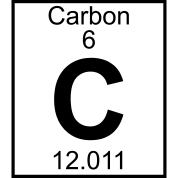
What does the 6 represent?
a)
atomic mass
b)
atomic number
c)
element name
d)
chemical symbol 
19.
What does 12.011 represent?
a)
atomic mass
b)
atomic number
c)
element name
d)
chemical symbol 
20.
What does the C represent?
a)
atomic mass
b)
atomic number
c)
element name
d)
chemical symbol 
21.

The horizontal (side to side) rows in the Periodic Table are called

a)

groups

b)

families

c)

periods

d)

atomic numbers

22.
These are found on the Periodic Table.
a)
Compounds
b)
Elements
c)
Mixtures
23.
Which of these grouping of elements could have the characteristic of luster (shiny)?
a)
Metal
b)
Nonmetal
c)
metalloids
d)
Both metals and metalloids
24.
Which of these is a property of metals?
a)
It's malleable
b)
It can't conduct electricity
c)
They are used in food
d)
It's very brittle
25.
Brittle
a)
Metal
b)
Nonmetal
26.
Which element is a metalloid?
a)
Titanium
b)
Selenium
c)
Potassium
d)
Polonium
27.
All of the following would classify an element as a metal except?
a)
Dull
b)
Luster
c)
Malleable
d)
Hard
28.
Which table below correctly lists the properties of metals and nonmetals? *
a)
A
b)
B
c)
C
d)
D
29.
What happens when my glass of water is sitting in the sun and disappears into a gas?
a)
evaporation
b)
burning
c)
melting
d)
freezing
30.
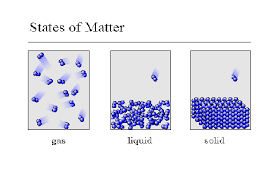
Which form of matter does not take the shape of its container?
a)
liquid
b)
gas
c)
solid
d)
air
31.
What term describes a solid changing to a gas?
a)
Deposition
b)
Sublimation
c)
Evaporation
d)
Freezing
32.
What term describes a liquid changing to a solid?
a)
Deposition
b)
Sublimation
c)
Evaporation
d)
Freezing
33.
Particles (molecules) in a ______________________ have more energy than the other states of matter.
a)
gas
b)
solid
c)
liquid
34.
______________________ takes place when a liquid changes to a solid.
a)
freezing
b)
melting
c)
boiling
d)
sublimation
35.
Particles (molecules) in a ______________________ have more energy than the other states of matter.
a)
gas
b)
solid
c)
liquid
36.
The state of matter that has no definite size or shape is
a)
Solid
b)
Liquid
c)
Gas
37.
Define a liquid.
a)
Indefinite shape, indefinite volume
b)
Definite shape, definite volume
c)
Found in stars
d)
Definite volume, indefinite shape
38.
A gas
a)
has a definite shape but no definite volume
b)
has a definite volume but no definite shape
c)
has fast-moving particles
39.
At higher temperatures
a)
particles in an object have less energy
b)
particles in an object move faster
c)
a gas contracts
40.
Which state of matter has a definite shape?
a)
solid
b)
liquid
c)
gas
41.
What term describes a solid changing to a gas?
a)
Deposition
b)
Sublimation
c)
Evaporation
d)
Freezing
42.

How does heat move?

a)

In many directions

b)

from warm places to cooler places

c)

from cold places to warm places

d)

Both B and C

43.

If you burn your hand on the handle of a hot pot, heat was transferred to your skin by

a)

conduction

b)

convection

c)

radiation

d)

equilibrium

44.

What type of energy transfer occurs when hot water flows through cool water?

a)

insulation

b)

radiation

c)

conduction

d)

convection

45.

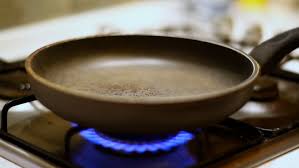
What type of heat transfer is occurring in the picture below? (the pan is touching the burner)

a)

conduction

b)

convection

c)

radiation

d)

insulation

46.

A material that reduces the flow of heat is a(n)

a)

conductor

b)

insulator

c)

metal

d)

radiator

47.

All of the following are good conductors of heat EXCEPT

a)

Copper

b)

Iron

c)

Plastic

d)

Aluminum