wayground logo

Free Printable Worksheets

Font size

S
M
L
XL
Worksheets

Midterm Review

Total questions: 53

Worksheet time: 34mins

Name
Class
Date
1.

Where and When the story takes place

PLACE and TIME

a)

Problem/Solution

b)

Summary

c)

Setting

d)

Characters

2.

The people or animals in stories

a)

Details

b)

Problem/Solution

c)

Characters

d)

Plot

3.
A ________ is the struggle between opposing forces that creates tension or suspense in a story. 
a)
Plot
b)
Theme
c)
Setting
d)
Conflict
4.
This type of conflict is a struggle within a character’s mind. It may occur when a character faces a difficult decision or conflicting feelings.
a)
Character vs. character
b)
Internal conflict
c)
Character vs. nature
d)
Character vs. society
5.
What is the point of view of the following passage?
“I’m proud to say that I’m the first person in my family to go to college.”
a)
Second person point of view
b)
First person point view
c)
Third person limited point of view
d)
Third person omnicient point of view
6.
All the events that lead to the climax of a story are called the ___.
a)
conflict
b)
exposition
c)
falling action
d)
rising action
7.
The message or lesson that the author wants you to learn from the story is called the
a)
thesis
b)
summary
c)
theme
d)
plot
8.
Read the excerpt from The Rough-faced Girl by Rafe Martin.Now in this village there lived a poor man who had three daughters.  The two older daughters were cruel and hard-hearted, and they made their youngest sister sit by the fire and feed the flames.  When the burning branches popped, the sparks fell on her.  In time, her hands became burnt and scarred.  Her arms too became rough and scarred.  Even her face was marked by the fire, and her beautiful long black hair ragged and charred.  And those older sisters laughed at her saying, "Ha! You're ugly, you Rough-faced Girl!"  And they made her life very lonely and miserable, indeed.
What is the theme of the passage?
a)
Cinderella had a lot of sad things happen to her.
b)
Cinderella's mother loved her very much.
c)
The step-sisters were mean people.
d)
Even good people can face trying and tragic situations.
9.
Example of Character vs Self 
a)
Batman vs Superman
b)
Shrek vs the kingdom 
c)
People in Texas vs. the flood.
d)
A person trying not to cry in public 
10.
Example of Character vs Character 
a)
Batman vs Superman
b)
Shrek vs the kingdom 
c)
People from Japan vs a Tsunami 
d)
A person trying not to cry in public 
11.

The sequence of events that make up a story from beginning to end

a)

Characters

b)

Conflict

c)

Theme

d)

Plot

12.
End of the story where loose ends are tied up
a)
resolution
b)
exposition
c)
rising action
d)
falling action
13.
Most exciting moment of the story; turning point
a)
exposition
b)
conflict
c)
climax
d)
rising action
14.

Telling of a story by a narrator who is a character in the story and describes his or her own thoughts and feelings

a)

First person point of view

b)

Second person point of view

c)

Third person limited point of view

d)

Third person omniscient point of view
15.
A struggle between a character and an outside force (another character, society, nature) is called an ____________ conflict. 
a)
External conflict
b)
Internal conflict
16.
In _______ point of view, the narrator is NOT a character in the story.  The narrator is all-knowing, revealing thoughts & feelings of ALL characters.
a)
Third-person limited
b)
Third-person omniscient
c)
Second person
d)
First person
17.
If the author directly tells you what the character is like, that is:
a)
direct characterization
b)
indirect characterization
18.
If the author shows you what the character is like and you have to infer, that is
a)
direct characterization
b)
indirect characterization
19.
Which of the following is an example of indirect characterization?
a)
Marcia was a good listener and wonderful friend.
b)
Marcia felt the knot in her stomach grow when she saw the number of questions on the test, and she tugged her hair anxiously. 
c)
Marcia was a nervous person.
d)
Marcia was an optimist who always believed the best about people.
20.
Which of the following is an example of direct characterization?
a)
He tapped his foot anxiously.
b)
"I wouldn't  trust that man," said Ma.
c)
Frank was a shy, quiet person.
d)
Every time he earned a high grade, he would hang the test on his wall.
21.
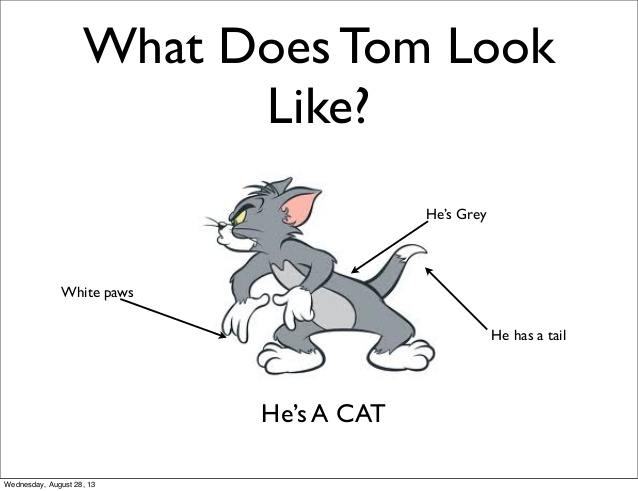
What does STEAL stand for when thinking about characterization?
a)
Taking things that don't belong to you.
b)
Direct Characterization
c)
Silly teal eels eat lagana
d)
Speech,Thoughts, Effect on others, Actions, Looks
22.
What is characterization?
a)
Character traits
b)
What a character says and thinks
c)
The process in which the author tells the personality of a character.
d)
What a character looks like and what are his actions
23.
In this element of plot the author introduces the characters and setting...
a)
Resolution
b)
Climax
c)
Exposition
d)
Rising Action 
24.
Which list shows the plot elements in the correct order? 
a)
exposition, falling action, climax, rising action, resolution 
b)
exposition, falling action, rising action, climax, resolution
c)
exposition, rising action, climax, falling action, resolution 
d)
rising action, falling action, exposition, climax, resolution
25.
What takes place after the climax that prepares the story for its resolution?
a)
resolution
b)
rising action
c)
falling action
d)
exposition
26.
Which tone is represented in the following passage?
Wow! With a top speed of one hundred fifty miles per hour, that car can almost fly!
a)
Calm
b)
Annoyed
c)
Scary
d)
Excited
27.
_________ is the feeling the reader gets as he/she reads the text.
a)
mood
b)
tone
28.
What is tone in writing?
a)
The reader's attitude toward the subject.
b)
The author's attitude toward the subject.
c)
The reader's feelings about the subject.
d)
The sound that comes from a piano when you press a key. 
29.
Define foreshadowing.
a)
A flashback of what happened previously
b)
A hint at something that will happen later
c)
Giving human-like characteristics to non-living things
d)
Comparing two unlike things using like or as
30.
A look back to an earlier event...
a)
Flashback
b)
Foreshadowing
c)
theme
d)
rising action
31.

A comparison of two unlike things using LIKE or AS.

a)

hyperbole

b)

simile

c)

personification

d)

metaphor

32.

A comparison of two unlike things stating that one thing IS the other.

a)

idiom

b)

simile

c)

personification

d)

metaphor

33.

Giving human characteristics to inanimate objects, ideas, or animals.

a)

metaphor

b)

onomatopoeia

c)

personification

d)

hyperbole

34.

Repetition of beginning consonant sounds in words that are close together.

a)

onomatopoeia

b)

oxymoron

c)

pun

d)

alliteration

35.

Outrageous exaggeration made to emphasize a point.

a)

hyperbole

b)

simile

c)

oxymoron

d)

pun

36.

A word that imitates the sound it represents.

a)

onomatopoeia

b)

oxymoron

c)

pun

d)

alliteration

37.

"The firework exploded in the air, making a big boom"

is an example of...

a)

Personification

b)

Onomatopoeia

c)

Metaphor

d)

Alliteration

38.

"He was as cool as a cucumber" is an example of...

a)

Simile

b)

Alliteration

c)

Metaphor

d)

Personification

39.

"Peter pranced playfully around the playground" is an example of...

a)

hyperbole

b)

alliteration

c)

onomatopoeia

d)

oxymoron

40.

"The flower hugged the earth after being blown over by the storm" is an example of...

a)

personification

b)

alliteration

c)

metaphor

d)

simile

41.

"Her long hair is an ocean of waves" is an example of...

a)

personification

b)

onomatopoeia

c)

hyperbole

d)

metaphor

42.

"She was so sad that all the tears she cried filled up a lake" is an example of...

a)

hyperbole

b)

oxymoron

c)

alliteration

d)

onomatopoeia

43.

"Life is a journey" is an example of what?

a)

Simile

b)

Metaphor

c)

Hyperbole

d)

Alliteration

44.

I nearly died laughing is an example of what?

a)

Metaphor

b)

Assonance

c)

Alliteration

d)

Hyperbole

45.

"You are the thunder, and I am the lightning," is an example of which type of figurative language?

a)

Metaphor

b)

Hyperbole

c)

Chliche

d)

Personification

46.

The flowers danced in the wind is an example of:

a)

Simile

b)

Personification

c)

Cliche

d)

Idiom

47.
'Pop! The cork flew from the champagne bottle.'  The word 'pop' is an example of:
a)
personification
b)
onomatopoeia
c)
simile
d)
hyperbole
48.
Silly Sally swam so smoothly' is an example of:
a)
onomatopoeia
b)
metaphor
c)
alliteration
d)
idiom
49.
'How sweet the sobbing violin!' is an example of:
a)
simile
b)
metaphor
c)
personification
d)
hyperbole
50.
The book was a spaceship that transported him to strange new worlds.
What figure of speech is this?
a)
Personification
b)
Hyperbole
c)
Simile
d)
Metaphor
51.
The thunder roared and the lightning cracked during the storm.
What type of figurative language is this?
a)
Hyperbole
b)
Onomatopoeia
c)
Personification
d)
Metaphor
52.

What is point of view?

a)

The perspective from which a narrative is told.

b)

The problem in the story.

c)

Time and place in which the events of a narrative

occur.

d)

The main idea or message in a plot.

53.

What is third person omniscient point of view?

a)

The narrative is told by one of the characters and seen only through his or her eyes.

b)

Narrator is all knowing; the author is telling the story, using the words they and them.

c)

A character is telling the story using we or you.

d)

The perspective from which from which a narrative is told.