
 Worksheets
Macromolecules/ Enzymes
Total questions: 30
Worksheet time: 27mins
Name
Class
Date
1.
Which of the following decreases the activation energy necessary to initiate the chemical change within the body?
a)
nucleotides
b)
enzymes
c)
amino acids
d)
fatty acids
2.
Enzymes will make a reaction go _______ and use ______ energy.
a)
faster, less
b)
faster, more
c)
slower, less
d)
slower, more
3.
Which factor denatures a enzyme?
a)
Excessive heat
b)
Nothing can
c)
Excessive pH
d)
Exposure to bacteria
4.

In a chemical reaction, a reactant binds to an enzyme at a region known as the
a)
catalyst.
b)
product.
c)
substrate.
d)
active site.
5.
What is a substance called if it speeds up a chemical reaction?
a)
reusable
b)
catalyst
c)
specific
d)
fragile
6.
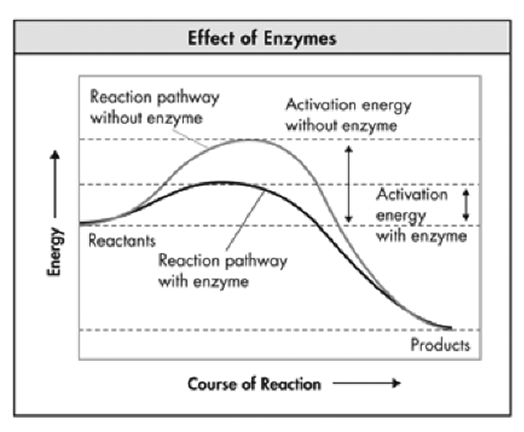
The graph shows how enzymes affect reactions in cells. Which statement best summarizes the information shown in the graph?
a)
Enzymes increase the energy of the reactants.
b)
Enzymes decrease the energy level of the products.
c)
Enzyme decrease the activation energy of the reaction.
d)
Enzymes reverse the direction of the reaction.
7.
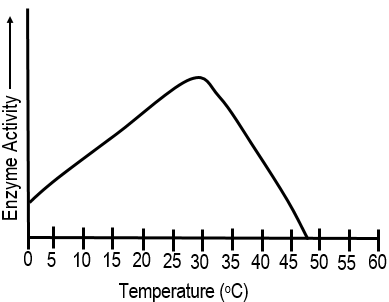
Based on the graph, what is the optimal temperature for this enzyme?
a)
15oC
b)
40oC
c)
30oC
d)
35oC
8.
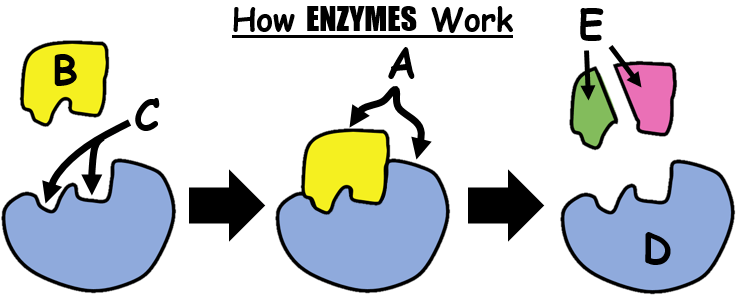
Letter D...
a)
active site
b)
enzyme
c)
substrate
d)
products
9.
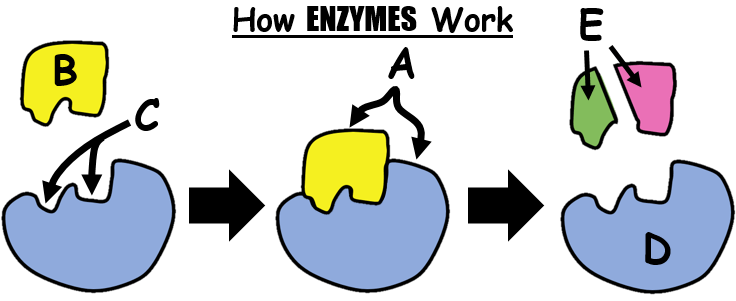
Letter B...
a)
active site
b)
enzyme
c)
substrate
d)
products
10.
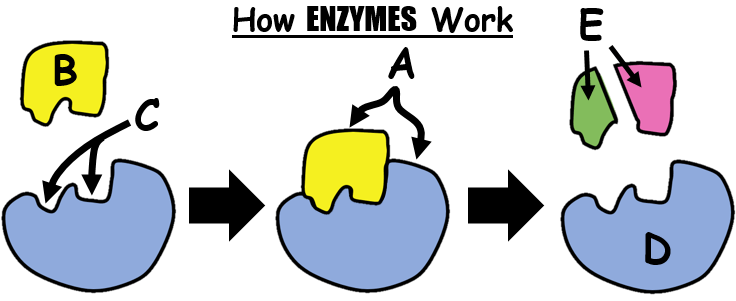
Letter C...
a)
active site
b)
enzymes
c)
substrate
d)
products
11.
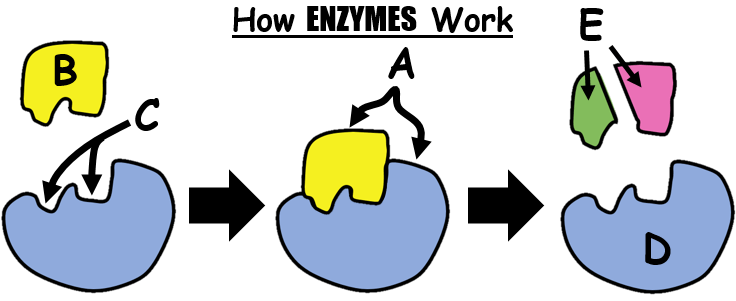
Letter E...
a)
active site
b)
enzyme
c)
substrate
d)
products
12.
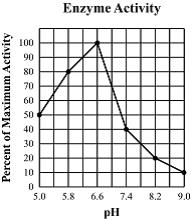
Which of the following conclusions can be drawn from this graph?
a)
The optimum pH of the enzyme is 6.6.
b)
The optimum pH of the enzyme is 5.8
c)
The enzyme’s activity increases as pH increases 5.0 to 9.0
d)
The enzyme’s activity is greater around pH of 8.0 .
13.
An enzyme speeds up a chemical reaction in the cell but can only be used once. True or False?
a)
true
b)
false
14.
With what 3 letters do enzymes typically end?
a)
-ose
b)
-ase
c)
-ese
d)
-tic
15.
Enzymes are an example of
a)
Lipids
b)
Carbohydrate
c)
Protein
d)
Nucleic Acid
16.
Each enzyme only has 1 substrate that will fit its active site. What is this called?
a)
reusable
b)
catalyst
c)
specific
d)
fragile
17.
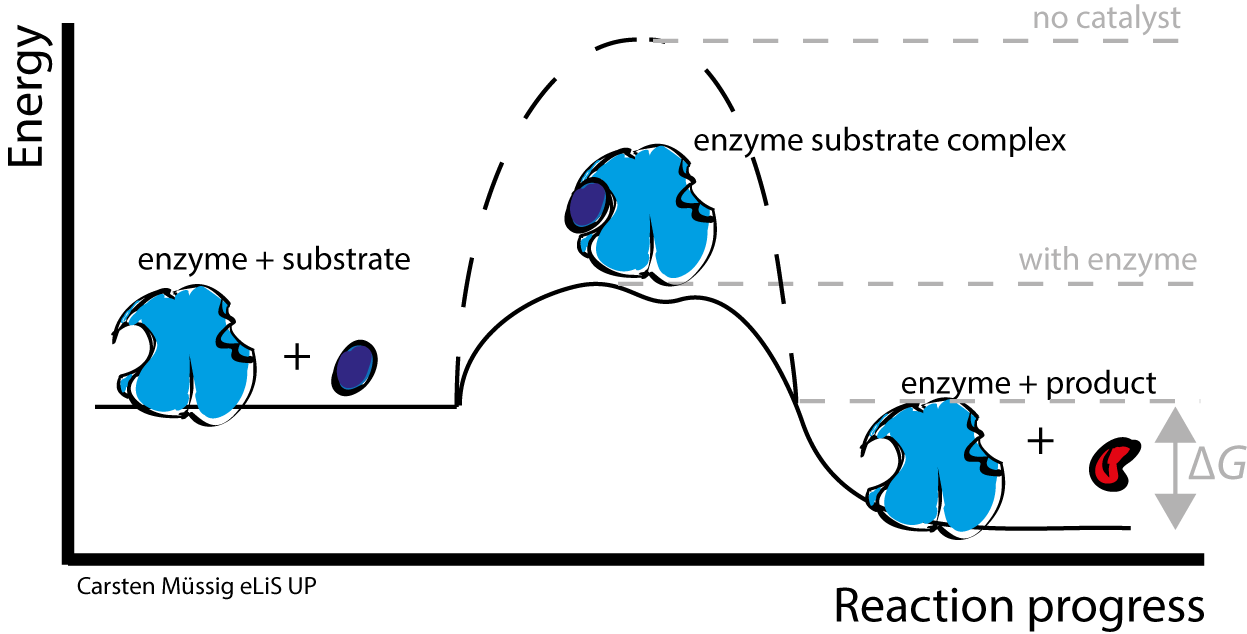
An enzyme speeds up a reaction by
a)
lowering the activation energy.
b)
raising the activation energy.
c)
releasing energy.
d)
absorbing energy.
18.
What happens when enzymes are heated to a high temperature?
a)
The enzymes die.
b)
The shape of the enzyme are changed and it denatures
c)
The enzymes' amino acid sequence changes.
d)
The enzymes remain the same
19.
Any substance that is acted upon by an enzyme is called a(n)?
a)
Coenzyme
b)
Substrate
c)
Vitamin
d)
Polypeptide
20.
Enzymes are...
a)
nucleic acids
b)
proteins
c)
lipids
d)
carbohydrates
21.
Which of these is most likely an enzyme?
a)
Sucrose
b)
Galactose
c)
Fructose
d)
Amylase
22.
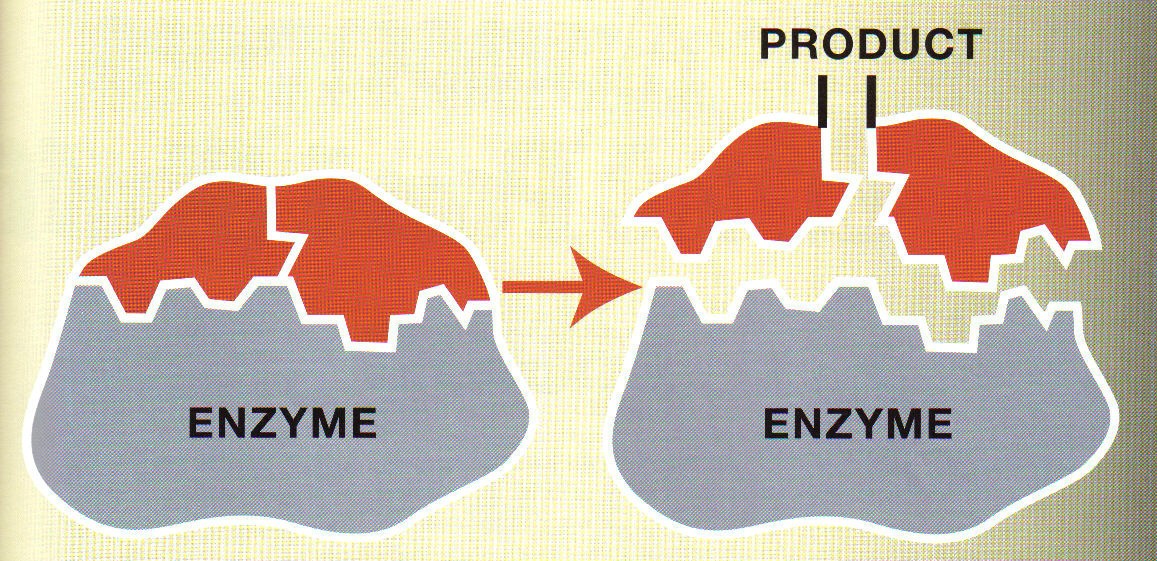
Enzymes speed up reaction rates by changing...
a)
Activation Energy
b)
pH
c)
Hydrogen Bonds
d)
Kinetic Energy
23.

Which enzyme is most efficient in a basic solution?
a)
A
b)
B
24.
What is the purpose of an enzyme?
a)
give permission for the reaction
b)
raise activation energy
c)
speed up reactions
d)
control how many reactions occur
25.
In a chemical reaction, bonds are broken and new bonds are formed that create new substances. The bonds that are broken are called what?
a)
Reactants
b)
Products
c)
Atoms
d)
Catalysts
26.

What is structure D?
a)
Substrate
b)
Active site
c)
Enzyme
d)
Products
27.

What is structure E, F, G?
a)
Substrate
b)
Active site
c)
Enzyme
d)
Products
28.
Which of the following denatures an enzyme?
a)
High Temperatures
b)
Incorrect pH
c)
Both
29.
What is the name for the mechanism of enzyme activity?
a)
Lock and key
b)
jigsaw puzzle
c)
hammer and nail
d)
two hands pattern
30.
What makes an enzyme substrate specific?
a)
Size
b)
Shape
c)
Name
d)
Location it is found in
100 %

