wayground logo

Free Printable Worksheets

Font size

S
M
L
XL
Worksheets

ASW Fall Final Review

Total questions: 200

Worksheet time: 2hrs 48mins

Name
Class
Date
1.
Vassals would swear oaths of fealty to their lords.  What is the best synonym for "fealty?"
a)
Love
b)
Money
c)
Obedience
d)
War
2.
Land was to the feudal system as ________ is to modern society.
a)
Money
b)
Real estate
c)
Education
d)
Politics
3.
What was the main job of a knight?
a)
Defending his lord's or king's territory
b)
Enforcing the law on his lord's manor
c)
Going on extreme adventures
d)
Competing in tournaments against other knights
4.
A medieval lord also performed the duties of a modern:
a)
Teacher
b)
Judge
c)
Policeman
d)
Farmer
5.

Medieval

a)

a country whose ruler is a king or queen

b)

a large area of land that was ruled over by a lord in medieval times

c)

from the Latin for "Middle Ages"

d)

a soldier in the past who had a high social rank and who fought while riding a horse and usually wearing armor

6.

Kingdom

a)

a country whose ruler is a king or queen

b)

a country that is ruled by a monarch (such as a king or queen)

c)

a feeling of strong support for someone or something

d)

a male ruler of a country who usually inherits his position and rules for life

7.

Feudalism

a)

a social system in which people worked and fought for nobles who gave them protection and the use of land in return

b)

a country whose ruler is a king or queen

c)

of, or relating to the Middle Ages: of, or relating to the period of European history from about A.D. 500 to about 1500

d)

the head of the Roman Catholic Church

8.

Monarchy

a)

a large area of land that was ruled over by a lord in medieval times: a feudal estate

b)

a country that is ruled by a monarch (such as a king or queen)

c)

of, or relating to, or belonging to the highest social class: of, or relating to, or belonging to the nobility

d)

a member of a servile feudal class bound to the land and subject to the will of its owner

9.

Manor

a)

a soldier in the past who had a high social rank and who fought while riding a horse and usually wearing armor

b)

a social system that existed in Europe during the Middle Ages in which people worked and fought for nobles who gave them protection and the use of land in return

c)

a large area of land that was ruled over by a lord in medieval times: a feudal estate

d)

an estate under a lord with a variety of rights over land and tenants

10.

Fief

a)

a country that is ruled by a monarch (such as a king or queen)

b)

of, or relating to, or belonging to the highest social class: of, or relating to, or belonging to the nobility

c)

a large area of land that was ruled over by a lord

d)

a feeling of strong support for someone or something

11.

Knight

a)

warrior mounted on horseback

b)

a feeling of strong support for someone or something

c)

of, or relating to the Middle Ages: of, or relating to the period of European history from about A.D. 500 to about 1500

d)

a country whose ruler is a king or queen

12.

Noble

a)

a person in the past who received protection and land from a lord in return for loyalty and service

b)

belonging to the highest social class

c)

a feeling of strong support for someone or something

d)

a country that is ruled by a monarch (such as a king or queen)

13.

King

a)

a member of a servile feudal class bound to the land and subject to the will of its owner

b)

a male ruler of a country who usually inherits his position and rules for life

c)

a person in the past who received protection and land from a lord in return for loyalty and service

d)

a place where monks live and work together

14.

Serf

a)

a peasant who is legally bound to the land and subject to the will of its owner

b)

a person in the past who received protection and land from a lord in return for loyalty and service

c)

a building that is used for Christian religious services

d)

a man who is a member of a religious and lives in a monastery

15.

Vassal

a)

noblemen who received land and from other noblemen in return for their services

b)

a male ruler of a country who usually inherits his position and rules for life

c)

a place where monks live and work together

d)

a woman belonging to a religious order: one under solemn vows of poverty, chastity, and obedience

16.

Monk

a)

a place where monks live and work together

b)

a member of a religious community of men

c)

the head of the Roman Catholic Church

d)

a person in the past who received protection and land from a lord in return for loyalty and service

17.

Monastery

a)

a place where monks live and work together

b)

a woman belonging to a religious order: one under solemn vows of poverty, chastity, and obedience

c)

a feeling of strong support for someone or something

d)

a country that is ruled by a monarch (such as a king or queen)

18.

Europe was known as the Dark Ages because

a)

there was decline in trade, education,and culture

b)

Rome did not pay its electric bill

c)

there was a growth of war

d)

emperors were not very smart

19.
Based on the picture who was at the top of the Feudal Society?
a)
King
b)
Peasants
c)
Knights
d)
Nobles
20.
What does this picture represent?
a)
A castle
b)
Rivers
c)
A manor
d)
Farms
21.
What is the difference between a Lord and a Vassal?
a)
Nothing
b)
Lords are the boss of the Vassal
c)
Vassals had more money
d)
Lords were not connected to Vassals
22.
What is a fief?
a)
land given to Knights in exchange for loyalty
b)
Something Kings ate
c)
A disease that killed many peasants
d)
Not a real thing
23.
Who was the King to reunite Europe after the Fall of the Roman Empire?
a)
William the Conqueror
b)
Charlemagne
c)
John VIII
d)
Caesar
24.
What is William the Conqueror NOT known for?
a)
Taking over England at the Battle of Hastings
b)
Beginning Feudalism in England
c)
Giving his knights fiefs of land
d)
Discovering America
25.
What was a peasant's job?
a)
Farming
b)
Building tools
c)
Cooking
d)
All of the above
26.
True of false: Peasants could leave whenever they wanted
a)
True
b)
False
27.
Who technically owned all of the land in the Kingdom?
a)
The King
b)
Everyone
c)
Peasants
d)
knights
28.

When noblemen where out on military duties, who tended their business while they were gone?

a)

noble women

b)

peasants

c)

knights

d)

kings

29.

What is NOT part of the agreement between the nobles and the king?

a)

If you were the lord in times of war you were to provide the king with soldiers and knights.

b)

The King would grant you land as part of the agreement

c)

You would marry into the royal line

d)

Not all lords were enlisted by the king.

30.

Where did nobles live? (select all correct answers)

a)

houses

b)

wooden huts

c)

manors

d)

churches

e)

castles

31.

True or False, Knights lived by a strong code called the Chivalry?

a)

True

b)

False

32.

What do Nobles get in return for supplying the King with knights?

a)

money

b)

gold and silver

c)

land

d)

serfs

33.

Lords and Ladies are...

a)

the King’s son and daughter

b)

high ranking nobles

c)

knights

d)

peasants

34.

Who did the peasants directly serve?

a)

knights

b)

nobles

c)

kings

35.

Which of the following organizational structures is ordered correctly?


low power - - - → - - - high power

a)

serf → knight → noble → monarch

b)

serf → noble → knight → monarch

c)

knight → noble → serf → monarch

d)

serf → monarch → knight → noble

36.
How did the use of standard currency, or coins, help the economy of the Roman Empire?
a)
people would trade for Roman coins even if they did not want Roman goods
b)
most other cultures did not understand what the purpose of coined money was
c)
coins had more uses in the ancient world than many other trade items
d)
the Romans used coins to represent loans when they could not afford goods
37.
How was the Roman Empire able to support its armies and public services?
a)
the army was largely made up of volunteers
b)
taxes were placed on people who had been conquered
c)
Rome forced its citizens to work without payment
d)
the army and services were funded by private citizens
38.
The Roman Republic and the Roman Empire grouped their soldiers into organized military units. The military unit was called a
a)
squadron
b)
horde
c)
legion
d)
phalanx
39.
How did the Roman Empire's use of roads help their economic growth?
a)
the Romans were payed well for building the roads
b)
the Romans rented their roads to other empires
c)
the roads made trading easier within the empire
d)
the roads were owned by private businesses
40.
What was a benefit of the time period known as Pax Romana?
a)
the Roman Empire discovered many scientific advances
b)
the Roman Empire did not suffer any major wars
c)
the Roman Empire doubled the size of its territory
d)
the Roman Empire became a more democratic government
41.
Which achievement allowed Rome to maintain contact with its large empire?
a)
the Colosseum
b)
the aqueduct system
c)
the road system
d)
the Julian calendar
42.
Roman citizenship could be granted to anyone in the Roman Empire. What was a result of this?
a)
conquered people could feel they had a place in the empire
b)
citizens often had land conflicts with each other
c)
most people felt that citizenship was not empire
d)
native Italians often protested against their government
43.

When did the Roman empire start to fall?

a)

3rd century

b)

2nd century

c)

4th century

d)

1st century

44.

Which of the followings are related to the decline of the Roman Empire? (more than 1 answer)

a)

Religion

b)

Army

c)

Bread and Circuses

d)

Invasion of Germanic tribes

45.

Who was the first Christian emperor?

a)

Constantine I

b)

Augustus Ceasar

c)

Julius Caesar

d)

‎Theodosius I‎

46.

Where was the capital of the Roman Empire after the rule of Constantine?

a)

Rome

b)

Italy

c)

Constantinople

d)

Spain

47.

Who defeated the Western Roman Empire?

a)

Visigoths

b)

Huns

c)

Turks

d)

Celts

48.

Which of these statements describes a change brought about by the Renaissance?

a)

Society was dominated by the church.

b)

Society began to value individualism.

c)

Society was focused on warfare.

d)

Society was dominated by lords.

49.

Which of these famous structures did Michelangelo paint?

a)

the Louvre

b)

the Coliseum

c)

the Sistine Chapel

d)

the Eiffel Tower

50.

Developments in cartography made it easier for explorers in their travels to new lands. Which of the following best describes cartography?

a)

the study of the Earth's natural processes

b)

the study of the Earth's weather patterns

c)

the study and practice of making maps

d)

the study of past human societies

51.

• Venetian explorer who visited the court of Kublai Khan

• One of the first Westerners to travel the Silk Road to China

• Travels increased the interest of Europeans in the lands of the East


Who is described above?

a)

Marco Polo

b)

Ferdinand Magellan

c)

Vasco da Gama

d)

Christopher Columbus

52.

• Botticelli • Michelangelo

• Raphael • Titian


All of the above were famous Renaissance

a)

scientists.

b)

philosophers.

c)

priests.

d)

artists.

53.

During the Renaissance, a new intellectual movement known as humanism evolved. What was the significance of the humanist movement?

a)

Humanists felt formal education was impractical and unnecessary; therefore, many schools were closed.

b)

Humanists spread the teachings of Eastern philosophers such as Confucius throughout Europe.

c)

Humanists were very interested in religious studies and sought to increase the influence of the Church.

d)

Humanists were inspired by classical texts and emphasized the dignity and worth of the individual.

54.

Which of these men of the Renaissance was known equally for his art as well as inventions?

a)

Rueben

b)

Leonardo da Vinci

c)

Michelangelo

d)

Aristotle

55.

? --->Literature printed for quickly --> literature printed for less money----> Greater spread of ideas

Which of these would complete the diagram?

a)

the Book of Common Prayer

b)

the Italian university system

c)

the Gutenberg printing press

d)

the Petrarchan style sonnet

56.

Which of these changes occurred during the Renaissance?

a)

The Church was all-powerful.

b)

The Church’s power declined.

c)

Factories began using electricity.

d)

Women gained equal rights with men.

57.

• Nicolaus Copernicus

• Galileo Galilei

• Tycho Brahe

• Johannes Kepler

All of the above were famous Renaissance

a)

philosophers.

b)

priests.

c)

artists.

d)

scientists.

58.

What was Niccolò Machiavelli's main argument in his work The Prince?

a)

A ruler should do whatever is necessary to maintain power.

b)

A ruler should follow all of the teachings of the Catholic Church.

c)

A ruler should make his subjects as happy as possible.

d)

A ruler should strive to maintain equality and fairness.

59.

Which of these statements reflects an influence of the Renaissance?

a)

dominance of the church

b)

constant feudal warfare

c)

lack of any governance

d)

increased interest in the arts

60.

Which of these events influenced the changing role of religion during the Renaissance?

a)

the humanist movement

b)

the removal of the pope

c)

the burning of bibles

d)

the invention of movable type

61.

Which of the following statements describes the type of government which existed in Florence during the Renaissance?

a)

It was a small Italian town ruled by the king of Italy in Rome.

b)

It was completely under the control of the Catholic Church.

c)

It was a city-state ruled by the wealthy Medici family.

d)

It was the capital of Italy and had a large bureaucracy.

62.

• Gunpowder

• Printing press

• Compass

All of the above were results of what in the Renaissance?

a)

the move toward using money

b)

a shift from science to religion

c)

an increased interest in the arts

d)

an increase in scientific inquiry

63.
What does the word "Renaissance" mean?
a)
Renewed
b)
Rebuilt
c)
Remade
d)
Rebirth
64.
What is one way that Medieval and Renaissance artists differ?
a)
Renaissance art focuses more on religion
b)
Medieval artists were more realistic
c)
Renaissance artist turned to Roman and Greek works for inspiration
d)
They are the same
65.
On what peninsula did the Renaissance begin?
a)
Spain
b)
England
c)
Italy
d)
Germany
66.
Humanism...
a)
emphasized the Bible
b)
leads to happier lives
c)
encourages people to learn Latin and Greek
d)
focuses on the potential of humans to achieve 
67.
______________ art was flat with rigid, emotionless figures, while ______________ art had full backgrounds with figures that showed emotion and detail.
a)
Renaissance, Medieval
b)
Renaissance, Classical
c)
Classical, Medieval
d)
Medieval, Renaissance
68.
Which of these would be valued most by a Renaissance thinker who emphasized individualism?
a)
a nation's strength 
b)
a family's ancestors
c)
a person's achievements
d)
an army's success in battle
69.
Title...
a)
Madonna
b)
Mona Lisa
c)
Margaret
d)
da Vinci
70.
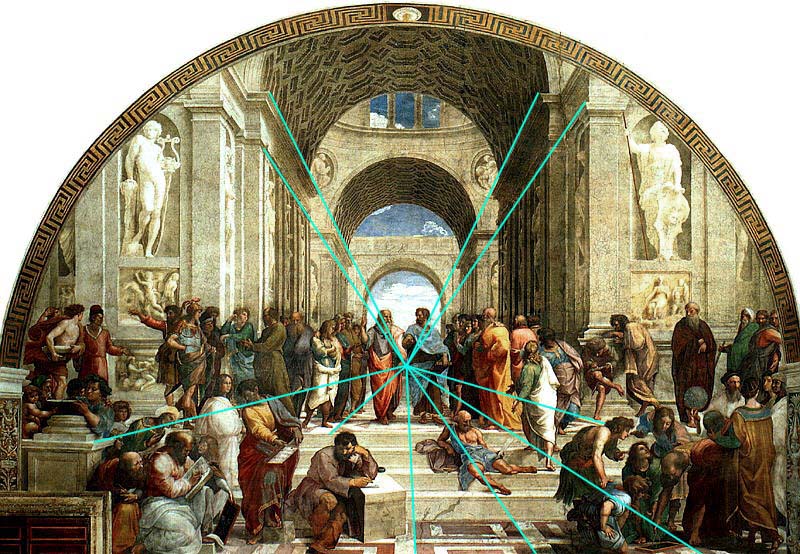
Renaissance artist who painted The School of Athens
a)
Michelangelo
b)
Raphael
c)
Johann Guttenberg 
d)
Leonardo da Vinci
71.
Which of the following most accurately characterizes the Renaissance?
a)
the spread of democracy
b)
the outburst of creativity 
c)
a growth of religious belief
d)
a decline in learning 
72.
Which of the following is associated with classical learning?
a)
the ideas of the middle ages
b)
the ideas of Greece & Rome
c)
the ideas of ancient China
d)
the ideas of ancient India
73.

What sculpture is this?

a)

David by Donatello

b)

Danny by Raphael

c)

David by Leonardo

d)

David by Michelangelo

74.

What was an explosion of discoveries and ideas that started in Europe during the 1500s?

a)

Enlightenment

b)

Protestant Reformation

c)

Black Death

d)

Scientific Revolution

75.

Where do historians feel the Renaissance began in Italy?

a)

Twin Valley Middle School

b)

Venice

c)

Florence

d)

The Globe Theater

76.

One of the most important ideas from the Renaissance that allowed ideas to spread more quickly.

a)

Perspective

b)

Greece and Rome

c)

Building designer

d)

Printing Press

77.

Philosophers and painters of the Renaissance and wanted to return to the times of ...

a)

Perspective

b)

Greece and Rome

c)

The Middle Ages

d)

about 3 weeks ago

78.

Florence, Milan, Rome were all Italian ____________ during the Renaissance

a)

Frescos

b)

Humanisms

c)

City States

d)

Architects

79.

Which was a key intellectual movement or philosophy of the Renaissance?

a)

Humanism

b)

City State

c)

Cultural relativism

d)

Behavioralism

80.
What provided the major economic support for the Renaissance?
a)
wealthy patrons
b)
church officials
c)
government grants
d)
kings competing for prestige
81.
What is the artistic technique that is used to show depth and distance on a flat surface?
a)
realism
b)
perspective
c)
idealism
d)
distancism
82.
The Medici Family...
a)
Were the first mafia family to live in Italy
b)
Were the most famous painters in Florence
c)
Were the family of Mona Lisa
d)
Were patrons of the arts in Florence
83.

Whose famous writings are the picture shown above?

a)

Da Vinci

b)

Donatello

c)

Fresco

d)

Michelangelo

84.

What was the theory that said that the Earth and all the planets revolve around the sun?

a)

Geocentric

b)

Heliocentric

c)

Geographic

d)

The Earth is flat

85.
Which of the following best helped Martin Luther's ideas reach other parts of Europe? 
a)
The Bible
b)
The printing press
c)
Church Hierarchy
d)
The Diet of Worms
86.
In his attempt to reform the Catholic Church, what did Martin Luther do?
a)
Bought a certificate of indulgence to be pardoned.
b)
Helped Pope Leo X rebuild St. Peter's Basilica in Rome.
c)
Prepared a list of 95 arguments against indulgences.
d)
Decided to become a lawyer. 
87.
Bloody Mary got her name from the execution of...
a)
Henry VIII's wives
b)
Elizabeth
c)
Catholics
d)
Protestants
88.
Martin Luther's main complaint was against what?
a)
Inquisitions
b)
Indulgences
c)
The Bible
d)
Ice Cream
89.
Fill in the blank. Luther believed that ________________ was how people would end up in heaven.
a)
faith
b)
indulgences
c)
good deeds
d)
going to church
90.
Protestant or Catholic belief? The Bible is the authority on Christ.
a)
Protestant
b)
Catholic
91.
T or F: Protestants and Catholics are both Christians.
a)
True
b)
False
92.
What is excommunication?
a)
You are kicked out of the church for life and won't go to heaven.
b)
You are put on trial, tortured, and given a choice to convert or die.
c)
You can pay money to have your sins forgiven: ticket to heaven.
d)
You are brought up on criminal charges, accusing you of going against approved teachings/beliefs.
93.
A devout Catholic who detested Martin Luther and specially titled as “Defender of the Faith” by the Pope, __________ created the Anglican Church so he could divorce his wife.
a)
Henry VIII
b)
Charles V
c)
Leo X
d)
Edward VI
94.
Who invented the printing press?
a)
Johannes Gutenburg
b)
Botticelli
c)
Leonardo da Vinci
d)
Michelangelo
95.
All Church activities were in this language.
a)
Latin
b)
French
c)
Spanish
d)
Pig Latin
96.
Authors living during the Renaissance started writing in the everyday language of the people known as the
a)
perspective
b)
chiaroscuro
c)
contrapposto
d)
vernacular
97.
Who painted the most famous work of art called The Last Supper?
a)
Leonardo da Vinci
b)
Michelangelo
c)
Gentileschi
d)
Jan van Eyck
98.

What was the time in history when the Roman Catholic Church was questioned?

a)

Middle Ages

b)

Renaissance

c)

Reformation

d)

All of the Above

99.

What was the time in history when the Roman Catholic Church was questioned?

a)

Middle Ages

b)

Renaissance

c)

Reformation

d)

All of the Above

100.

How did the invention of the printing press help the Reformation?

a)

Bibles printed allowed more people to read them.

b)

People could read translations of the Bible in their language.

c)

It allowed reformers to spread their ideas.

d)

All of the Above

101.

Why did the Reformation begin?

a)

Luther wanted to start a new religion.

b)

The Church was poor and needed a new leader.

c)

Calvin wanted to head the Church.

d)

There were abuses in the Church that needed changing.

102.

What does Protestant Reformation mean?

a)

start something new

b)

replace leaders

c)

go against and speak for change

d)

protect the Catholic Church

103.

Before the Reformation, Christian churches were ___________

a)

Jewish

b)

Roman Catholic

c)

Muslim

d)

None of the Above

104.

What was the Spanish Inquistion?

a)

Attempt to spread protestant beliefs

b)

Attempt to rid Spain of non-Catholic people

c)

Attempt to spread Judaism

d)

Attempt to rid Spain of Catholics

105.

What was the Counter Reformation?

a)

Pope's decision to go to war

b)

Protestants moving to new lands

c)

Printing Bible in other languages

d)

Catholic Church making changes

106.

Which of the following was the Council of Trent NOT responsible for?

a)

Protestant Reformation

b)

missions

c)

changes to Catholic Church

d)

seminaries

107.

I started the Protestant Reformation in Scotland. Who am I?

a)

John Calvin

b)

John Knox

c)

Martin Luther

d)

King Henry VIII

108.

Why did Luther disagree with the selling of indulgences?

a)

He believed they should cost more.

b)

He believed people had to work to earn salvation.

c)

He believed salvation was a gift of grace.

d)

He believed his 95 Theses could get people to Heaven.

109.

I was a reformer that encouraged people to reject Catholicism. Who am I?

a)

John Calvin

b)

John Knox

c)

Martin Luther

d)

Queen Mary

110.

If a person was accused of heresy, he/she could be kicked out of the church or ______________________.

a)

ordained

b)

crowned

c)

excommunicated

d)

reformed

111.

Which was NOT a cause of the Protestant Reformation?

a)

Bibles being available for people to read.

b)

Luther's 95 Theses

c)

Crusades

d)

People becoming more educated and a focus on humanism

112.
Who was NOT a major influence in the Reformation?
a)
Martin Luther
b)
King Henry the VIII
c)
John Calvin
d)
Percales of Athens
113.
What was the Catholic Church promising with if you bought indulgences?
a)
automatic entrance into Heaven
b)
predestination 
c)
charity 
d)
A chance to fight in the 30 years war
114.
Who is the head of the Anglican Church?
a)
The King of England
b)
Martin Luther
c)
John Calvin
d)
The Pope
115.
Which of the following movements happened in Europe that led to the Reformation?
a)
Fall of Rome
b)
Renaissance
c)
River Valley Civilizations
d)
Mongol Empire
116.
A heretic is 
a)
Someone who challenges church doctrine
b)
Someone who works for the Inquisition.
c)
Someone who sells fish
d)
A protestor
117.
What was the Protestant Reformation?
a)
an attempt to overthrow the Pope and replace him with a Frenchman.
b)
an attempt to reform the Catholic practices that were considered corrupt.
c)
a call for Christian Europe to reclaim the Holy Land from the Arabs.
d)
a call for a new pope
118.
Luther was able to criticize the Roman Catholic Church and translate the Bible into German primarily because
a)
German princes protected him.
b)
he bought indulgences.
c)
he was Pope Leo's cousin.
d)
the Pope tolerated it.
119.
This was the Church practice of selling forgiveness for sin 
a)
Usury
b)
Tithe
c)
Sin Tax
d)
Indulgences
120.
The idea that God has already determined who will be saved is called
a)
indulgence
b)
diet
c)
predestination
d)
theocracy
121.
What event was the start of the Protestant Reformation?
a)
Martin Luther creating a competing church to the Catholic Church
b)
Martin Luther taking over the church at Worms from the Catholic Priest
c)
Martin Luther writing a book condemning the Catholic Church
d)
Martin Luther posting his suggestions for reforms to the church to the door of the church
122.
Why did Henry VIII break away from the Catholic Church?
a)
Henry VIII had deep theological disagreements with the Church
b)
The Pope Excommunicated Henry VIII
c)
Henry VIII started a war with the king of Spain, the Pope's distant cousin
d)
He wanted to annul his marriage to marry his girlfriend to get an heir to the throne
123.
Henry VIII was different from the Other Reformers because he was motivated by political reasons and not religious reasons
a)
True
b)
False
124.
How many wives did Henry eventually have?
a)
4
b)
5
c)
6
d)
7
125.

English King who formed the Church of England (Anglican Church)?

a)

King Henry IV

b)

King Henry VI

c)

King Henry VIII

d)

King Henry IX

126.
1st to sail around (circumnavigate) the globe
a)
Magellan
b)
de Gama
c)
Columbus
d)
Dias
127.
First European to sail around the southern tip of Africa
a)
B. Dias
b)
C. Columbus
c)
V. de Gama
d)
J. Cartier
128.
Did not sail for Spain
a)
Columbus
b)
Pizarro
c)
de Gama
d)
Magellan
129.
Main motivation for European exploration
a)
the need for Slave labor
b)
God, Gold, Glory
c)
to see if the earth was flat
d)
none of these are correct
130.
Missionaries, forced conversion, and relocation is the main way this spread
a)
English language
b)
Christianity
c)
Smallpox
d)
livestock
131.
The exchange of new goods, resources and ideas between east and west is called...
a)
Columbian Exchange
b)
Triangle trade
c)
Westward Expansion
d)
The Exploration Revolution
132.
Goods left markets in Europe and were traded for slaves in Africa. Slaves were traded in the Americas for resources. Resources were brought back to Europe.
a)
Columbian Exchange
b)
Triangle Trade
c)
East/West Exchange
133.
Henry the Navigator was famous for...
a)
Discovering the Northwest Passage
b)
1st European to reach the Indian Ocean by sea
c)
Opened a sailing school in Portugal
d)
Paid for the sailing of Columbus
134.
Henry the Navigator was famous for...
a)
Discovering the Northwest Passage
b)
1st European to reach the Indian Ocean by sea
c)
Opened a sailing school in Portugal
d)
Paid for the sailing of Columbus
135.
Whose famous journey does this map show?
a)
Magellan
b)
de Gama
c)
Dias
d)
Cartier
136.
Whose route is shown in this map?
a)
Magellan
b)
de Gama
c)
Columbus
d)
Dias
137.
What is divine right?
a)
The right to rule was given to the monarch by God
b)
a Birth right
c)
soldiers for hire
d)
a monarch for hire
138.

Philip II sent the ________ to DESTROY England in 1588.

a)

Spanish Armada

b)

The Conquistadors

c)

Pizarro and Cortez

d)

Spanish Inquisition

139.

Who built St. Petersburg to establish a closer city to Western Europe in order to modernize?

a)

Frederick the Great

b)

Louis XIV

c)

Peter the Great

d)

Ivan the Terrible

140.
Peter the Great implemented this to make Russia stronger.
a)
Mercantilism
b)
Westernization
c)
Balance of Power
d)
Trickle down economics
141.
Who was the monarch of England when Phillip II went to war with his Spanish Armada and lost?
a)
Mary of Scots
b)
Elizabeth I
c)
James I
d)
Charles I
142.
Who said, "I am the state?"
a)
Louis XIV
b)
Peter the Great
c)
The State Legislative
d)
Bloody Mary
143.
Where did Louis XIV move France's palace?
a)
Lyon
b)
Gordes
c)
Versailles
d)
Dinan
144.

Which best describes the kind of ruler Louis XIV was?

a)

He was a kind king who worked in the best interest of the people

b)

He murdered his wives and brought about a new religion

c)

He saw himself and the only source of power and built powerful armies and overspend on lavish wars and goods

d)

He tried to mimic the western world to modernize his country especially in material goods, fashion, and shipbuilding

145.
When a ruler has complete authority over the government and the lives of the people.
a)
Absolutism
b)
Republicanism
c)
Socialism 
d)
Parliament-arianism
146.

The religion that Spain imposed upon its colonies and it's people

a)

Jewism

b)

Islam

c)

Catholicism

d)

Hindu

147.
What body in England placed limits on the powers of the monarchs?
a)
The Church
b)
Parliament
c)
Universities
d)
Foreign governments
148.
Louis XIV built this palace as a symbol of Frances wealth and power.
a)
Taj Mahal
b)
Buckingham Palace
c)
Versailles
d)
Huguennots
149.
Peter the Great moved the capital city of Russia from Moscow to St. Petersburg to:
a)
Be closer to Western Europe in order to open up trade through the Baltic Sea
b)
Move away from the famine and plague that killed thousands
c)
Move away from invading Mongols and other east Asian invaders
d)
Be closer to the great iron reserves of northern Russia
150.

Mercantilism can be described as:

a)

Population = Power

b)

More imports = Power

c)

Wealth = Power

d)

Location = Power

151.

True or False:


During the reign of Louis XIV, France became extremely wealthy and the most powerful military force in Europe.

a)

True

b)

False

152.

True or False:

Due to the economic success of Louis XIV, the idea of absolutism spread throughout Europe.

a)

Ture

b)

False

153.
Ferdinand and Isabella were the king and queen of
a)
Spain
b)
Greece
c)
Italy
d)
Poland
154.
Christopher Columbus was sponsored by 
a)
King Ferdinand and Queen Isabella
b)
Ivan the Terrible
c)
King Henry VIII
d)
Pope Benedict V
155.
Ferdinand and Isabella were known for pushing the ____ south back to Africa.
a)
Moors (Muslim North Africans)
b)
The South Africans
c)
Portuguese
d)
Irish
156.
Using a telescope, ________ discovered that the Earth is not the center of the Universe.
a)
Galileo
b)
Marie Curie
c)
Einstein
d)
da Vinci
157.
Galileo was accused of ______, disagreeing with the Bible.
a)
heresy
b)
theft
c)
murder
158.
Which Islamic group began to invade the Christian, Byzantine Empire?
a)
Fatimid
b)
Turk
c)
Chinese
d)
Franks
159.
Pope Urban II changed the world by
a)
Launching the Crusades
b)
Discovering America
c)
Defending Jerusalem from attacks
d)
Launching the first Catapult 
160.
Why were the Crusades fought?
a)
Oil
b)
Holy Land
c)
Drama
d)
Funsies
161.
What ancient empire did the Ottomans end?
a)
China
b)
Arab
c)
Byzantine
d)
none are true
162.
What religion did the Ottoman Empire help spread throughout their empire?
a)
Islam
b)
Christianity
c)
Shintoism
d)
Buddhism
163.
The Age of Enlightenment began
a)
Before Exploration
b)
During Prehistoric Times
c)
After the American Revolution
d)
In the 17th Century
164.
Enlightened thinkers based their philosophical beliefs on what two things?
a)
power and privilege
b)
money and fame
c)
good looks and charm
d)
reason and logic
165.
Whose authority was challenged by the new scientific theories during the 16th and 17th centuries? 
a)
Catholic Church
b)
Roman Gods
c)
Baptist ministers
d)
The Queen of Spain
166.
Which of the following is an example of an “unlimited government?”
a)
Democracy
b)
Republic
c)
Absolute Monarch
d)
Constitutional Monarchy
167.
The Scientific Revolution can best be described as:
a)
A period when scientists embraced the teachings of the Church
b)
The time when the Catholic Church empathized most with scientists 
c)
period when scientists began to question the old teachings of the Church
d)
 Scientific property invented by astrophysicists to explain the rotation of the Earth
168.
The procedure for testing theories that starts with a question
a)
Methods of Operation
b)
Scientific Method
c)
Procedural Operations
d)
Steps in a process 
169.
Because he feared the Church, what Polish astronomer waited to publish his heliocentric theory until he was near death?
a)
Johannes Kepler
b)
Nicolaus Copernicus 
c)
Isaac Newton 
d)
Francis Bacon 
170.
This diagram is representative of which theory that was supported by the Catholic Church? 
a)
Geocentric 
b)
Concentric
c)
Heliocentric 
d)
Geothermantic
171.
Sir Isaac Newton is associated with the Laws of:
a)
Electricity
b)
Motion and gravity
c)
Human biology
d)
Astronomy 
172.
Which of the following best explains the effect of the Scientific Revolution on traditional religious beliefs?
a)
People now looked to religion to explain the world around them.
b)
People now looked to their kings to explain the world around them.
c)
People used reason and logic to explain the world
d)
Momney makes the world go round
173.
This tool used latitude to determine location.
a)
astrolabe
b)
compass
c)
caravel
d)
rudder
174.

The Enlightenment is a period of time where "faith" is being replaced with what?

a)

Water

b)

Reason

c)

Opinions

d)

Science

175.

A "Social Contract" is an agreement between a ruler and who?

a)

Monarchy

b)

Dictator

c)

Citizens

d)

Aliens

176.

Absolutism is a form of what type of government?

a)

Limited Government

b)

Unlimited Government

177.

Enlightenment thinkers/philosophers would meet at this place to talk and discuss ways of fixing the problems of the monarchy?

a)

Courthouse

b)

A salon

c)

A Saloon

d)

School

178.

This man wrote the book titled Leviathan

a)

Voltaire

b)

John Locke

c)

Jean Jaque Rousseau

d)

Thomas Hobbs

179.

John Locke believed these people had these type of right?

a)

No Rights

b)

Freedom Rights

c)

Natural Rights

d)

Unnatural Rights

180.

John Locke inspired the writing of this important document by Thomas Jefferson

a)

US Constitution

b)

The Magna Carta

c)

The Declaration of Independence

d)

English Bill of Rights

181.

Rousseau believed in the idea of what for the government?

a)

Majority Rule

b)

Dictatorship

c)

Nobody Votes

182.

Baron de Montesquieu developed this idea for government

a)

One House Congress

b)

Checks and Balances

c)

No House Congress

d)

The President

183.

Voltaire was concerned about what for the citizens?

a)

Rights

b)

Living

c)

Money

184.

Voltaire also fought for this idea between government and religion?

a)

Separation of Food and Water

b)

Separation of Church and State

c)

Separation of Women and Men

185.

Voltaire directly influenced this document for the United States

a)

US Constitution

b)

The Declaration of Independence

c)

The Magna Carta

d)

The US Bill of Rights

186.
Human behavior is governed by natural laws?
a)
True
b)
False
187.
Government should reflect natural laws and encourage education/debate.
a)
True
b)
False
188.
Enlightenment philosopher who did not agree with censorship.
a)
Voltaire
b)
Denis Diderot
c)
Mary Wollstonecraft
d)
Adam Smith
189.
Enlightenment philosopher who believed men and women should be equal
a)
Voltaire
b)
Denis Diderot
c)
Mary Wollstonecraft
d)
Adam Smith
190.
Enlightenment philosopher who believed natural laws governed economics.
a)
Voltaire
b)
Denis Diderot
c)
Mary Wollstonecraft
d)
Adam Smith
191.
Enlightenment philosopher who believed people had natural rights of life, liberty, and property.
a)
John Locke
b)
Montesquieu
c)
Rousseau
d)
Voltaire
192.
Enlightenment philosopher who believed to limit government, that it should be divided into separate branches that shared power.
a)
John Locke
b)
Montesquieu
c)
Rousseau
d)
Voltaire
193.
Enlightenment philosopher who believed people give the government to ability to rule and in return the government should protect will of the people.  
a)
John Locke
b)
Montesquieu
c)
Rousseau
d)
Voltaire
194.
Enlightenment philosphers believe that if government abuses power the people should change it.
a)
True
b)
False
195.
Natural Rights
a)
Life, Liberty, and the Pursuit of Happiness.
b)
Life, Liberty, and Property
c)
Freedom
d)
Rights to say what we want, when we want to.
196.
Social Contract
a)
Government protect people, people follow(give power) to the government
b)
Government protects people and people don't complain.
c)
People cannot trust a government.
d)
People must trust the government and in return they cannot have a say in government.
197.
Which enlightenment thinker believed that a government is needed to keep order?
a)
Voltaire
b)
Hobbes
c)
Rousseau
d)
Beccaria
198.
Beccaria did not support ____________.
a)
education
b)
establishment of government
c)
capital punishment
d)
laws to control social order
199.
Who believed that a person's punishment should match the seriousness of the crime?
a)
Wollstonecraft
b)
Rousseau
c)
Locke
d)
Beccaria
200.
The beliefs of the enlightenment thinkers led to a revolution in France in __________.
a)
1689
b)
1789
c)
1725
d)
1559