
 Worksheets
Quiz on Lab Concepts
Total questions: 40
Worksheet time: 33mins

What is diffusion?
when molecules move
when molecules move from a high solute concentration to a low solute concentration
no movement of molecules
molecules move everywhere
The term used to describe the diffusion of water.
diffusion
osmosis
selective permeability
equilibrium
The term used to describe when some molecules are able to pass through a membrane and others are not.
osmosis
diffusion
selective permeability
dynamic equilibrium
Molecules will move from an area of high concentration to an area of low concentration until they reach
osmosis
dynamic equilibrium
selective permeability
diffusion
In which case would a cell most likely shrink?
when placed in a solution containing a high salt concentration
when placed in an isotonic solution
when placed in a solution containing a low pH
when placed in a solution containing distilled water
Active transport requires energy because...
the cell is moving a solute against its concentration gradient
the cell is moving a solute down its concentration gradient
If the volume of a cell increases when it is placed in a solution, that solution is said to be ____________ to the cell
hypertonic
subatomic
isotonic
hypotonic

____________ regulates what enters and leaves a cell
Cell Membrane
Nucleus
Mitochondria
Cytoplasm

What is the definition of Selective Permeability?
The movement of materials across the cell membrane that requires NO ENERGY from the cell
The movement of materials across the cell membrane
The ability of the cell membrane to allow some things to pass through while preventing other things from passing through
The movement of molecules from an area of high concentration to a area of low concentration
Sometimes, energy is required for ____ molecules to go in or out of the cell because they cannot fit through the membrane.
big
small
crunchy
water
What is DIFFUSION?


What happened to the CELL WALL and the CELL MEMBRANE in these plant cells?
Both the CELL WALL and CELL MEMBRANE shrunk
Only the CELL WALL shrunk, the CELL MEMBRANE stayed the same
The CELL WALL stayed the same, only the CELL MEMBRANE shrunk
Both the CELL WALL and CELL MEMBRANE stayed the same

The cell below is immersed in a _________ solution.
Hypotonic
Hypertonic
Isotonic


The cell below is located in a(n) _____________ solution
Hypertonic
Hypotonic
Isotonic


Based on the image, which of the following statements is/are true? (Select ALL answers that apply.)
The solution in the beaker will turn purple.
The solution in the bag will turn purple.
Iodine will diffuse across the membrane.
Starch will diffuse across the membrane.

In regards to iodine, the solution in the beaker can be considered __.
hypotonic
hypertonic
isotonic
(cannot be determined)

In regards to starch, the solution in the beaker can be considered __.
hypotonic
hypertonic
isotonic
(cannot be determined)


Which of the following items was unable to cross the dialysis tubing and why (from the Osmosis Diffusion Experiment)?
Water because it was too small.
Iodine (IKI) because it was too large.
Starch because it was too large.
Water because it is very polar and forms hydrogen bonds.

The image depicts Elodea plants placed in a(n) __ solution, which has resulted in __.
hypertonic; plasmolysis
hypotonic; crenation
isotonic; turgidity
(cannot be determined)

The organelles of the Elodea plant cells have all gathered towards the center of the cells because...
...water diffused out of the cells.
...water diffused into the cells.
...salt diffused out of the cells.
...salt diffused into the cells.

Which of the following statements is/are correct? (Select ALL answers that apply.)
The cell in the center has been placed in an isotonic solution.
The cell on the right has been placed in a hypotonic solution.
The cell on the left has been placed in a hypotonic solution.
Water molecules are entering and leaving each of these cells.

The __ cell has been placed in a(n) __ solution, resulting in __.
left; hypotonic; lysis
center; isotonic; plasmolysis
right; hypotonic; crenation
left; hypertonic; turgidity


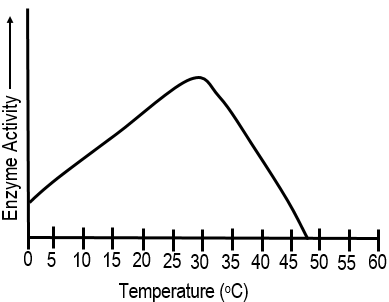
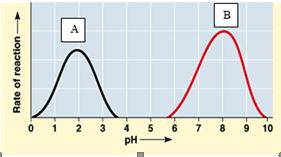
What is the optimal pH of enzyme B?
8
2
5.7-10
10

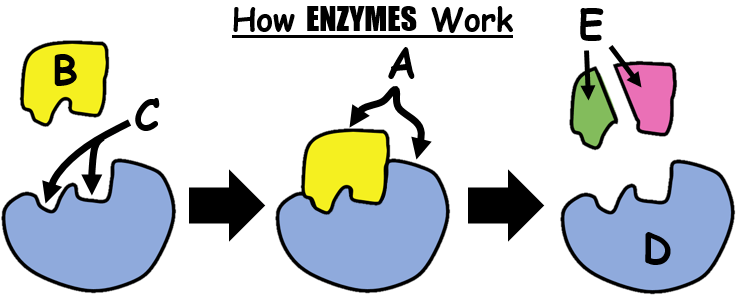
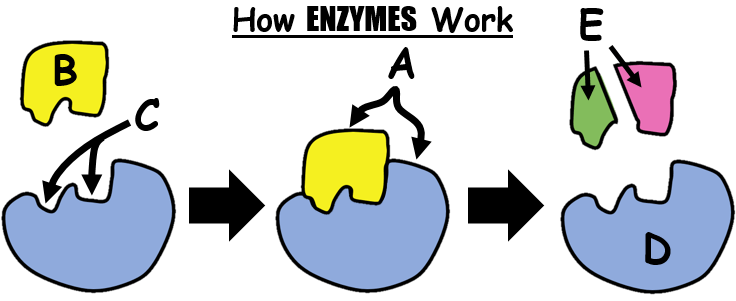
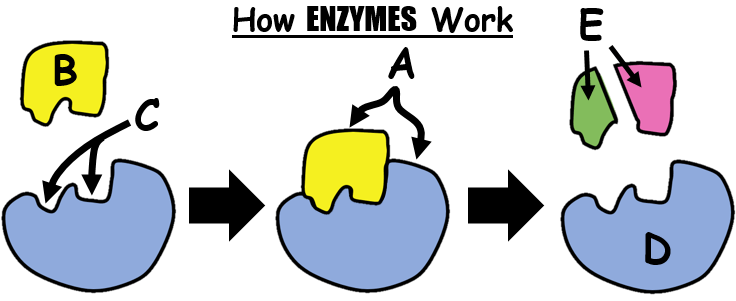
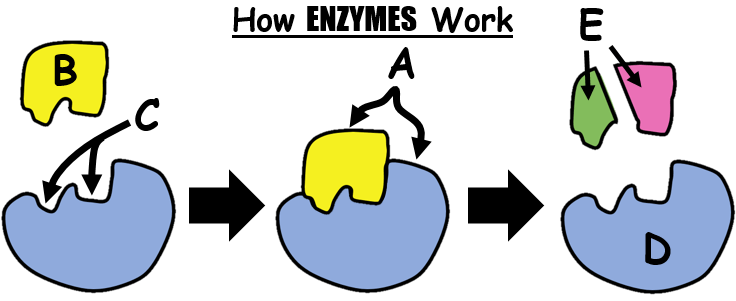
Which substrate would this enzyme catalyze?



