
Font size
 Worksheets
Unit 9 Ecology Review
Total questions: 39
Worksheet time: 42mins

Put this food chain in the correct order
Grass
Rabbit
Snake
Hawk
What organism is missing from this food chain?
Shrub -> (a) -> Insect Eating Bird -> Hawk
Match each organism with the correct trophic level
Producer
Grass
Primary Consumer
Squirrel
Secondary Consumer
Insect Eating Bird
Apex Predator
Mountain Lion
Decomposer
Bacteria

The trout is a source of food for the human and the eagle. When there are more than one organism vying for the same source we call this____?

What is a population?
One individual member of a species
a group of individuals of the same species that live in the same area
a community of different species and their environment
Honey guide birds alert and direct badgers to bee hives. The badgers then expose the hives and feed on the honey first. Then, the honey guide birds eat as well.
symbiosis
parasitism
mutualism
commensalism
Tapeworms reside in human intestine and take nutrients from the human
symbiosis
parasitism
mutualism
commensalism
The ecological role an organism performs in their specific environment is considered the organism's...
Habitat
Population
Biome
Niche

The populations of which organisms will most likely increase as a result of a disease that suddenly reduced the population of Texas horned lizards?
Grasses and ants
Ants and grasshoppers
Grasshoppers and Texas Cottonmouths
Texas cottonmouths and red shouldered hawks

Producers /Autotrophs
Consumers /Heterotrophs
Decomposers
Scavengers

Why might an organism have more than one arrow coming FROM them in a food web?
More than one organism may eat them.
They may eat more than one other organism.
This organism gets its energy from multiple sources.

What happens to the amount of available energy in the pyramid as it moves up through the different levels?
it increases
it decreases
it remains the same
Decomposer
This is an organism that breaks down and gains nutrients from dead organisms.
Predator
This is an animal that lives by preying on other animals.
Producer
This is an organism that supplies matter and energy, also known as an autotroph.
Consumer
This is an organism that relies on other organisms for its food and energy supply; heterotroph
Parasite
This is an organism which feeds on, but usually does not kill, a larger organism


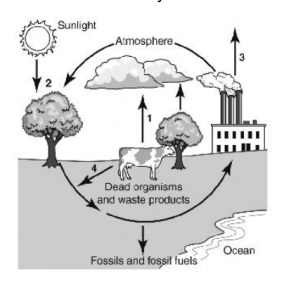
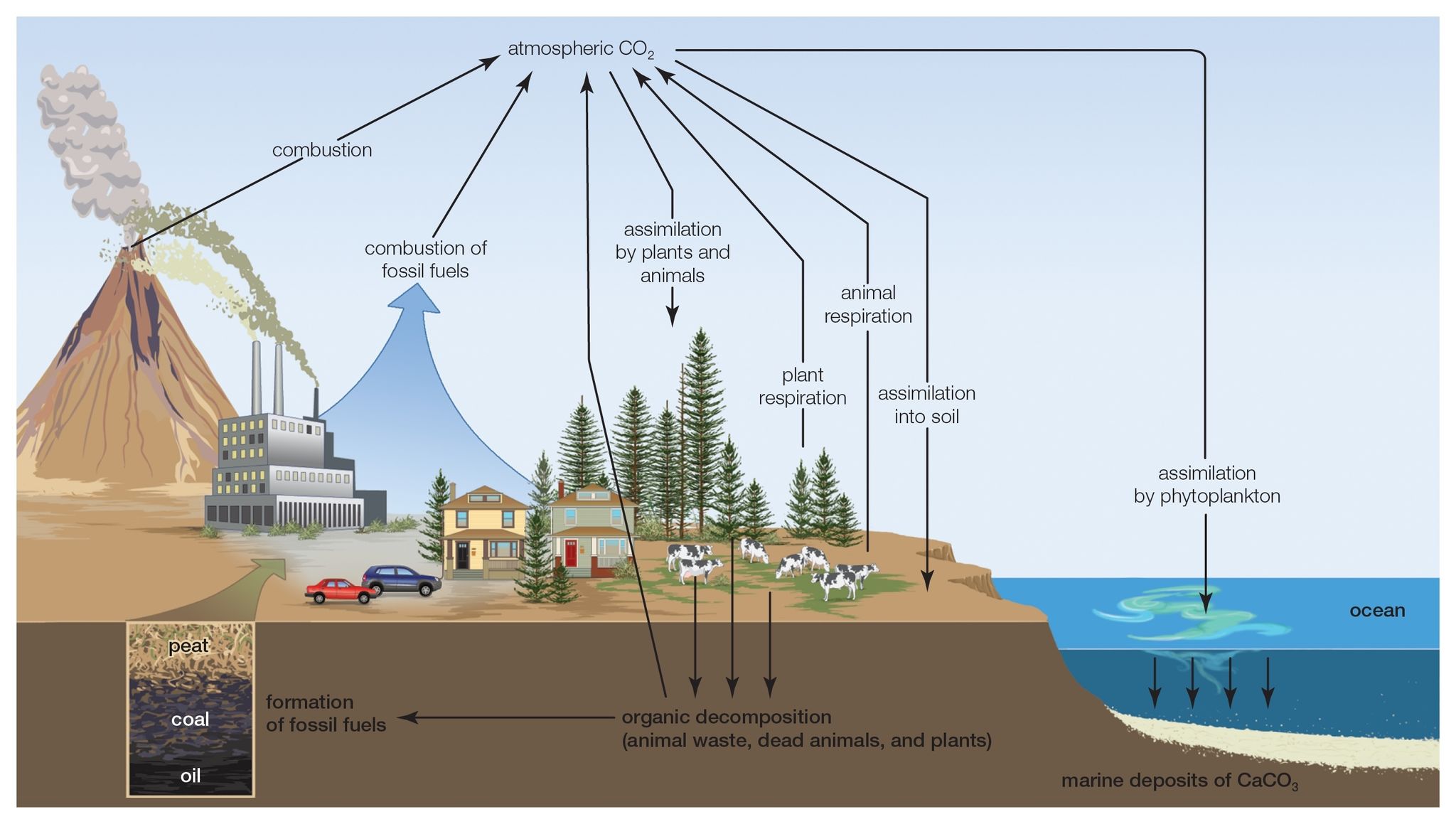

Which is a true statement?
Humans depend on oxygen, plants depend on carbon dioxide
Plants produce carbon dioxide
Humans depend on carbon dioxide, plants depend on oxygen
Humans don't depend on plants for the air they need

A bee receives nectar from a flower and carries the pollen to other flowers:
predation
parasitism
mutualism
commensalism
What would happen within a few months after the formation of a volcanic island?
pioneer species would grow
no pioneer species would grow
trees and large plants would grow
rich, organic soil would be present
What would be a good example of a primary consumer?
carnivore
detrivore
decomposer
herbivore
Introduced species disrupt ecosystems because they are a/an
Keystone Species
Endemic Species
Invasive Species
Native Species
Which is an example of where primary succession could occur?
a glacier melts and exposes new rocks
natural fire burns a prairie
a corn field is abandoned and left to overgrow
flood covers a piece of land

Mice might grow in population and destroy the community by eating all of the berry bushes if
wolves and snakes were removed from the food web
another predator migrated in to the community
the snake population grew
none of these

These organisms are often not shown in a food chain, but are important for recycling nutrients
producers
decomposers
primary consumers
carnivores

90% of the energy that gets lost as you move up a food pyramid or chain gets lost as
pollution to the environment
heat to the environment
energy for decomposers
gets recycled

Predation

Mutualism

Commensalism

Parasitism
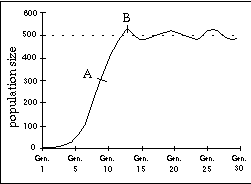
What is the carrying capacity of the graph?
around 500
more than 800
less than 300
around 700

