
 Worksheets
DNA, RNA, Replication & Transcription
Total questions: 40
Worksheet time: 53mins

Which of the following base pairs with adenine in RNA?
thymine
guanine
uracil
cytosine
DNA is _____ stranded and RNA is ______ stranded.
single, double
single, single
double, single
double, double
RNA...
is a temporary copy of DNA
is double stranded
contains A T G C nucleotides
contains deoxyribose sugar
Which of the following are types of RNA? (Select all that apply).
mRNA (messenger RNA)
pRNA (primer RNA)
tRNA (transfer RNA)
rRNA (ribosomal RNA)
The Central Dogma says that information moves in one direction from...
DNA - RNA - Protein
Protein - RNA - DNA
DNA - Protein - RNA
RNA - DNA - Protein
What is the name of segment of DNA that codes for a protein?
double helix
single strand
gene
transcript
The Central Dogma says that information moves in one direction through....
Replication - Translation - Transcription
Transcription - Translation - Replication
Replication - Transciption - Translation
Transcription - Replication - Translation
Replication produces
two identical copies of DNA
two identical copies of RNA
one DNA and one RNA molecule
two copies of DNA that are not identical
Transcription produces
only one copy of DNA
one or more copies of RNA
many copies of DNA
only one copy of RNA
The intermediate molecule between DNA and protein is
tRNA
mRNA
rRNA
pRNA
This type of RNA makes up ribosomes.
rRNA
tRNA
pRNA
mRNA
This type of RNA brings amino acids to the ribosome during protein production.
mRNA
rRNA
tRNA
pRNA
During DNA replication, the ______ strand is replicated in a smooth, continuous flow.
leading
lagging
prime
main
During DNA replication, the ______ strand is replicated in a choppy, discontinuous way.
leading
lagging
secondary
minor
If a strand of nucleic acid reads ATTCTGA, you can tell that it's a strand of
DNA
RNA
If a strand of nucleic acid reads GUCUAGUCA, you can tell it's a strand of
DNA
RNA
If a DNA strand reads ATCGT what would the complimentary DNA strand read?
TAGCA
TCAGT
ATCGT
CGTGC
If a strand of DNA reads GTTAC, the complimentary strand of RNA would read
GTTAC
CAAUG
GUUAC
ACCUG
In eukaryotes, DNA replication and transcription both take place
in the cytoplasm
in the golgi apparatus
in the ribosomes
in the nucleus
DNA polymerase typically has an error rate of ___ nucleotides.
1 in 1 billion
10 in 1 billion
1 in 1 million
10 in 1 million
RNA transcription...
copies the entire DNA strand
copies only 1 DNA strand
copies part of the double helix
copies only a small segment (gene)
________ makes only one copy, but ______ can make many copies.
transcription, replication
translation, transcription
replication, transcription
replication, translation
True or False: The double helix unwinds during transcription AND replication.
True
False
True or False: Both replication and transcription use a polymerase enzyme.
True
False
This enzyme helps helicase unzip DNA by relieving supercoiling
Topoisomerase
Exonuclease
DNA Primase
DNA Polymerase
How many nucleotides make up a codon?
1
3
5
15
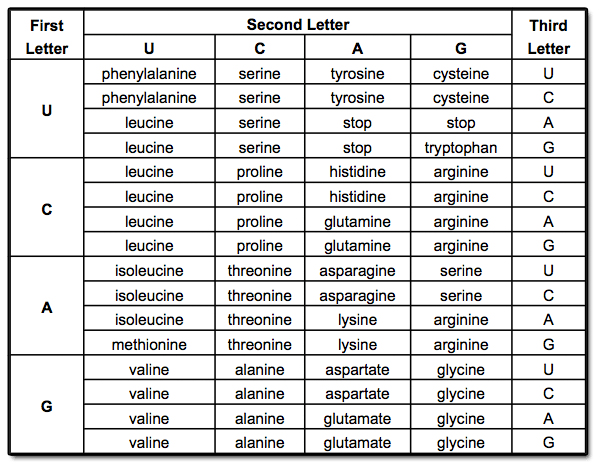

what does tRNA do?
carry amino acids
carry glucose
carry lipids
carry ribosomes

