wayground logo

Free Printable Worksheets

Font size

S
M
L
XL
Worksheets

Practice Semester 1

Total questions: 28

Worksheet time: 19mins

Name
Class
Date
1.

The process by which hot and cold air are transferred in the atmosphere is

a)

conduction.

b)

convection.

c)

insulation.

d)

radiation.

2.

Microwave ovens heat food through the process of

a)

conduction.

b)

convection

c)

radiation.

d)

stratification

3.

What is the main method of heat transfer from the core to the crust of Earth?

a)

conduction

b)

convection

c)

insulation

d)

radiation

4.

Heat is transferred from the heating element to the pot to the boiling water. What is the MOST likely method of heat transfer?

a)

circulation

b)

conduction

c)

convection

d)

radiation

5.

Peter's mom is cooking brownies in a pan in the oven. Which pan should she choose if she wants the pan that will heat up and cool the quickest?

a)

metal pan

b)

glass pan

c)

ceramic pan

d)

plastic pan

6.

Which observation would be evidence that heat was transferred by radiation?

a)

A person feels colder when the wind is blowing.

b)

A pan on a stove heats up the food placed in it.

c)

Warm air in the kitchen rises to the second floor of the house.

d)

A car with the windows rolled up gets very hot on a summer day.

7.

Conduction is the process in which

a)

there is no medium required for heat transfer.

b)

cold air displaces warmer air and causes air circulation.

c)

the collisions of molecules within a substance transfer heat energy.

d)

air flows from one location in the atmosphere to another helping to transfer heat energy.

8.
The tendency of a stationary object to resist being put into motion is known as
a)
acceleration
b)
inertia
c)
weight
d)
velocity
9.
According to Newton's second law of motion, in which of the situations is the object accelerating?
a)
a book on a shelf
b)
a rock sitting on the ground
c)
a helium balloon tied to a lamp post
d)
a ball that has been thrown upward
10.
__________ can be measured as the distance traveled in a given amount of time.
a)
Speed
b)
Acceleration
c)
Energy
d)
Force
11.
____________ is a push or pull on an object.
a)
Motion
b)
Force 
c)
Speed
d)
Velocity
12.
Force is measured in ________.
a)
Joules
b)
Kilograms
c)
Pounds
d)
Newtons
13.
An object that is balanced will have a net force of:
a)
0 N
b)
10 N
c)
100 N
d)
1000 N
14.
A train accelerating away from the station would have ___________.
a)
unbalanced forces
b)
balanced forces
15.
A satellite in orbit would have _________________.
a)
unbalanced forces
b)
balanced forces
16.
An object at rest will stay at rest and an object in motion will remain in motion unless acted upon by an unbalanced force.
a)
Newton's 1st Law
b)
Newton's 2nd Law
c)
Newton's 3rd Law
d)
Newton's 4th Law
17.
What is the net force on the object?
a)
10 N right
b)
500 N right
c)
950 N right
d)
50 N left
18.

What wavelength of light is reflected from a red shirt?

a)

red

b)

green

c)

white

d)

all but red

19.

As wavelength shrinks on the electromagnetic spectrum, the frequency...

a)

Increases

b)

Decreases

c)

Stays the same

d)

Disappears

20.

This type of wave does not need to travel through a medium. Instead, it travels through a vacuum.

a)

Transverse

b)

Electromagnetic

c)

Longitudinal

21.
White light is the entire range of
a)
colors of visible light combined.
b)
ultraviolet light.
c)
gamma rays and X rays.
d)
EM waves.
22.
The entire electromagnetic spectrum is divided into regions by
a)
color
b)
speed
c)
wavelength
d)
the way they are used
23.

What is the color of visible light determined by?

a)

Amplitude

b)

Speed

c)

Frequency

d)

Sound

24.

Which electromagnetic radiation has the greatest frequency?

a)

Radio waves

b)

Visibile light

c)

Infrared

d)

X-rays

25.
At which point is potential energy greatest?
a)
W
b)
X
c)
Y
d)
Z
26.
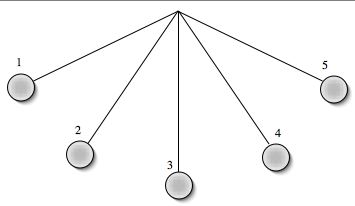
When a pendulum swings, at which point is kinetic energy highest?
a)
1
b)
2
c)
3
d)
4
27.
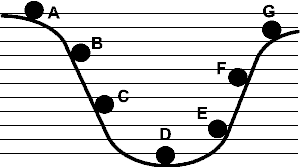
Which point has the most potential energy?
a)
G
b)
f
c)
b
d)
a
28.
Which would be greater at Position 2?
a)
Potential Energy
b)
Kinetic Energy