wayground logo

Free Printable Worksheets

Font size

S
M
L
XL
Worksheets

Fall Final Physical Science (Not Rocket Science)

Total questions: 194

Worksheet time: 5hrs 33mins

Name
Class
Date
1.

In a controlled experiment, the variable that is changed to test the hypothesis is called the –

a)

Controlled Variable

b)

Responsive Variable

c)

Dependent Variable

d)

Independent Variable

2.
The independent variable is the ONE thing you _____.
a)
change
b)
keep the same
c)
experiment with
d)
investigate
3.
The measurable factor in an experiment is known as the: 
a)
Control
b)
Independent Variable
c)
Constant
d)
Dependent Variable
4.
A series of steps used by scientists to solve a problem or answer a question. 
a)
scientific method
b)
recipe
c)
data collection
d)
metric system
5.

The parts of an investigation that remain the same so that the dependent variable can be measured.

a)

independent variable

b)

dependent variable

c)

hypothesis

d)

control variable

6.
What type of graph is this?
a)
Line Graph
b)
Pictograph
c)
Bar Graph
d)
Histogram
7.

What type of graph is this?

a)

Bar graph

b)

Histogram

c)

Pie Chart/Circle Graph

d)

Stem Chart

8.

To make observations you use your _______.

a)

senses

b)

feet

c)

smile

d)

experience

9.
Which one is an example of Qualitative Data?
a)
25 Pounds
b)
30 Seconds 
c)
2 Meters
d)
Soft
10.
Which is an example of Quantitative Data?
a)
42 grams
b)
Hard
c)
Squishy
d)
Blue
11.
This is the group that we will compare our experimental group to. This group stays "normal."
a)
Control Group
b)
Experimental Group
c)
 Normal Group
d)
Weird Group
12.
This is the group that is affected by the independent variable or the group that is changed.
a)
Control Group
b)
Experimental Group
c)
Changed Group
d)
Cool Group
13.
After you write your conclusion, it is important to share your results with others. 
a)
True
b)
False 
14.
When experimenting with the growth of a plant, a scientist uses three (of the same type of) plants, two different fertilizers, equal light, and equal water. What type of variable is the fertilizer?
a)
Dependent
b)
Independent
c)
Control
d)
Compound
15.
Research Question: Does the type of gasoline put in a car effect how fast the car can drive. What is the independent variable?
a)
Type of gasoline
b)
which car the gas is put into
c)
how fast the car can drive
d)
how much gas is put into the car
16.
What would the INDEPENDENT variable be in an experiment testing which types of paper airplane goes furthest?
a)
the paper used
b)
the type of paper airplane
c)
the distance of each plane's flight
d)
how hard the plane is thrown
17.
An experiment is performed on plants to see how different liquids affect plant growth. Each plant in the experiment is given a different liquid; water, apple juice, or milk. Each plant has the same amount of soil, sunlight, and listens to the same music. In this investigation, the independent variable is ...
a)
The type of plant
b)
The amount of sunlight
c)
The type of music
d)
The type of liquid
18.
Ms. S set up an experiment to see how the mass of a ball affects the distance it rolls off a ramp. What is the dependent variable?
a)
Distance traveled by the ball
b)
Height of the ramp
c)
Mass of the ball
d)
Where the experiment took place.
19.
Ms. S set up an experiment to see how the mass of a ball affects the distance it rolls off a ramp. Identify the independent variable.
a)
Distance traveled by the ball
b)
Height of the ramp
c)
Mass of the ball
d)
Who set up the experiment (Ms. S, etc)
20.
Tiffany was investing how fast it took Hayden to react to different sounds. Identify the independent variable.
a)
How fast Hayden reacted
b)
different sounds
c)
types of music
d)
Hayden
21.
Mr. S normally uses praise as a reward to train his dog. He wants to know the best way to train his dog, so he sets up an experiment to find out if there is a better way to get his dog to respond to commands. What is his dependent variable?
a)
Type of reward
b)
Praise
c)
Type of dog
d)
Amount of time the dog follows commands
22.
 In a controlled experiment, the variable that is changed to test the hypothesis is called the –
a)
Controlled Variable
b)
Responsive Variable
c)
Dependent Variable
d)
Independent Variable
23.
The measurable factor in an experiment is known as the: 
a)
Control
b)
Independent Variable
c)
Constant
d)
Dependent Variable
24.
Khaleel is testing how the use of stress balls during testing affects a student's test score.  The students' average test scores who used the stress balls is the __ variable.
a)
dependent (measured)
b)
constant (same)
c)
independent (changes)
25.
What is the name of the vertical (up and down) axis of the graph? 
a)
X axis
b)
Y axis
26.
What do we put at the top of a graph?
a)
X axis
b)
data table
c)
title 
d)
nothing
27.
What do we use to pick the numbers for the scale? 
a)
whatever we want
b)
you must always count by tens
c)
use your data to pick the scale
d)
you don't need a scale
28.
What is the name of the horizontal (side to side) axis of the graph? 
a)
X axis
b)
Y axis
29.

What kind of information might go on the X axis?

a)

Independent Variable

b)

Dependent Varaible

30.
On a graph, which axis shows the dependent variable?
a)
x-axis
b)
y-axis
c)
neither
d)
it changes
31.
How long did it take this object to travel 10 m?
a)
0 s
b)
10 s
c)
15 s
d)
20 s
32.
It is a measure of how close measurements come to each other when they are made in the same way
a)
Accuracy
b)
Precision
c)
Error
d)
Extrapolation
33.

How close a measurement is to the accepted value is called..

a)

Accuracy

b)

Precision

c)

Significant

d)

Estimate

34.
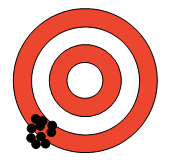
This bullseye demonstrates...
a)
High Accuracy & High Precision
b)
High Accuracy & Low Precision
c)
Low Accuracy & High Precision
d)
Low Accuracy & Low Precision
35.
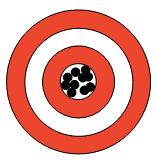
?
a)
High Accuracy & High Precision
b)
High Accuracy & Low Precision
c)
Low Accuracy & High Precision
d)
Low Accuracy & Low Precision
36.
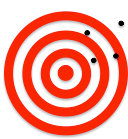
Describe the accuracy and precision of the image
a)
Accurate and Precise
b)
Accurate and not precise
c)
Not Accurate and Precise
d)
not accurate and not precise
37.
If you are not sure what to do during a lab activity:
a)
guess
b)
change lab partners
c)
ask a teacher
d)
just sit quietly and do nothing
38.
Keeping your work area neat and clean is important because:
a)
My teacher is a neat-freak
b)
I won't lose my supplies in the clutter.
c)
It keeps the room from looking messy.
d)
It helps prevent accidents.
39.

Playing around disrupting other students in the laboratory is -

a)

helpful.

b)

allowed

c)

dangerous.

d)

the quickest way to do a job.

40.
When in the lab you should wear...
a)
open-toed shoes.
b)
sandals.
c)
closed-toes shoes.
d)
no shoes.
41.

Which of the following items are considered safety equipment in our classroom?

a)

Eyewash Station

b)

Emergency Shower

c)

Fire Extinguisher

d)

All of the Above.

42.

When should you read the lab instructions?

a)

After starting the lab

b)

When your teacher tells you to

c)

Before starting the lab

d)

It doesn't really matter. Instructions are silly!

43.

Which of the following are examples of dressing appropriately in the lab?

a)

Pulling long hair back

b)

Leaving long hair down to get in the chemicals.

c)

Wearing sandals

d)

Wearing baggy long sleeves

44.

Bob and Lizzy are working in the lab. They are goofing off and break a glass beaker. Which rule did they break?

a)

Know the location of the safety equipment.

b)

Do not eat or drink in the lab.

c)

Read instructions.

d)

No playing around!

45.

If your teacher instructs you to smell a chemical, you should do so carefully in a wafting motion.

a)

True

b)

False

46.

You should wear googles to -

a)

to look cool

b)

to block out sunlight

c)

protect your eyes from chemicals

d)

protect your ears from loud sounds

47.
Theory or Law???  Explanation of a wide range of observations?
a)
Theory
b)
Law
48.
Theory or Law???  Is a well-tested EXPLANATION for a wide range of observations and experimental results.
a)
Law
b)
Theory
49.
Theory or Law???  Is a DESCRIPTION of what a scientists expects to happen every time under a certain set of conditions.
a)
Law
b)
Theory
50.

Which SI unit is used to measure length?

a)

mol

b)

m

c)

kg

d)

m2

51.

Which SI unit is used to measure mass?

a)

s

b)

m

c)

kg

d)

Pa

52.

Which SI unit is used to measure temperature?

a)

K

b)

s

c)

mol

d)

N

53.

Which SI unit is used to measure time?

a)

K

b)

s

c)

mol

d)

N

54.
a)
metric ruler
b)
Celsius thermometer
c)
graduated cylinders
d)
pan balances
55.
a)
metric ruler
b)
triple beam balance
c)
pan balance
d)
beaker
56.
a)
beaker
b)
hot plate
c)
metric ruler
57.
Identify the equipment shown here:
a)
acetylene torch
b)
flame thrower
c)
alcohol burner
d)
Bunsen burner
58.
Name this item
a)
Pipette
b)
Stirring rod 
c)
Test tube
d)
Test tube holder
59.
Name the tool pictured
a)
Pipette
b)
Eye dropper
c)
Tweezer
d)
Forceps
60.
Identify the equipment shown here:
a)
concave glass
b)
convex glass
c)
watch glass
d)
glass plate
61.
Identify the equipment shown here:
a)
grinder
b)
evaporating dish
c)
mortar and pestle
d)
crucible
62.
Name this lab apparatus:
a)
wash bottle
b)
striker
c)
well plate
d)
safety glasses or safety goggles
63.
Iron + oxygen = rust is an example of a ___________.
a)
physical property/change
b)
chemical property/change
c)
mass
d)
volume
64.
Which physical property is measured in liters?
a)
color
b)
length
c)
mass
d)
volume
65.
Which liquid has the greatest density?
a)
lamp oil
b)
karo syrup
c)
water
d)
honey
66.
What form of matter has a definite shape?
a)
Solid
b)
Liquid
c)
Gas
d)
Square
67.
What can causes ice to transform from a solid to a liquid?
a)
The air.
b)
The cold.
c)
Shape
d)
Heat
68.
This state of matter does not have a definite size or shape.
a)
Gas
b)
Liquid
c)
Solid
d)
Milk
69.
What is an example of gas?
a)
crayons
b)
paper
c)
soda
d)
air
70.
What is an example of a solid?
a)
wind
b)
water
c)
rock
d)
juice
71.
Which state of matter has particles that are tightly packed?
a)
liquid
b)
gas
c)
solid
72.
The amount of matter something contains. 
a)
volume
b)
mass
c)
density
d)
measurement 
73.
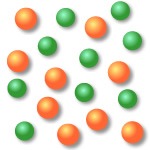
This picture represents: 
a)
Element
b)
Compound
c)
Mixture of Elements
d)
Mixture of Compounds
74.
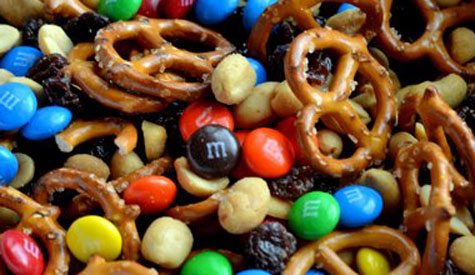
What type of mixture is this?
a)
homogenous mixture
b)
chemical
c)
heterogeneous mixture 
d)
solid mix
75.
A substance with two or more elements that are combined in a fixed proportion
a)
colloid
b)
compound
c)
element
d)
solution
76.
A substance in which all the atoms are the same
a)
colloid
b)
homogeneous mixture
c)
solution
d)
element
77.
A mixture in which different materials can be identified easily
a)
element
b)
heterogeneous mixture
c)
homogeneous mixture
d)
solution
78.
A mixture that contains two or more substances blended evenly throughout
a)
heterogeneous mixture
b)
homogeneous mixture
c)
suspension
d)
colloid
79.
Which of the following is an element?
a)
Sugar
b)
Salt
c)
Water
d)
Oxygen
80.
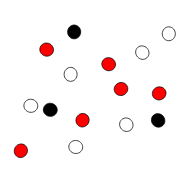
This picture represents which of the following?
a)
element
b)
compound
c)
mixture
81.
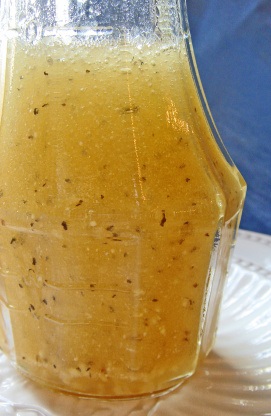
Italian Salad Dressing is a . . .
a)
heterogeneous mixture
b)
homogeneous mixture
c)
Pure Substance
d)
Compound
82.
Can usually be separated in your kitchen (by physical means)
a)
Pure Substance & Element
b)
Pure Substance & Compound
c)
Mixture & Homogenous
d)
Mixture & Heterogenous
83.
A mixture that is so evenly mixed you can't see the parts.  Such as Kool-Aid
a)
Homogeneous Mixture
b)
Heterogeneous Mixture
c)
Pure Substance
84.
A combination that can be separated by physical processes is a .....
a)
Pure Substance
b)
Glucose
c)
Element
d)
Mixture
85.
A mixture that is NOT evenly distributed is called ....
a)
Compounded
b)
Homogenous
c)
Heterogenous
d)
Salty
86.
If you change a substance into a new substance...
a)
Partial Change
b)
Physical Change
c)
Chemical Change
d)
Freezing
87.
Changing the phase, size or shape of something....
a)
Chemical change
b)
Physical Change
c)
Suspension
d)
Colloid
88.
This picture represents: 
a)
Element
b)
Compound
c)
Mixture of Elements
d)
Mixture of Compounds
89.
Which is NOT a chemical change?
a)
Leaves changing colors in the fall
b)
Iron rusting
c)
Digesting Lunch
d)
Ice Melting
90.
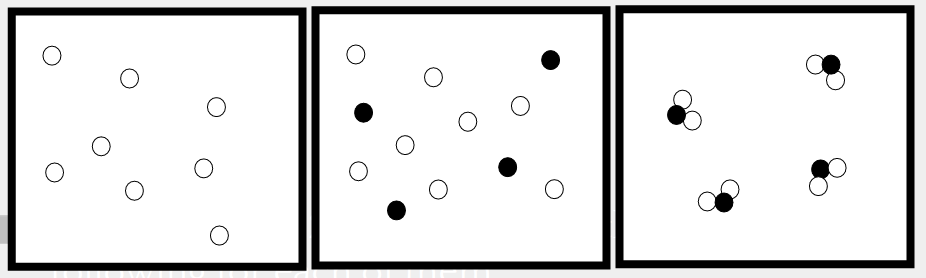
Which one of these pictures represents a mixture? 
a)
1
b)
2
c)
3
d)
1, 2 and 3
91.
Is burning wood a chemical or physical change?
a)
chemical
b)
physical
92.
A gold bar is an example of a.....
a)
pure element
b)
pure compound
c)
heterogeneous mixture
d)
homogeneous mixture
93.

table salt (NaCl)

a)

compound

b)

homogenous mixture

c)

heterogenous mixture

d)

pure substance

94.

vegetable soup (mmmmmmm)

a)

heterogenous mixture

b)

compound

c)

pure substance

d)

homogenous mixture

95.
A change in which NEW substances are formed.
a)
Chemical change
b)
Physical change
c)
Casual change
d)
Formal change
96.
Which of the following is NOT an example of a physical change?
a)
crumpled paper
b)
pencil sharpening
c)
shrunken clothing
d)
sour milk
97.
Which of the following IS a physical change?
a)
Getting a haircut
b)
Rusty metal
c)
sour milk
d)
A compound
98.
Is melting butter for popcorn a chemical or physical change?
a)
chemical
b)
physical
99.
Is a rusting bicycle a chemical or physical change?
a)
chemcial
b)
physical
100.
A change in phase ...
a)
Chemical Change
b)
Physical Change
101.
Bubbles form when two or more substances are combined ...
a)
Chemical Change
b)
Physical Change
102.
Causes a change in temperature ...
a)
Chemical Reaction
b)
Physical Reaction
103.
Causes a change in odor ...
a)
Chemical Reaction 
b)
Physical Reaction
104.
A gas
a)
has a definite shape but no definite volume
b)
has a definite volume but no definite shape
c)
has fast-moving particles
105.
Freezing
a)
Solid to gas
b)
Liquid to solid
c)
Gas to solid
d)
Liquid to gas
106.
Boiling
a)
liquid to gas
b)
gas to solid
c)
gas to liquid
d)
solid to liquid
107.
What is condensation?
a)
gas to solid
b)
gas to liquid
c)
liquid to solid 
d)
solid to liquid 
108.
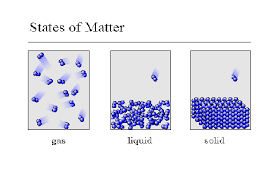
What does this picture represent? 
a)
solid
b)
liquid
c)
gas
d)
plasma
109.
What term describes a solid changing to a gas?
a)
Deposition
b)
Sublimation
c)
Evaporation
d)
Freezing
110.
Thermal energy is...
a)
heat energy.
b)
the energy of motion
c)
energy of nuclear processes.
d)
an indication of physical change.
111.
During the process of condensation, a gas is _______ down to a liquid.
a)
getting 
b)
smelling
c)
heating
d)
cooling
112.
In this substance, the _____ has the greatest temperature oC.
a)
solid
b)
liquid
c)
gas
d)
Mr. Considine
113.
True or False:  The density of a specific type of material never changes.  
a)
True
b)
False
114.
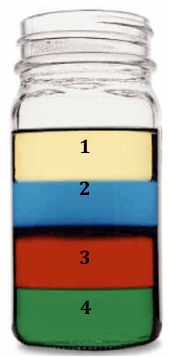
Put the liquids in order from most dense to least dense?
a)
4, 3, 2, 1
b)
1, 2, 3, 4
c)
3, 4, 2, 1, 
d)
4, 3, 1, 2
115.
What is the formula for density?
a)
density = mass x volume
b)
density = mass / volume
c)
density = mass + volume
d)
density = mass - volume
116.
Jack has a rock. The rock has a mass of 14 g and a volume of 2 cm3. What is the density of the rock?
a)
7 mL
b)
7 g/cm3
c)
28 g/cm3
d)
1/7 g/cm3
117.
Frank has an eraser. It has a mass of 4 g, and a volume of 2 cm3. What is its density?
a)
8 g/cm3
b)
2 g/cm3
c)
1/2 g/cm3
d)
24 g/cm3
118.
Frank has a liquid. It has a mass of 6 g and a volume of 9 mL. What is its density?
a)
3 g/mL
b)
.66 g/mL
c)
1.33 g/mL
d)
54 g/mL
119.
Calculate the density of the cube.
a)
2 g/cm3
b)
4 g/cm3
c)
6 g/cm3
d)
8 g/cm3
120.
Calculate the density of the cube.
a)
2 g/cm3
b)
4 g/cm3
c)
6 g/cm3
d)
8 g/cm3
121.
If this substance takes up 6 ml of space, what is its mass?
a)
 6 ml
b)
6 grams
c)
0 grams
d)
4 grams 
122.
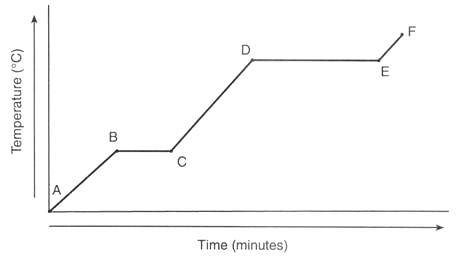
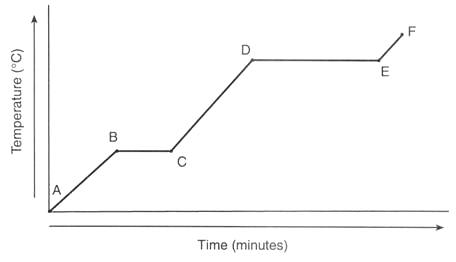
Describe the substance between letters C and D. 
a)
Gas
b)
Liquid
c)
Melting
d)
Evaporating
123.
Between which points is the temperature of the substance remaining constant?
a)
A-B only. 
b)
A-B, C-D, E-F
c)
B-C only. 
d)
B-C, D-E
124.
True or false: melting and freezing occur at the same temperature.
a)
True
b)
False
125.
Describe the substance between letters A and B. 
a)
Solid
b)
Liquid
c)
Melting
d)
Evaporating
126.
Describe the substance between letters E and F. 
a)
Gas
b)
Liquid
c)
Melting
d)
Evaporating
127.
What is the heat of fusion for this substance?
a)
20 kJ
b)
10 kJ
c)
30 kJ
d)
80 kJ
128.
What is the heat of vaporization for this substance?
a)
20 kJ
b)
10 kJ
c)
30 kJ
d)
80 kJ
129.
What is the boiling point for this substance?
a)
60 °C
b)
40 °C
c)
120 °C
d)
100 °C
130.
What is the freezing point for this substance?
a)
60 °C
b)
40 °C
c)
80 °C
d)
100 °C
131.
Which of these is NOT a basic piece of an atom?
a)
proton
b)
neutron
c)
electron
d)
quantron
132.
Which atomic particle has a negative charge?
a)
proton
b)
neutron
c)
electron
d)
all of the above
133.
Which of these phrases best describes an atom?
a)
a positive nucleus surrounded by a hard negative shell
b)
a positive nucleus surrounded by a cloud of negative charges
c)
a hard sphere with postive and negative charges on the outside
d)
a negative nucleus surrounded by protons and neutrons
134.
Which of the following particles has the smallest mass?
a)
neutron
b)
proton
c)
nucleus
d)
electron
135.
What part of the atom is indicated by the red sphere?
a)
nucleus
b)
electron cloud
c)
electrons
d)
neutrons
136.
The positively charged parts of an atom are the
a)
protons
b)
electron clouds
c)
neutrons
d)
electrons
137.
Matter that is made up on only one type of atom is called
a)
a compound
b)
a subatomic particle
c)
an element
d)
water
138.
Atoms are neutral because they have the same number of
a)
protons and neutrons
b)
protons and electrons
c)
electrons and neutrons
139.

A substance that cannot be broken down into other substances by chemical or physical means.

a)

Covalent bond

b)

Atom

c)

Element

140.

What is the atomic number?

a)

35

b)

18

c)

17

d)

52

141.

How many protons and electrons does this element have?

a)

35

b)

18

c)

17

d)

52

142.

How many neutrons does Chlorine have?

a)

18

b)

17

c)

35

d)

52

143.

What is the atomic mass of Neon?

a)

10

b)

20

c)

30

144.

How many neutrons does calcium have?

a)

20

b)

40

c)

60

d)

0

145.

What is the atomic mass of Arsenic?

a)

33

b)

107

c)

75

146.

What would Au (Gold) be categorized as on the periodic table?

a)

Nonmetal

b)

Metal

c)

Transitional metal

d)

Noble gas

147.

What would He (Helium) be categorized as on the periodic table?

a)

Nonmetal

b)

Metal

c)

Noble gas

d)

Transitional metal

148.
These particles have a mass of 1 amu
a)
protons and neutrons
b)
protons and electrons
c)
neutrons and electrons
149.
An atom with atomic number 6 would have how many protons?
a)
6
b)
12
c)
3
d)
cannot be determined 
150.
The mass of one proton is greater than the mass of one...
a)
neutron
b)
electron
151.
Which letter represents a proton?
a)
A
b)
B
c)
C
d)
D
152.
Which letter represents the nucleus?
a)
A
b)
B
c)
D
d)
E
153.
Which letter represents an electron?
a)
A
b)
B
c)
C
d)
D
154.

Which color on the image of the periodic table corresponds with the halogens.

a)

red

b)

black

c)

blue

d)

orange

155.

Vertical columns on the periodic table are called ___?

a)

groups

b)

periods

c)

rows

d)

families

156.

Which color on the image of the periodic table corresponds with the noble gases.

a)

red

b)

black

c)

blue

d)

orange

157.

Which color on the image of the periodic table corresponds with the transition metals.

a)

red

b)

black

c)

blue

d)

orange

158.

Which color on the image of the periodic table corresponds with the alkaline earth metals.

a)

yellow

b)

dark yellow

c)

blue/green

d)

teal

159.

Mendeleev first ordered the periodic table of elements by increasing

a)

atomic number

b)

atomic mass

c)

atomic symbol

d)

atomic weight

160.

Horizontal rows on the periodic table are called ___?

a)

groups

b)

periods

c)

rows

d)

families

161.

What is the most reactive nonmetal?

a)

Fluorine

b)

Iodine

c)

Chlorine

d)

Bromine

162.

Which family of elements does not combine with other elements unless under special conditions in a laboratory?

a)

Noble gases

b)

Halogens

c)

Metalloids

d)

Alkaline earth metals

e)

Actinides

163.
Who believed that electrons were scattered amongst positively charged material.
a)
JJ Thomson
b)
Ernest Rutherford
c)
John Dalton
d)
Niels Bohr
164.
Believed that atoms are small, hard particles that were "indivisible"
a)
Democritus
b)
Aristotle
c)
Schrodinger
d)
Greek Philosophers
165.
Discovered that the atom has a small, dense, positively charged nucleus.
a)
Ernest Rutherford
b)
Heisenberg
c)
Democritus
d)
JJ Thomson
166.
Believed that electrons traveled around the nucleus in definite paths.
a)
Niels Bohr
b)
John Dalton
c)
Modern Atomic Theory
d)
Ernest Rutherford
167.
Determined that electron paths cannot be predicted and exist inside the Electron Cloud.
a)
Schrodinger & Heisenberg
b)
Ernest Rutherford
c)
John Dalton
d)
Democritus
168.
Believed that all atoms of the same element would be the same.
a)
John Dalton
b)
JJ Thomson
c)
Niels Bohr
d)
Modern Atomic Theory
169.
How many protons does an atom with an atomic number of 28 and a mass number of 40 have?
a)
28
b)
68
c)
12
d)
40
170.
The following picture represents which atomic model?
a)
Niels Bohr
b)
Democritus
c)
Schrodinger & Heisenberg
d)
JJ Thomson
171.

What were Ernest Rutherford's three contributions to atomic theory?

a)

Discovered that the atom is mostly empty space

b)

Discovered the nucleus- did the gold foil experiment

c)

Used the cathode ray tube in his discovery

d)

Discovered the electron

e)

Discovered that the proton had a positive charge

172.
What atom matches this electron configuration?
1s2s2p3s2
a)
Neon
b)
Magnesium
c)
Aluminum
d)
Potassium
173.
What is the maximum number of electrons that an orbital can have?
a)
1 electron
b)
2 electrons
c)
3 electrons
d)
4 electrons
174.
How many valence electrons are represented here?
a)
7
b)
5
c)
2
d)
8
175.
How many d orbitals are there in a given sublevel?
a)
1
b)
3
c)
5
d)
7
176.
How many p orbitals are there in a sublevel?
a)
2
b)
1
c)
4
d)
3
177.
How many electrons can the d sublevel hold?
a)
8
b)
10
c)
2
d)
4
178.
What is this element? 
1s22s22p63s23p6
4s23d104p6
a)
Argon
b)
Krypton
c)
Selenium
d)
Bromide
179.
What atom matches this electron configuration?
[Xe] 6s2 4f14 5d9
a)
Mercury
b)
Gold
c)
Platinum
d)
Thallium
180.
What is the shorthand electron configuration for Sulfur atom?
a)
[Ar] 3p4
b)
[He] 3s23p4
c)
[Ne] 3s23p4
d)
[Na] 3s23p3
181.
How many electrons can the first energy level hold?
a)
1
b)
2
c)
8
d)
0
182.
How many valence electrons does phosphorus have?
a)
5
b)
2
c)
8
d)
15
183.
What element has the valence shell configuration
3s2 3p2
a)
Al
b)
B
c)
Si
d)
Ga
184.
Which element is pictured?
a)
neon
b)
fluorine
c)
magnesium
d)
argon
185.
What noble gas should be used to write the shorthand configuration for Te?
a)
Ar
b)
Kr
c)
Xe
d)
Sb
186.
Identify the element in Period 5 that has 1 valence electron?
a)
Rb
b)
Nb
c)
Ag
d)
Sb
187.
What element in Period 4 has 5 valence electrons?
a)
Zr
b)
As
c)
V
d)
Sb
188.
Which of the following is a p block element?
a)
Ca
b)
Ar
c)
Re
d)
Au
189.
Electron arrangement that uses arrows
a)
Electron configuration
b)
Shorthand configuration
c)
Lewis dot structure
d)
Orbital diagram
190.
How many electrons does Si contain? (click to see image)
a)
14
b)
28
c)
2
d)
4
191.
The electron configuration of an atom is 1s22s22p6.  The number of electrons in the atom is 
a)
3
b)
6
c)
8
d)
10
192.
What do you start electron configuration with?
a)
1s2
b)
1d10
c)
1f14
d)
1p6
193.
Which electron configuration belongs to Chlorine (Cl)?
a)
1s2s2p3s3p5
b)
1s2s2p3s3p6
c)
1s2s2p3s3p7
194.
There are 4 different types of subshells s,p,d,f
a)
true
b)
false