

wayground logo

Free Printable Worksheets

Font size

S
M
L
XL
Worksheets

English II A Final Exam Review

Total questions: 60

Worksheet time: 2hrs 48mins

Name
Class
Date
1.

Carrie loved her phone and her tablet. She was always looking at one or the other. Her parents would try to talk to her about her life, but she would just ignore them or give them brief answers until they left her alone. When she was at school, she'd sneak peeks at her phone under her desk whenever she could get away with it. When she was at parties, she spent more time interacting with the devices in front of her than with the people around her. Even at concerts and sporting events, Carrie seldom removed her eyes from these tiny screens. One day Carrie was walking home from a friend's house and watching a funny video of people slipping on ice. She began crossing the street just after the light changed. She was so into the video that she did not notice the oncoming traffic. She walked directly into the traffic while laughing at the falling people on her tiny screen and was hit by a bus. Carrie sustained mild injuries, but both of her devices were destroyed. As far as she was concerned, her life was over.

a)

Carrie loves to use her phone, but she needs to balance that desire with the more practical concerns of safety and wellbeing.

b)

Carrie is rude to her teachers and parents and gets away with it. That is bad for her eyes.

c)

To much screen time is bad is for your eyes and hurts your eyes. It is never good for you

d)

Carrie bad girl.

2.

Kelly had a job at the movie theater, but it didn't pay very much and she was sick of working there. Nonetheless, the work was steady and she needed all of the money that she could get. To her delight, Kelly got an interview at a big office downtown for a job that paid much more. The interview went very well and the bosses all but offered her a position. They said that she would fit the role well and they promised that they would call her back within two weeks. Kelly couldn't wait to quit her job at the movie theater. As soon as she got back she put in her two week notice. She spent the next two weeks bragging to her coworkers about her new high-paying job in the big city. Yet, two weeks passed and she received no phone call. When Kelly decided to follow up on her interview, she learned that the bosses had chosen a different candidate. Kelly was crushed.

a)

If you like meat, eat it before throwing it away.

b)

Nothing is a sure thing before it happens

c)

Don't count your chickens before they hatch.

d)

Kelly is a person who had a job review to work at the movie theater. while the chicken is alive. It is gross but she likes it. It is weird she is 4 years old but this is not the answer if you are reading this thank you.

3.
Brandon stepped to the pitcher's mound. He held the ball in his mitt and adjusted his fingers on the seams. He could feel the pressure of the moment. It was the ninth inning. His team was up by one. The bases were loaded. "You can do it," Brandon thought to himself, but he felt hesitation in his heart. He stared at the batter. His name was Jimmy. Jimmy could sense Brandon's hesitation. He was going to capitalize on it. Jimmy knew that Brandon was going to throw it down the middle. He couldn't wait to take a swing. This was Jimmy's chance to be a hero and he had no intentions of blowing it.
What is the point of view?
a)
first person
b)
second person
c)
third person limited
d)
third person omniscient
4.
Rock music was playing through the speakers at the gas station. John jumped out the window of his yellow Jeep without opening the door. As he pumped gas into the Jeep, he danced to the rock music. A girl with blonde hair was walking past. She said, "Wow, partner, you can really move." John tipped his hat to her and winked, and then he continued his performance. John climbed onto the hood of his Jeep and began stomping, shaking his hips, and clapping. Gas overflowed from the tank of the Jeep and spilled onto the ground. John continued to strut his stuff.
What is the point of view?
a)
first person
b)
second person
c)
third person limited
d)
third person omniscient
5.
Time travel is exhausting. It took me 200 million years to realize that. Well, actually it only took me a few seconds, but I first realized it about 200 million years ago. That was the first time that I traveled through time. "Try it!" said the mad scientist. "History needs you," he told me. I went with my gut.
What is the point of view?
a)
first person
b)
second person
c)
third person limited
d)
third person omniscient
6.
"You need to try harder, Kyle, if you want to graduate," Mr. Jenkins intoned. Kyle nodded his head, but he wasn't really listening. He was picturing himself snowboarding down a mountain while Mr. Jenkins lectured him. Somehow, Kyle knew exactly where to put the "uh-huhs" even though he wasn't listening to a word that Mr. Jenkins was saying. "Do you want to graduate, Kyle?" Mr. Jenkins asked.
"Uh-huh," replied Kyle.
What is the point of view?
a)
first person
b)
second person
c)
third person limited
d)
third person omniscient
7.

the character who causes the conflict the main character must face

a)

antagonist

b)

protagonist

c)

round character

d)

static character

8.

a character who undergoes a change, usually in his or her personality, as a result of events in the story

a)

round character

b)

dynamic character

c)

flat character

d)

protagonist

9.

a character that is so detailed that he or she could be a real person

a)

static character

b)

flat character

c)

dynamic character

d)

round character

10.

a character who doesn’t change at all, despite all of the events that occur in the story

a)

static character

b)

dynamic character

c)

major character

d)

antagonist

11.

a character that the reader doesn’t know very much about

a)

dynamic character

b)

flat character

c)

protagonist

d)

antagonist

12.

John is a doctor working against the clock to find a cure for a disease that is threatening the human race. Despite all odds, he meets the challenge. John is the

a)

protagonist

b)

antagonist

c)

static character

d)

minor character

13.

Foils or NOT Foils?

a)

Foils

b)

Not Foils

14.

Foils or NOT FOILS

a)

Foils

b)

NOT FOILS

15.

Foil or NOT foils

a)

Not foils

b)

Foils

16.

What is a foil character?

a)

The central character.

b)

The character that opposes the central character.

c)

A character who contrasts with another character, usually the protagonist, to highlight qualities of the other character

17.

What is an anachronism?

a)

an act that leads to anarchy

b)

something that has to do with acrobatics

c)

something that is placed in a time to which it does not belong

d)

something that is placed into a time to which it does belong

18.

Which of the following is not an example of an anachronism

a)

something old-fashioned

b)

something that wasn't invented yet

c)

something that exists in nature (water, earth)

d)

customs or traditions of a culture

19.
Which is NOT a type of irony?
a)
situational
b)
momentous
c)
dramatic
d)
verbal
20.
What is verbal irony?
a)
When what is said is different than what is meant
b)
When what happens is the opposite of what is expected
c)
When the audience knows something a character doesn't know. 
21.
What is situational irony?
a)
When what is said is the opposite of what is meant
b)
When what happens is the opposite of what is expected
c)
When the audience knows something the character doesn't
22.

What is dramatic irony?

a)

When what is said is different than what is meant

b)

When what happens is the opposite of what is expected

c)

When the audience knows something the character doesn't

23.

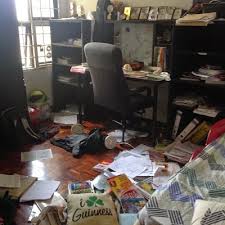
Looking at her son's messy room, Mom says, "Wow, you could win an award for cleanliness!"

a)

verbal

b)

situational

c)

dramatic

d)

not ironic

24.

In Toy Story, human characters are not aware that the toys speak and move, but the audience is aware

a)

verbal irony

b)

dramatic irony

c)

situational irony

d)

not ironic

25.

A pilot with a fear of heights

a)

verbal irony

b)

dramatic irony

c)

situational irony

d)

not ironic

26.
Often you feel you’ve done nothing when you’ve actually done a lot. That’s because what you did do seemed beneath notice—it was so small that it didn’t “count.” But it did—just as each stitch counts toward a finished dress, each brick or nail toward a house you can live in, each mistake toward knowing how to do things right. 
a)
Hesitant
b)
Encouraging
c)
Amused
27.
A vaccine is a preparation of killed or weakened germs that is injected under the skin and causes the blood to produce antibodies against the disease. Effective vaccines, for instance, have been developed for small pox, rabies, and polio. 
a)
objective
b)
arrogant
c)
regretful
28.
We have come together this afternoon to mourn the deaths of sixteen miners—our friends and neighbors—who were trapped by fire yesterday, deep below the earth. They lived bravely and they died too soon, leaving behind grieving wives and bewildered children. We bid them a final farewell. 
a)
forgiving
b)
sorrowful
c)
angry
29.
Why do these things always happen to me?, Brad wondered. First I forget an important meeting, and nobody reminds me until it’s over. Then my boss dumps a big project on my desk and wants it done by yesterday. And to top everything off, I leave my wallet on the bus. 
a)
comic
b)
self-pitying
c)
optimistic
30.
Each year in the middle of February, when slush is underfoot and the sky is a depressing gray, I begin dreaming of warm beaches, tropical fruits and sunsets. If only I could save enough for a winter vacation! Maybe next year I’ll win the lottery. Meanwhile, I’ll read travel brochures and sigh. 
a)
unsure 
b)
joyous
c)
longing
31.
The process by which the personality of a fictitious character is revealed through the character's speech, actions, appearance, thoughts
a)
Indirect characterization
b)
Direct characterization
c)
flat character
d)
round character
32.
In parenthesis or italics to give extra information to the actors
a)
Stage Directions
b)
Aside
c)
dialogue
d)
monologue
33.
A conversation between two (or more) characters
a)
Aside
b)
Monologue
c)
Dialogue
d)
Imagery
34.
A solitary speech in which is the character is speaking to himself or herself
a)
Monologue
b)
Soliloquy
c)
Aside
d)
Stage Directions
35.
A character breaks the fourth wall to interact with the audience
a)
Dialogue
b)
Imagery
c)
Stage Directions
d)
Aside
36.
A solitary speech in which the actor is speaking uninterruptedly and the other characters may or may not be listening.
a)
Soliloquy
b)
Monologue
c)
Dialogue
d)
Imagery
37.
When the author makes statements about a character's personality directly to the reader
a)
Indirect Characterization
b)
Aside
c)
Direct Characterization
d)
Dialogue
38.
Characters that do not change throughout the course of a work
a)
Dynamic Character
b)
Static Character
c)
Flat Character
d)
Round Character
39.
Characters that are complex and undergo a change
a)
dynamic character
b)
Flat character
c)
round character
d)
static character
40.

In the story A Christmas Carol, by Charles Dickens, a penny-pinching and bitter Ebenezer Scrooge values money more than people.

What is the meaning of the allusion in the sentence below?

Our neighbor has a reputation for being a Scrooge, so we don't even stop at his door any more when we're fundraising.

a)

generous

b)

kind

c)

stingy

d)

jealous

41.

The comic book superhero Spider-Man possesses a spidey sense that warns him of impending trouble.

What is the meaning of the allusion in the sentence below?

Luther picked up his pace on the trail as his spidey sense began to tingle.

a)

sense of smell

b)

sense of danger

c)

sense of wonder

d)

sense of pride

42.

How would allusion be defined?

a)

a reference to a famous person, place, or event

b)

words that involve one of the five senses

c)

two lines working as a unit

d)

a form or wordplay with similar sounding sounds

43.

Select the sentence that uses the semicolon correctly.

a)

The garden contained; vegetables they will harvest them in fall.

b)

The garden contained vegetables; they will harvest them in fall.

c)

The garden contained vegetables they will; harvest them in fall.

d)

The garden contained vegetables, they will harvest them in fall.

44.

Select the sentence that uses the semicolon correctly.

a)

He's taking algebra, which he's good at, biology, his least favorite subject, and drama, for fun.

b)

He's taking algebra, which he's good at; biology, his least favorite subject; and drama, for fun.

c)

He's taking algebra; which he's good at; biology; his least favorite subject; and drama; for fun.

d)

He's taking algebra; which he's good at, biology; his least favorite subject, and drama; for fun.

45.

Select the sentence that uses the semicolon correctly.

a)

Their house and garden are extremely important to them; that's why they take care of their property so well.

b)

Their house and garden are extremely important to them that's why they take care of their property so well.

c)

Their house and garden are extremely important to them, that's why they take care of their property so well.

d)

Their house and garden are extremely important to them that's why; they take care of their property so well.

46.
This punctuation mark is used as a substitute for a missing letter(s) in a word.
a)
comma
b)
period
c)
quotation mark
d)
apostrophe
47.
This mark is used at the end of a question.
a)
exclamation point
b)
question mark
c)
period
d)
colon
48.
This is used to make compound sentences, separate phrases or items in a list, coordinating adjectives, and/or extra information.
a)
comma
b)
quotation mark
c)
period
d)
semicolon 
49.
This mark is used before a list or quote, between hours and minutes, or mathematical ratios.
a)
colon
b)
ellipis
c)
exclamation point
d)
parentheses
50.
This mark separates two independent clauses in a compound sentence.
a)
semicolon
b)
quotation mark
c)
period
d)
parentheses
51.
This mark is used to show excitement or emphasis.
a)
ellipsis
b)
hyphen
c)
parentheses
d)
exclamation point
52.
This mark is used to note the end of a declarative sentence.
a)
period
b)
quotation mark
c)
parenthesis
d)
apostrophe
53.
Is the following a complete sentence or a sentence fragment?
Zoologists call the American buffalo a bison.
a)
Sentence
b)
Sentence Fragment
54.
Is the following a complete sentence or a sentence fragment?
May weigh up to three thousand pounds.
a)
Sentence
b)
Sentence Fragment
55.
Is the following a complete sentence or a sentence fragment?
Live in herds and feed on grass.
a)
Sentence
b)
Sentence Fragment
56.
Is the following a complete sentence or a sentence fragment?
Once roamed across North America.
a)
Sentence
b)
Sentence Fragment
57.
Which of the following is correct?
a)
The birds flew south, because winter was coming.
b)
The birds flew south; Winter was coming.
c)
Because the birds flew south, winter was coming.
d)
The birds flew south because winter was coming.
58.
Which of the following is correct?
a)
The child was scared of the dark so he had a nightlight.
b)
The child was scared of the dark because he had a nightlight.
c)
The child was scared of the dark; thus, he had a nightlight.
d)
The child was scared of the dark, because he had a nightlight
59.
Which of the following is correct?
a)
The child was scared of the dark so he had a nightlight.
b)
The child was scared of the dark because he had a nightlight.
c)
The child was scared of the dark; thus, he had a nightlight.
d)
The child was scared of the dark, because he had a nightlight
60.
Which of the following is correct?
a)
Before they left for the movies, they checked what time it began.
b)
The checked what time the movie began, before they left.
c)
Before they left for the movie; they checked what time it began
d)
Before they left for the movie. They checked what time it began.
