Wayground logo

Free Printable Worksheets

Font size

S
M
L
XL
Worksheets

Post War Period

Total questions: 112

Worksheet time: 59mins

Name
Class
Date
1.

Three Monotheistic relgions

a)

Judaism, Christianity, Islam

b)

Buddhism, Christianity, Hinduism

c)

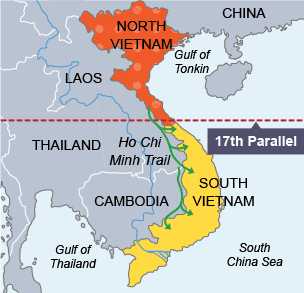
Hinduism, Judaism, Islam

d)

Greek mythology, Islam, Hinduism

2.

written record of the Hebrews

a)

Torah

b)

New Testament

c)

Quran

d)

Vedas

3.

Jesus as Son of God

• Life after death

• New Testament: Life and teachings of Jesus

• Establishment of Christian doctrines by early church councils

a)

Judaism

b)

Christainity

c)

Islam

d)

Hinduism

4.

• Muhammad, the prophet

• Qur’an (Koran)

• Five Pillars of Islam

• Mecca and Medina

a)

Judaism

b)

Christianity

c)

Islam

d)

Hinduism

5.

• Four Noble Truths

• Eightfold Path to Enlightenment

a)

Hinduism

b)

Buddhism

c)

Islam

d)

Greek Mythology

6.

Founder of Buddhism

a)

Siddhartha Gautama

b)

Muhammad

c)

Jesus

d)

Paul

7.

Spread Buddhism from India to China with the help of his missionaries

a)

Buddha

b)

Asoka

c)

Jesus

d)

Muhammad

8.

Many forms of one God

• Reincarnation: Rebirth based upon karma

• Karma: Knowledge that all thoughts and actions result in future consequences

a)

Buddhism

b)

Hinduism

c)

Islam

d)

Judaism

9.

Rebirth based upon karma

a)

Reincarnation

b)

Karma

c)

Eightfold Path to Enlightenment

d)

Four Noble Truths

10.

Knowledge that all thoughts and actions result in future consequences

a)

karma

b)

reincarnation

c)

Quran

d)

Torah

11.

Concentrated in Israel and North America in present day

a)

Judaism

b)

Christianity

c)

Islam

d)

Hinduism

12.

Concentrated in Europe and North and South America present day

a)

Christianity

b)

Islam

c)

Judaism

d)

Buddhism

13.

Concentrated in the Middle East, Africa, and Asia present day

a)

Islam

b)

Judaism

c)

Christianity

d)

Hinduism

14.

Concentrated in India present day

a)

Hinduism

b)

Buddhism

c)

Christianity

d)

Judaism

15.

Concentrated in East and Southeast Asia present day

a)

Hinduism

b)

Buddhism

c)

Islam

d)

Judaism

16.

Holy cities of the Islam

a)

Mecca and Israel

b)

Mecca and Medina

c)

Israel and Bethlehem

d)

Bethlehem and Jerusalem

17.

Quran(Koran) is the holy book for what religion?

a)

Christianity

b)

Judaism

c)

Islam

d)

Hinduism

18.

New Testament

a)

Islam

b)

Hinduism

c)

Judaism

d)

Christianity

19.
Deng Xiaoping allowed ________ ideas in China and that helped the economy. 
a)
capitalist
b)
communist
c)
mixed
d)
closed market
20.
This Prime Minister of India increased relationship with the USSR and started India's nuclear program
a)
Indira Gandhi
b)
Nehru
c)
Gandhi
d)
Kenyatta
21.
What nation has been permanently divided into communist north and democratic south?
a)
Germany
b)
Korea
c)
Vietnam
d)
Japan
22.
Who was the communist leader of North Vietnam who fought to unite the entire nation?
a)
Kim Jong Un
b)
Mao Zedong
c)
Jiang Jeishi
d)
Ho Chi Minh
23.
What group led guerrilla attacks against Americans and South Vietnamese soldiers?
a)
North Vietnamese Army
b)
Khmer Rouge
c)
Nazis
d)
Vietcong
24.
What were going on in the US during the conflict in Vietnam?
a)
Protests
b)
Guerrilla wars
c)
Communist insurrections
d)
Immigration reforms
25.
In 1962 _______________ sent missiles to ______________.
a)
Germany, Cuba
b)
Cuba, The U.S.
c)
The Soviets, Cuba
d)
Cuba, Japan
26.
Nationalist leader in Chinese civil war
a)
Chaing Kai Shek
b)
Mao Zedong
c)
Ho Chi Minh
d)
Dong Xiaoping
27.
Post WWII Military alliance
a)
NATO
b)
Warsaw Pact
c)
UN
d)
League of Nations
28.
What was the Policy of economic restructuring  under Gorbachev
a)
Perestroika
b)
Glasnost
c)
NEP
d)
Collectivazation
29.
What was the Policy of Openness under Gorbachev
a)
Perestroika
b)
Glasnost
c)
NEP
d)
Collectivazation
30.
Korea is Divided here?
a)
Nanzing River
b)
36'30 line
c)
38th Parallel
d)
17th Parallel
31.
The Soviet Alliance made to oppose Nato
a)
Central Powers
b)
Warsaw Pact
c)
Nafta
d)
Axis
32.
What year did the Berlin Wall come down
a)
1991
b)
1975
c)
1992
d)
1989
33.
What nation has been permanently divided into communist north and democratic south?
a)
Germany
b)
Korea
c)
Vietnam
d)
Japan
34.
Which side in the Korean War was supported by the U.S. and other democratic forces?
a)
North
b)
South
c)
East
d)
West
35.
What two nations were in competition with each other during the Cold War?
a)
Spain and Portugal
b)
England and France
c)
Germany and Italy
d)
United States and Soviet Union
36.
President Truman adopted a new foreign policy during the Cold War know as the Truman Doctrine. What was the main goal of the Truman Doctrine?
a)
To expand trade with Europe
b)
To limit the build up of nuclear weapons
c)
To stop the spread of communism
d)
to send financial aid to Europe
37.
How did the Marshall plan try to stop the spread of communism in Western Europe after WWII?
a)
by providing government housing for refugees
b)
by providing military assistance to Vietnam
c)
by providing money to stop poverty
38.
Why did the United States become involved in the Korean War?
a)
to contain communism
b)
to colonize Korea
c)
to spread communism
d)
to Christianize Koreans
39.
Where was Korea divided?
a)
18 parallel
b)
34 parallel
c)
38 parallel
d)
15 parallel
40.
In 1950, Korea fought a civil war over the spread of communism.  Communists from the north tried to take over the south.  What role did he US play in this war?
a)
The US and its allies went to Vietnam to fight Korean Communists.
b)
The US and its allies join the fight to keep communism from spreading.
c)
The US and its allies did not join the Korean War.
d)
The US and its allies fought to defend the North.
41.
In the 1950s, the United States became involved in the Vietnam War. Why did the United States become involved in this war?
a)
to prevent the collapse of the government of North Vietnam
b)
to stop Vietnam from taking over Hong Kong
c)
to stop the spread of communism to South Vietnam
d)
to prevent attacks against United States shipping
42.
Where was Vietnam divided? 
a)
17th Parellel
b)
20thParellel
c)
38th Parellel
d)
34th Parellel
43.
How did the US respond to finding out that the Soviets had missiles in Cuba?
a)
They sent the Air Force to bomb Cuba
b)
They began placing missiles in the Soviet Union.
c)
They placed a naval blockade around Cuba.
d)
They invaded Cuba and the Soviet Union.
44.
Which country was Nikita Khrushchev the leader of in the 1950's?
a)
United Stated
b)
France
c)
Soviet Union
d)
Germany
45.
What type of race was the U.S. involved in with Russia in the 1950's?
a)
Naval
b)
Arms
c)
Foreign Aid
d)
Land expansion
46.
Which 2 superpowers were involved in the Cold War?
a)
Britain and the Soviet Union
b)
France and Germany
c)
Japan and the Soviet Union
d)
The U.S. and the Soviet Union
47.
What symbolizes the end of the Cold War?
a)
U.S. President Bush worked toward easing tensions
b)
The Soviet Union broke up into 15 independent republics
c)
People in Easter Europe were gaining more freedom
d)
The Berlin Wall was built
48.
What event happened in 1949 to strengthen the threat of Communism spreading in Asia?
a)
Russia falls to Communism
b)
China falls to Communism
c)
The Arms Race begins
d)
Sputnik is launched
49.
Which of the following was a failed invasion by the United States under Kennedy in an attempt to overthrow Fidel Castro?
a)
Invasion of Moscow
b)
Cuban Missile Crisis
c)
Bay of Pigs Invasion
d)
Korean Invasion
50.
During the Cold War, the fear of Communism infiltrating the US and McCarthyism both contributed to the--
a)
Red Fever
b)
Domino Theory
c)
Red Scare
d)
Red Army
51.
Was the Cold War an actual war?
a)
Yes
b)
No
52.
How long did the Cold War last?
a)
10 years
b)
20 years
c)
30 years
d)
40 years
53.
This person was the first female Prime Minister of Great Britain: 
a)
Margaret Thatcher 
b)
Elisabeth Domitien
c)
Kim Campbell
d)
Helen Clark
54.
Which leader believed in less regulation of business and free trade? 
a)
Indira Gandhi 
b)
Gold Meir 
c)
Margaret Thatcher 
d)
Mikhail Gorbachev
55.
Which Prime Minister had a close relationship with US foreign policy during the Cold War? 
a)
Indira Gandhi 
b)
Margaret Thatcher 
c)
Mikhail Gorbachev
d)
Deng Xiaoping
56.
Glasnost and perestroika were reforms put into place by: 
a)
Indira Gandhi 
b)
Margaret Thatcher 
c)
Mikhail Gorbachev 
d)
Deng Xiaoping 
57.
What was apartheid?
a)
segregation of races in Kenya
b)
integrated democracy in Kenya 
c)
segregation of races in South Africa
d)
integrated democracy in South Africa
58.
Algeria went to war with the nation that colonized it.  This nation was
a)
France
b)
Britain
c)
India
d)
United States
59.
What was the significance of Nelson Mandela's election to office in South Africa? 
a)
he became the first black president
b)
he released political prisoners
c)
he united the Zulu and Ashanti people to win the election
d)
he won the election with the support of the British
60.
What was the significance of Nelson Mandela's election to office in South Africa? 
a)
he became the first black president
b)
he released political prisoners
c)
he united the Zulu and Ashanti people to win the election
d)
he won the election with the support of the British
61.
Who received Iraq, Transjordan and Palestine as Mandates after WWI? 
a)
French 
b)
United States
c)
Iran 
d)
British 
62.
The progressive Israeli Prime Minister who fell victim to an assassin in 1974.
a)
Yasir Arafat
b)
Shah Pahlavi
c)
Bin Laden
d)
Golda Meir
63.
What countries were given control of the most territories
  (mandates) in the Middle East  following WWI
a)
France and U.S
b)
Great Britain and France
c)
Great Britain and U.S.
d)
Spain and France
64.
Which statement BEST summarizes the conflict between Arabs and Jews over land and   religion in the Middle East? 
a)
Jews and Arabs are different ethnically and religiously and both claim a right to the same holy land.
b)
Jews are struggling for independence
c)
There is not a conflict in the Middle East between the Jews and Arabs.
d)
Arabs control the government and oil reserves in Israel.
65.

After Indian independence, the darker shaded region became known as--

a)

Burma

b)

Sri Lanka

c)

Pakistan

d)

Bangladesh

66.

The creation of the nation of Pakistan was a result of

a)

a mandate by the United Nations

b)

religious conflicts within India

c)

economic depression in India

d)

a revolt against France

67.

Which number on this map was part of Pakistan before gaining independence?

a)

1

b)

2

c)

3

d)

4

68.

What method did Mohandas Gandhi advocate for to achieve the goal of Indian independence?

a)

nonviolent civic disobedience

b)

violent public demonstration

c)

economic embargo

d)

guerrilla warfare

69.

Which leader is described by the list?

a)

Nelson Mandela

b)

Golda Meir

c)

Gamal Abdul Nasser

d)

Jawaharlal Nehru

70.

In 1948, the land controlled by the Jewish people became the country of

a)

Palestine

b)

Israel

c)

Jordan

d)

Jerusalem

71.

Which of the following was true before Syria became independent?

a)

Syria was part of the Russian empire

b)

Large oil reserves were discovered in Syria

c)

The Treaty of Versailles was enforced in Syria

d)

Syria was ruled under the mandate system

72.

Which is a system for acquiring colonies to provide raw materials for a stronger country?

a)

socialism

b)

democracy

c)

imperialism

d)

communism

73.

Which group was the majority in South Africa during Apartheid?

a)

Blacks

b)

white Europeans

c)

Asians, mainly those from India

d)

equal population distribution with no majority

74.

What is Apartheid?

a)

Laws in South Africa that perpetuated segregation between blacks and whites

b)

Non- violent protests led my Gandhi

c)

The freedom and equal rights of black people in South Africa

d)

Fighting for independence in South Africa

75.
Does this map depict (show) India before or after partition?
a)
Before
b)
After
76.
What methods does Gandhi use?
a)
Peaceful
b)
Violent
77.
Who was Gandhi?
a)
An African leader in South Africa.
b)
A leader of the Hindu faith.
c)
An Indian Activist for India's Independence.
d)
A Hindu God 
78.
the refusal to comply with certain laws or to pay taxes and fines, as a peaceful form of political protest.
a)
Peaceful Protest
b)
Civil Disobedience
c)
Passive Protest
d)
Quit India Movement
79.

Indian nationalism in the 1800s began as a reaction to

a)

British rule

b)

religious conflict

c)

communist revolutions

d)

drought and famine

80.
During the Partition of India, which religious group fled to India?
a)
Christians
b)
Sikhs
c)
Jews
d)
Hindus
81.
During the partition of India, which religious group fled to Pakistan?
a)
Hindus
b)
Muslims 
c)
Christians
d)
Catholics 
82.
Which of the following represents an accurate colonial / mother country relationship?
a)
Ghana - France
b)
Ghana - France
c)
Rhodesia/Zimbabwe - Germany
d)
Kenya - England
83.

What is the world's largest democratic nation?

a)

US

b)

Great Britain

c)

India

d)

China

84.

close associate of Gandhi, supported western style industrialization

a)

Nelson Mandela

b)

Jomo Kenyatta

c)

Jawaharlal Nehru

d)

Indira Ghandi

85.

1950 Constitution in India sought to prohibit

a)

caste discrimination

b)

alcoholism

c)

apartheid

d)

women from voting

86.

East Pakistan is present day

a)

Bangladesh

b)

Pakistan

c)

Sri Lanka

d)

Ceylong

87.

Sri Lanka was formerly called

a)

West Pakistan

b)

India

c)

Ceylon

d)

Bangladesh

88.

How did West Africa transition to independence?

a)

Peacefully

b)

Violently

c)

Armed protests

d)

Strikes

89.

What two mandates were controlled by France?

a)

Syria and Lebanon

b)

Palestine and Jordan

c)

Iraq and Iran

d)

Germany and Bulgaria

90.

Prime Minister of Israel who sought support from the US.

a)

Gamal Nasser

b)

Golda Meir

c)

Bill Clinton

d)

Ghadfi

91.

President of Egypt • Nationalized Suez Canal • Established relationship with Soviet Union • Built Aswan High Dam

a)

Golda Meir

b)

Margaret Thatcher

c)

Gamal Abdul Nasser

d)

Joseph Stalin

92.

A nation with established agriculture and industry, advanced technology, and a strong educational system.

a)

Developed Nations

b)

Developing nation

c)

Industrial Nation

d)

Poor countries

93.

a nation whose economy is based on farming and the export of natural resources

a)

agriculture revolution

b)

Industrial nation

c)

Developed nation

d)

developing nation

94.

person who flees to another country to escape persecution or disaster

a)

migrant

b)

refugee

c)

aliens

d)

tourist

95.

workers who migrate to the more developed countries in search of higher paying jobs

a)

Refugee

b)

guest worker

c)

aliens

d)

Tourists

96.

geopolitical and cultural region of southeastern Europe. Greece and the region North of Greece

a)

Japan

b)

Balkans

c)

Iberian

d)

British Isles

97.

a peninsula of northeastern Africa (the easternmost part of Africa) comprising Somalia and Djibouti and Eritrea and parts of Ethiopia

a)

Horn of Africa

b)

Cape of Good Hope

c)

Madagascar

d)

Indian Ocean

98.

the transfer of a gene from the DNA of one organism into another organism, in order to produce an organism with desired traits

a)

gene dropping

b)

Genetic engineering

c)

selective service

d)

RNA replication

99.

the study of ethical issues related to DNA technology

a)

genetic engineering

b)

Cloning

c)

Bioethics

d)

DNA Replication

100.

number of people who can read & write, increased in Europe when Gutenberg created the printing press, lower in developing nations

a)

mortality rate

b)

literacy rate

c)

developed countries

d)

developing countries

101.

we rely on other nations, and other nations rely on us, to provide the goods and services that we consume

a)

global independence

b)

economic interdependence

c)

developed nations

d)

worldwide depression

102.

an international organization of European countries formed after World War II to reduce trade barriers and increase cooperation among its members

a)

NATO

b)

Allied powers

c)

Axis Powers

d)

European Union

103.

trade agreement between Canada, the United States and Mexico that encourages free trade between these North American countries.

a)

NATO

b)

Warsaw Pact

c)

NAFTA

d)

European Union

104.

An international agency which encourages trade between member nations, administers global trade agreements and resolves disputes when they arise.

a)

NAFTA

b)

European Union

c)

World Trade Organization

d)

NATO

105.

an organization of independent states formed in 1945 to promote international peace and security, replaced the League of Nations

a)

NATO

b)

Warsaw Pact

c)

European Union

d)

United Nations

106.

a United Nations agency to promote trade by increasing the exchange stability of the major currencies

a)

NATO

b)

NAFTA

c)

International Monetary Fund

d)

European Union

107.

the calculated use of violence (or threat of violence) against civilians in order to attain goals that are political or religious or ideological in nature

a)

hate

b)

genocide

c)

terrorism

d)

anti-antisemitism

108.

In September 1972, a Palestinian terrorist organization held Jewish Israeli athletes hostage and killed eleven of them.

a)

Yom Kippur War

b)

Iraq War

c)

Afghanistan War

d)

Munich Olympics

109.

4 airplanes were hijacked: 3 hit their targets (World Trade Center Towers & the Pentagon), the fourth plane's passengers rushed the cockpit and forced the plane to crash into the ground. Osama bin Laden was identified as the person responsible for the terrorist attack.

a)

Iraq War

b)

Persian Gulf

c)

WWII

d)

9/11

110.

Car bombing, suicide bombing, airline hijacker are examples of

a)

genocide

b)

Terrorism

c)

democracy

d)

diplomacy

111.

surveillance increases, privacy rights reviews, increased security at seaports and airports, increased security of ID badges and photos

a)

governmental responses to terrorism

b)

military responses to government

c)

civilian responses to unfriendly neighbors

d)

enemy responses to illegal refugees

112.

Free market economies produce rising standards of living and an expanding middle class, which produces growing demands for political freedoms and individual rights. Recent examples include what two places

a)

China and North Korea

b)

Japan and Russia

c)

Taiwan and South Korea

d)

Vietnam and Laos