wayground logo

Free Printable Worksheets

Font size

S
M
L
XL
Worksheets

Fall Semester Final

Total questions: 50

Worksheet time: 33mins

Name
Class
Date
1.

All matter is made of what

a)

energy

b)

atoms

c)

electrons

d)

compounds

2.

The positive particles of an atom are

a)

electrons

b)

positrons

c)

neutrons

d)

protons

3.

The central region of an atom where its neutrons and protons are is its

a)

nucleus

b)

electron cloud

c)

core

d)

center

4.

An atom with atomic number 6 would have how many protons

a)

6

b)

12

c)

3

d)

cannot be determined

5.

Particles in an atom that are neutral and have no charge are

a)

negatrons

b)

electrons

c)

neutrons

d)

protons

6.

True or False: Neutrons have a negative charge

a)

True

b)

False

7.

What is the atomic number for an element with 3 protons?

a)

2

b)

1

c)

3

d)

6

8.

A particle that moves around the nucleus is a(n)...

a)

Proton

b)

Neutron

c)

Electron

d)

Quark

9.

What does the 1.00794 stand for?

a)

Hydrogen

b)

atomic number

c)

atomic mass

d)

atomic explosion

10.

What subatomic particles would you find in the nucleus of an atom?

a)

Protons only

b)

Protons and Neutrons

c)

Neutrons and Electrons

d)

Protons and Electrons

11.

If an atom has 10 protons, 10 neutrons, and 10 electrons, what is the mass of the atom?

a)

10

b)

20

c)

30

12.

What subatomic particle(s) would be found orbiting the nucleus?

a)

Neutrons only

b)

Electrons only

c)

Protons and Neutrons

d)

Protons and Electrons

13.

Most of the mass in an atom is concentrated in the...

a)

electrons

b)

nucleus

c)

protons

d)

empty space

14.
At higher temperatures
a)
particles in an object have less energy
b)
particles in an object move faster
c)
a gas contracts
15.
A gas
a)
has a definite shape but no definite volume
b)
has a definite volume but no definite shape
c)
has fast-moving particles
16.
Freezing
a)
Solid to gas
b)
Liquid to solid
c)
Gas to solid
d)
Liquid to gas
17.
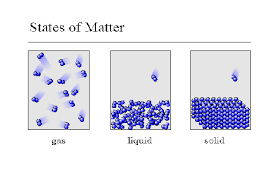
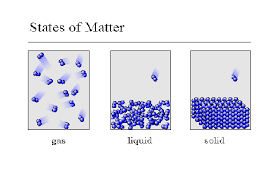
Which state of matter has tightly packed molecules?
a)
solid
b)
liquid
c)
gas
18.
Which state of matter has a definite shape?
a)
solid
b)
liquid
c)
gas
19.
What is happening when my ice cream changes from a solid to a liquid?
a)
freezing
b)
melting
c)
burning
d)
evaporation
20.
Define a liquid.
a)
Indefinite shape, indefinite volume
b)
Definite shape, definite volume
c)
Found in stars
d)
Definite volume, indefinite shape
21.
The state of matter that has no definite size or shape is
a)
Solid
b)
Liquid
c)
Gas
22.
Particles of a liquid
a)
are tightly packed together and stay in a fixed position.
b)
have no viscosity.
c)
decrease in volume with increasing temperature.
d)
are free to move around one another but still touch.
23.
What is condensation?
a)
gas to solid
b)
gas to liquid
c)
liquid to solid 
d)
solid to liquid 
24.
The slower the particles in a substance move,
a)
the colder it is.
b)
the warmer it is.
c)
the more energy it has.
d)
the less energy it has.
25.

Which type of rock is made from lava or magma cooling?

a)

igneous

b)

sedimentary

c)

metamorphic

26.
Which type of rock is made from a rock being changed by heat and pressure?
a)
Smooshed Rock
b)
igneous
c)
metamorphic
d)
sedimentary
27.
Sedimentary and igneous rocks go through _____________________________ to become metamorphic rocks.
a)
weathering and erosion
b)
heat and pressure
c)
compacting and cementing
d)
melting and cooling
28.
Each rock type can follow only one pathway of the rock cycle.
a)
True
b)
False
29.

Scientists think that the continents once formed a giant landmass that broke apart, and then slowly drifted apart. What is the name given to this hypothesis?

a)

sea-floor Spreading

b)

plate tectonics

c)

continental drift

d)

Pangaea

30.

What is the name of the super continent that existed about 250 million years ago?

a)

Plate tectonics

b)

Convection

c)

Pangaea

d)

Gonwandaland

31.

Choose all the evidence Wegener used to support his Continental Drift Hypothesis.

a)

human remains

b)

fossils

c)

mountain ranges

d)

climate evidence

e)

the age of the Earth

32.

Which two land masses did Wegener think fit the best together like puzzle pieces?

a)

N American and Europe

b)

S America and Aftrica

c)

Australia and Africa

d)

Europe and S America

33.
What are the remains of organism noticed by Wegener that are found the same in two continents?
a)
Leaves and flowers
b)
Ice and mountains
c)
Plants and animals
d)
Dinosaurs and reptiles
34.
What evidence did Wegener use in his theory?
a)
Continents and fossils fitting together/matching-up like puzzle pieces 
b)
glacier scars and evidence from temperature
c)
mountain ranges and coal deposits line up across continents
d)
all of the above
35.
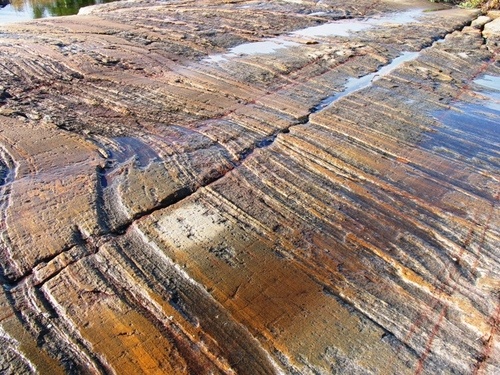
This is a picture of glacier scars found in Africa.  What are these evidence for?
a)
Africa has always been near the equator
b)
Africa was once in an area of the Earth that had a very cold climate
c)
The continents have not moved
d)
sea floor spreading
36.

What type of evidence was used by Alfred Wegener to support his continental drift hypothesis? (Select 3)

a)

evidence from landforms / geology

b)

evidence from fossils

c)

evidence from human remains

d)

evidence from climate

37.
Rock underground suddenly breaks along a fault causing tectonic movement, causing what natural hazard? 
a)
Volcanic Eruption 
b)
Cyclone
c)
Earthquake
d)
Hurricane
38.
What is a huge wave made by an underwater earthquake?
a)
hurricane
b)
tsunami
39.

Looking at the image, where would an earthquake most likely occur?

a)

Location A

b)

Location B

40.

The majority of Texas is in what zone for winds?

a)

Zone 1

b)

Zone 2

c)

Zone 3

d)

Zone 4

41.
What is the energy that an object has because it is moving?
a)
kinetic
b)
potential
c)
electric
d)
wind
42.
If you have a liquid that changes to a gas, explain it's freedom of movement in both phases.
a)
molecules move away from each other, then around each other
b)
molecules move in place, then around each other
c)
molecules move around each other, then away from each other
d)
molecules move around each other, then in place
43.
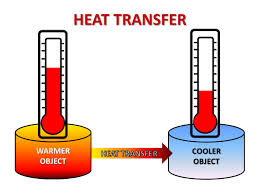
Heat transfers from an area of ____temperature to an area of ___ temperature.
a)
high to low
b)
low to high
c)
high to high
d)
It can travel high to low and low to high. 
44.
What is the difference between particles in a gas and a solid?
a)
gas particles are closer together
b)
solid particles move faster than gas particles
c)
solid particles expand on heating
d)
gas particles have more kinetic energy than solid particles
45.
Which of the following would increase the pressure on a system?
a)
Increase the Temperature
b)
Pump in more gas
c)
Decrease the volume
d)
All of these
46.

What is pressure?

a)

The amount of force exerted on a surface

b)

The surface area of an object

c)

The weight of an object

47.
a)
1
b)
2
c)
3
d)
4
48.

What is the possible formula name for this compound?

a)

HCH4OH

b)

6H2C1O

c)

C2H6O

d)

C2H6O

49.

What is deposition?

a)

Solid to a liquid

b)

Solid to a gas

c)

Liquid to a solid

d)

Gas to a solid

50.

What is sublimation?

a)

Solid to a liquid

b)

Solid to a gas

c)

Liquid to a solid

d)

Gas to a solid