wayground logo

Free Printable Worksheets

Font size

S
M
L
XL
Worksheets

CBA Review OL

Total questions: 40

Worksheet time: 59mins

Name
Class
Date
1.

What energy transformation occurs as as an elephant walks through the savanna?

a)

Thermal --> Chemical + Mechanical

b)

Mechanical --> Chemical + Thermal

c)

Radiant --> Chemical + Mechanical

d)

Chemical --> Mechanical + Thermal

2.
What is the scale that is used to indicate hardness of a mineral?
a)
Red Scale
b)
Moh's scale
c)
Einstein Scale
d)
Fracture Scale
3.
What are the two types of luster? 
a)
Metallic and Metallic
b)
Nonmetallic and Shiny
c)
Metallic and Nonmetallic
d)
Shiny and Dull
4.
Which of these minerals is softer than glass?
a)
Topaz 
b)
Corundum 
c)
Calcite 
d)
Orthoclase 
5.
The inclined plane makes work easier by _____ the amount of effort that must be applied to raise or lower a load.
a)
increasing
b)
accelerating
c)
reducing
d)
softening
6.
The longer the inclined plane, the ___________________ to move the object
a)
the less input force you need
b)
the more input force you need
c)
the more output force you need
d)
the less output force you need
7.
What is a disadvantage of using an inclined plane to lift a heavy object?
a)
The object must be moved a greater distance.
b)
It takes less effort to move the object.
c)
Many objects are difficult to lift straight up.
d)
Heavy object usually take up more space.
8.

What is position?

a)

The movement of an object.

b)

The location of an object.

9.

What is motion?

a)

A change in position.

b)

A change in force.

10.
If these boys are pulling with the same amount of force.  What will happen?
a)
The boy in blue will win.
b)
They will not move at all.
c)
The boy in red will win.
d)
Both will fall down.
11.
This is an example of what kind of force?
a)
Balanced Force
b)
Pushing Force
c)
Gravity Force
d)
Unbalanced Force
12.

Which form of energy would most likely be affected by change in weather

a)

geothermal

b)

natural gas

c)

wind

d)

nuclear

13.
Which of the following energy transfers occurs when food is digested?
a)
chemical to mechanical
b)
radiant to nuclear
c)
mechanical to potential
d)
thermal to chemical
14.

What is inside rocks?

a)

a mixture of different minerals.

b)

smaller rocks

c)

water/sediments

d)

living organisms

15.

When gravity is affecting an object, what type of force is applied?

a)

Gravity is a force that PULLS

b)

Gravity pushed the object down

c)

gravity pushes the object upwards.

d)

gravity does not exist.

16.
What does this graph represent?
a)
Constant speed
b)
Acceleration
c)
Not moving
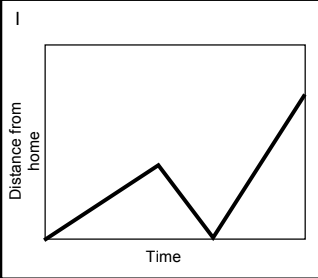
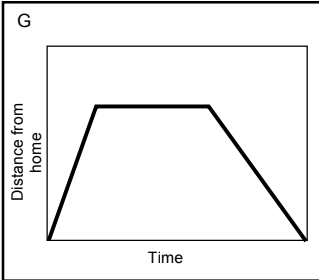
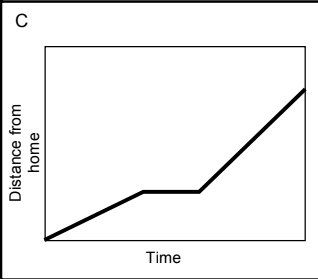
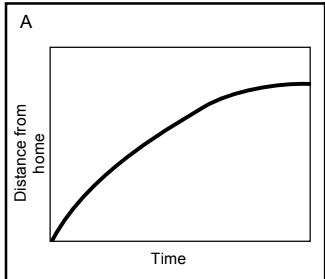
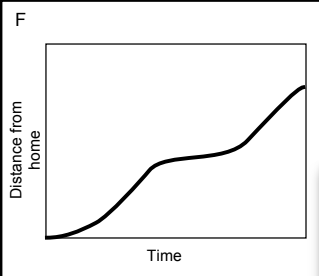
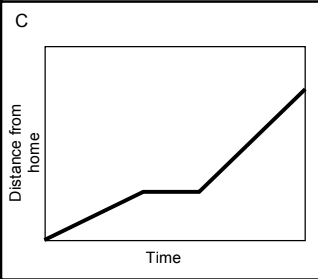
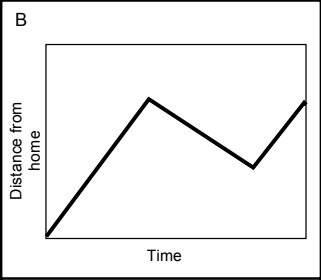
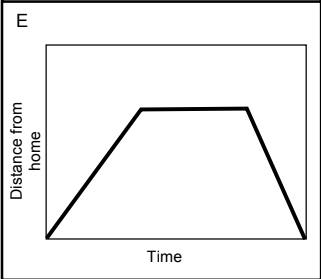
17.
a)
b)
c)
d)
18.
a)
b)
c)
d)
19.
a)
b)
c)
d)
20.
The heat from a lamp allows a lizard to remain warm. This is an example of which type of heat transfer?
a)
radiation
b)
conduction
c)
convection
d)
insulation
21.
Which best explains how bacon is fried on a stove burner?
a)
The bacon creates a convection current, the  heat rises to the pan, and then rises to the stove burner.
b)
The bacon transfers heat directly to the pan, and the pan transfers heat directly to  the stove burner.
c)
The stove burner radiates heat to the pan,  and the pan radiates heat to the bacon.
d)
The stove burner transfers heat directly  to the pan, and the pan directly  transfers heat to the bacon.
22.
Which items would have this energy transformation: chemical energy -> mechanical energy?
a)
person running
b)
candle burning
c)
windmill turning
d)
playing a violin
23.
Which items would have this energy transformation: chemical energy -> electrical, light and thermal energy?
a)
turning on a flashlight
b)
nuclear power plant
c)
digesting an apple
d)
tanning bed
24.

What would not be very helpful when trying to identify an unknown mineral?

a)

finding the luster of the mineral

b)

calculating the hardness of the mineral

c)

measuring the length/mass of the sample

d)

testing the streak color

25.
What is the formula to calculate speed?
a)
Speed = Distance x Time
b)
Speed = Distance/Time
c)
Speed = Time/Distance
d)
Speed = Time x Distance
26.
Calculate the speed:
A Car traveled 240 Km in 5 Hours
a)
48 Km/Hr
b)
1200 Km/Hr
c)
4.8 Km/Hr
d)
0.02 Km/Hr
27.
Determine the speed at 20 seconds based on the information shown in the graph.  Speed = distance/time
a)
2 m/s
b)
10 m/s
c)
20 m/s
d)
.5 m/s
28.
At 60 seconds, how far had this object traveled? 
a)
0 m
b)
10 m
c)
20 m
d)
40 m
29.
How many times does this object STOP moving?
a)
None
b)
Once
c)
Twice
d)
Three times
30.
What is the speed of an object that travels 60 meters in 4 seconds?
a)
240 m/s
b)
15 m/s
c)
0.067 m/s
d)
15 mph
31.

How does heat travel?

a)

Hot objects to cold objects

b)

cold to hot objects

32.

Potential energy depends on the ________ and ________ of the object.

a)

Height (position)

b)

Mass

c)

Speed

d)

Friction

33.

Which point has the most potential energy?

a)

G

b)

F

c)

B

d)

A

34.

At which point of the roller coaster is potential energy the greatest?

a)

W

b)

X

c)

Y

d)

Z

35.
The three groups of rocks are classified by
a)
How they form
b)
Color
c)
Grain size
d)
Chemical Composition
36.
Rock that forms when sediment from older rocks get pressed and cemented together.
a)
Sedimentary Rock
b)
Metamorphic Rock
c)
Igneous Rock
37.
The process by which igneous rocks are formed...
a)
heat and pressure
b)
melting and cooling
c)
weathering and erosion
38.
The process by which metamorphic rocks are formed...
a)
heat and pressure
b)
erosion and deposition
c)
melting and cooling
39.
Rock that forms when pressure and temperature change existing rock.
a)
Igneous Rock
b)
Sedimentary Rock
c)
Metamorphic Rock
d)
Rock Cycle
40.

What is the transfer of thermal energy that does not require matter to travel?

a)

conduction

b)

convection

c)

radiation

d)

condensation