
 Worksheets
Civics Midterm Review
Total questions: 60
Worksheet time: 1hrs 17mins
What theory did Thomas Hobbes, Rousseau and Locke have in common in their influence to the founding fathers?
What term did Baron de Montesquieu use that best describes the division of the government into 3 specific branches with individual powers such as; the Legislative Branch having the authority to collect taxes, the Judicial Branch having the authority to declare laws unconstitutional, and the Executive Branch to negotiate treaties.
Checks and Balances
Tri-Government Balance
Pyramid of Power
Separation of Powers
What is the purpose of interest groups?
government agencies that raise awareness lead by political parties
hold fundraisers to get candidates elected to office
raise awareness and lobby to pass laws that support their agenda or beliefs
influence public opinion polls to guide country in political direction that they agree with
Which Enlightenment idea describes an agreement between the people and the government?
Social Contract
Separation of Powers
Checks and Balances
treaties
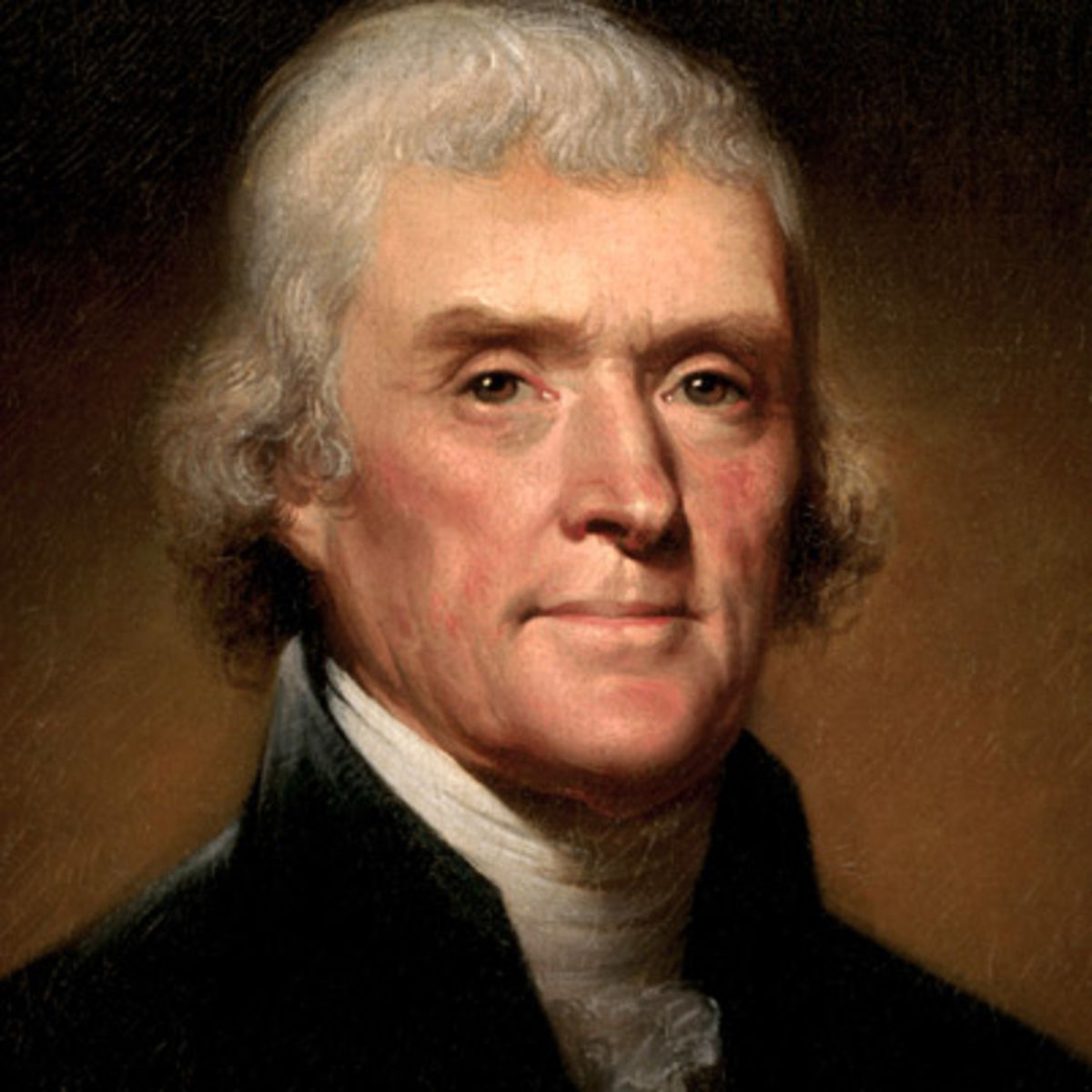
Where can this quote be found?
“Bills of attainder . . . are such special acts of the legislature, as inflict capital punishments upon persons supposed to be guilty of high offences, such as treason and felony, without any conviction in the ordinary course of judicial proceedings."
Article I of the U.S. Constitution
Article II of the U.S. Constitution
Article III of the U.S. Constitution
Bill of Rights
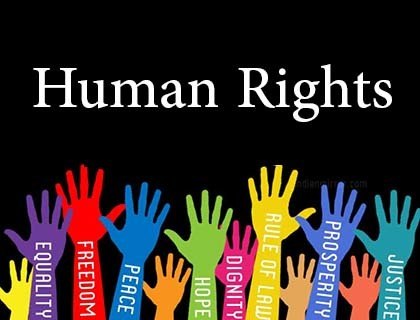
How does the Bill of Rights protect citizens?
provides protection of individual rights
limits the power of the citizens
describes the powers of the government
identifies the individual powers of each branch of government
protected the rights of English citizens, limited power of the king, and became the basis for the American Bill of Rights
agreement signed in 1620 by the Pilgrims in Plymouth, to consult each other about laws for the colony and a promise to work together to make it succeed; "Civil body politic" - Self Government / Social Contract
magna carta
Mayflower Compact
Virginia House of Burgesses
English Bill of Rights


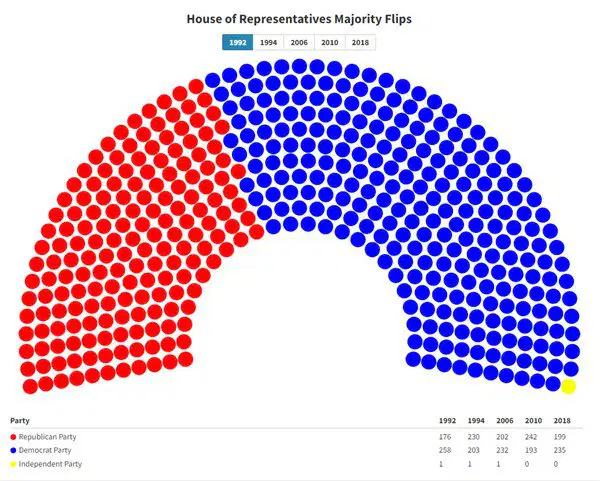
According to the diagram, The Democratic Party is the majority party, and the Republican party is the minority party. Which group would control the agenda of the Legislative branch?
Democratic Party
Republican Party
what event occurred in 1786-1787 where there was an uprising/ riot of Massachusetts farmers, led by Daniel Shays, to protest high taxes, heavy debt, and farm foreclosures led the US Government to realize the Articles needed to be changed
Shay's Rebellion
Marbury v. Madison
Alien and Sedition Acts
Kentucky and Virginia Resolutions
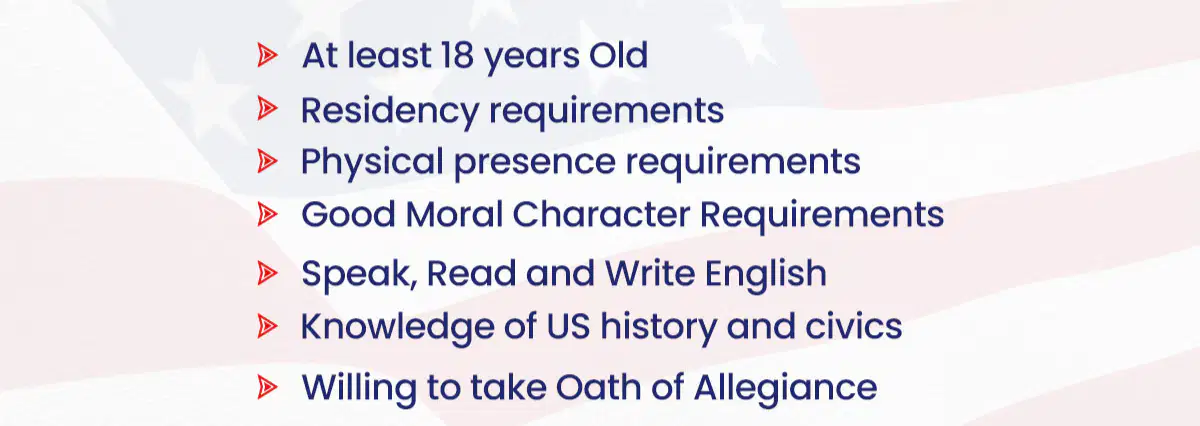
What would be a good title for this list of qualifications?
Qualifications to become a Natural Born Citizen
Qualifications to become a U.S. President
Qualifications to become a naturalized Citizen

This picture of a juror's name tag illustrates what duty/obligation of citizens?
Attending school
obtaining license
Paying taxes
Serving on a jury
What purpose of government would Thomas Jefferson believe to be true?
"Governments are instituted among Men, deriving their just powers from the consent of the governed..."
excerpt from Declaration of Independence written by Thomas Jefferson
Give power to federal government
Protect rights of the people
Taxes support government programs
What is the introduction to the Constitution - where the six purposes of government are listed?
1. Form a More Perfect Union
Meaning: Organize a stronger government to maintain law and order but weak enough not to impose on liberty
2. Establish Justice
Meaning: Broad statement to ensure the populous is not wronged by common daily activities, and there is a method to handle disputes
3. Insure Domestic Tranquility
Meaning: Keep and affirm the peace among different people, groups, and individuals in society
4. Provide for the Common Defence
Meaning: Ability to raise an army or navy to protect against foreign threats
5. Promote the General Welfare
Meaning: Government promotes the well-being of citizens
6. Secure the Blessings of Liberty
Meaning: Enjoy the protections in the Constitution and natural rights of liberty
Articles of Confederation
Declaration of Independence
Bill of Rights
Preamble

Which group wanted to ensure that individual rights were protected in the new constitution and supported Bill of Rights?
Federalist
Anti-Federalist

Which group saw no need to include a bill of rights in the new constitution as they believed that states already protected individual rights?
Federalist
Ant-Federalist

what two parties does the Two-Party System in America include?
Republicans and Green Party
Republicans and Democrats
Democrats and Libertarian
Green Party and Democrats
Federalists wanted (click 2)
Strong State Government
Strong National Government
No Bill of Rights
Bill of Rights
Why did the Articles of confederation fail?
Too much sugar
Federal Government had all the power
State Government had all the power
Green Bay Packers had all the power
5th Amendment
No self-incrimination
No double jeopardy
Due process
The right to a jury trial in civil cases involving more than $20
No cruel and unusual punishment
No excessive bail
The right to a fair, speedy and public trial in criminal cases.
The right to a lawyer.
6th Amendment
No self-incrimination
No double jeopardy
Due process
The right to a jury trial in civil cases involving more than $20
No cruel and unusual punishment
No excessive bail
The right to a fair, speedy and public trial in criminal cases.
The right to a lawyer.
7th Amendment
No self-incrimination
No double jeopardy
Due process
The right to a jury trial in civil cases involving more than $20
No cruel and unusual punishment
No excessive bail
The right to a fair, speedy and public trial in criminal cases.
The right to a lawyer.
8th Amendment
No self-incrimination
No double jeopardy
Due process
The right to a jury trial in civil cases involving more than $20
No cruel and unusual punishment
No excessive bail
The right to a fair, speedy and public trial in criminal cases.
The right to a lawyer.

What group of people did the 13th, 14th and 15th Amendments expand rights to?
Women
African American men (former slaves)
Juveniles
Immigrants
What principle suggests that even a person in authority must be held accountable to the law?
separation of powers
taxation without representation
checks and balances
rule of law
Requirements to be a member of _________________
U.S. Citizen (natural born - through law of blood or law of soil - OR naturalized)
Resident of state you want to represent
What choice below would best complete the title for this list of requirements
President
Congress
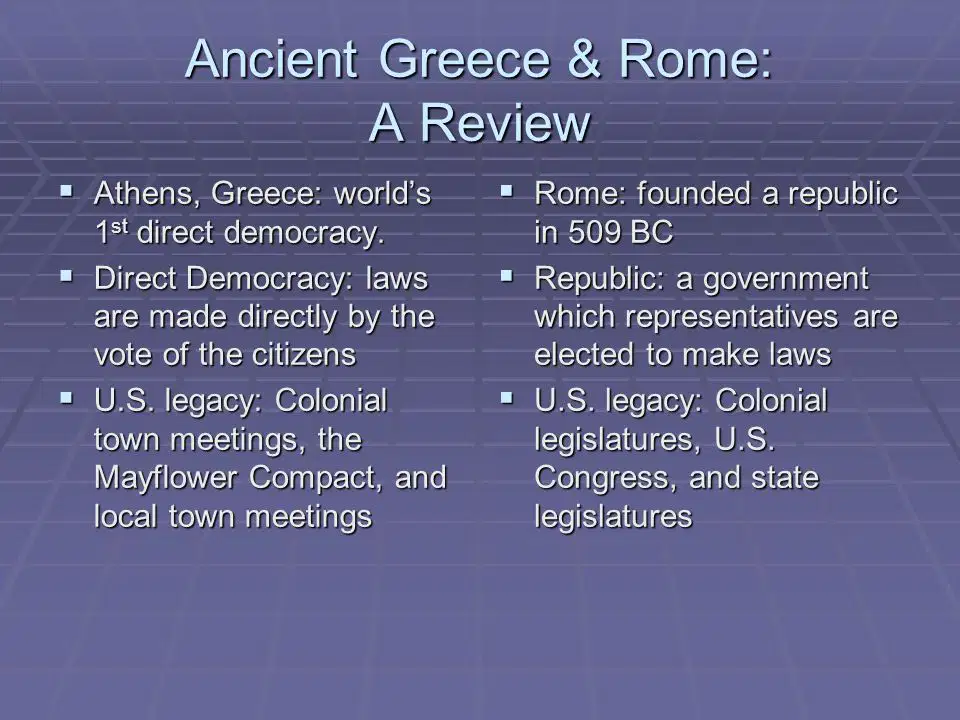
What similarity do both ancient Greece and Ancient Rome have in common with the United States?
Elections/Voting
lobbying
Constitutions
Separation of Powers
Why is it important to analyze political ads before choosing a candidate to vote for?
Political ads only contain propaganda and lies.
Political ads probably don't feature up-to-date information.
The purpose of political ads is to convince people to vote for candidates, and they might not show all sides of an issue.
Political ads can be a good source of information, because they often show balanced viewpoints of all issues.
What's the most direct way to use mass media to promote political change?
voting in elections
writing letters to politicians
purchasing ads
staging political demonstrations


The president may sign a ________________ to make an agreement with another country but the Senate must approve it!
Treaty
Bill
amendment
custom
In which house does the impeachment process of the president of the U.S. begin?
The Oval Office
The White House
The House of Representative
The Senate

What role is the president in when leading military orders?
Head of the State
Commander in Chief
Chief Executive
Party Chief

