
NEW
Font size
 Worksheets
Energy Flow Vocabulary
Total questions: 17
Worksheet time: 21mins
These organisms break down dead or decaying plant and animal material.
producer
consumer
decomposer
These are living things in an environment.
abiotic
biotic
These are nonliving things in an environment.
abiotic
biotic
These are organisms that use the sun's energy to make their own food.
producer
consumer
predator
These are animals that eat other animals rather than plants.
hervivore
omnivore
carnivore
Animals that eat producers are called:
herbivore
omnivore
carnivore
Animals that eat both plants and animals are called:
herbivore
omnivore
carnivore
Animals that eat other animals that eat plants.
tertiary consumer
secondary consumer
producer
primary consumer
Animals that eat secondary consumers.
secondary consumer
tertiary consumer
producer
primary consumer

Looking at the chart below what type of organism is the Alaskan brown bear?
Carnivore
Herbivore
Omnivore
Decomposer
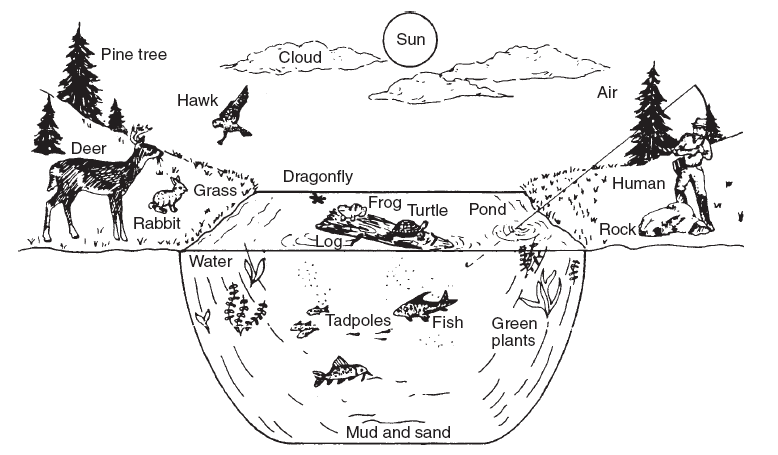
What is the primary source of energy for the ecosystem pictured above?
Grass and Green plants
Hawks and Deer
Tadpoles and Fish
Sun
Which of the following does NOT describe an ectotherm.
internal physiological sources of heat are of relatively small
depends on environmental sources as a source of body heat
is able to warm itself up and regulate its body temperature
they operate at very economical metabolic rates
Which of the following does NOT describe a endotherm
capable of the internal generation of heat
a warm-blooded animal
use of heat set free by its internal bodily functions
relies solely on ambient heat

