wayground logo

Free Printable Worksheets

Font size

S
M
L
XL
Worksheets

4. Cells and tissues practice quiz BMS191

Total questions: 63

Worksheet time: 58mins

Name
Class
Date
1.

The cell membrane is _______________ permeable.

a)

selectively

b)

somewhat

c)

physically

d)

ionically

2.

The cell membrane is mostly made of what?

a)

Membrane-spanning Proteins

b)

Surface Proteins

c)

Phospholipids

d)

Carbohydrates

3.

What are the two parts of a phospholipid?

a)

head

b)

enzyme

c)

tail

d)

hormone

4.

The phospholipid head is _____________ & _____________

a)

Hydrophilic

b)

Hydrophobic

c)

Polar (+)

d)

Uncharged

5.

The phospholipid tail is _____________ & _____________

a)

Hydrophilic

b)

Hydrophobic

c)

Polar (+)

d)

Uncharged

6.
In passive transport, molecules move from an area of __________ concentration to an area of __________ concentraiton
a)
high, low
b)
low, high
c)
water, salt
d)
active, passive
7.
What type of transport is this?
a)
Diffusion
b)
Osmosis
c)
Facilitated Diffusion
d)
Active Transport
8.
What type of transport is this?
a)
Endocytosis
b)
Facilitated Diffusion
c)
Active Transport Pump
d)
Osmosis
9.
In passive transport, molecules move from an area of __________ concentration to an area of __________ concentraiton
a)
high, low
b)
low, high
c)
water, salt
d)
active, passive
10.
Which type of transport requires an input of energy?
a)
Passive Transport
b)
Osmosis
c)
Simple Diffusion
d)
Active Transport
11.

I am fluid filled within the cell

a)

Mitochondrion

b)

Vacuole

c)

cytoplasm

d)

Cell membrane

12.
The powerhouse of the cell is the...
a)
Mitochondrion
b)
Golgi body
c)
Nucleus
d)
Ribosomes
13.
Directs all cell activities through the DNA located there.
a)
Lysosomes
b)
Nucleus
c)
ribosomes
d)
Mitochondria
14.
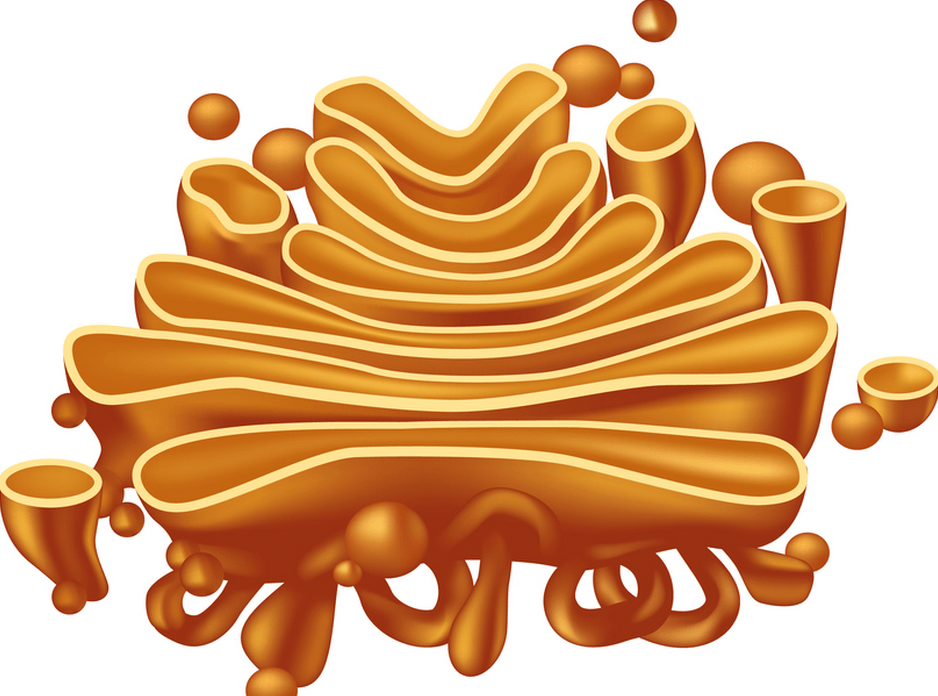
I am a protein packaging and shipping machine! Who am I?
a)
vacuole
b)
ribosome
c)
mitochondrion
d)
golgi apparatus
15.
You might think of me as the trash collector, but recycler is maybe more accurate. What am I?
a)
mitochondria
b)
lysosome
c)
vacuole
d)
ribosome
16.
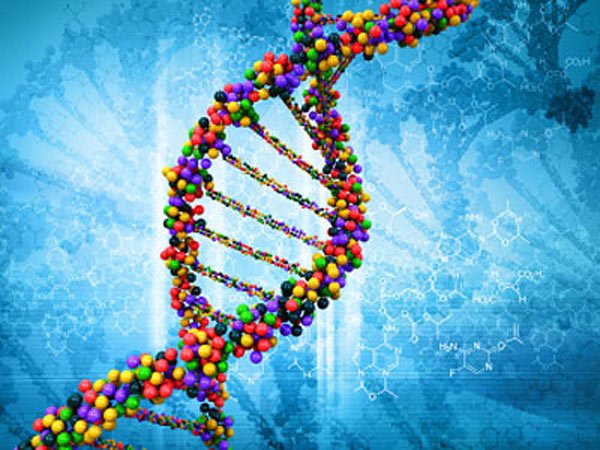
What is the name of the genetic material that is inside the nucleus?
a)
ER
b)
ATP
c)
YOLO
d)
DNA
17.
This organelle takes food and turns it into ENERGY for plant and animal cells.
a)
Chloroplast
b)
Mitochondria
c)
Lysosome
d)
Ribosome
18.
I am the outer most layer of an animal cell. What am I?
a)
cell wall
b)
nucleus
c)
cell membrane 
d)
cell skin
19.
What are tiny organelles that convert glucose into ATP?
a)
Ribosomes
b)
Vesicles
c)
Cytoskeleton
d)
Mitochondria
20.
Where is there a low concentration of dye?
a)
at the bottom of cup
b)
in the color
c)
at the top of cup 
d)
no concenteraion gradient
21.
The picture below is an example of _________________.
a)
osmosis
b)
isotonic
c)
diffusion
d)
active transport
22.
Osmosis is the movement of _____ across a membrane.
a)
food
b)
energy
c)
oxygen
d)
water
23.
During osmosis
a)
water moves from high to low concentration
b)
large or oddly shaped molecules move across a cell membrane
c)
water moves when energy is used
d)
proteins are built
24.
Permeable means
a)
things can pass through
b)
the concentration levels are different
c)
it is permanent
d)
things are stuck
25.

The diffusion of WATER through a semi-permeable membrane is called?

a)

Osmosis

b)

Cell wall

c)

Diffusion

d)

Respiration

26.
What is diffusion?
a)
when molecules move 
b)
when molecules move from a high concentration to a low.
c)
no movement 
d)
molecules move everywhere
27.

Tonicity is

a)

The ability of an extracellular solution to make water move into or out of a cell by osmosis

b)

The ability of an intercellular solution to make water move into or out of a cell by osmosis

c)

The ability of an extracellular solution to make water move into or out of a cell by exocytosis

d)

The ability of an extracellular solution to make sugar move into or out of a cell by diffusion

28.

If the dots represent sugar what direction will the water flow?

a)

Into the cell

b)

Out of the cell

c)

Both equally (equilibrium)

29.

Which best describes the solution the cell is in?

a)

Hypotonic Solution

b)

Hypertonic Solution

c)

Isotonic Solution

30.

What will happen to the cell in the given solution?

a)

Swell up

b)

Shrink

c)

Stay the same

31.

If the % represent % of sugar, what direction will water flow?

a)

Into the cell

b)

Out of the cell

c)

Both equally (equilibrium)

32.

What best describes the solution the cell is in?

a)

Hypotonic Solution

b)

Hypertonic Solution

c)

Isotonic Solution

33.

What will happen to the cell in the given solution?

a)

Swell up

b)

Shrink

c)

Stay the same

34.

What best describes the solution the cell is in?

a)

Hypotonic Solution

b)

Hypertonic Solution

c)

Isotonic Solution

35.

What best describes the solution the cell is in?

a)

Hypotonic Solution

b)

Hypertonic Solution

c)

Isotonic Solution

36.

What best describes the solution the cell is in?

a)

Hypotonic Solution

b)

Hypertonic Solution

c)

Isotonic Solution

37.

What best describes the solution the cell is in?

a)

Hypotonic Solution

b)

Hypertonic Solution

c)

Isotonic Solution

38.

What best describes the solution the cell is in?

a)

Hypotonic Solution

b)

Hypertonic Solution

c)

Isotonic Solution

39.

What best describes the solution the cell is in?

a)

Hypotonic Solution

b)

Hypertonic Solution

c)

Isotonic Solution

40.

What will happen to the cell in the given solution?

a)

Swell up

b)

Shrink

c)

Stay the same

41.

What will happen to the cell in the given solution?

a)

Swell up

b)

Shrink

c)

Stay the same

42.
Define tissue with regards to anatomy
a)
A group of structurally and functionally related cells that come together to perform common functions
b)
Multiple sheets of thin paper used to clean your nose
c)
A series of different cells in the same area
d)
The smallest structural and functional unit of an organism
43.
Cells make up.....
a)
Tissues
b)
Organs
c)
Organ systems
d)
more cells
44.
Which of the following tissues binds everything together?
a)
Epithelial
b)
Connective
c)
Muscle 
d)
Nervous
45.
Which of the following tissues lines the interior and exterior of organs?
a)
Epithelial
b)
Connective
c)
Muscle 
d)
Nervous
46.

Which epithelial tissue has more than one layer of flattened cells?

a)

simple squamous

b)

stratified squamous

c)

transitional

d)

simple columnar

47.

Name the type of epithelium

a)

simple cuboidal

b)

simple squamous

c)

simple columnar

d)

stratified squamous

48.

What type of epithelium lines the air sacs in this slide of lung tissue?

a)

simple cuboidal

b)

simple columnar

c)

simple squamous

d)

pseudostratified columnar

49.
Identify:
a)
Smooth Muscle
b)
Columnar
c)
Transitional
d)
Pseudostratified
50.
Name this tissue
a)
Bone
b)
Cartilage
c)
Blood
d)
Adipose
51.
Name this tissue
a)
Bone
b)
Cartilage
c)
Blood
d)
Adipose
52.
Name this tissue
a)
Bone
b)
Cartilage
c)
Blood
d)
Adipose
53.
How many daughter cells are produced in mitosis?
a)
1
b)
2
c)
4
d)
6
54.
Fruit fly body cells have 8 chromosomes. After mitosis, you would expect a resulting fruit fly daughter cell to have ...
a)
16 chromosomes.
b)
46 chromosomes.
c)
8 chromosomes.
d)
4 chromosomes.
55.
Which of the following cell types is formed by meiosis?
a)
muscle cells
b)
skin cells
c)
sperm cells
d)
blood cells
56.
Which statement correctly describes meiosis?
a)
Cells divide only once.
b)
Meiosis does not occur in reproductive cells.
c)
The cells produced at the end of meiosis are genetically identical to the parent cell.
d)
The cells produced at the end of meiosis contain half the number of chromosomes as the parent cell.
57.
How many times in meiosis does the cell divide?
a)
2
b)
4
c)
3
d)
1
58.
How many daughter cells are produced at the end of meiosis?
a)
1
b)
2
c)
3
d)
4
59.
Why is meiosis important for sexual reproduction? 
a)
It allows the zygote formed from fertilization to have triple the chromosome number of the organism. 
b)
It allows gametes to have twice the original number of chromosomes of the organism.
c)
It allows gametes to have half the original number of chromosomes of the organism.
d)
It allows the zygote formed from fertilization to have half the original number of chromosomes of the organism.
60.
How would the DNA in a horse muscle cell compare with the DNA in a horse sperm cell?
a)
The sperm cell would have twice the DNA as the muscle cell.
b)
The sperm cell would have half as much DNA as the muscle cell.
c)
The sperm cell and muscle cell would contain the same amount of DNA.
d)
The muscle cell would have four times the DNA as the sperm cell.. 
61.
When an area of a chromatid is exchanged with the matching area on a chromatid of its homologous chromosome, _________________ occurs
a)
crossing over
b)
mutagenesis
c)
hybridization
d)
fertilization
62.
Why do we need meiosis?
a)
To double the number of chromosomes going into sex cells
b)
To halve the number of chromosomes going into sex cells
c)
To triple the number of chromosomes going into sex cells
d)
To not change the number of chromosomes going into sex cells
63.
Meiosis makes sperm and egg cells. In humans, sperm and egg cells each have _____ chromosomes. Therefore a fertilized human egg cell (sperm and egg cell combined) would create a cell with _____ chromosomes.
a)
23, 46
b)
46, 23
c)
2, 4
d)
50, 100