wayground logo

Free Printable Worksheets

Font size

S
M
L
XL
Worksheets

Semester 1 Review

Total questions: 130

Worksheet time: 3hrs 36mins
Name
Class
Date
1.
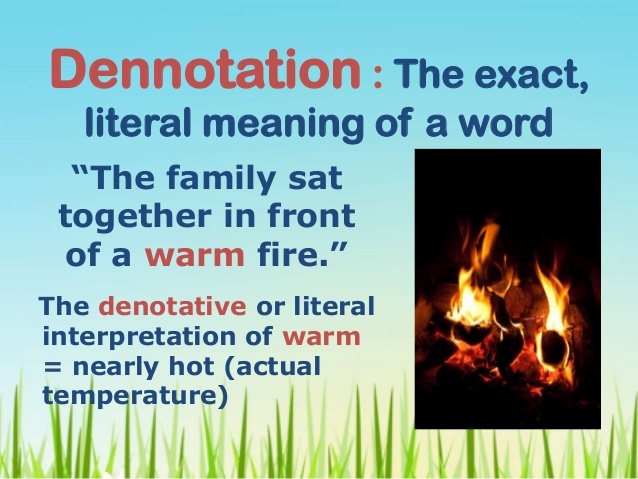
What is connotation?
a)
Connotation implies or suggests a meaning of a word.
b)
Dictionary meaning of a word.
c)
I don't know!
d)
Unknown meaning
2.
What is denotation?
a)
Direct meaning of a word or dictionary meaning.
b)
It means down.
c)
Let me ask my friend
d)
It means to note the word.
3.
Which connotation is MORE negative?
I didn't like the ______ on the jester's face.
a)
grin
b)
smirk
4.
Which connotation is MORE negative?
I ate a ________ sandwich.
a)
moist
b)
soggy
5.
Which connotation is MORE positive?
Some of the monkeys made ______ faces.
a)
amusing
b)
hilarious
6.
Which connotation is MORE negative?
It made me feel _______.
a)
uneasy
b)
frightened
7.
Which connotation is MORE negative?
Mike _______ us to go to the funny house.
a)
nagged
b)
reminded
8.
Which connotation is MORE negative?
We bought _____ souvenirs at the amusement park.
a)
cheap
b)
inexpensive
9.
Which connotation is MORE positive?
Everyone had a _____ on his or her face on the way home.
a)
smile
b)
smirk
10.
Which connotation is MORE positive?
We saw ______ animals in the animal house.
a)
fascinating
b)
weird
11.
Which connotation is MORE positive?
________ people rode on the roller coaster.
a)
Brave
b)
Foolhardy
12.
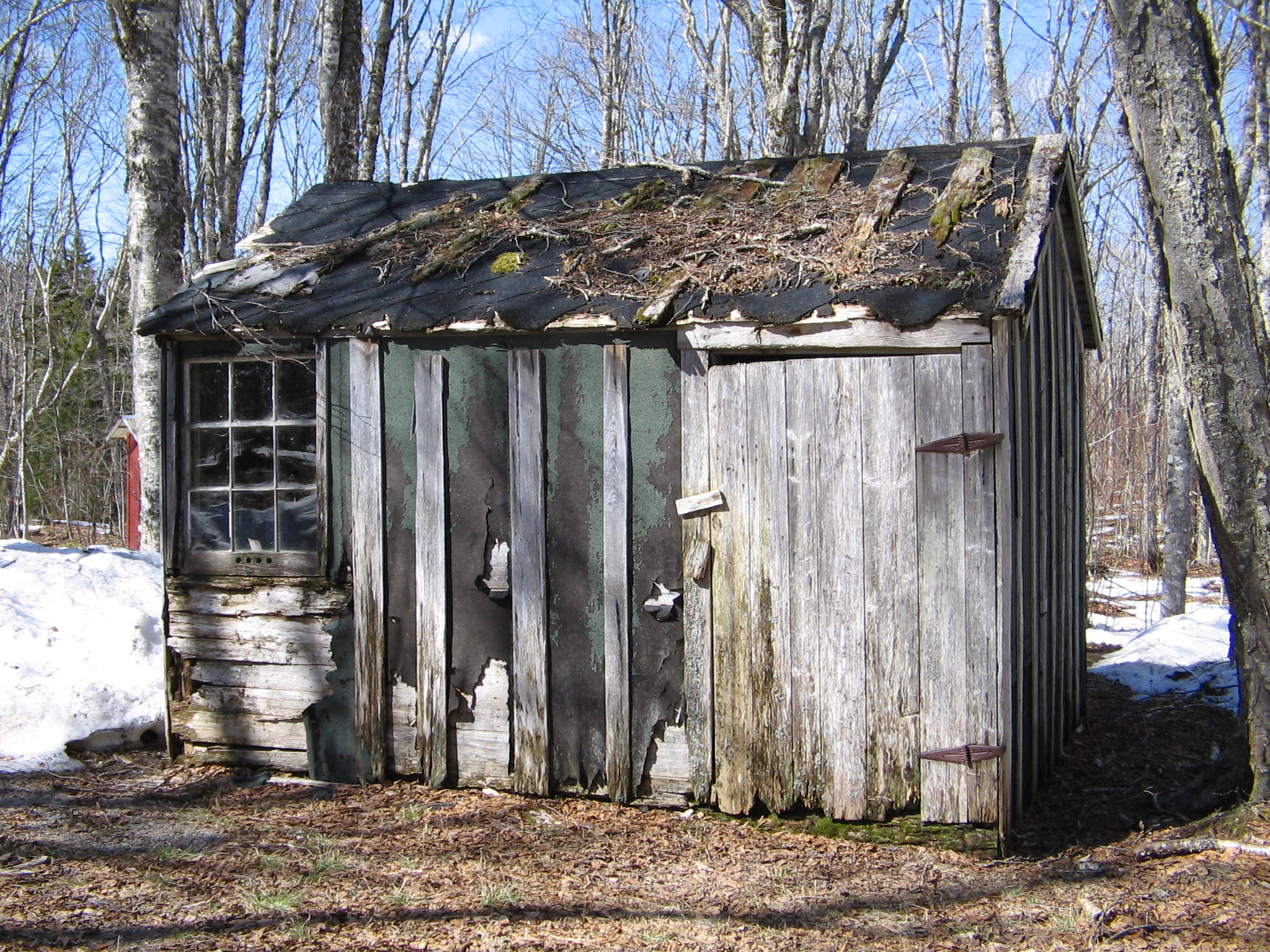
Referring to someone's house as a "shack" would have a __________ connotation.
a)
positive
b)
negative
13.
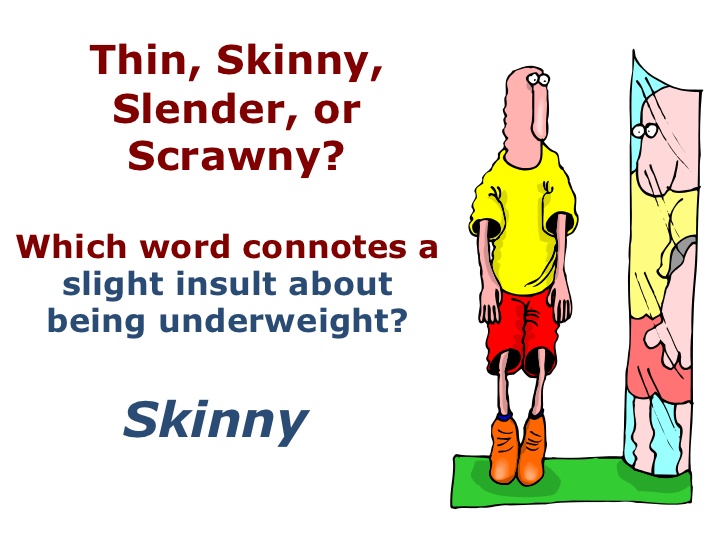
The word scrawny, as in "Jason appeared scrawny," has a _________ connotation.
a)
positive
b)
negative
14.
Choose the word with the positive connotation.
gossip--chat
a)
gossip
b)
chat
15.
Choose the word with the positive connotation.
self-confident--arrogant
a)
self-confident
b)
arrogant
16.
Which word has a positive connotation?
a)
brainwash
b)
persuade
17.
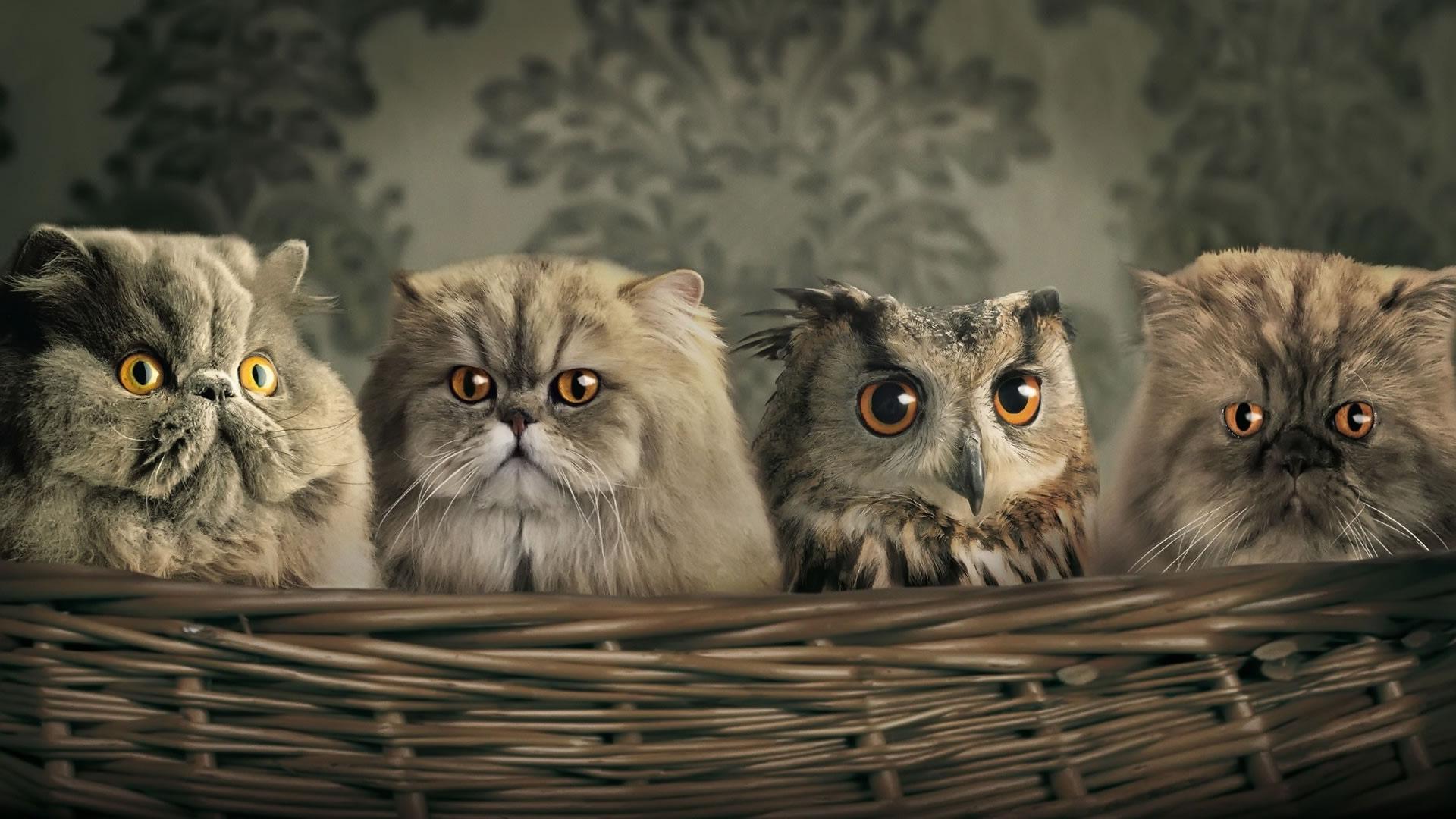
A compliment would be to say that the owl in the picture is...
a)
bizarre
b)
strange
c)
unique
18.
Consider the following sentences. I hear my brother talking on the phone with his girlfriend. I hear my brother chatting on the phone with his girlfriend. How does the connotation of the word chatting in the second sentence convey the author’s purpose?
a)
It implies the conversation is not serious.
b)
It implies that the conversation is funny.
c)
It implies anger or resentment in the conversations.
d)
It implies the conversation is very serious.
19.
Read the sentences and answer the question. Winning by seven strokes, Jordan Speith won the tournament. Winning by seven strokes, Jordan Speith dominated the tournament. How does the connotation of the word dominated in the second sentence convey the author’s purpose? 
a)
It shows that he won by a small margin.
b)
It emphasizes that he easily won.
c)
It implies that he played with arrogance and pride.
d)
It implies that he cheated in order to win.
20.
Read the sentences and answer the question. I gave the most difficult task to Yandy because she is the most stubborn person I know.    I gave the most difficult task to Yandy because she is the most persistent person I know. How does the connotation of the word persistent in the second sentence convey the author’s purpose?
a)
It implies a positive characteristic.
b)
It implies an increasingly negative characteristic.
c)
It implies a careless characteristic.
d)
It implies a playfully irresponsible characteristic.
21.

"It used to be that students through fifth grade could carry cellphones only with special permission. But over the years, an increasing number of parents wanted their elementary-age children to take phones to school. They often believe kids will be safer — walking home or in an emergency — with the device at the ready" (George 5).

What text structure is this?

a)

Description and List

b)

Cause and Effect

c)

Problem and Solution

d)

Compare and Contrast

22.

"Much of the call for paying athletes has come from the popularity of college football and basketball on television, and the money these sports produce. However, most of that money goes back to the universities. It supports both sports and academics" ( Kusler 7). What text structure is this?

a)

Problem and Solution

b)

Description/List

c)

Compare and Contrast

d)

Cause and Effect

23.

"It has a pair of teddy bear eyes, a button nose and a face that looks like a cross between a red panda and a sloth. The Javan slow loris may well be one of the cutest critters on the planet. But what we see as adorable, other animals may interpret as a dire warning" (Bittel 1). Which text structure is this?

a)

Description and List

b)

Sequence

c)

Problem and Solution

d)

Cause and Effect

24.

"Above the main sequence is the region where the red giant and supergiant stars are found. These stars have lower surface temperatures and higher luminosities, ranging from class I through class III. They are larger than main sequence stars" (Encyclopedia of Astronomy 5). What is the text structure?

a)

Sequence

b)

Problem and Solution

c)

Compare and Contrast

d)

Description and List

25.

"Most people who play do not understand exactly why it works. "Spot It!" may be easy to play, but the math behind it is surprisingly complicated. Kirkman's problem and therefore the solution to "Spot It!" lives in the area of finite geometry. Most simply, the game is based on a math fact that two lines on an endless, flat surface will only cross at a single point" ( Smithsonian.com 4). Which text structure is this?

a)

Sequence

b)

Description and List

c)

Problem and Solution

d)

Compare and Contrast

26.

Rules for a gesture drawing:

First: Look at your subject 75% of the time

Second: No erasing

Third: There are no mistakes

Fourth: Use your arm and shoulder more than your wrist

Use different perspectives to find both answers.

a)

Description and List

b)

Problem and Solution

c)

Cause and Effect

d)

Sequence

27.

"These new rules would change the foundation of the game, but baseball needs to catch up. Soccer is growing popular in the U.S. for a good reason: the running clock. Soccer games have constant action. There is a defined starting and ending point to a soccer game — they will always be about two hours long. Many people like the slow pace of baseball, and that it has no time limits. But there’s still a way to make it faster-paced" Use different perspectives to find both answers.

a)

Sequence

b)

Problem and Solution

c)

Compare and Contrast

d)

Cause and Effect

28.

"For example, our sun has a temperature of about 5,700 Kelvin. The unit of temperature measures how fast the tiny particles in each star move. The temperature means the sun is called a G2 star" (Encyclopedia of Astronomy).

a)

Sequence

b)

Cause and Effect

c)

Problem and Solution

d)

Description and List

29.

Hockey and Soccer are much the same and much different. Hockey and soccer are both a sport and both need gear. They are different because you kick a soccer ball and shoot a puck.

a)

Problem and Solution

b)

Cause and Effect

c)

Compare and Contrast

30.

In the U.S. there are many rules. For example in Delaware there are strict trick or treating rules. Also for instance in Topeka, Kansas it is illegal to throw snowballs.

a)

Cause and Effect

b)

Problem and Solution

c)

Description and List

d)

Sequence

31.

How to make slime:

First:mix 1 oz. glue and 1/4 cup of water Add 1/4 cup of

Second: Add Sodium Tetraborate

Last: Stir

What text structure is this?

a)

Compare and Contrast

b)

Sequence

c)

Compare and Contrast

d)

Description and List

32.

Africa and Asia are very much the same and very much different they are both continents and have countries in them. They are different because they are different size and are different names. What text structure is this?

a)

Compare and Contrast

b)

Problem and Solution

c)

Cause and Effect

33.

Tennis and pickleball are the same and different. Tennis and pickleball both use a racket and a ball to hit. They are different because they use a different ball and different racket.

a)

Cause and Effect

b)

Problem and Solution

c)

Compare and Contrast

34.

Identify the type of figurative language:

She started yelling out of the blue.

a)

Idiom

b)

Hyperbole

c)

Metaphor

d)

Personification

35.

Identify the type of figurative language:


The ice gave me a freezer burn.

a)

Metaphor

b)

Idiom

c)

Oxymoron

d)

Assonance

36.

Identify the type of figurative language:


The tsunami raced toward the coastline.

a)

Metaphor

b)

Personification

c)

Idiom

d)

Oxymoron

37.

Identify the type of figurative language:


He was as strong as an ox.

a)

Metaphor

b)

Idiom

c)

Oxymoron

d)

Simile

38.

Identify the type of figurative language:


The plane made a crash landing.

a)

Metaphor

b)

Assonance

c)

Idiom

d)

Oxymoron

39.

Identify the types of figurative language:


She was fairly certain that life was a fashion show.

a)

Simile

b)

Metaphor

c)

Alliteration

d)

Hyperbole

40.

Identify the type of figurative language:


He ran around the camp, got damp, and cramped badly

a)

Alliteration

b)

Assonance

c)

Metaphor

d)

Repetition

41.

Identify the type of figurative language:


The boy buzzed around as busy as a bee

a)

Alliteration

b)

Assonance

c)

Metaphor

d)

Idiom

42.

Identify the type of figurative language:


I'm drawing a blank.

a)

Metaphor

b)

Idiom

c)

Hyperbole

d)

Oxymoron

43.

Identify the type of figurative language:


Hail pounded the houses and streets.

a)

Idiom

b)

Metaphor

c)

Personification

d)

Oxymoron

44.
You can often infer the theme of a piece of literature by ...
a)
evaluating how a character has changed
b)
sharing a character's experience
c)
determining how the conflict has resolved
d)
ALL of the above
45.
Nature's first green is gold,
Her hardest hue to hold.
Her early leaf's a flower; 
But only so an hour.
Then leaf subsides to leaf,
So Eden sank to grief,
So dawn goes down to day
Nothing gold can stay. 
What is the central theme of this poem?
a)
Nature and man
b)
Innocence cannot last
c)
Sunsets and sunrises are beautiful
d)
Nature and beauty
46.
One summer's day, a merry Grasshopper was dancing, singing and playing his violin with all his heart. He saw an Ant passing by working hard to store food for the winter. “Come and sing with me instead of working so hard,” said the Grasshopper “Let’s have fun together.” “I must store food for the winter,” said the Ant,“ and I advise you to do the same.” “Don’t worry about winter, it’s still very far away,” said the Grasshopper, laughing at him. But the Ant wouldn’t listen and continued to work. When winter came, the starving Grasshopper went to the Ant’s house and humbly begged for something to eat. “If you had listened to my advice in the summer you would not now be in need,” said the Ant. “I’m afraid you will have to go without supper,” and he closed the door.
What is the theme?
a)
share with your neighbor
b)
work before you play
c)
be respectful
d)
don't be greedy
47.
During a baseball game, Tanner tried to tag a player leaving first base. When the umpire called the player out, Tanner immediately informed the umpire that he in fact did not tag the runner. Two weeks later, the very same umpire was at another one of Tanner’s baseball games. Tanner was playing short stop and tagged a runner as they approached third base. When the umpire called the player safe, Tanner didn’t say a word, but the umpire noticed the surprised look on Tanner’s face. “Did you tag the runner?” she asked Tanner. When Tanner told her that he did tag the runner, the umpire changed her decision and called the player out. The coaches and parents were furious, but the umpire stood by her decision.
What is the theme?
a)
You should cheat to win.
b)
Always work hard.
c)
It pays to be honest.
d)
Teamwork is best.
48.
The best definition of theme is...
a)
The lesson the author is teaching. 
b)
The message the author is sending.
c)
A word that summarizes the story.
d)
The character's main problem.
49.
Which of the following is an example of THEME?
a)
Carry your laptops with two hands at all times.
b)
Cereal is the healthiest food you can eat.
c)
How much wood a woodchuck could chuck if a woodchuck could chuck wood.
d)
Life is short; make the most of it.
50.
One way you could figure out the theme is to...
a)
Skim through the story
b)
Just read the beginning of the story
c)
Think about what the character has learned
d)
Read the ending of the story
51.
When determining a theme, the reader should first consider...
a)
the illustrations
b)
the subject or topic
c)
the title
d)
the length of the story 
52.
What is true about thematic statements?
a)
It is that same as a subject.
b)
It is the idea the author wishes to convey abut a subject.
c)
It is the same as the moral of the story.
d)
There is only one theme per story.
53.
What text features can give you a clue of what the main idea is?
a)
Title
b)
Headings
c)
Pictures
d)
All of these
54.
What is the best question to ask yourself when you are trying to find the main idea?
a)
Who is the main character?
b)
What is the main event?
c)
What is one important detail?
d)
What point is the author trying to make?
55.
What is the central idea here
A penny for your thoughts?  If it's a 1943 copper penny, it could be worth as much as fifty thousand dollars.  In 1943, most pennies were made out of steel since copper was needed for World War II, so the 1943 copper penny is ultra-rare.  Another rarity is the 1955 double die penny.  These pennies were mistakenly double stamped, so they have overlapping dates and letters.  If it's uncirculated, it'd easily fetch $25,000 at an auction.  Now that's a pretty penny.  
a)
The 1943 penny is worth 50 thousand dollars.
b)
the 1943 penny is more rare than the 1955 penny.
c)
Some pennies are rare and worth a lot of money.
d)
None of these options
56.
What is the Central Idea of the passage?
What's that humming sound?  Could it be hummingbird, the only bird capable of backward flight?  Hummingbirds have many unique flight habits that distinguish them from other birds.  Most birds flap their wings up and down to fly, but the hummingbird moves its wings forward and backward very rapidly in a figure eight pattern.  This allows the hummingbird to hover in position, fly upside down, and move about very rapidly.  And while other birds have to push off with their feet to begin flying, and work their ways up to their top speeds, the hummingbird can both start flying at maximum speed and stop flying instantaneously.  After you've seen a hummingbird in flight, it's unlikely that you'll mistake them for another bird.
a)
Birds and hummingbirds are very different.
b)
Hummingbirds make a humming sound.
c)
Hummingbirds wings fly in figure eight patterns.
d)
The hummingbird flys in a totally unique and unusual way.
57.
Microchips provide the power for wristwatches. They are also the brains in our computers, and they control robots. These chips are used in video games and space shuttles. They make our cameras, radios, and televisions small and light.
What is the story mainly about?
a)
How computers work
b)
Why televisions are small
c)
How microchips are used
58.
Soccer players learn many skills when playing soccer. Soccer players learn how to dribble and pass the ball. They also learn how to control the ball so they can eventually score. Most importantly, soccer players learn how to work together with their teammates.
What is the central idea?
a)
They also learn how to control the ball so they can eventually score.
b)
Soccer players learn how to dribble.
c)
Soccer players learn many skills when playing soccer.
59.
Though forks were first used in China thousands of years ago, it took a long time for them to make their way to what is now the United States. 
Ancient Greeks began using forks after the Chinese. However, they did not use forks for eating. They used them for serving food. From Greece, forks moved to the Roman Empire. Romans first used long forks for cooking and serving. By the 300s, they began using table forks to feed themselves. 
The table fork spread from there to what is now the Middle East and Turkey, before arriving in Italy and becoming popular in the 1000s. It stayed popular in southern Europe, but was not used much in northern Europe until it first became popular in France and Spain in the 1700s. 
The table fork arrived in England from France before making its way to the North American colonies, where it first became popular shortly before the American Revolution.
a)
The fork changed after arriving in the Roman Empire.
b)
Roman forks were longer than Greek and Chinese forks.
60.
“The rain forest is home to many creatures. Monkeys, toucans and macaws live in the rain forest. Butterflies and anteaters also live in the rain forest.”
What is the central idea?
a)
Sloths and tapirs are other creatures that live in the rain forest.
b)
The rain forest is home to many creatures.
c)
Monkeys, toucans and macaws live in the rain forest.
61.
Native Americans dried strips of meat, pounded it into a paste, and then mixed it with fat. Sometimes they added berries and sugar. Then they pressed it into small cakes. They called these cakes pemmican. Pemmican didn't spoil, and it provided lots of energy for people traveling or going hunting. 
This passage is mainly about?
a)
who uses pemmican today
b)
what can be put into pemmican
c)
how pemmican was made by Native Americans
62.
Most people think that gorillas are mean, but actually they are shy. It seems that such a huge animal with very large teeth would be aggressive. Hollywood movies help convey this image of the scary, ferocious gorilla. In fact, gorillas only attack if they are provoked. 
This author belives that:
a)
Gorillas are misunderstood as vicious animals.
b)
Gorillas are mean animals
c)
Gorillas don't like other animals.
63.
Were you born after 1985? If so, how long do you expect to live? most people born after 1985 can expect to live more than 70 years. Of course, this is just a guess based on past records. 
What is this passage mostly about?
a)
why people live to be 70
b)
how long your might expect to live
c)
past records give you information
64.
"Are you already done?" his father asked. "It seems like you just got in the water." Jacob was finished with his bath in two minutes. He got his body and hair wet, rubbed  shampoo on his hair, washed his body with soap, and rinsed off. He liked fast baths so to have more time to play. In fact, Jacob never took a long bath. To him, the faster the bath, the better.
What is the central idea of the passage?
a)
Jacob is very clean
b)
Jacob never too showers
c)
Jacob likes to take fast baths
65.

Do you ever wonder how you taste things? You owe your sense of taste to your taste buds. We have 9,000 taste buds just on the tongue alone. There are also taste buds on the roof of your mouth. You even have taste buds on the back of your throat.

What does the author want you to learn about the passage?

a)

Why we can taste only sweet things.

b)

that we taste through our nose

c)

Taste buds are found in different places.

66.

Because lambs are sometimes eaten by coyotes, ranchers may hunt or trap the coyotes. However, killing coyotes may upset nature's balance. Scientists have found a way to protect sheep without killing coyotes. Coyotes are fed lamb meat treated with a drug. When they eat the meat, they get sick. Later, coyotes won't even go near lambs. They'll hunt rabbits instead.

This story mainly tells.....

a)

Coyotes prefer rabbits to lambs.

b)

Killing coyotes upsets nature's balance.

c)

Scientists are trying to protect sheep and coyotes.

67.
Find the central idea
 Being a clown isn't all fun and games.  Rodeo clowns expose themselves to great danger every time they perform.  When cowboys dismount or are bucked off of bulls at riding competitions, rodeo clowns jump in front of the bulls and motion wildly to get their attention.  In this way rodeo clowns provide an alternate target, and in doing so protect the rider.  So you see, sometimes clowning around can be serious business
a)
Being a clown isn't all fun and games.
b)
Rodeo clowns protect cowboys by putting themselves in danger.
c)
Rodeos are exciting.
d)
Clowns are good at riding bulls.
68.
Excerpt from: Frost’s Laws and Bylaws of American Society (#2)
By: Sarah Annie Frost
The gentleman of the house offers his arm to the lady most honored amongst the guests, the gentleman most distinguished offers his arm to the lady of the house.
Q: The gentleman of the house offers his arm to whom?
a)
the lady of the house
b)
the eldest female at the party
c)
the eldest daughter of the house
d)
the most distinguished female guest
69.
Excerpt from: Home Emergencies
By: Carole Jenkins
(1)Many people have never thought about what they would do when faced with a home emergency, such as a tornado, a hurricane, or a fire. (2)People get scared and don't act right. (3)Being prepared in case of emergencies can reduce the risk of danger and prevent panic should emergencies occur.
Q: 
 The passage suggests that being prepared in case of an emergency is important because
a)
it is a law that all families have an emergency plan..
b)
forest fires can become dangerous in a matter of seconds.
c)
many people do not own a battery operated radio in their home.
d)
it prevents chaos and risk of injury in the event of an emergency.
70.
Excerpt from: Telemarketing Calls
Are You Getting Telemarketing Calls You Don’t Want?
Here’s How to Stop Them.

The Federal Trade Commission (FTC) launched the National Do Not Call Registry to give Americans a choice about getting telemarketing calls at home. According to a recent Harris Interactive poll, 92 percent of people who reported placing a number on the registry said they are receiving fewer calls; a total of 78 percent said they’re getting ‘far fewer calls’ or none at all.

Q: What can the reader infer from paragraph 1?
a)
The DO NOT CALL Registry costs the government a lot of money.
b)
The DO NOT CALL Registry has been somewhat successful for its intended purpose.
c)
The DO NOT CALL Registry should have been implemented years earlier.
d)
The DO NOT CALL Registry has had no significant impact on telemarketing calls.
71.
Excerpt from: I Have a Dream (2)
Martin Luther King, Jr.
It would be fatal for the nation to overlook the urgency of the moment. This sweltering summer of the Negro's legitimate discontent will not pass until there is an invigorating autumn of freedom and equality. Nineteen sixty-three is not an end, but a beginning. Those who hope that the Negro needed to blow off steam and will now be content will have a rude awakening if the nation returns to business as usual. There will be neither rest nor tranquility in America until the Negro is granted his citizenship rights. The whirlwinds of revolt will continue to shake the foundations of our nation until the bright day of justice emerges.
Q: 
 What significant theme topic from American literature is present in this speech?
a)
physical force
b)
freedom of speech
c)
struggle for justice
d)
patriotism for American
72.
Excerpt from: Best Friends
Elizabeth Kibler

Lauren and Claudia embraced each other and said goodbye.
Q: What is a synonym for the word embraced?
a)
groaned
b)
 hugged 
c)
sighed
d)
 sobbed
73.
Excerpt from: The Great Blue Hole
By: Rebecca Sparling
The poor water circulation inside most blue holes makes them anoxic. This means that oxygen levels are extremely low at certain depths. The unfavorable environment makes it difficult for marine plants and animals to survive, but large numbers of bacteria seem to flourish in these holes. Some divers claim to spot the occasional shark in the deeper parts of the hole where the water is much clearer. Explorers and scientists believe that a series of underwater tunnels might connect the hole to the mainland. The hazards of exploring such a network make this theory difficult to verify.
 
Q: In this passage the word verify means
a)
invest 
b)
locate
c)
 protect 
d)
prove
74.
What is plagiarism?
a)
the practice of taking someone else's work or ideas and passing them off as one's own.
b)
putting something in your own words
c)
summarizing
d)
quoting
75.
What does it mean to paraphrase?
a)
the practice of taking someone else's work or ideas and passing them off as one's own.
b)
to put someone else's word in your own words
c)
to quote
d)
none of the above
76.
Water from California’s northern mountains is pumped south along a 400-mile canal through the farming communities of the Central Valley. Not only is this canal system a marvel of modern engineering, its water fuels the state’s economic engine. In 2006, these farms produced $31 billion-worth of food and fiber, more than any other state. By contrast, world-wide ticket sales of Hollywood movies, a more famous export of California, totaled $25 billion that year.
What inference can the reader make from this paragraph?
a)
The author thinks it is more important to eat than go to movies.
b)
Water is a precious resource and shouldn't be wasted on making movies.
c)
The writer thinks moving water to the Central Valley is a good investment.
d)
The movie industry is more important to California than farming.
77.
When I was ten years old, I had to arrive home by 8 o'clock in the evening. When I was thirteen years old, I had to arrive home by 8 o'clock in the evening. When I was sixteen years old, I had to arrive home by 8 o'clock in the evening. Shortly after my sixteenth birthday, I decided that I was going to ask my mom if I could get a car, but I never went through with it. Knowing how my mother would respond, I was reluctant to ask her such a question. So, rather than ask her if I could get a car, I decided to start out smaller and ask her why I had to be home so early in the evening.   I built up my courage, walked into the living room, and asked her. She answered the same way she answered the majority of my questions, "rules are rules." From the point of view of a sixteen-year-old who grew up in a fairly sheltered environment, her logic was flawless. Things are the way they are because that's the way they are.   As I grew older, her logic became less convincing, and "rules are rules" held less sway over me. Surely, my mom knew that it would happen, that I would break from her rules and strike out on my own. After all, she is the person who encouraged me to go to a college that's halfway across the country from my hometown. I'm certain that she knew that I would exercise my newfound freedom when I arrived there, but I don't think she could have imagined how far I would take that freedom.  
Which of these is an inference that can be supported by the passage above
a)
The author of this passage got into trouble with the police.
b)
The author of this passage has graduated from college.
c)
The author of this passage was raised by a strict mother.
d)
The author of this passage does not like his or her mother.
78.
Which of these is an inference that can be supported by the passage above? Tony was delighted to see the pavement disappearing under the attack of the bulldozers. The more park, the better, he thought. His delight gradually turned to concern, however, when it became clear that the construction workers were also laying the forms for new pavement, much more pavement than had been there before.  
Which of the following can you infer from the passage above?   
a)
Tony was in the construction business.
b)
Tony enjoyed spending time in the park.
c)
 Tony was an avid environmentalist.
d)
Tony was in the construction business.
79.
The launch of the space shuttle Atlantis has been postponed while NASA evaluates a problem with the new robot arm on space station Alpha. The arm will be used to carry out the installation of a new U.S.-built airlock on the space station.

What can you infer from this paragraph? 
a)
The robot space arm is critical to the space shuttle's mission.
b)
The robot arm was poorly constructed.
c)
The space shuttle experiences frequent launch delays.
d)
The space program is very expensive.
80.
Dr. Martin Luther King, Jr. was a preacher and a civil rights leader. He was born in 1929 and died in 1968. In 1963, he organized the March on Washington, which brought more than 200,000 people together. In 1964, he was awarded the Nobel Peace Prize.
 In 1968, he was shot and killed in Memphis, Tennessee, by an assassin's bullet on the balcony of the motel where he was staying. James Earl Ray was convicted of his murder.


Which of the following can you infer from the passage above? 
a)
Dr. Martin Luther King, Jr. was a major political figure in the 1960s.
b)
James Earl Ray was a racist man.
c)
Dr. Martin Luther King, Jr. was a great public speaker.
d)
Memphis, Tennessee is an extremely dangerous city.
81.
Chip grabbed a bagel on his way out the door. "See you this afternoon," he yelled to his dad, who was getting ready to go to work.
 "Got everything you need?" his dad asked.   "Yep, it's all in here," Chip said, pointing to his backpack.   "Good luck on that English test," his dad said.   "I'll need it!"

Where is Chip going? 
a)
to his friend's house
b)
to band practice
c)
to school
d)
to the library
82.
Jill couldn't believe it was only June 15th. All of her friends from school had taken summer jobs, she didn't have brothers or sisters, and after a couple of weeks, television made a very poor companion. She had already finished three books and started a fourth, a great mystery that only made her more desperate to have something to do. Jill decided it was time for her to find something to do.

Which of the following can you infer from the passage above? 
a)
Jill will be bored for the rest of the summer.
b)
Jill is a very lazy person.
c)
Jill will look for a job.
d)
Jill hates the summers.
83.
I love to go into my sister's room. On her shelf she has shiny trophies—gold and silver, tall and short, skinny and wide. All of the trophies have athletes on top swinging golf clubs. My favorite trophy is one that is as tall as my arm is long. "City Champion 2001" it says on its engraved front. It is beautiful and impressive!
What inference can the reader draw based on the information in the passage? 
a)
The person relating the passage is a younger sister.
b)
The sister is a very good golfer.
c)
The person relating the passage plays golf also.
d)
The sister is a professional golfer.
84.
Tiffany has always been really good at drawing. Her mother used to hang her pictures up on the refrigerator, but Tiffany’s pictures soon covered it. Then her mom started keeping her drawings in scrapbooks.   “You could make a career as a visual artist,” her mom said. “Why don’t you sign up for an art class?”   Although she was reluctant to let anyone outside her family see her work, Tiffany added art to her high school schedule. Within a few months, the students began painting. She decided to do a watercolor portrait inspired by her family’s trip to Africa last summer. I loved all the grass on the savannah, Tiffany thought. If I mix these two colors, I’ll have the perfect green.   She worked on her painting for hours, but it was worth it. Everyone in class loved her watercolor painting, especially her art teacher, Mrs. Sloan.   “You have so much potential, Tiffany,” Mrs. Sloan said. “You would be a great candidate for the Young Artist Development Program this summer.” She gave Tiffany an application and told her to take it home for her parents to fill it out.   After school, Tiffany was both excited and nervous. “I was really afraid to try painting at first, but now I love it,” Tiffany said. “I can’t wait to get home to show Mom my latest masterpiece! She’ll probably put this one in a frame.”
Which of these books would Tiffany enjoy reading based on the passage?
a)
a book on how to stay cool outdoors in the summer
b)
a book about great women athletes in history
c)
a book on how to write an interesting biography
d)
a book about great twentieth-century artists
85.
“I can’t believe Emily’s going to be here!” Maria squealed with glee as she jumped up and down in her room. Her favorite singer was performing at a local theater this weekend.  The show will cost $15, and I really want to go with all my friends, she thought. But I don’t get paid until the Monday after the concert. Suddenly, Emily coming to town didn’t seem so exciting after all.  Maria had been working as a cashier at the local supermarket on weekends and sometimes after school. The past few months she had been saving her paychecks to buy her father a good birthday present. Dad always complained that he never gets gifts as good as Mom’s on his birthday, Maria thought. She had asked him what he wanted and had saved up enough money to buy the cordless drill set. Maria couldn’t wait to see his face when he opened the gift on his birthday, which was also Monday.  Maria decided to ask her mom for advice. “I could borrow money to pay for the concert from my savings, but then I won’t be able to buy Dad’s gift this weekend,” she said. “I could get him something else, but what if he doesn’t like it?”  “Well, honey, what do you think you should do?” her mom responded after Maria told her the problem.  “I’m not sure, Mom. Who knows when Emily will come back to town again?” she replied. “This could be my only opportunity to see her in  mom said, “Looks like you have a tough decision to make, but think about what your father would do if the tables were turned.” She patted Maria on the shoulder before she walked out the room.  A couple of months before her birthday every year, Maria’s father would always start asking questions to get an idea about what to get her. He always gets me exactly what I ask for on my birthday, she thought. Dad deserves the same special treatment.  Maria grabbed her purse and headed to the shopping center.  
Which of these can be inferred from the last sentence in the passage? 
a)
Maria is going to ask her mom to buy her dad the drill.
b)
Maria is going to the concert and will tell her dad she forgot his birthday.
c)
Maria is on her way to buy her dad's birthday present.
d)
Maria is on her way to buy her and her friends concert tickets.
86.
1.  A force working against the main character is called the
a)
antagonist
b)
minor character
c)
protagonist
d)
foil
87.
The central character or hero in a narrative or a drama is called the
a)
antagonist
b)
protagonist
c)
minor character
d)
foil
foil
88.
 A character that changes is referred to as 
a)
static
b)
dynamic
c)
flat
d)
triangular
89.
 A ________ character is typically also a static character is typically
a)
round character
b)
flat character
c)
protagonist
d)
real character
90.
 A __________ character is typically also a dynamic character.
a)
round character
b)
flat character
c)
protagonist
d)
real character
91.
 When an author includes specific character descriptions (either through the characters   or the narrator), this is an example of which type of characterization?
a)
direct characterization
b)
indirect characterization
c)
realistic characterization
d)
dynamic characterization
92.
 When an author reveals character traits through the use of dialogue and character actions but does not state specific traits of a character, this is an example of which type of characterization?
a)
direct characterization
b)
indirect characterization
c)
realistic characterization
d)
dynamic characterization
93.
  When Georgie says, “I’m gonna’ learn Robin to read”, his misuse of the word “learn” is an example of….
a)
symbolism 
b)
tone
c)
mood
d)
dialect
94.
“What would you do if you could fly?" Mrs. V asks as she glances from the bird to me.
"Is that on the quiz?" I ask, grinning as I type.
"I think we've studied just about everything else." Mrs. V chuckles.
"I'd be scared to let go," I type.
"Afraid you'd fall?" she asks.
"No. Afraid it would feel so good, I'd just fly away.”
― Sharon M. Draper, Out of My Mind
a)
First Person
b)
Second Person
c)
Third Person Limited
d)
Third Person Omniscient
95.
"Leslie sat in front of Paul. She had two long, brown pigtails that reached all the way down to her waist. Paul saw those pigtails, and a terrible urge came over him. He wanted to pull a pigtail. He wanted to wrap his fist around it, feel the hair between his fingers, and just yank." Sideways Stories From Wayside School, Louis Sachar
a)
First Person
b)
Second Person
c)
Third Person Limited
d)
Third Person Omniscient
96.
“Sometimes you do have to laugh to keep from crying. And sometimes the world feels all right and good and kind of like it's becoming nice again around you. And you realize it, and realize how happy you are in it, and you just gotta laugh. ”
― Jacqueline Woodson, Peace, Locomotion
a)
First Person
b)
Second Person
c)
Third Person Limited
d)
Third Person Omniscient
97.
“It all began when Ms. Frizzle showed our class a film strip about the human body.  We knew trouble was about to start, because we knew Ms. Frizzle was the strangest teacher in the school.” The Magic School Bus: Inside the Human Body, Joanna Cole and Bruce Degen
a)
First Person
b)
Second Person
c)
Third Person Limited
d)
Third Person Omniscient
98.
“Life is where you sleep and what you see when you wake up in the morning, and who you tell about your weird dream, and what you eat for breakfast and who you eat it with. Life isn’t something that happens to you. It’s something you make yourself, all the time.”
― Rebecca Stead, Goodbye Stranger
a)
First Person
b)
Second Person
c)
Third Person Limited
d)
Third Person Omniscient
99.
“He did not go much further, but sat down on the cold floor and gave himself up to complete miserableness, for a long while. He thought of himself frying bacon and eggs in his own kitchen at home - for he could feel inside that it was high time for some meal or other; but that only made him miserabler.”
― J.R.R. Tolkien, The Hobbit
a)
First Person
b)
Second Person
c)
Third Person Limited
d)
Third Person Omniscient
100.
The girl stopped and looked as if she might pull back in surprise, but instead stood regarding Montag with eyes so dark and shining that he felt he had said something quite wonderful.  But he knew his mouth had only moved to say hello.  "Do you mind if I ask? How long've you worked at being a fireman?" the girl asked.  "Since I was twenty, ten years ago," said Montag. They walked farther and the girl said, "Is it true that long ago firemen put fires out instead of going to start them?" "No," Montag replied, "houses have always been fireproof, take my word for it," but the girl knew this was not true. Fahrenheit 451 by Ray Bradbury
a)
First Person
b)
Second Person
c)
Third Person Limited
d)
Third Person Omniscient
101.
“There is a curious comfort in letting go. After the agony, letting go brings numbness, and after the numbness, clarity. As if I can see the world for the first time, and my place in it, independent of you, a whole vista of what may be. Even if it is not grand or inspiring, it is real and solid, unlike the fantasy I've built around you. I will do this.
I will triumph over you.”
― Julie Berry, All the Truth That's in Me
a)
First Person
b)
Second Person
c)
Third Person Limited
d)
Third Person Omniscient
102.
“Ozma took the arm of her hostess, but Dorothy lagged behind.  When at last she rejoined Glinda and Ozma in the hall, she found them talking earnestly about the condition of the people, and how to make them more happy and contented– although they were already the happiest and most contented folks in all the world.  This interested Ozma, of course, but it didn’t interest Dorothy very much, so the little girl ran over to the big table on which was lying open Glinda’s Great Book of Records.” Ozma of Oz by Frank L. Baum
a)
First Person
b)
Second Person
c)
Third Person Limited
d)
Third Person Omniscient
103.
“The next morning, Mr. Sir marched the boys to another section of the lake, and each boy dug his own hole, five feet deep and five feet wide. Stanley was glad to be away from the big hole.  At least now he knew just how much he had to dig for the day.  And it was a relief not to have other shovels swinging past his face, or the Warden hanging around.” Holes by Louis Sachar
a)
First Person
b)
Second Person
c)
Third Person Limited
d)
Third Person Omniscient
104.
Congress put a tariff on overseas goods so the price would not be lower than domestic products.
a)
stamp
b)
prohibition
c)
ad
d)
tax
105.
The scared rock climber balanced precariously on the edge of the cliff.
a)
gracefully
b)
lazily
c)
dangerously
d)
hopefully
106.
We often travel to New England in the autumn to see the bright colors of the fall foliage.
a)
hurricane
b)
plays
c)
snow
d)
leaves
107.
Each student was allotted two tickets to the dance.
a)
allowed
b)
joyful
c)
taken
d)
fed
108.
The mood was somber at the funeral of the former president.
a)
shyly
b)
serious
c)
hungry
d)
plenty
109.
The country cottage was just outside the quaint and picturesque town.
a)
charming
b)
running
c)
ruined
d)
perhaps
110.
When he didn't understand the instructions, the student asked the teacher to clarify them.
a)
remove
b)
call
c)
explain
d)
stop
111.
The impudent boy was rude to the policeman.  
a)
handsome
b)
carefully
c)
poor
d)
bold
112.
The lost campers sweltered in the heat of the desert sun. 
a)
ate
b)
burned
c)
slept
d)
sunbathed
113.
Cold rain fell all day, making it a dismal Saturday afternoon.
a)
gloomy
b)
red
c)
shining
d)
fun
114.
What is a narrative?
a)
A story
b)
Poetry
c)
A biography
d)
A research project
115.
_________________ means the time and place in which the events happen in a story.
a)
Chronological order
b)
Setting
c)
Dialogue
d)
Transition words
116.
True or False. Descriptive words are important because they add detail to the story.
a)
True
b)
False
117.
Dialogue is 
a)
Action at the end of the story
b)
The conversation between characters
c)
Authors point of view
d)
Chronological order
118.
What is the purpose of a narrative?
a)
To give the reader information
b)
To persuade readers
c)
To tell a story
d)
To describe characters
119.
True or False.  It is a good idea to "hook" reader at the beginning of the story.
a)
False
b)
True
120.
An example of a sensory detail is
a)
Rattling thunder and lightening flashes
b)
Talking
c)
A magic wand
d)
Happy
121.
True or False.  A narrative must have characters.
a)
True
b)
False
122.
The person telling the story.
a)
Narrator
b)
First Person Point of View
c)
Third Person Point of View
d)
Narrative Writing
123.
The end of the story; brings the story to a satisfactory close.
a)
Falling Action
b)
Resolution
c)
Climax
d)
Exposition 
124.
The story is told by one of the characters - usually the protagonist. 
a)
Third Person Point of View
b)
Narrator
c)
Narrative
d)
First Person Point of View
125.
The turning point of the story where the main conflict is decided one way or another.
a)
Falling Action
b)
Climax
c)
Conflict
d)
Exposition
126.
Opening of the story; author describes the setting, gives background info & intros characters.
a)
Narrator
b)
Conflict
c)
Exposition
d)
Setting
127.
The struggle between opposing forces; the problem handled by the main character.
a)
Conflict
b)
Climax
c)
Rising Action
d)
Resolution
128.
The time and place in which a story happens.
a)
Exposition
b)
Setting
c)
Conflict
d)
Climax
129.
The author describes the conflict or problem the characters must face; tensions rise.
a)
Climax
b)
Conflict
c)
Falling Action
d)
Rising Action
130.

Why is it important to use transition words/phrases in our narrative essays?

a)

To confuse the reader

b)

We don't need to use transition words in a narrative essay

c)

I have no idea

d)

It helps make the sequence of events make sense/ go in order