
 Worksheets
Midterm Review
Total questions: 100
Worksheet time: 1hrs 28mins

Which of the following were negative effects of the Columbian Exchange?
The spread of disease killed millions of indigenous people in the Americas.
Agriculture spread to more regions.
Failure to enslave Native Americans led to the Atlantic slave trade which lasted 300 years
Europeans established global trade networks that brought maize to Europe, chili peppers to India, and wheat to the Americas.
Europeans turned to African slaves after Native Americans died off from diseases like small pox, measles, and malaria.
True
False
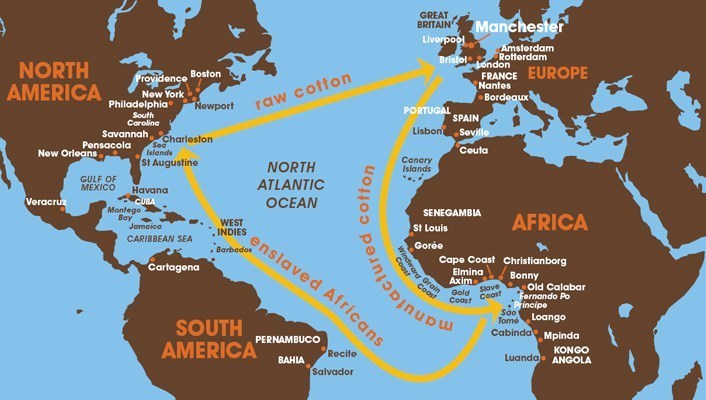
What was the journey from Africa to the New world called?
Old Passage
New Passage
Middle Passage
Slave Passage
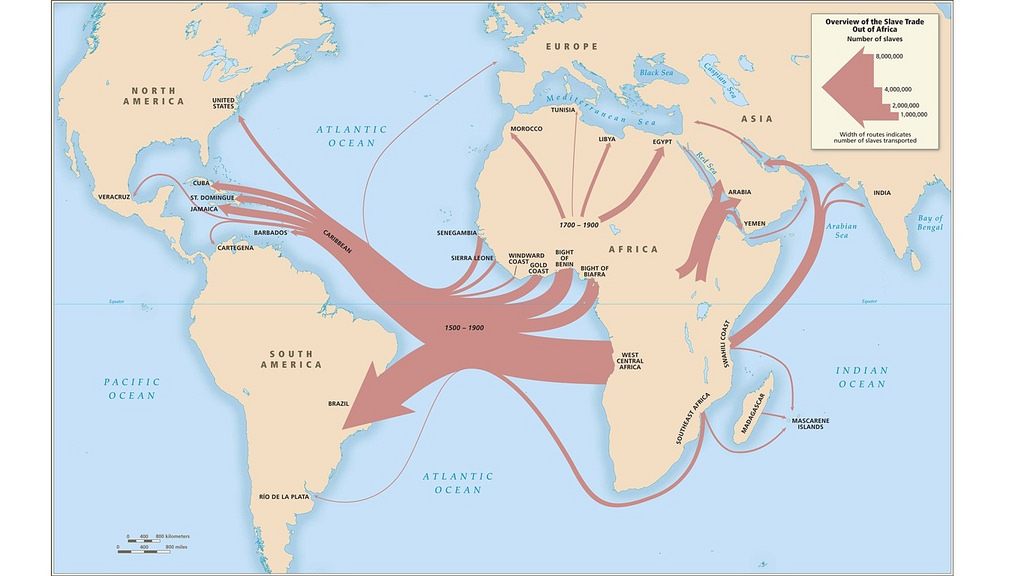
According to this map, most African slaves were brought to
North America
South America
Europe
Asia
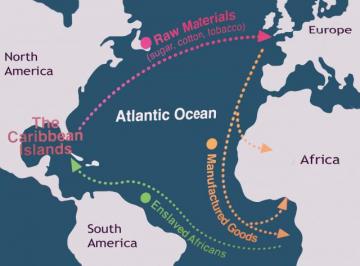
Which of these events happened first?
Europeans traded manufactured goods with African rulers who captured slaves and sold them to Europeans
Europeans tried to enslave Native Americans, but many died from Old world diseases
Slaves were transported to the New World to work on plantations (huge farms)
What happened to the population of many indigenous Americans due to Europe's invasion and colonization of Latin America?
The population decreased significantly due to diseases and warfare
The population increased significantly due to diseases and warfare
The population didn't change much
The population increased significantly due to the new crops and animals
What does indigenous mean?
the native people of a given place
the people who colonize a new place
What is an export?
the sending of goods to another country
the receiving of good fro another country
using goods from another country
bringing tobacco into the colonies
Enslaved people were brought to the New World (The Americas) to work on _________
Plantations to cultivate natural resources
Factories to produce finished products
building ships for trade
becoming traders of furs

The __________ colonies' economy depended on slave labor.
New England
Southern
Middle
Mercantilism was...
selling finished products to a colony
Trading with the french and Spanish to help make an empire rich
Had nothing to do with trade
Taking natural resources from the colonies to fund an empire
What items were exported from the Americas during the Triangular Trade?
Finished products like textiles, rum, and manufactured goods
African Slaves
Raw goods like tobacco, sugar cane, and cotton
Roman Catholic Missionaries
What was the major export from Africa during the Triangular Trade?
Raw Goods like cotton and sugar cane
Enslaved people
Finished products like textiles and rum
Roman Catholic Missionaries

Why did the English settle Jamestown?
To drive the Spanish out of the area
To drive the French out of the area
To trade with Native Americans
To make a profit to compete with other European countries

For what reason did the colonists settle in Plymouth?
To trade with Native Americans
To make a profit
To seek religious freedom
To drive the French out of the area

When the contract ended for an indentured servant, the indentured servant ___.
becomes a slave
must return to Europe
is free to do what he wants
must work without pay for an additional 4 years.
gets a plot of land and some tools if that is part of the contract
Mistreatment of an individual or group of individuals as a response to their religious beliefs.
Contentment
Possessed
Persecution
This word means relating to money
Social
Civics
Economic
This word means people interacting with each other
Social
Civics
Economics
This word means relating to government, laws, and rights
Social
Political
Economics
Which of the following statements are true about indentured servitude and slave labor?
Indentured servants had a set time they worked, while slavery lasted a person's whole life
Indentured servants came from Africa only, while slave labor was found in the Americas
Indentured servants gave their consent to work for someone, while enslaved people were forced into it
Indentured servants had rights, while enslaved people did not
Which of the following were positive effects of the Columbian Exchange?
New foods helped people become healthier and populations increase
Knowledge, culture, and religion were shared
European countries colonized the Americas and funded their empires
Disease was shared and led to the death of many people who did not have immunity
Cash crops, such as tobacco and rice, were grown primarily in this region:
New England
Middle
Southern
Which of the following are true of colonial legislative bodies?
Colonies were under the authority of the British government
Distance allowed colonists to govern themselves as long as they stayed within the boundaries of English law
White, landowning males of age could vote for representatives
The British government left the colonies alone to govern themselves as long as they were earning money through mercantilism
Who is responsible for your education, choices, actions?
Me
My teachers
My parents
My principals
This law restricted colonists from moving past the Appalachian Mountains because Native Americans were attacking English settlers.
The Townshend Acts
The Intolerable Acts
The Proclamation of 1763
The Declaratory Act
This law placed a tax on all printed material in the colonies including wills, contracts, newspapers, and playing cards.
The Declaratory Act
The Stamp Act
The Intolerable Acts
The Coercive Acts
This act stated colonists must be responsible for housing and provisions for British soldiers.
The Quebec Act
The Stamp Act
The Declaratory Act
The Quartering Act
These acts placed a tax only on imported goods like paper, glass, tea, and lead.
The Intolerable Acts
The Coercive Acts
The Townshend Acts
Writs of Assistance
What was the COLONIAL name for the acts that closed Boston Harbor, banned town meetings, and other harsh penalties following the Boston Tea Party protest?
The Coercive Acts
The Townshend Acts
The Intolerable Acts
The Proclamation of 1763

Militia means....
taking no side
a military force made up of ordinary citizens
a group of Native American nations in eastern North America joined together under one general government
partnership

Why did Britain seek to tax the colonists in the 1760s?
The colonists were wealthier than most British citizens.
Britain needed money to pay their debt from the French and Indian War.
The British wanted to punish the colonists for rebelling against the Proclamation.
Britain needed money to protect the colonists from the French.

(usually biased) Ideas and information designed to help or harm a cause
Propaganda
Debate
Newspaper
Political Cartoons

This rendering of the events on March 5, 1770 is considered ____________ by some because it is biased and only shows one perception of the Boston Massacre.
propaganda
historical
fallacy
fact
Which well-known Patriot represented the British soldiers in a trial after the Boston Massacre because he wanted to prove that even a British soldier could get a fair trial in America.
Sam Adams
John Hancock
Paul Revere
John Adams

What is the connection between natural rights and government?
government is meant to provide services
people have the right to alter government
people have certain unalienable rights
government is meant to protect peoples' natural rights
The men who signed the Declaration knew that it was a dangerous thing to do. If the war was lost they could be tried for treason. What is treason?
helping your country win a battle
disagreeing with your king
betraying your country
What are unalienable rights?
Rights that government cannot take away
Rights that government takes away
rights for aliens
Government is needed to promote equality
Why were the colonists being taxed so heavily?
To pay for the French and Indian War
Because the King felt like it
Because they wanted a revolution
They owed a lot of money to China
Money charged by a government to provide services for its citizens
Parliament
debt
repeal
Taxes

The phrase "No Taxation without Representation" was shouted by colonist who felt what?
They needed a tax collector
That they had no colonial representatives in Parliament
That they wanted their tax check
That Parliament had heard them
Tyranny means
fairness and equality
cruel or oppressive rule
committing treason
Parliament:
England's law-making body
Trials by jury
A court system
A powerful military
Which statements described life in the colonies?
Higher literacy rates
More religious and ethnic diversity
Larger middle class
Highest taxes in the world
An abundance of land in the colonies led to land being cheaper so more people could purchase it. This then led to...
colonists earning money and moving up the social classes (social mobility)
more landowners participating in government through voting
England getting angry and demanding colonists stop harvesting natural resources
slavery decreasing
Convention of delegates called together from the 13 Colonies, became the governing body of America during the American Revolution.
Sons of Liberty
Continental Congress
Minutemen
Patriots
Legal document that enabled officers to search homes and warehouses for goods that might be smuggled.
Writs of Assistance
Petition
Propaganda
Privateer
Group of "rebel" colonists led by Samuel Adams who terrorized British tax collectors, hung effigies, and promoted rebellion against British occupation
Sons of Liberty
Samuel Adams
Propaganda
Paul Revere
During the American Revolution, George Washington...
was a loyalist
participated in the Boston Tea Party
was Commander in Chief of the Continental Army
wrote the Declaration of Independence
An Act passed in British Parliament
is a part in a play
can not be enforced in the colonies
is unlawful
is a law
Which is a peaceful colonial protest?
Boycott
Tar and feathering
Boston Tea Party
Burning of British warship
Why were boycotts so effective?
They are peaceful (non-violent)
They hurt merchants financially who then pressured Parliament to repeal the acts
Both women and men participated in this form of protest
Boycotts were not effective
Something written or created during the time period or by someone who experienced the event firsthand.
Primary Source
Secondary Source
Something written or created after the time period or by someone who did not experience the event firsthand
Primary source
Secondary source

"No Taxation without Representation."
What does this mean?
fighters who work in small groups to carry out ambush attacks
guerilla
civilian
privateer
cavalry
A professional army of 50,000 well trained troops,
30,000 Hessian mercenaries,
and a steady supply of food, uniforms, weapons, and ammunition
are all examples of...
American strengths
American weaknesses
British strengths
British weaknesses
Long supply line made it hard to plan and to send troops and supplies,
lack of support from the British people,
and poor leadership
are all examples of...
American strengths
American weaknesses
British strengths
British weaknesses
Patriotism of colonists willing to give their lives to defend their liberty and their homes,
help from France,
and a commander who inspired courage and confidence
are all examples of...
American strengths
American weaknesses
British strengths
British weaknesses
Poorly trained soldiers,
a lack of weapons and ammunition,
and food and clothing shortages,
are all examples of...
American strengths
American weaknesses
British strengths
British weaknesses
3,000 miles away from home
British strength
British weakness
American weakness
American strength
hired mercenaries
American strength
American weakness
British strength
British weakness
familiar with the geography/terrain (had a "home field advantage")
British strength
British weakness
American weakness
American strength
inexperienced soldiers
British strength
British weakness
American strength
American weakness
little money for the war
American strength
American weakness
British strength
British weakness
powerful Navy
British weakness
British strength
American weakness
American strength
more soldiers
British weakness
American weakness
British strength
American strength
professional soldiers
British strength
American strength
British weakness
American weakness
one year enlistment
American Strength
American Weakness
British Strength
British Weakness
Americans declared independence from England in
1607
1776
1763
1783
This treaty OFFICIALLY gives colonists independence from Great Britain.
Declaration of Independence
Treaty of Paris 1783
Yorktown
2nd Continental Congress

Under the terms of the Treaty of Paris of 1783, the northern border of the United States became --
Canada
Spain
Florida
Appalachian Mountains
Under the terms of the Treaty of Paris of 1783, the southern border of the United States became --
Canada (owned by the British)
Mississippi River
Florida (owned by Spain)
Louisiana Territory (owned by the French and Spanish)
Women performed which of the following tasks during the American Revolution?
disguising themselves as men and fighting
Supplying the troops with food and clothing
protesting nonviolently by boycotting British goods
Tending to wounded soldiers
How were Native Americans affected by the Treaty of Paris of 1783?
The new boundaries of America were redrawn without regard for their land.
Many indigenous tribes that allied with the Americans got their land back.
Large tracts of land were set aside for Natives in New England.
It required them to pay debt they owed to the British soldiers.
Who is going to do well on this test?
Me!
I am!
I will!
"What can I do to bring up my grade?"
-Students, two weeks before the marking period ends
Study a little bit each day
Complete all my work
Pay attention in class
Re-read my notes

