
 Worksheets
Semester 1 Exam Review
Total questions: 90
Worksheet time: 47mins
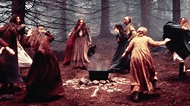
"He believed he was being persecuted wherever he went, despite his best efforts to win people." (3)


Danforth further illustrates his hypocritical yet resolute stance by refusing to pardon or even to delay the executions of the remaining seven prisoners because:
he does not want to seem weak by reversing his decisions
people were promised a hanging
the town will always doubt about witches
the state issued the decree
What realization did Elizabeth have about herself?
Her husband is truly a good man.
She is guilty of doing the Devil's work.
She was right to suspect her husband's loyalty.
Her insecurity and coldness were partly to blame for her husband's infidelity.
In "Of Plymouth Plantation" as soon as the Mayflower passengers landed on Cape Cod, they
"fell upon their knees and blessed the God of Heaven.”
“tendered themselves to go by land and discover those nearest places.”
“could not bear a knot of sail, but were forced to hull for divers days together.”
“returned to the ship lest they should be in fear of their safety.”
In "Of Plymouth Plantation," the “First Encounter” refers to the place where the settlers initially came in contact with
the good providence of God.
the grampus.
Massasoit, the great Sachem.
Indians.
From "Of Plymouth Plantation," which sentence best summarizes the “starving time”?
After the settlers stole their stores of corn and seed, many Indians starved.
Half of the company died, and the few strong people took care of the weak.
People made fires, washed their loathsome clothes, and became infected.
Thanks to William Brewster and Myles Standish, Bradford and many others recovered from scurvy.
In "Of Plymouth Plantation," who interpreted for the settlers and taught them survival skills?
Samoset
Seneca
Sowams
Squanto
In "Of Plymouth Plantation," by the time of the first Thanksgiving,
relations with Massasoit had soured.
the pilgrims were finally beginning to thrive in the New World
Sir Ferdinando Gorges had arrived in Plymouth.
Squanto had established a great store of wild turkeys.
What was Equiano’s main purpose in writing The Interesting Narrative of the Life of Equiano?
to entertain readers with dramatic episodes in his life
to sway public opinion about slavery
to contrast life in Africa and life in Barbados
to provide detailed information on 18th century sea travel
At the end of the narrative, Equiano calls his captors "Nominal Christians." What he meant was...
they go to church a lot
they don't go to church at all
they are studying to be ministers
they say they are Christians but do not act like it
What is the main idea of Equiano's slave narrative?
The slave trade is cruel and contradictory to Christian beliefs
Slaves went through extreme environments to arrive in America
Equiano believes that slave families should be kept together
Slaves were not given enough food on slave ships
What is "Song of Myself" mostly about?
The Industrial Revolution
Individual's relation to nature
Grass
Father/Son relationship
These lines are from "Song of Myself"
"They are alive and well somewhere,
The smallest sprout shows there is really no death" What can be inferred about the author's view on death based on these two lines.
Death is permanent
Life energy is finite
Life energy is transferred
Life is perpetual
What does the phrase "what I assume you shall assume" mean in this context of Section 1 of "Song of Myself"?
What physically makes up my body will make up yours, too
We will both make the same assumptions about life
You will assume the same things that I assume
We will both assume together
How does the speaker exit "Song of Myself"? What's the image of exit?
becoming one with nature and returning that way
dying, never to return
literal immortality, he never exits
stepping into a horse-drawn carriage
The following line from "Song of Myself":
"Look for me under your boot-soles" is an expression that exudes a tone of
sadness
depression
confusion
hope
loss
What do the following lines from "Song of Myself"reveal about the poet?
My tongue, every atom of my blood, form’d from this soil, this air,
Born here of parents born here from parents the same, and their parents the same,
I, now thirty-seven years old in perfect health begin,
Hoping to cease not till death.
A. He is a fourth-generation native of his birthplace.
B. He is a recent immigrant.
C. He is Native American.
D. He does not know anything about his ancestry.
What is the central idea/theme of this passage from "Song of Myself?"
A child said What is the grass? fetching it to me with full hands;
How could I answer the child? I do not know what it is any more than he.
I guess it must be the flag of my disposition, out of hopeful green stuff woven.
Or I guess it is the handkerchief of the Lord,
A scented gift and remembrancer designedly dropt,
Bearing the owner’s name someway in the corners, that we may see and remark, and say Whose?
Or I guess the grass is itself a child, the produced babe of the vegetation.
Or I guess it is a uniform hieroglyphic,
And it means, Sprouting alike in broad zones and narrow zones,
Growing among black folks as among white,
Kanuck, Tuckahoe, Congressman, Cuff, I give them the same, I receive them the same.
And now it seems to me the beautiful uncut hair of graves.
A. Each blade of grass is the resurrection of a human soul.
B. Children are born in a state of ignorance and must be taught.
C. Grass is an example of how even the most common things closely examined reveal mysterious significance.
D. Because grass can grow in so many places and conditions it is available to everyone.
Which of these inferences about the narrator is best supported by the following section of the poem "Song of Myself?"
I resist anything better than my own diversity
Breathe the air but leave plenty after me,
And am not stuck up, and am in my place.
(The moth and the fish-eggs are in their place,
The bright suns I see and the dark suns I cannot see are in their place,
The palpable is in its place and the impalpable is in its place.)
A. He feels superior to others
B. He would identify with other people if they behaved better.
C. He does not consider himself superior or different to any other person.
D. He feels that racial differences are a block to common understanding.
In "The Devil and Tom Walker," why does Tom begin reading the Bible and praying to God?
He feels bad about what he has done
He finds people who care about him
He thinks God can give him more money that the Devil can
He wants to escape the devil
What is the main lesson of the story "The Devil and Tom Walker"?
money = happiness
Marriage is sacred
Greed leads to misery
Prayer makes everything ok


What happened to their first house?
Caught on fire
Ruined in a flood
Smashed by an earthquake
Nothing, it was totally fine
How is The Black Cat is similar to The Cask of Amontillado?
The protagonist falls in love
The protagonist is insulted
The protagonist buries someone in a wall
The protagonist harms a cat


