

wayground logo

Free Printable Worksheets

Font size

S
M
L
XL
Worksheets

Human Interaction with Earth

Total questions: 151

Worksheet time: 2hrs 11mins

Name
Class
Date
1.

To properly dispose of used resources so they can be reprocessed into new products:

a)

Environment

b)

Conservation

c)

Resource

d)

Recycle

2.

To protect resources and avoid wasteful and destructive use:

a)

Population

b)

Conservation

c)

Environment

d)

Information

3.

What is something valuable that we can use?

a)

Resource

b)

Revolution

c)

System

d)

Solution

4.

A resource that CANNOT be replaced within a short period of time or at all is renewable resource.

a)

True

b)

False

5.

This act removes valuable resources that may never be recovered through the cutting of trees:

a)

Deforestation

b)

Population

c)

Conservation

d)

Restoration

6.

Landfills help humans by getting rid of waste, and they have POSITIVE effects on the environment.

a)

True

b)

False

7.

Encouraging people in a town to take longer showers during a DROUGHT would be a good conservation strategy.

a)

True

b)

False

8.

Water is a particularly useful natural resource because:

a)

Earth's surface is mainly convered by water, so it is plentiful.

b)

Energy from water can easily be generated at home

c)

Most people live near oceans and can easily get water

d)

Water flows quickly and can generate energy in little time

9.

What is the BEST way to conserve natural resources?

a)

Taking shorter showers

b)

Leaving the water running while brushing your teeth

10.

What are the 3 R's?

a)

Redo, Reuse, Repeat

b)

Reduce, Reuse, Recyle

c)

Repeat, Recycle, Redo

d)

Recycle, Repeat, Reuse

11.

Overhunting and overfishing can harm or destroy populations of organisms.

a)

True

b)

False

12.

NATURAL GAS IS NOT A RENEWABLE RESOURCE

a)

TRUE

b)

FALSE

13.

What causes smog?

a)

sunlight mixed with pollutants in the air

b)

dirt carried by wind

c)

wind mixed with fresh air

14.

OIL IS A RENEWABLE RESOURCE

a)

TRUE

b)

FALSE

15.

Resources that can be replaced or recycled, such as sunlight, water, wind, and trees

a)

Renewable Resources

b)

Nonrenewable Resources

16.
_____ is a material that is found in nature and that is used by living things.
a)
nonrenewable resource
b)
natural resource
c)
renewable resource
17.
Which of the following is NOT a natural resource?
a)
fish
b)
cows
c)
plants
d)
computers
18.
Which of the following is NOT an example of a renewable resource?
a)
water
b)
trees
c)
sun
d)
gasoline
19.
_____ is any harmful material in the environment.
a)
global warming
b)
pollution
c)
conservation
20.
These are the three main types of pollution:
a)
land, water, air
b)
car, water, land
c)
air, gases, water
21.
When people throw trash out of their car, they are causing this type of pollution:
a)
air
b)
land
c)
water
22.
When it is hard to breathe, it could be caused by this type of pollution:
a)
air
b)
wind
c)
land
d)
water
23.
When pollution in the air and land run into ponds, lakes, oceans and rivers, it causes this type of pollution:
a)
land
b)
water
c)
air
24.
This is an example of reusing:
a)
refilling a water bottle instead of taking another one
b)
picking up trash off the ground
c)
riding a bike instead of driving a car
25.
This is an example of reusing:
a)
refilling a water bottle instead of taking another one
b)
picking up trash off the ground
c)
riding a bike instead of driving a car
26.
This is an example of reducing:
a)
turning off the water while brushing teeth
b)
using a plastic bag twice
c)
riding with a friend to school instead of taking another car
27.
This is an example of recycling:
a)
using both sides of your paper instead of one
b)
throwing a wrapper on the ground
c)
dumping paint into a storm drain
28.
What is one way people help the environment?
a)
building new cities
b)
tearing down a forest
c)
placing harmful chemicals in streams
d)
picking up litter
29.

Taking old materials and making them into something new

a)

Recycle

b)

Conservation

c)

Composting

30.
Pollution _________________________.
a)
is harmful materials put into the environment
b)
found in air, water, and land
c)
effects plants, animals, and people
d)
All of the above
31.
__________________ is using materials wisely to protect them.
a)
Pollution
b)
Conservation
c)
Recycling
d)
Smog
32.
How can trash effect wildlife?
a)
Wildlife animals cannot hunt prey because of the smell of garbage.
b)
Trash makes it hard for wildlife to camouflage.
c)
Wildlife could eat trash that they think is food.
d)
Wildlife animals are afraid of trash.
33.
what is one way you can conserve water?
a)
take shorter showers
b)
drink a lot of water
c)
water your lawn daily
d)
keep your faucet running
34.
6. Which of these examples is a water-conservation technique that also reduces water pollution?
a)
factories making printing inks with water instead of chemical solvents
b)
farmers using fewer pesticides on farm fields
c)
factories reusing cooling water instead of returning it to a river
d)
farmers planting fields of coarse grass that filter out pollutants
35.
What does conserving resources mean?
a)
Use as much of the resources as you can
b)
Only use the resources at school
c)
Protecting the resource so it does not run out
36.
The Jones family cares about the environment. They run their dishwasher only when it is completely full. Which of the following BEST explains why they do this?
a)
To save money
b)
To recycle dish soap
c)
To reduce sewage
d)
To conserve water
37.

If a species in no longer found living on Earth it is

a)

pollutants

b)

extinct

c)

species

d)

endangered

38.
Where is pollution found on the earth?


a)
only in the air 
b)
only on the land 
c)
only in the water 
d)
on land, in the air, and in the water 
39.
Which way can people best reduce land pollution caused by large amounts of waste dumped in landfills?  
a)
They can use a water filter to use fewer water bottles.
b)
They can recycle their plastic, glass, paper, and cardboard items and only throw away non-recyclable items.
c)
They can watch less television, reducing electricity use and allowing their electronics to last much longer.
d)
They can refill large plastic containers, like those used for laundry detergent, instead of throwing them away.
40.
What does conserving resources mean?
a)
Use as much of the resources as you can
b)
Only use the resources at school
c)
Protecting the resource so it does not run out
41.

Does what we do today to the environment affect those after us?

a)

NO

b)

YES

c)

MAYBE

42.

A good practice to help conserve energy is?

a)

using plastic bags

b)

letting the water run while brushing teeth.

c)

using warm water to wash clothes

d)

turning lights off when not in use.

43.

Many products are made from trees. Which is the BEST way to manage the use of trees?

a)

plant a tree each time one is cut down.

b)

build more lumber mills.

c)

cut down more trees.

d)

reduce the amount of recycled paper.

44.
Which of the following natural resources are nonrenewable?
a)
Water
b)
Animals
c)
Natural gas
d)
Wind
45.
All of these resources are renewable EXCEPT:
a)
Oxygen
b)
Crude Oil
c)
Ice
d)
Corn
46.
Fossil fuels are nonrenewable because...
a)
they are used to produce heat
b)
they take a long time to form
c)
they can be found underground
47.
What does conserving resources mean?
a)
Use as much of the resources as you can
b)
Only use the resources at school
c)
Protecting the resource so it does not run out
48.
A resource that is not easily replaced...
a)
Renewable
b)
Nonrenewable
49.
Diamonds and other minerals
a)
Nonrenewable
b)
Renewable
50.
Can be replaced within a human lifetime
a)
Nonrenewable resource
b)
Renewable resource
51.
Which group includes ALL renewable resources?
a)
Coal, trees, water, oil
b)
Water, wind, sun, plants
c)
Minerals, sun, natural gas, water
52.
Which of these is renewable?
a)
Water
b)
Oil
c)
Coal
d)
Minerals
53.
Why is water a renewable resource?
a)
It can be frozen into ice
b)
It evaporates into air
c)
It is constantly replaced
54.
A resource that can be easily replaced...
a)
Nonrenewable
b)
Renewable
55.
What does reuse mean?
a)
Use again
b)
Throw away
c)
To buy again
d)
To make again
56.
What does recycle mean?
a)
Make smaller
b)
Make bigger
c)
Converting waste into something that can be used again.
d)
Throw away
57.
Why is it important to recycle?
a)
It saves landfill space
b)
It saves natural resources
c)
It saves money
d)
All of the above statements are true 
58.
True or False- Littering will increase the amount of available resources.
a)
True
b)
False
59.
True or False- The 4 Rs are- reduce, reuse, recycle, and rethink.
a)
True
b)
False
60.

Why do materials have to be sorted before they're recycled?

a)

Because different materials are sent to different recycling facilities

b)

Because sorting allows you to play a role in the recycling process

c)

Because people who work at recycling facilitates don't know how to sort recyclables

d)

Because materials have to be recycled in the same state where they're produced

61.

To properly dispose of used resources so they can be reprocessed into new products:

a)

Environment

b)

Conservation

c)

Resource

d)

Recycle

62.

To protect resources and avoid wasteful and destructive use:

a)

Population

b)

Conservation

c)

Environment

d)

Information

63.

What is something valuable that we can use?

a)

Resource

b)

Revolution

c)

System

d)

Solution

64.

A resource that CANNOT be replaced within a short period of time or at all is renewable resource.

a)

True

b)

False

65.

This act removes valuable resources that may never be recovered through the cutting of trees:

a)

Deforestation

b)

Population

c)

Conservation

d)

Restoration

66.

Water is a particularly useful natural resource because:

a)

Earth's surface is mainly convered by water, so it is plentiful.

b)

Energy from water can easily be generated at home

c)

Most people live near oceans and can easily get water

d)

Water flows quickly and can generate energy in little time

67.

Overhunting and overfishing can harm or destroy populations of organisms.

a)

True

b)

False

68.

Resources that can be replaced or recycled, such as sunlight, water, wind, and trees

a)

Renewable Resources

b)

Nonrenewable Resources

69.
_____ is a material that is found in nature and that is used by living things.
a)
nonrenewable resource
b)
natural resource
c)
renewable resource
70.
_____ is a resource that can be replaced quickly.
a)
natural resource
b)
nonrenewable resource
c)
renewable resource
71.

Sustainability is making sure that the planet and its resources can continue to provide life.

a)

True

b)

False

72.

If we don't look after resources, we will have...

a)

No problems

b)

More problems

c)

Less problems

73.

Which of these problems could happen if we don't look after the resources we have?

a)

Loss of animal homes

b)

Climate change

c)

Increase in pollution

d)

All of the above

74.

A resource that can replenish itself is...

a)

Renewable

b)

Non-renewable

75.

A resource that cannot replenish itself is...

a)

Renewable

b)

Non-renewable

76.

Gas, oil and diesel are all examples of...

a)

Renewable resources

b)

Non-renewable resources

77.

Solar, wind and water energy are all...

a)

Non-sustainable resources

b)

Sustainable resources

78.

What are the 3Rs?

a)

Reduce

b)

Reuse

c)

Recycle

d)

All of the above

79.

What does sustainability mean?

a)

Using lots of resources.

b)

Maintaining the world we live in for future generations.

c)

Cutting down trees.

d)

Using lots of water and electricity.

80.

What is a resource?

a)

Anything that is used for a purpose.

b)

Anything that has a purpose.

c)

Anything that we use for information.

d)

Anything that is renewable.

81.

What are examples of non-renewable resources?

a)

Oil, coal and solar energy.

b)

Gas, coal and water.

c)

Oil, gas and wind.

d)

Oil, gas and coal.

82.

What is renewable energy?

a)

Energy that comes from resources such as fossil fuels.

b)

Energy that comes from resources that humans have to replenish over time.

c)

Energy that comes from resources which are naturally replenished on a human timescale.

d)

Energy that comes from resources that are available in nature.

83.

What do you call energy generated from the sun?

a)

Sun

b)

Wind

c)

Solar

d)

Heat

84.

What do you call energy that is captured from water that is converted to electricity?

a)

Hydroelectricity

b)

Water energy

c)

River electrical generation

d)

Dam energy.

85.

How do heavy curtains make a home more energy efficient in winter in Perth?

a)

They help heated inside air from being cooled or escaping outside.

b)

They act as a barrier to prevent heat loss out of the home.

c)

They reduce the use of heating inside the home.

d)

All of the above.

86.

What is the best way to heat food in an energy efficient home?

a)

Oven

b)

Electric stove

c)

Microwave

d)

Camp fire

87.

Why do we need to conserve water?

a)

Australia is the world’s driest inhabited continent.

b)

If we reduce our water use, we can also reduce our energy consumption.

c)

Our population is increasing and so is the demand for water.

d)

All of the above.

88.

What is the best toilet to use to help conserve water?

a)

A lightly flushing toilet.

b)

A single flush toilet.

c)

A drip flush toilet.

d)

A dual flush toilet.

89.

Which action is the most effective way to help the environment?

a)

Recycle waste.

b)

Reuse waste.

c)

Reduce waste.

d)

Refuse waste.

90.
Geothermal energy uses heat energy from under the earth’s surface to heat buildings and also to generate –
a)
building materials
b)
solar power
c)
fossil fuels
d)
electric energy
91.
A student is preparing a presentation about alternative energy resources. The student has found the following information:
Which alternative energy source does this information describe?
a)
Hydroelectricity
b)
Solar energy
c)
Biofuels
d)
Wind
92.
Which of the following sources of energy is classified as an alternative energy source?
a)
Mined coal
b)
Geothermal heat
c)
Crude oil
d)
Natural gas
93.
A hydroelectric power plant generates electricity by using the energy of which of the following?
a)
Blowing wind
b)
Organic material
c)
Moving water
d)
Earth’s core
94.
Corn, wheat, and soybeans can be made into a substance called ethanol. In some places, ethanol is part of a mixture used to power cars and trucks. What type of alternative energy resource is ethanol?
a)
Hydroelectric
b)
Geothermal
c)
Biofuel
d)
Solar
95.
All of the following are considered alternative energy sources EXCEPT –
a)
Wind
b)
Coal
c)
Biofuel
d)
Solar
96.
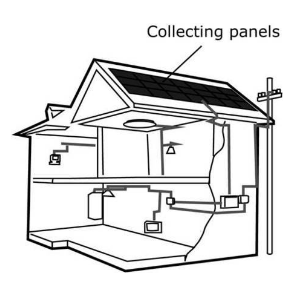
The house illustrated here uses panels on the roof to collect a natural resource and convert it into electricity that can be used.
Which alternative energy source does this house use?
a)
Water
b)
Wind
c)
Solar
d)
Geothermal
97.
Which alternative energy source is generated beneath Earth’s crust and can be used to heat buildings?
a)
Hydroelectric energy
b)
Geothermal energy
c)
Wind energy
d)
Solar energy
98.
Wind energy is 
a)
generated from moving water
b)
starts with moving air and generates electricity
c)
starts with the sun
d)
comes from the earth
99.
Alternative energy is
a)
Generated by natural resources and is renewable
b)
man made
c)
nonrenewable
d)
not helpful to us in Texas
100.
Energy from the sun is called
a)
Biofuels
b)
Solar
c)
Geothermal
d)
Hydroelectric
101.
Nonrenewable resources are
a)
man-made resources
b)
cannot be replaced quickly
c)
can be replaced in a short amount of time
d)
never run out
102.
Corn, wheat, and soybeans can be made into a substance called ethanol. In some places, ethanol is part of a mixture used to power cars and trucks. What type of alternative energy resource is ethanol?
a)
Hydroelectric
b)
Geothermal
c)
Biofuels
d)
Solar
103.
All of the following are considered alternative energy sources EXCEPT –
a)
Wind
b)
Coal
c)
Biofuel
d)
Solar
104.
Wind Energy is...
a)
 Energy that comes from harnessing the movement of the air
b)
Energy that comes from the Sun
c)
A source of renewable energy, such as solar, wind, or geothermal energy
d)
Fuel from plant material
105.
Solar Energy is... 
a)
Energy that comes from harnessing the movement of the air
b)
Energy that comes from the Sun
c)
A source of renewable energy, such as solar, wind, or geothermal energy
d)
Fuel from plant material
106.
Which type of alternative energy source is shown in this picture?
a)
Wind
b)
Solar
c)
Hydroelectric
d)
Geothermal
107.
As water flows through a dam, a generator is turned and creates enough electricity for thousands of homes. This describes...
a)
biofuels
b)
hydroelectric energy
c)
geothermal energy
d)
solar power
108.
Which of the methods of generating electricity does NOT use alternative energy resources? 
a)
Burning coal in a power plant
b)
Turbines spinning in dam
c)
Solar panels taking in light energy 
d)
Drilling wells to reach hot rocks deep inside the earth 
109.
Renewable resources are
a)
man-made resources
b)
can be replaced in a short amount of time
c)
cannot be replaced 
d)
never run out
110.
What fossil fuel is in the image?
a)
Coal
b)
Natural Gas
c)
Petroleum
111.
Hydroelectric power produces electricity using.....
a)
Wind
b)
Sunlight
c)
Moving water
d)
Dung
112.
What fossil fuel is in the image?
a)
Natural Gas
b)
Steam
c)
Coal
d)
Petroleum
113.

What is biomass?

a)

A lot of food

b)

Plants that can be used for fuel

c)

Oil, gasoline, and coal

114.
What is one type of biomass energy?
a)
Plastic
b)
Sun
c)
Wood
115.
The most common way to release biomass is?
a)
Bacterial Decay
b)
Fermentation
c)
Conversion
d)
Burning
116.
Growing plants absorb sunlight and convert it into chemical energy in a process called?
a)
hydrolysis
b)
torrefaction
c)
gasification
d)
photosynthesis
117.
A resource that can be easily replaced.
a)
renewable
b)
alternative
c)
nonrenewable
118.
A resource not easily replaced.
a)
nonrenewable
b)
renewable
c)
alternative
119.

Which burns cleaner?

a)

biofuels

b)

fossil fuels

120.

Growing and harvesting crops for biofuels requires energy, most of which comes from...

a)

wind

b)

geothermal

c)

solar

d)

fossil fuels

121.
Which is NOT an example of Biomass?
a)
wood
b)
crops
c)
wind
d)
animal and yard waste
122.
Which renewable resource uses the natural resource in the picture below to produce energy?
a)
wind
b)
tidal
c)
biomass
d)
geothermal
123.

Fossil Fuels are

a)

pieces of rock that have been compacted many times

b)

rock that contains 50% plant and animal remains

c)

metamorphic rock

d)

fuels that form from the remains of plant and other organisms that were buried and altered over million of years

124.

This fossil fuel has been created by the remains of plants and must be mined from deep within the Earth.

a)

oil

b)

coal

c)

natural gas

d)

solar

125.

The ADVANTAGES of Fossil Fuels include: (Choose ALL that apply)

a)

low cost

b)

produce a lot of energy

c)

cause air pollution

d)

high cost

126.

Two ADVANTAGES of Fossil Fuels are:

a)

They are not easy to find and hardly generate electricity

b)

Are easy to find and generate huge amounts of electricity for big cities.

c)

Are nonrenewable and generate just enough electricity for big cities

d)

Are renewable and are gone once used up

127.

Some DISADVANTAGES of Fossil Fuels are (Select ALL that apply)

a)

air pollution

b)

acid rain

c)

climate change

d)

a lot of energy

128.
Which of the following natural resources are nonrenewable?
a)
Water
b)
Animals
c)
Natural gas
d)
Wind
129.
Fossil fuels are nonrenewable because...
a)
they are used to produce heat
b)
they take a long time to form
c)
they can be found underground
130.
What does conserving resources mean?
a)
Use as much of the resources as you can
b)
Only use the resources at school
c)
Protecting the resource so it does not run out
131.
Any useful material that is found in nature:
a)
Natural Resource
b)
Human Resource
c)
Plants
132.
We dig metal out of the Earth to make steel for buildings, cars, and buses. Metal is a nonrenewable resource.
a)
True
b)
False
133.
Why are trees a natural resource?
a)
The leaves are green
b)
We use them to make paper, lumber, and other products.
c)
They are beautiful
d)
They grow back after they are cut down.
134.
All of the following are nonrenewable resources EXCEPT
a)
Coal
b)
animals
c)
petroleum (oil)
d)
natural gas
135.
Which of the following means of transportation uses a renewable resource for its energy source?
a)
solar powered car
b)
coal powered steam train
c)
natural gas car
d)
gasoline truck
136.
A farmer decides that he is going to produce his own energy on the farm by using a type of renewable energy. The renewable energy could come from--
a)
setting up wind turbines
b)
having a coal furnace
c)
using natural gas
d)
burning oil
137.
Which of the following is a way a person could conserve natural resources?
a)
recycling waste materials like plastic, glass, paper, and aluminum
b)
limiting water use when showering, brushing teeth, and shaving
c)
using rechargeable batteries
d)
all of the above are good conservation practices
138.
Any useful material that is found in nature:
a)
Natural Resource
b)
Human Resource
c)
Plants
139.

The people or animals living in a particular area.

a)

population

b)

species

c)

community

d)

consumer

140.

Rosa's neighborhood is only allowed to water their lawns on Tuesdays and Thursdays. What is the most likely explanation for why Rosa's neighborhood can only water their lawns two days a week?

a)

Water is a renewable resource that needs to be conserved.

b)

Water is a nonrenewable resource that needs to be conserved.

c)

Water erodes the soil, and soil is a renewable resource that needs to be conserved.

d)

Water corrodes the soil, and soil is a nonrenewable resource that needs to be conserved.

141.

Atlanta often has smog warnings during the summer. The city cautions citizens against being outside too long when smog levels are high. How can the city of Atlanta reduce smog levels?

a)

by increasing the use of fossil fuels

b)

by decreasing the use of solar power

c)

by decreasing the number of individual cars and increasing the number of buses

d)

by increasing the number of individual cars and decreasing the number of buses

142.

The citizens of a small fishing town are meeting to discuss a proposed new power plant. Paul, a local reporter, recorded the number of people who spoke at the meeting and what their top priorities were. Paul's data is shown.


Priorities:

Must be renewable- 10

No visible machines- 2

Must not hurt the fishing industry- 5

Must not pollute the air- 8

No dangerous waste products- 5


Paul plans to write a story about the town's preferences for the newspaper. Based on the data, what should the headline of Paul's story be?

a)

Town wants coal, coal, and more coal!

b)

Onward to the future, town to go nuclear!

c)

Sunny days ahead, the people want solar!

d)

Get caught in the current with hydropower!

143.

Which of the following resources would be considered renewable?

a)

coal

b)

wind

c)

metal ore

d)

natural gas

144.

Why are trees a natural resource?

a)

because they come from Earth

b)

because they can never be replaced

c)

because they are made by humans

d)

because they are used for many things

145.

What is the term for important nonrenewable resources that formed from the remains of living organisms?

a)

solar particles

b)

mineral sediments

c)

fossil fuels

d)

elemental energy

146.

What is the purpose of recycling?

a)

to produce resources

b)

to conserve resources

c)

to decrease resources

d)

to change resources

147.

After he finishes his lunch, Edwin needs to get rid of his trash. He has the empty paper bag that he brought his lunch in, an empty soda can, a pizza crust that he didn't finish, and a dirty napkin.


Match the item to the action Edwin could do to practice saving resources: Paper Bag

a)

Recycle

b)

Throw Away

148.

After he finishes his lunch, Edwin needs to get rid of his trash. He has the empty paper bag that he brought his lunch in, an empty soda can, a pizza crust that he didn't finish, and a dirty napkin.


Match the item to the action Edwin could do to practice saving resources: Napkin

a)

Recycle

b)

Throw Away

149.

After he finishes his lunch, Edwin needs to get rid of his trash. He has the empty paper bag that he brought his lunch in, an empty soda can, a pizza crust that he didn't finish, and a dirty napkin.


Match the item to the action Edwin could do to practice saving resources: Soda Can

a)

Recycle

b)

Throw Away

150.

Clothes are often made from cotton, which is grown from a plant. What kind of resource is cotton?

a)

renewable

b)

nonrenewable

c)

mineral

d)

chemical

151.

Which of the following is a nonrenewable resource?

a)
b)
c)
d)
