
 Worksheets
Semester 1 Finals Review
Total questions: 60
Worksheet time: 32mins
Find the velocity of a plane that traveled 3000 miles west in 5 hours. V= d/t
65 mph west
6 mph west
600 mph west
6000 mph west
Which is a unit for momentum?
m/sec
kg/sec
kg/m
kg m/sec
Which is a unit for mass?
m/sec
kg/sec
kg
kg m/sec
Determine the momentum of 1000-kg car moving southward at 20 m/s.
P= m * v
20000 N
20000 Joules
20000 Kg * m/s
10000 kg * m/s
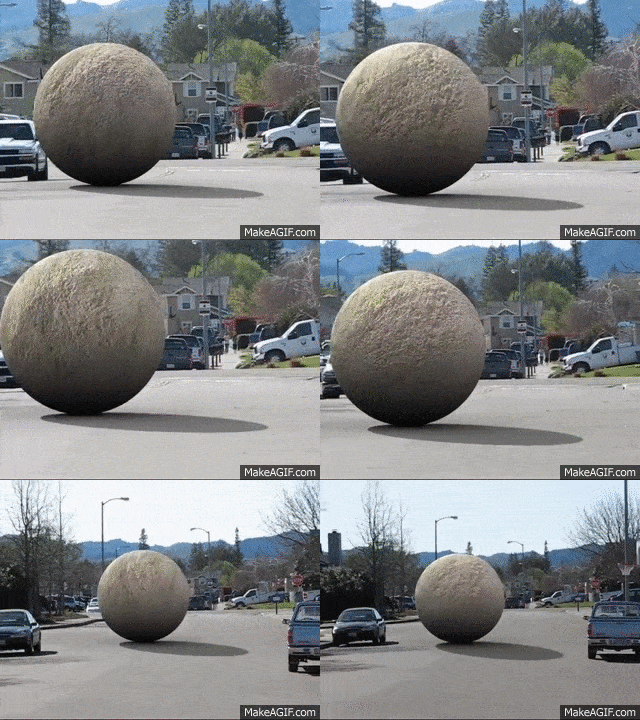
A 50 kg ball rolls down the street at 5 m/s. Calculate the momentum of the ball. P= m * v
55 kg*m/s
100 kg*m/s
250 kg*m/s
500 kg*m/s
Whenever an object is moving, there is always this force opposing the motion:
inertia
momentum
friction
applied force
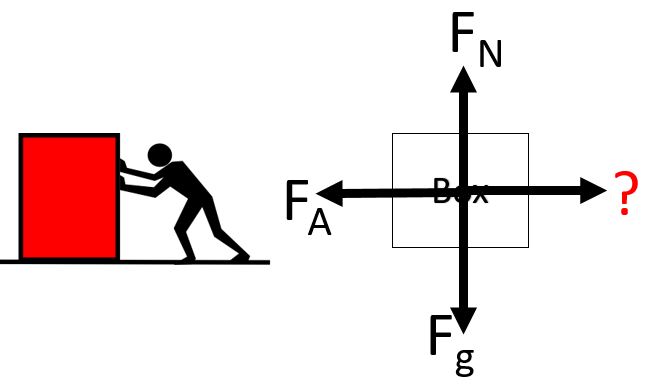
Which diagram best shows person pushing a couch (accelerating) across the floor?




What will the bulbs look like when this circuit is turned on?
They will be equally bright, and as bright as one bulb in series
The one in the middle will be brighter than the one on top
The one on top on will be brighter than the middle one
This circuit does not work
The lights in a parallel circuit are ____________, compared to a series circuit.
Dim
Equally bright
Bright
laser beams


What do the lines around this magnet represent?
North pole
South pole
Magnetic declination
The magnetic field

How does increasing the number of coils effect an electromagnet?
It makes it weaker
It makes it stronger
It doesn't change anything
It switches the poles

Looking at the picture, how are the poles on these bar magnets most likely facing?
South/ North, South/ North
North/ South, South/ North

How is wavelength measured?
From trough to crest (B to D)
From the center line to the crest (B to C)
From the crest of one wave to the crest of the next (B to F)
From one end of the wave to the far end of the wave (A to H)
Which of these electromagnetic waves has the longest wavelength on the EM spectrum?
Ultraviolet
Visible red light
Microwaves
x-rays

The electromagnetic (EM) spectrum is referring to what...?
A range of electrical magnets
A variety of light waves that vary in length and frequency
How rainbows are made!
Energy waves that are percieved as sounds
Which EM wave has the highest frequency and shortest wavelength?
x-rays
Visible light
Gamma waves
Radio Waves

Knowing these are light waves, which would be blue light?
The high frequency wave
The low frequency wave
Neither are blue light

How do you measure amplitude?
From the bottom of a wave to the top of a wave
From the middle of a wave to the top of a wave
From the crest of one wave to the crest of the next wave
From the beginning to the end of the wave

Increasing the amplitude of a wave increases the waves _____________.
Length
Speed
Energy
In light waves higher amplitude means?
Louder volume
Brighter light
Blue light
Red light
Low pitched sounds have ______________ wavelengths
Short
Medium
long
No
Which has the longest wavelength?
X-rays
gamma rays
Microwaves
Ultraviolet light
Which wave is the shortest?
Ultraviolet
Radio waves
Infrared
X-rays

What moon phase is this?
Waxing gibbous
Waning gibbous
Waxing crescent
Waning crescent

What phenomena is being shown in the picture?
Full moon
Lunar eclipse
Solar eclipse
Harvest moon

What phase of the moon is shown in the picture?
Waning gibbous
Waxing gibbous
Waning crescent
Waxing crescent
How can you tell if the moon is waxing?
The light is on the right
The light is on the left
The sun is behind the moon
When the light is moving

When the Moon passes directly between the Sun and the Earth it causes what phenomena?
A lunar eclipse
A new moon
A solar eclipse
A full moon
When there are extreme high tides and low tides it is called a _________ __________
High tide
Spring tide
Full moon tide
Neap tide

What kind of tide is happening?
Low tide
Spring tide
Neap tide
Weak tide
Neap tides occur during which moon phase?
Full moon
Crescent moon
Quarter moon
New moon

How does increasing distance effect the gravity between two objects?
it increases the gravitational pull
It prolongs the gravitational pull
It destroys all gravitational pull
It decreases the gravitational pull
Objects with more mass have a ______________ gravitational pull.
Weaker
Equal
Stronger
Normal

What kind of tide is shown in the picture?
Spring tide
Full moon tide
High tide
Neap tide
Spring tides happen during which moon phases?
The quarter moon
The crescent moons
The full moon and new moon
The gibbous moons
When the high tide is not so high and the low tide is not so low it is called a _____________ tide.
Spring
Neap
Chill
Moderate
Why does the moon have a stronger gravitational pull on Earth than Mars?
The moon is bigger than mars
The moon is more important than mars
The moon much closer than mars
The moon is heavier than mars


Which picture is showing a lunar eclipse?
Top picture
Bottom picture
Neither

Define and explain how the celestial phenomena in the picture occurs?
Solar eclipse, when the sun is blocked by the moon
Partial eclipse, when the sun is partly blocked from the Earth
Lunar eclipse, when the Earth blocks the sun from the moon
Linear eclipse, when the Earth, sun, and moon align

Why are the tides more extreme (spring tides) during the full moon and the new moon?
Because the suns gravitational pull is stronger than the moon
Because the gravitational pull of moon and sun are combined
Because the Earth is spinning on a tilted axis, tipping the oceans that direction
Because the moon is closest to the Earth at that time
What causes the oceans tides?
The gravitational pull of the sun and the moon
Earths gravity
The Earths rotation
Moon phases

During a Neap tide, high tides and low tides are much less extreme, why?
The moon is only half full at that time
There is a lunar eclipse happening
The suns gravity pulls in the opposite direction of the moons gravity, and reduces the overall gravity on Earths oceans
The gravitational pull of mars is counteracting the gravitational pull of the moon.

Which wave has more energy?
The top one
The bottom one
They are equal

Once static electricity is generated through friction, why does the balloon stick to the cats fur?
Because the electrons are flowing from the cat to the balloon
Friction put electrons from the cat onto the balloon, the (+) charged cat fur is attracted to the (-) balloon
Both the cat the balloon are (-) and like charges are attracted to each other
The cat is really dirty and sticky so the balloon is caught on its fur

Find the stopping force of a 5 kg dog running 7 miles an hour, as it stops beside it's own in 2.5 seconds.
P= m * v
F= P/t
4 newtons
14 newtons
44 newtons
12 newtons

