wayground logo

Free Printable Worksheets

Font size

S
M
L
XL
Worksheets

Laws of Thermodynamics

Total questions: 39

Worksheet time: 38mins
Name
Class
Date
1.
How many laws of thermodynamics are there?
a)
a lot
b)
3
c)
4
d)
1
2.
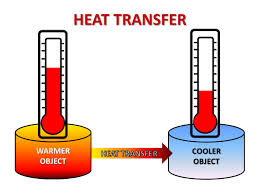
Which way does heat flow?
a)
hot to cold
b)
cold to hot
c)
it doesn't 
3.
What is absolute zero?
a)
0 K
b)
273 K
c)
0oC
4.
What heat transfer happens when you burn your hand by touching a fire?
a)
Radiation
b)
Conduction
c)
Convectio
d)
I don't know!!!!!!!!!!!
5.
Heat transfers from an area of ____temperature to an area of ___ temperature.
a)
high to low
b)
low to high
c)
high to high
d)
It can travel high to low and low to high. 
6.
Dragging an object across a rough surface makes it warm, or even hot. The temperature increase occurs because of
a)
Work
b)
Heat
c)
Thermal
d)
Both work and heat
7.
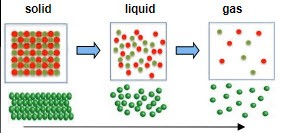
Entropy increases from solid, liquid to gas. Why?
a)
Molecular disorder increases
b)
Molecular randomness decreases
c)
Molecules are more energetic
d)
Molecules are more reactive
8.
The total amount of energy in a system is ALWAYS ________.
a)
increasing
b)
decreasing
c)
conserved 
d)
changing
9.
The transfer of thermal energy between objects of different temperatures is called...
a)
temperature
b)
heat
c)
internal energy
d)
none of these
10.
It is possible to reach absolute zero
a)
true
b)
false
11.
The temperature of a glass of cold water will eventually...
a)
Match the temperature of the surrounding environment.
b)
Always be colder than the surrounding environment.
c)
Become warmer than the surrounding environment.
d)
Never change temperature.
12.
What is internal energy?
a)
The amount of heat an object contains.
b)
The sum of the kinetic and potential energy of the particles of a substance.
c)
Something we can measure easily.
d)
Something that does not exist.
13.
The first law of thermodynamics is basically the same as which law?
a)
Newton's first law
b)
The law of conservation of energy
c)
The law of conservation of momentum
d)
Newton's second law
14.
It states that if two thermodynamic systems are each in thermal equilibrium with a third, then they are in thermal equilibrium with each other.
a)
First Law of Thermodynamics
b)
Second Law of Thermodynamics
c)
Third Law of Thermodynamics
d)
Zeroth Law
15.
An ice cube is placed on a table and begins to melt.  The following conclusion can be made.
a)
Energy is being absorbed by the table which causes the cube to melt.
b)
Energy is being transferred from the table to the ice cube.
c)
Energy is being created by the air and table and making the cube heat up.
d)
Energy  is being created by the ice cube and is being released to the air
16.
Which law of thermodynamics states that absolute zero cannot be reached?
a)
1st
b)
2nd
c)
3rd
d)
Zeroth
17.
The _____ Law of Thermodynamics says that heat always flows from an object with a higher temperature to an object of lower temperature naturally
a)
Zeroth
b)
First
c)
Second
d)
Third
18.
Two cups of water, one at 100oC and the other at 50oC are poured into a larger container. What would be the final temperature of the water?
a)
Less than 50oC.
b)
Greater than 100oC.
c)
Between  50oC and 100oC.
d)
The water temperature will rise and fall continually.
19.
A hot cup of tea absorbs thermal energy from a cold room.
a)
True
b)
False
20.
The Gulf Stream is a current that brings warm ocean water from the south to the north. What type of heat transfer is this?
a)
conduction
b)
convection
c)
radiation
d)
Insolation 
21.
My coffee and the creamer have the same temp.  My cofee and the cup have the same temp. So...Creamer and cup have same temp.
a)
Zeroth Law
b)
First Law
c)
Second Law
d)
Third Law
22.
The ideal thermodynamic cycle is called 
a)
the Crovener cycle
b)
the Carnot cycle
c)
the Nitrogen cycle
d)
the Somenoc cycle
23.
A thermodynamic cycle which uses heat exchange to create work is called ...
a)
a heat reservoir
b)
a heat pump
c)
a perpetual motion machine
d)
a heat engine
24.
The ideal thermodynamic cycle is called 
a)
the Crovener cycle
b)
the Carnot cycle
c)
the Nitrogen cycle
d)
the Somenoc cycle
25.

Which phase change represents a decrease in entropy?

a)

solid to liquid

b)

gas to liquid

c)

liquid to gas

d)

solid to gas

26.

What phase of matter has the most entropy?

a)

solid

b)

liquid

c)

gas

27.

The following statements are true for entropy EXCEPT

a)

entropy is the measure of molecular disorder

b)

entropy is greater if matter is more dispersed

c)

gases have more entropy than liquids of the same substance and temperature

d)

lowering the temperature causes entropy to increase.

28.

Entropy is a form of energy

a)

True

b)

False

29.

Entropy of a system increases when a reaction increases the number of particles.

a)

True

b)

False

30.

There is a natural tendency for energy to spread out.

a)

True

b)

False

31.

The entropy will usually increase when

a)

a molecule is broken into two or more smaller molecules

b)

a reaction occurs that results in an increase in the number of moles of gas

c)

a solid changes to a liquid

d)

all of these

32.

Which of these have a DECREASE in entropy?

a)

CaCO3(s) → CaO(s) + CO2(g)

b)

2NO2(g) → N2O4(g)

c)

2NH3(g) → 3H2(g) + N2(g)

d)

C6H6(l) → C6H6(g)

33.

Which involves an increase in entropy? (if needed, select more than one answer)

a)

spraying an air freshener

b)

picking up apples off the ground

c)

dropping an egg on the floor

d)

arranging a deck of cards by suit

34.
For the following reaction indicate if entropy is increased or decreased.    2N2(g)  +  3 H2(g)  ------->  2 NH3(g)
a)
increase
b)
decrease
35.

When two gases combine to form a new gas as seen below, entropy decreases due the smaller number of gas molecules in the product. Which law of thermodynamics?

a)

Zeroth Law

b)

First Law

c)

Second Law

d)

Third Law

36.

A Ceiling fan forcing the warm air downward.

a)

Conduction

b)

Convection

c)

Radiation

37.

Walking on the hot sand on a beach

a)

Conduction

b)

Convection

c)

Radiation

38.

Feeling heat from a campfire

a)

Conduction

b)

Convection

c)

Radiation

39.
When thermal energy is added to a substance, the substance's particles move:
a)
More rapidly at an increased diestance from each other.
b)
More rapidly with less distance between each other.
c)
More slowly with a greater distance between each other.
d)
More slowly with a reduced distance between each other.