
NEW
Font size
S
M
L
XL
 Worksheets
DNA Replication
Total questions: 18
Worksheet time: 13mins
Name
Class
Date
1.
If the percentage of DNA is made of 30% Thymine, what is the correct percentage of Guanine?
a)
30
b)
15
c)
20
d)
60
2.

Replicate the following strand of DNA:
AATCATGGA
AATCATGGA
a)
AATCATGGA
b)
TTAGTACCT
c)
UUAGUACCU
d)
GGATAUCUA
3.
The enzyme that unzips the DNA to prepare for replication
a)
helicase
b)
replicase
c)
polymerase
d)
synthase
4.
DNA replication results in two DNA molecules,
a)
each one with two original strands
b)
each one with two new strands
c)
each one with one new strand and one original strand
d)
one with two new strands and the other with two original strands
5.
A scientist observes a base sequence of AGCTAGCTAGCT. Which of the following would be the complimentary strand?
a)
TGCATGCATGCA
b)
TCGATCGATCGA
c)
TAGCTAGCTAGC
d)
TTAAGGCCTTCC
6.
A process in which DNA has the unique ability to make an exact copy of itself.
a)
Replication
b)
Translation
c)
Transcription
7.
The bonds that hold the two strands of DNA together come from...
a)
the attraction of phosphate groups
b)
strong bonds between bases and sugars
c)
carbon to carbon bonds in the sugar
d)
weak hydrogen bonds between the bases
8.

Why is DNA important?
a)
it is very small and very complicated
b)
it's in everything
c)
it serves as the blueprint for traits of all living things
d)
because we eat it every day for energy
9.
Which organelle is DNA usually found in?
a)
cell membrane
b)
vacuole
c)
chloroplast
d)
nucleus
10.

This picture is illustrating the ____ nature of DNA.
a)
anti-parallel
b)
deoxyribosic
c)
helical
d)
radioactive
11.
A DNA nucleotide contains all of the following, except...
a)
Deoxyribose
b)
Phosphate group
c)
Nitrogenous base
d)
Cholesterol
12.
Which sequence of DNA bases would pair with this partial strand
CAT TCA CTG
CAT TCA CTG
a)
ATG TGA CAG
b)
TAC ACT GTC
c)
GTA AGT GAC
d)
CAT TCA CTG
13.
Which of the following units are repeatedly joined together to form a strand of DNA?
a)
amino acids
b)
nucleotides
c)
fatty acids
d)
polysaccharides
14.
Which enzyme is responsible for adding nucleotides?
a)
Topoisomerase
b)
DNA Polymerase
c)
Ligase
d)
Primase
15.
Which of the following does DNA polymerase do?
a)
Connects nucleotides (in the new strand) through covalent bonds
b)
Matches free-floating nucleotides to nucleotides on a DNA strand
c)
Proofreads
d)
It does all of these functions
16.
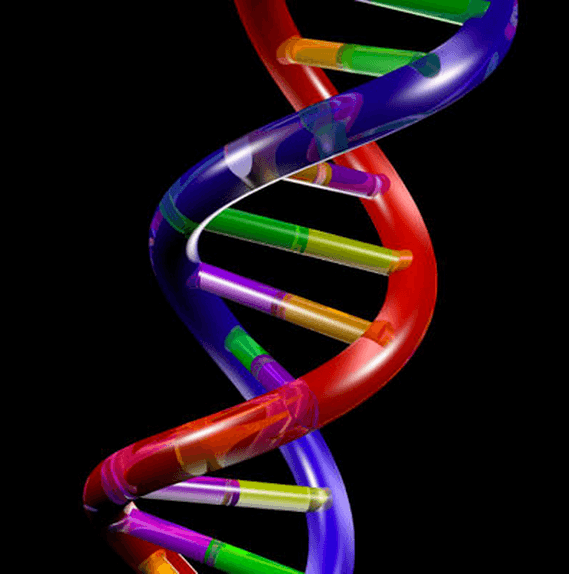
What determines the code, or information, of a DNA molecule?
a)
the shape (structure) of the nitrogen bases
b)
the order (sequence) of the nitrogen bases
c)
the color of the nitrogen bases
d)
the frequency (number) of nitrogen bases
17.
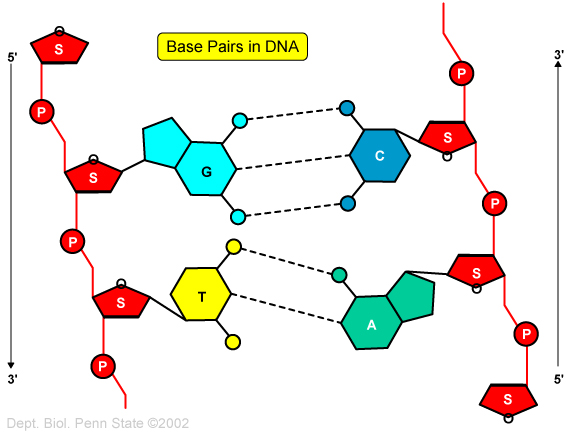
Nitrogenous bases are joined by which type of bond?
a)
polar bonds
b)
ionic bonds
c)
covalent bonds
d)
hydrogen bonds
18.
Which of the following would happen FIRST in DNA replication?
a)
DNA polymerase proofreads the DNA strand
b)
DNA polymerase adds new nucleotides
c)
Helicase breaks the hydrogen bonds between bases
d)
There are two complete & identical molecules of DNA
Reset

