Worksheets
States & Phases of Matter 25/26
Total questions: 47
Worksheet time: 30mins
The state of matter in which a material has a definite volume but not a definite shape
Solid
Liquid
Gas
Kinetic Energy
The state of matter in which materials have a definite shape and a definite volume
Solid
Liquid
Gas
Kinetic Energy
The state of matter in which a material has neither a definite shape nor a definite volume
Solid
Liquid
Gas
Kinetic Energy
The energy an object has due to its motion
Solid
Liquid
Gas
Kinetic Energy

A substance that has a changing shape, a fixed volume, flows, but cannot be squashed, is a...
solid
liquid
gas
plasma

The state of matter that has the HIGHEST energy level is...
solid
liquid
gas
Matter in a ...... has a ...... volume and ...... shape
gaseous state ___ no definite ___ no definite
liquid state _____ no definite ___ definite
a. solid state _____ no definite ___ no definite
Matter is
anything that has mass
anything that takes up air
anything that takes up space
anything that has weight
The Kinetic theory explains how particles in matter behave..
all matter is composed of particles
particles move in linear motion
particles are in constant random motion
particles collide with each other
particles collide with the walls of their container
Solids have
Definite shape & definite volume
particles have more space and slide past each other
Particles closely packed in geometric arrangement
Indefinite shape & definite volume
Indefinite shape & indefinite volume
Liquids have
Definite shape & definite volume
particles have more space and slide past each other
Particles closely packed in geometric arrangement
Indefinite shape & definite volume
Indefinite shape & indefinite volume
Gasses have
Definite shape & definite volume
particles have more space and slide past each other
Particles that have the energy to spread out evenly in their container
Indefinite shape & definite volume
Indefinite shape & indefinite volume
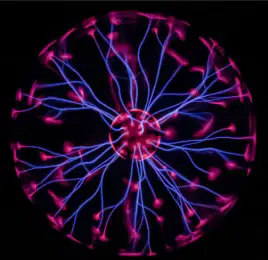
Plasma...
High-temperature gasses
particles have more space and slide past each other
Particles that have the energy to spread out evenly in their container
Positively and negatively charged particles
Indefinite shape & indefinite volume
the state of a sample of matter depends on its
volume
temperature
mass
weight
Kinetic energy is a molecules or objects energy in
motion
potential of motion
temperature
Temperature is related to the average
the kinetic energy of the molecules of an object
the molecular weight of an object
the molecular mass of an object
Thermal Expansion is the
size of the mass of an object
size of a substance when the temperature increases
the volume of an object relative to its mass
size of a substance when the temperature is cooled and it contracts
The exception to the thermal expansion rule is
water because it contracts when it is cooled
water because it stays the same when it is cooled
water because it expands when it is cooled
What needs to be present in order for one phase to change from one to another?
space
increase in kinetic energy, resulting in temperature increasing
potential energy
evaporation

Amount of space an object takes up
The amount of atoms in an object
Has mass & takes up space
Kinetic Energy
Energy in motion
Temperature
Measures the kinetic energy of atoms

Match the descriptions with the numbers
Gas state: heat is being put off
Match the descriptions with the numbers
2
4
1
3
5
Thermal Expansion states that when the temperature of a substance is increased its (a) . This also (b) . Adversely when the temperature of a substance decreases its KE (c) as well as the (d) of the object.
A typical substance will (a) when temperature decreases because the KE also (b) . However, when the water temperature decreases the substance (c) even though the KE is decreasing. When the temperature of a typical substance increases it will (d) because the Kinetic Energy has increased; and particles are moving (e) .
As Temperature increases Kinetic Energy (a) . As Temperature decreases Kinetic Energy (b) .

Mr. Dixon filled a plastic gas can half full at the gas station. He left the can in the sun while he mowed his lawn. When it cam time to fill his lawn mower, the sides of the gas can were pushing out. He asked Mrs. Julius why this happened.
Which of the following was mostly likely her answer to his question?
Since you left your gas can in the sun, it heated up the particles in the liquid gas and they began to move faster and spread apart and evaporate into a gas vapor. This gas vapor then had particles moving very fast which pushed on the sides of the gas can.
Since you left your gas can in the shade, it heated up the particles in the liquid gas and they began to slow down and get closer together and evaporate into a gas vapor. This gas vapor then had particles moving very fast which pushed on the sides of the gas can.
Since you left your gas can in the sun, it cooled down the particles in the liquid gas and they began to slow and come closer together becoming a gas solid. This gas solid pushed on the sides of the gas can.
Since you left your gas can in the shade, it cooled down the particles in the liquid gas and they began to slow and come closer together becoming a gas solid. This gas solid pushed on the sides of the gas can.


Choose all that are true at the 4 min mark
(Choose 2)
The substance is in the liquid state
Heat is increasing and releasing to the environment
Heat is increasing but being absorbed by the atoms of the substance so they can phase change
The substance is a liquid going through solidification

Use the graph below to answer this question. Which point on the graph represents the boiling point?
When atoms start absorbing the heat this is the start of liquification
B
This is the melting point where the substance just becomes a liquid
C
This is the start of Vaporization
D
This is the vaporization point where the substance is now becoming a gas
E
At this point the KE and TE are at their highest and the substance is a Gas
F
What is the phase change from gas to liquid?
condensation
vaporization
melting
freezing
What is the phase change from liquid to gas?
vaporization
condensation
melting
freezing

Critical Thinking! If gas particles in a tire are moving slowly, your tire pressure will drop because the gas particles are not pressing against the walls of the tire. What temperature change do you think would cause this pressure drop?
The temperature will have become colder
The temperature will have become hotter
Temperature and pressure have no relation
Phase change between liquid and gas that takes place below boiling point without the addition of heat. This takes place at the surface of a liquid.
evaporation
boiling
vaporization
condensation
Phase change from a liquid to a gas that occurs when the liquid reaches its boiling point. This will occur throughout the liquid not just at the surface.
vaporization
evaporation
melting
condensation

This is an example of
(Hint: Dry Ice)
Crystallization
Sublimation
Freezing
Melting

This is an example of a pot on a campfire is demonstrating
Crystallization
Condensation
Melting
Evaporation
Vaporization

This is an example of
Condensation
Evaporation
Sublimation
Melting
When an object undergoes phase change, its mass
increases
stays the same
decreases

The temperature at which a liquid evaporates to a gas is called
freezing point
boiling point
melting point
condensation
boiling
The temperature at which a liquid freezes to a solid is called
Freezing Point
Melting Point
Boiling Point
Condensation Point
Freezing
Particles tightly packed
Particles loosely packed
Particles bouncing
Definite shape, definite volume
No definite shape, definite volume
No definite shape, no definite volume


Positivly and negatively charged particles
An electrified gas