
 Worksheets
Chemical Reactions
Total questions: 18
Worksheet time: 10mins
Which letters show the Reactants in the following chemical equation: A + B --> C
-->
C
A + B
A
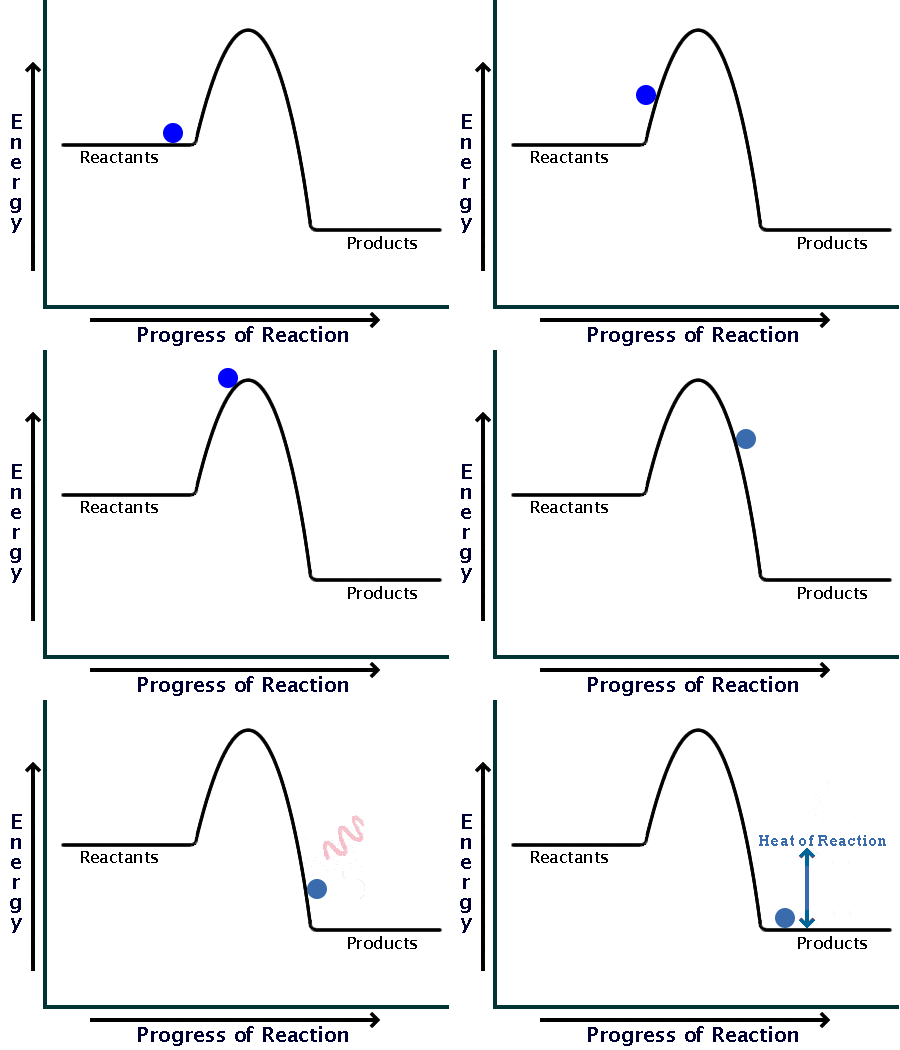
What type of reaction is this?
Exothermic
Endothermic
Exorcism
Endoscopy
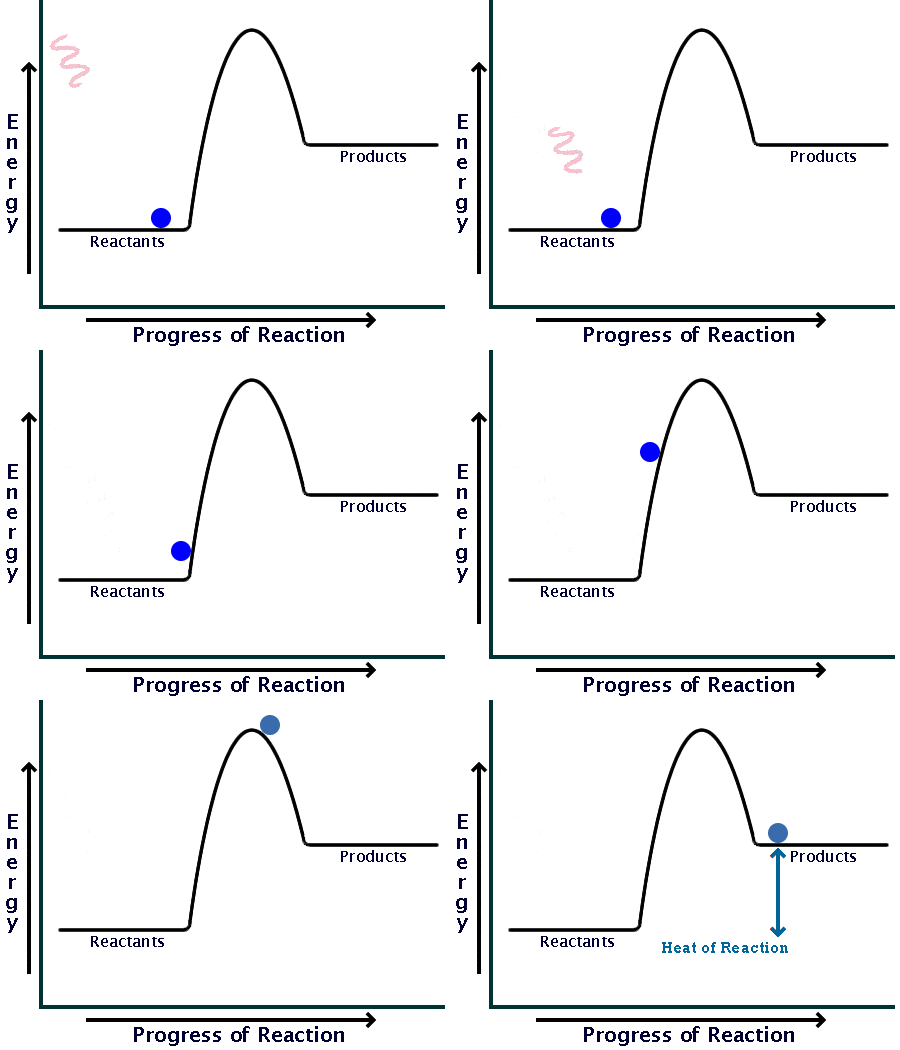
What type of reaction is this?
Exothermic
Endocrine System
Exon Mobil
Endothermic
How many oxygen atoms will be produced at the end of a reaction starting with 6 oxygen atoms?
12
3
6
0
An enzyme's role is to...
speed up biological chemical reactions.
balance chemical reactions.
reorganize groups of atoms into different substances.
tell the cell when to start making more energy.
The example of an iron train getting rusted, forming iron oxide, is an example of chemical change.
True
False
Water in a lake freezing is an example of a chemical change.
True
False
Amylase is an enzyme that breaks down...
Protein
Lipase (lipids)
Amylose (startch)
Lipase is an enzyme that breaks down...
Lipids (fats)
Amylose (startch)
Protein
Every enzyme has multiple jobs and can create multiple substances.
True
False
Enzymes can be used multiple times.
True
False
Which of the following factors can affect enzyme activity? (multiple answers)
Temperature
Water
pH
Heart Rate
What makes Nobel Gases special?
They are highly reactive with other elements because they need to fill their valence shell.
They are very rare.
They were discovered first.
They don't react with any other elements because their valence shell is full.
Which group number are the Alkaline Earth Metals located?
1
2
3
8
Isotopes are forms of the same element that have different numbers of _________.
Electrons
Protons
Neutrons
The gain or loss of electrons forms a/n ____.
Isotope
Element
Atom
Ion
How many valence electrons does carbon have?
2
4
8
1
How many protons does Lithium have? (Li)
3
2
6
12

