
 Worksheets
Grade 9 Enzyme
Total questions: 15
Worksheet time: 15mins
What is the purpose of an enzyme?
control how many reactions occur
raise activation energy
give permission for the reaction
speed up chemical reactions
Enzymes are _______________ that _____________________ chemical reactions.
carbohydrates, slow down
fats, speed up
lipids, speed up
proteins, speed up
Which of the following best explains why enzymes are necessary for reactions in our cells?
The reactions are too slow to meet the needs of the cell if enzymes are missing.
Enzymes supply the oxygen necessary for the reactions.
Enzymes change reactants from solid to liquid during the reactions.
The reactions take up too much space in the cell if enzymes are missing.
Where do substrates bind to an enzyme?
calcium channels
active site
receptor molecules
voltage-gated channels
The substance that binds to an enzyme is called a?
Polypeptide
Co-enzyme
Vitamin
Substrate
Changes in pH and temperature can ___________________ an enzyme which causes it to lose its shape and affects its function.
puncture
denature
double
delete

What is the optimal temperature of this enzyme?
60
40
70
30
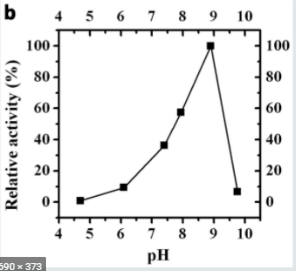
What is the optimal pH for this enzyme?
6
10
9
7
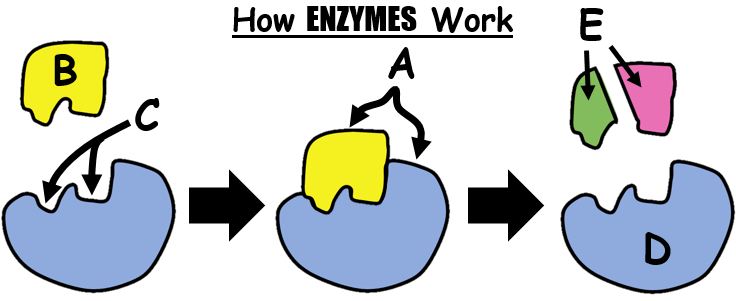
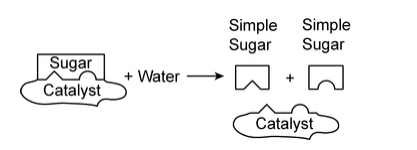
This enzyme breaks down carbohydrates
trypsin
pepsin
lipase
amylase
Saliva contains this enzyme
amylase
pepsin
trypsin
lipase

