
 Worksheets
Matter
Total questions: 74
Worksheet time: 19hrs 30mins
Name
Class
Date
1.

A pure substance containing only one kind of atom.
a)
element
b)
mixture
c)
compound
2.

Can only be separated by chemical means.
a)
element
b)
mixture
c)
compound
3.

This picture represents which of the following?
a)
element
b)
compound
c)
mixture
4.

This picture represents which of the following?
a)
element
b)
compound
c)
mixture
5.
The ability of a substance to be pounded or rolled into thin sheets
a)
State
b)
Ductility
c)
Malleability
d)
Thermal Conductivity
6.
The ability of a substance to be pulled into wires
a)
Malleability
b)
Flexibility
c)
State
d)
Ductility
7.
Physical or Chemical? Water is nonflammable
a)
Physical
b)
Chemical
c)
Neither
8.
Physical or Chemical Property? If copper comes in contact with water, it will turn green.
a)
Physical
b)
Chemical
c)
Neither
9.
Physical or Chemical Property? The temperature of boiling water is 100 degrees Celsius.
a)
Physical
b)
Chemical
c)
Neither
10.
Physical or Chemical Property? The solid form of water is ice.
a)
Physical
b)
Chemical
c)
Neither
11.
What is matter?
a)
Any subtance that doesn't take up space or have mass.
b)
Any substance that takes up space or have mass.
c)
Any substance that exists on Earth.
d)
Any substance that exists in space.
12.
Boiling point,melting point, and density are some of an element's
a)
pure properties
b)
physical properties
c)
chemical properties
13.
A mixture that appears to be evenly mixed throughout:
a)
an atom
b)
a compound
c)
a homogeneous mixture
d)
a heterogeneous mixture
14.
mixture that does NOT appear to be evenly mixed throughout:
a)
an atom
b)
a compound
c)
a homogeneous mixture
d)
a heterogeneous mixture
15.
Which of these is an example of a chemical property?
a)
density
b)
melting point
c)
ductility
d)
flammability
16.
Can a mixture be separated?
a)
No
b)
Yes
c)
Only sometimes
17.
An example of a physical change would be a change in...
a)
Color
b)
Shape
c)
Size
d)
All of the above
18.
What is an example of gas?
a)
crayons
b)
paper
c)
soda
d)
air
19.
What form of matter has a definite shape?
a)
Solid
b)
Liquid
c)
Gas
d)
Square
20.
What can causes ice to transform from a solid to a liquid?
a)
The air.
b)
The cold.
c)
Shape
d)
Heat
21.
This state of matter does not have a definite size or shape.
a)
Gas
b)
Liquid
c)
Solid
d)
Milk
22.
Which is not a property of matter?
a)
Shape
b)
Mass
c)
Liquid
d)
Volume
23.

Which state of matter has particles that are tightly packed?
a)
liquid
b)
gas
c)
solid
24.
A student was asked to help pass out cups of hot chocolate to two other students. A teacher poured the steaming liquid into cups. Once cup was made of stainless steel and the other was made of thick plastic. As the student walked across the room, he suddenly put one of the cups on a desk and exclaimed "Ouch". Which cup did he put down and why?
a)
He put down the plastic cup because the contents were spilling everywhere.
b)
He put down the steel cup because it was conducting thermal energy from the liquid to his hand.
c)
He put down the steel cup because it was insulating thermal energy from the liquid to his hand.
d)
He put down the plastic cup because it was insulating thermal energy from the liquid to his hand.
25.

Which physical property is measured in liters?
a)
color
b)
length
c)
mass
d)
volume
26.

Which liquid has the greatest density?
a)
lamp oil
b)
karo syrup
c)
water
d)
honey
27.
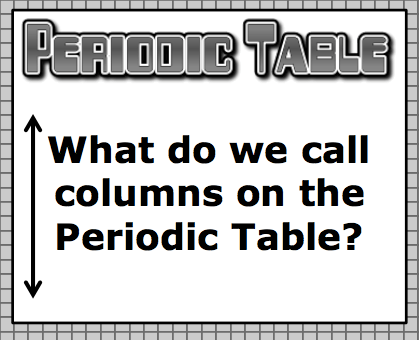
a)
Periods
b)
Groups
28.
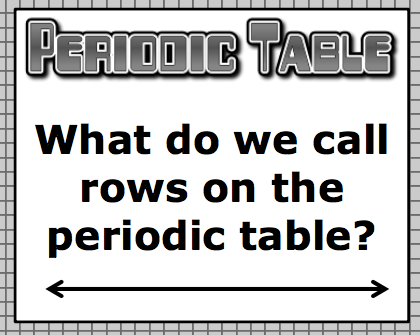
a)
Periods
b)
Groups
29.
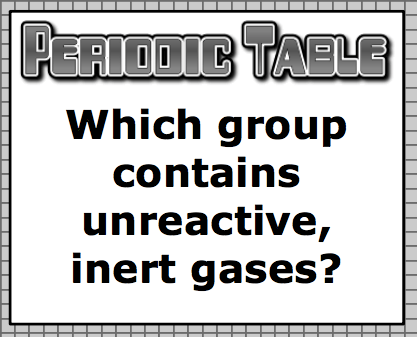
a)
Group 1
b)
Group 17
c)
Group 2
d)
Group 18
30.
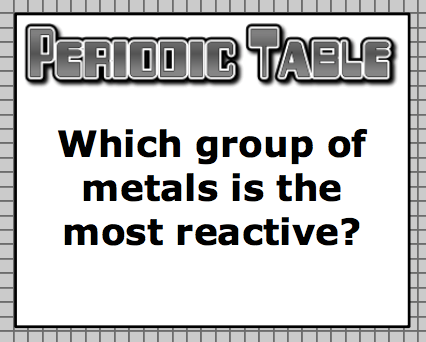
a)
Group 1
b)
Group 17
c)
Group 18
d)
Group 2
31.
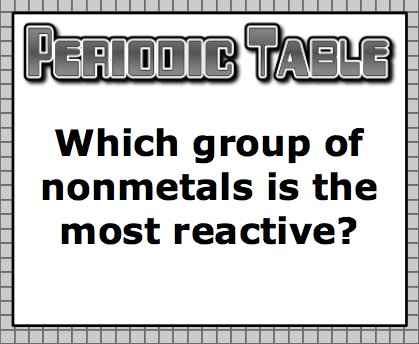
a)
Group 1
b)
Group 17
c)
Group 18
d)
Group 2
32.
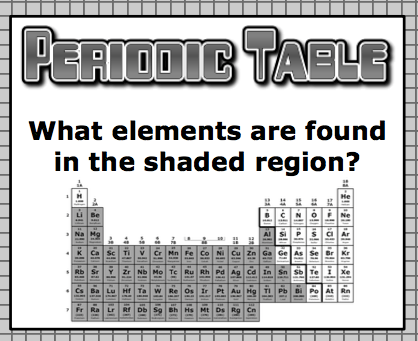
a)
Metals
b)
Nonmetals
c)
Metalloids
33.
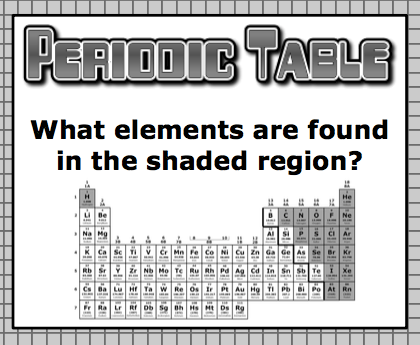
a)
Metals
b)
Nonmetals
c)
Metalloids
34.
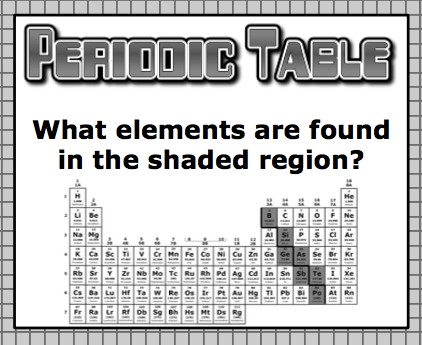
a)
Metals
b)
Nonmetals
c)
Metalloids
35.
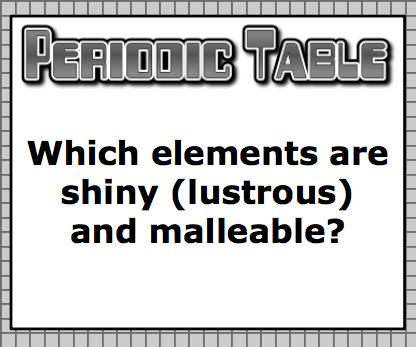
a)
Metals
b)
Nonmetals
c)
Metalloids
36.
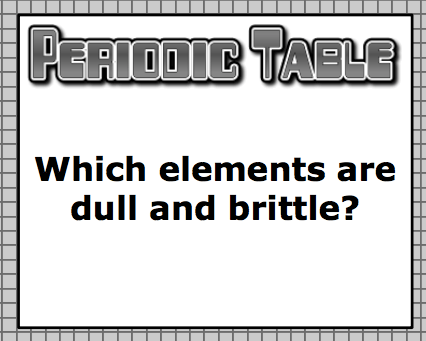
a)
Metals
b)
Nonmetals
c)
Metalloids
37.
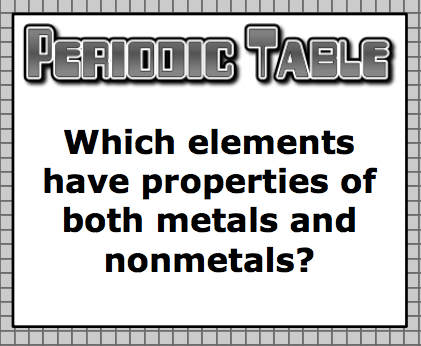
a)
Metals
b)
Nonmetals
c)
Metalloids
38.
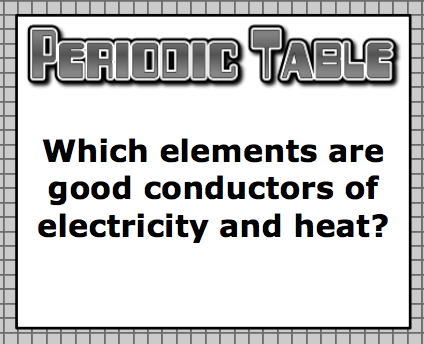
a)
Metals
b)
Nonmetals
c)
Metalloids
39.
Which group of the periodic table is composed of inert (not reactive) gases?
a)
alkali metals
b)
alkaline earth metals
c)
halogens
d)
noble gases
40.
Which element is not a metal?
a)
H
b)
Re
c)
Al
d)
B
41.

The atoms along the staircase are called
a)
metals
b)
nonmetals
c)
metalloids
d)
noble gases
42.
Which is a halogen?
a)
Helium
b)
Chlorine
c)
Oxygen
d)
Neptune
43.
Which is an alkali metal?
a)
Magnesium
b)
Iron
c)
Sodium
d)
Europium
44.
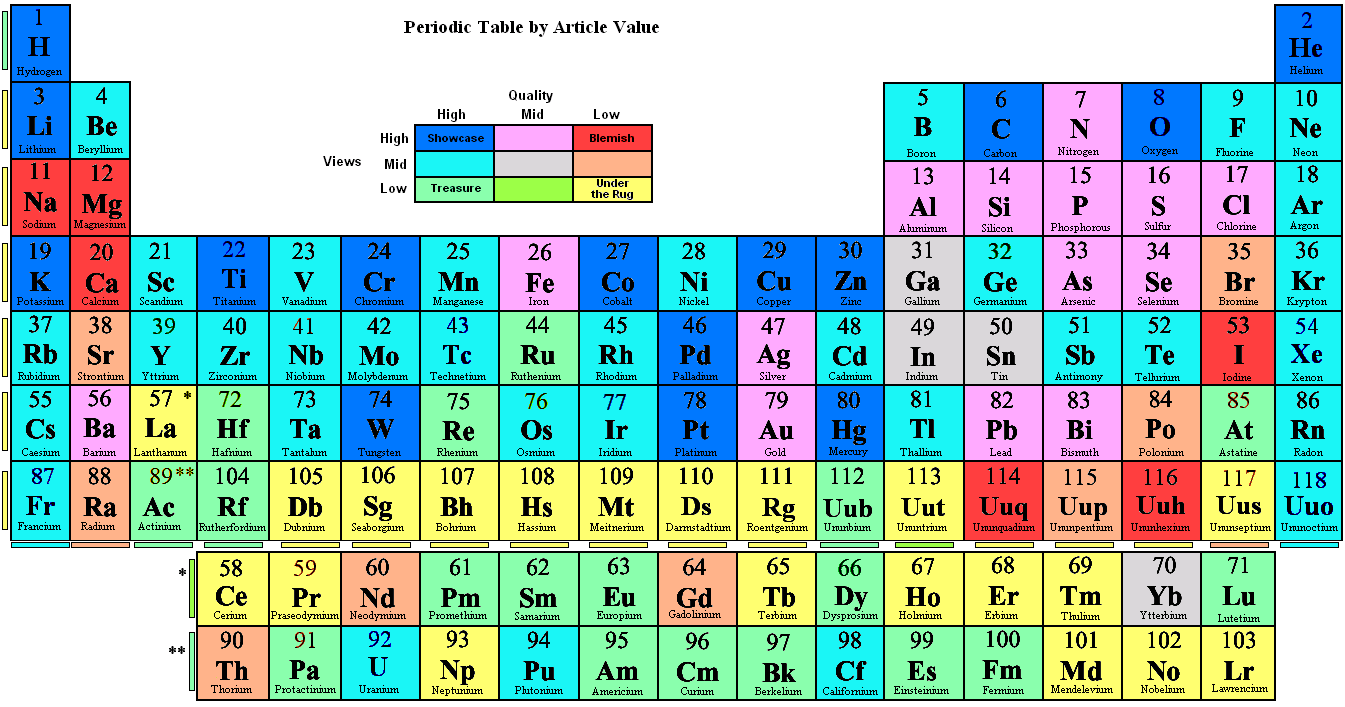
Sodium (Na) is found in period
a)
3
b)
2
c)
4
d)
1
45.
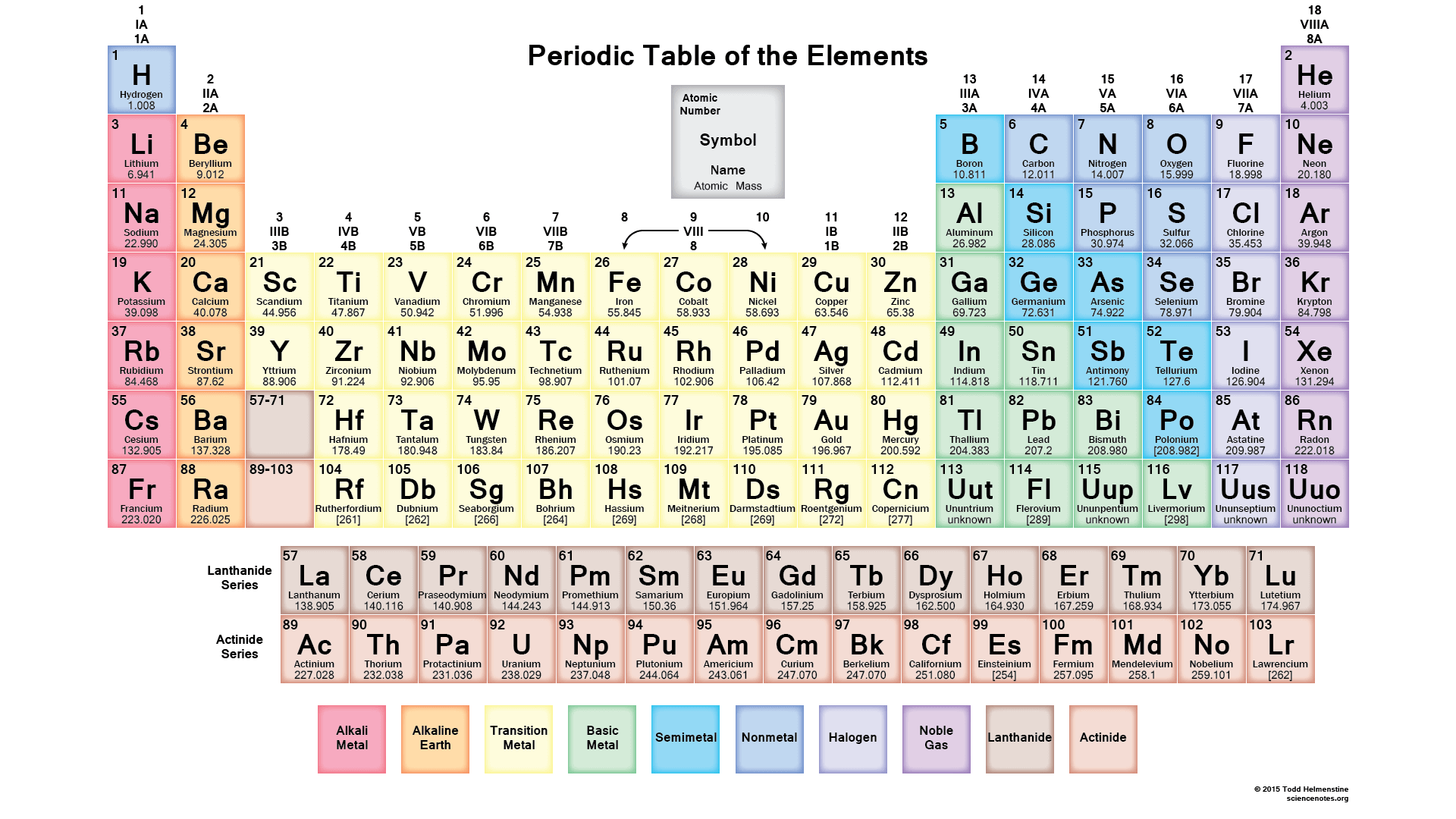
Sodium (Na) is found in group
a)
1
b)
2
c)
3
d)
4
46.
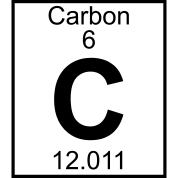
What does the 6 represent?
a)
atomic mass
b)
atomic number
c)
element name
d)
chemical symbol
47.
What does 12.011 represent?
a)
atomic mass
b)
atomic number
c)
element name
d)
chemical symbol
48.
What does the C represent?
a)
atomic mass
b)
atomic number
c)
element name
d)
chemical symbol
49.

Which of these element is the least metallic?
a)
Potassium (K)
b)
Carbon (C)
c)
Sulfur (S)
d)
Neon (Ne)
50.

Which of the following is the most metallic element in period 3?
a)
Boron (B)
b)
Sodium (Na)
c)
Argon (Ar)
d)
Silicon (Si)
51.

Which is NOT an example of a physical change?
a)
tearing paper
b)
molding clay
c)
burning wood
d)
chopping wood
52.

Which is NOT an example of a physical change?
a)
wetting paper
b)
burning a match
c)
coloring a picture
d)
mixing food coloring and water
53.

Chocolate milk is an example of a
a)
homogeneous mixture
b)
heterogeneous mixture
54.

Salad is an example of a
a)
homogeneous mixture
b)
heterogeneous mixture
55.
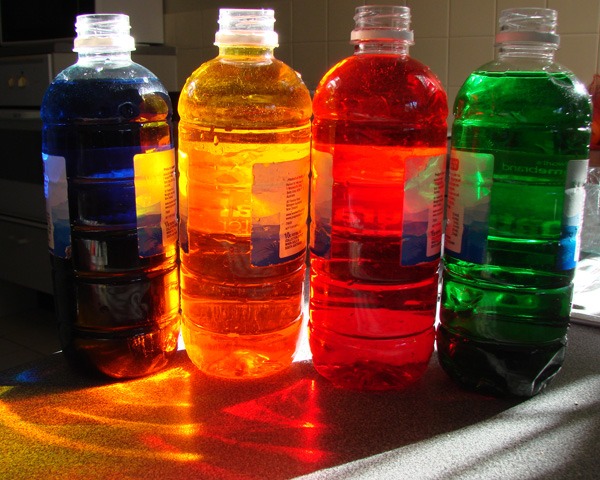
Coloured water is an example of a
a)
homogeneous mixture
b)
heterogeneous mixture
56.

Dishwasher soap is an example of a
a)
homogeneous mixture
b)
heterogeneous mixture
57.

Chicken noodle soup is an example of a
a)
homogeneous mixture
b)
heterogeneous mixture
58.

Soil is an example of a
a)
homogeneous mixture
b)
heterogeneous mixture
59.
Substances that form as the result of a chemical reaction
a)
products
b)
reactants
c)
coefficients
d)
subscripts
60.
Substances present at the start of a chemical reaction
a)
subscripts
b)
coefficients
c)
reactants
d)
products
61.
If reaction starts with 20g of reactants it should produce...
a)
a total of 40g of product
b)
a total of 10g of product
c)
a total of 80 g of product
d)
a total of 20g of product
62.
In a reaction A + B ----> C, reactant A has 5g and product C has 9g. How many grams does reactant B should have?
a)
4g
b)
5g
c)
9g
d)
14g
63.
What will weigh more when a chemical change is complete? The reactants before the chemical reaction, or the product after the reaction is complete?
a)
They both will weigh the same
b)
The product always weighs more than the reactant
c)
The reactant will weigh more than the product
d)
They both will loose mass after the reaction
64.
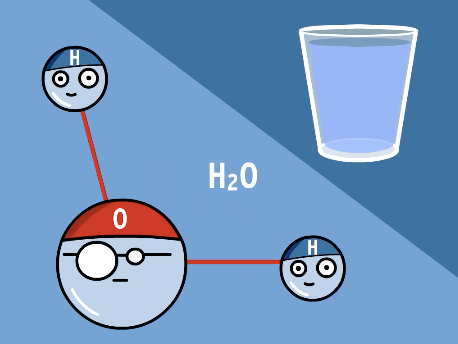
4 grams of hydrogen and 32 grams of oxygen will combine to form:
a)
36 grams of water
b)
28 grams of hydroxide
c)
32 grams of oxygen
d)
36 grams of deuterium
65.
The molar mass of an element is equal to its...
a)
Atomic mass
b)
Atomic number
c)
Oxidation number
d)
Valence electrons
66.
What is the molar mass of sodium?
a)
11
b)
23
c)
45.98
d)
3
67.
What is the molar mass of table salt (NaCl)?
a)
116.886 g/mol
b)
35.453 g/mol
c)
22.990 g/mol
d)
58.443 g/mol
68.
What is the molar mass of NaOH?
a)
40 g/mol
b)
38.989 g/mol
c)
23.998 g/mol
d)
57.004 g/mol
69.
How many particles are in a mole?
a)
602
b)
602 million
c)
602 moles
d)
6.02 x 10²³
70.
How many moles are present in 32.3 grams of carbon dioxide (CO2)?
a)
44.01 moles
b)
1421.52 moles
c)
32.3 moles
d)
0.73 moles
71.
What is the mass in grams of 5.90 mol C8H18?
a)
.0512 g
b)
19.4 g
c)
673 g
d)
389 g
72.
How many water molecules are in 5.2 moles of water?
a)
6.02 x 10²³
b)
5.2
c)
3.1304 x 1024
d)
8.638 x 10⁻²⁴
73.
If I have 6.02 x10²³ molecules of CO2, what is the mass?
a)
44.0 g
b)
2.65 x10²³ g
c)
1.37 x10²² g
d)
96.0 g
74.
How many atoms would be contained in 454 grams of iron (Fe)?
a)
6.02x10²³ atoms
b)
8.14 atoms
c)
4.90x1024 atoms
d)
55.85x10²³ atoms
100 %

